On October 27, 2026, BNY and Ripple announced an expanded partnership, with BNY’s digital asset custody platform now supporting XRP and the RLUSD stablecoin. The same day, Janus Henderson and Centrifuge launched JQQQ, an on-chain fund tracking the Nasdaq-100 Index. Bank custody and investment products are expanding in succession, yet third-party platforms’ stock-tokenization plans are meeting opposition from more listed companies. Institutional involvement in digital assets is moving from providing technical access toward specifying legal rights, custody responsibilities and trading arrangements. Those arrangements will determine how far the business can develop.
BNY expands custody; minting and redemption services still await approval
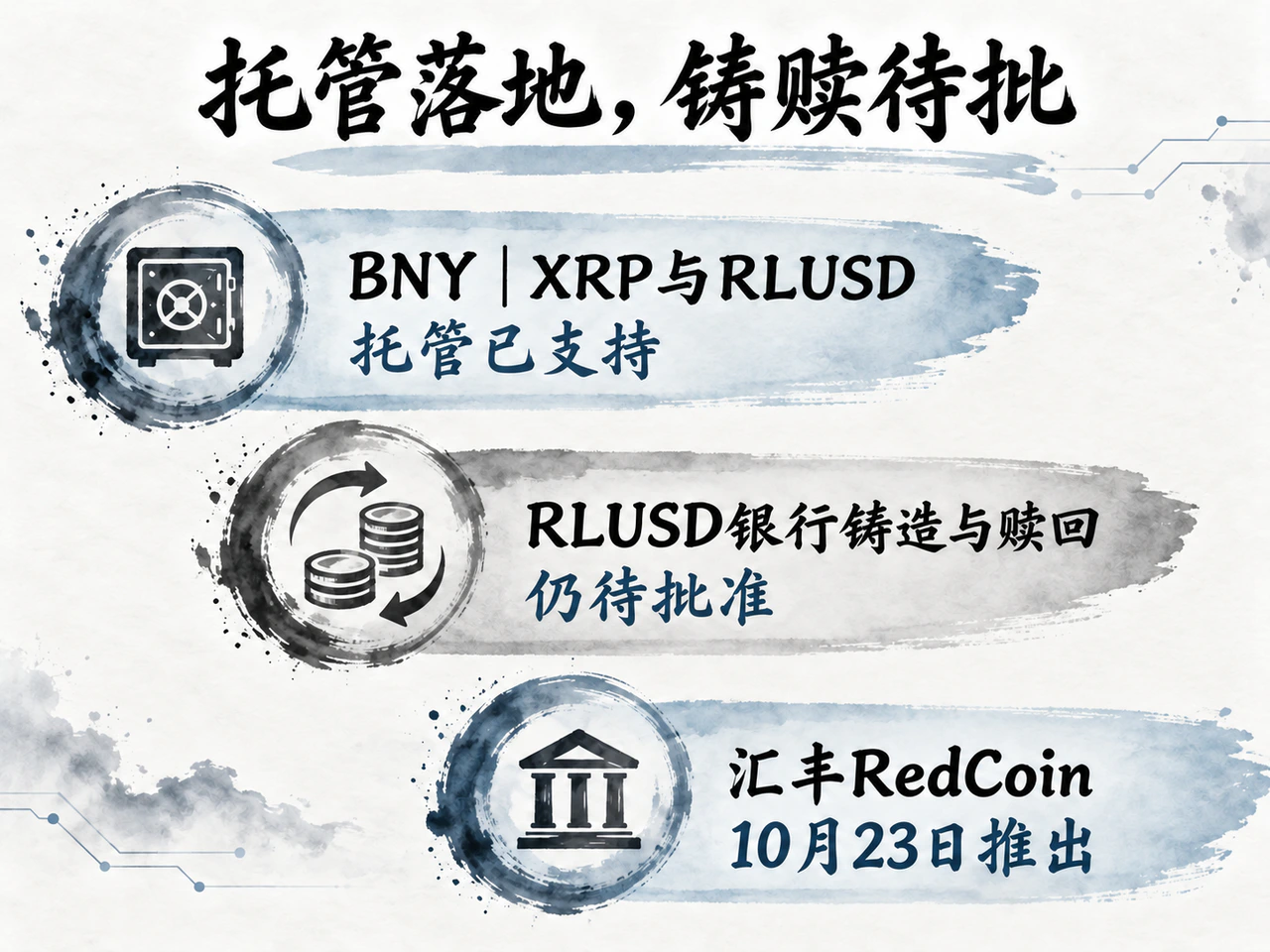
BNY had already served as the primary custodian of RLUSD reserves and worked with Ripple Prime on custody. The new addition is custody of the tokens themselves. Reserve custody manages the assets backing a stablecoin, while digital asset custody provides eligible clients with token safekeeping, holding and transfer services. Connecting the two allows institutions to use familiar governance and operational controls to handle a wider range of on-chain assets.
The partners also plan to let BNY clients mint and redeem RLUSD directly through the bank and to expand support for tokenized assets and investment products on the XRP Ledger. These plans remain subject to final BNY approval and regulatory approval. In supply-chain finance, the partners are exploring cooperation with working-capital platform C2FO to bring new investors to confirmed receivables. Whether the business generates earnings will depend on financing-asset quality, investor eligibility and actual transactions.
Bank distribution channels are also extending into retail payments. HSBC launched the Hong Kong dollar stablecoin RedCoin on October 23 and began opening wallet activation in stages through PayMe. Its official announcement said the feature would be available to more than 3.3 million PayMe users for payments to friends, relatives and over 100,000 merchants. These figures describe the potential reach of an existing channel; activation and use still have to develop over time. HSBC also plans to integrate RedCoin into its Hong Kong mobile banking service within the year and allow clients to use it to subscribe to tokenized investment products.
From BNY’s custody services to HSBC’s payment application, banks are bringing on-chain assets into existing client relationships, connecting account opening, asset holdings, payments and redemption. Distribution provides a foundation for reaching users; payment transactions and continued token holdings provide a better indication of actual stablecoin demand.
JQQQ uses a fund structure, while stock tokenization meets issuer objections
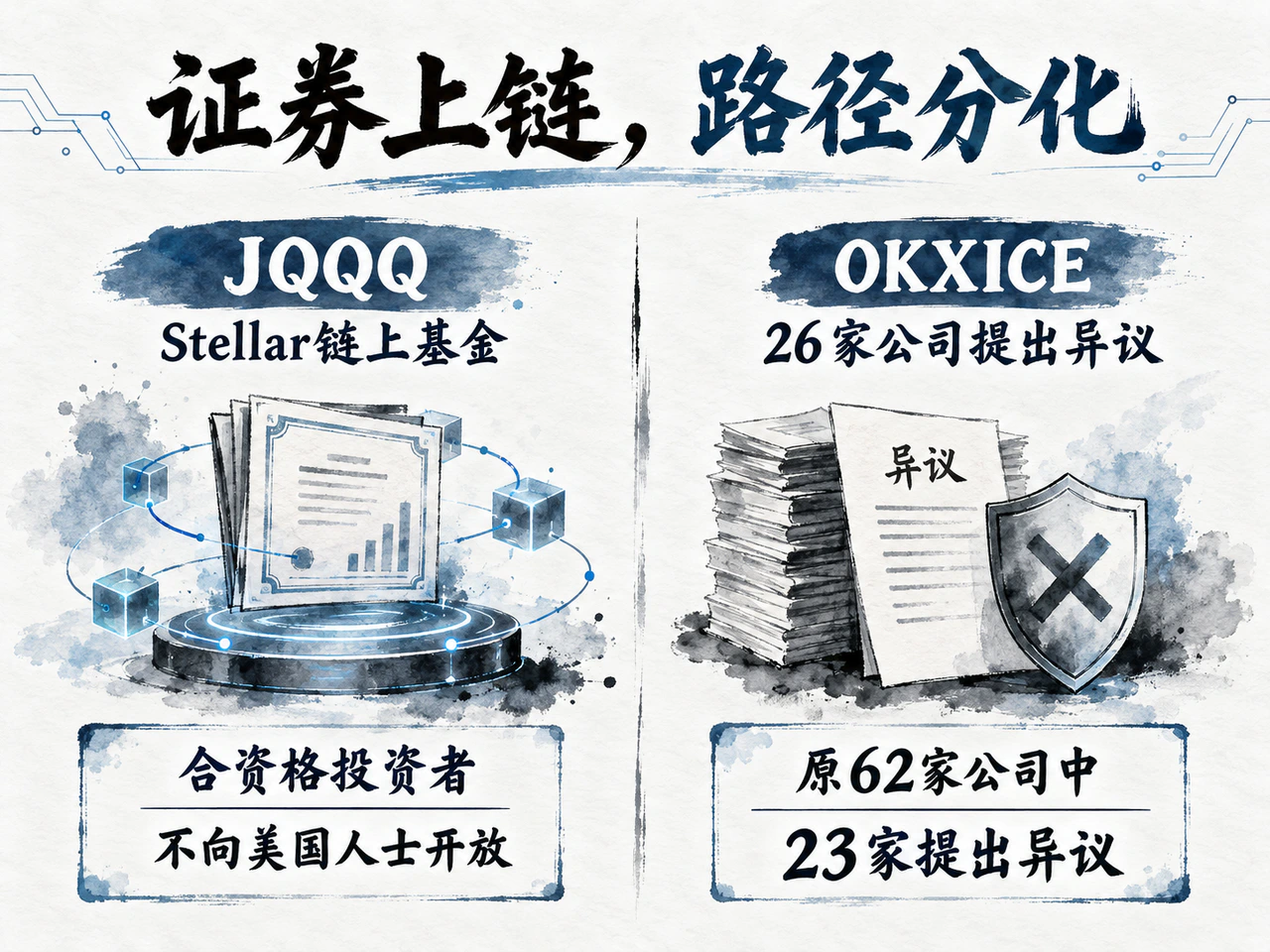
JQQQ launched on the Stellar network using an institution-led fund structure licensed to use the Nasdaq index. The official legal disclosures identify Anemoy as investment manager and Janus Henderson as sub-investment manager. The product is available only to eligible investors in jurisdictions where distribution is permitted and is not available to U.S. persons. Investors receive the corresponding economic exposure through the fund; they do not directly hold shareholder rights in the index’s constituent companies.
The arrangement distinguishes responsibilities for product management, index licensing and on-chain infrastructure. Whether the collateral, lending and other on-chain uses mentioned in the official materials are available also depends on third-party functionality, investor eligibility and local rules. On-chain issuance facilitates technical connectivity, while the fund structure and access conditions continue to determine the scope of services and allocation of risk.
Third-party platforms’ tokenization of listed companies’ shares has encountered resistance from issuers. CoinDesk reported on October 27 that IBM, Oracle, Intel and IonQ appeared in an updated OKXICE notice dated October 26, bringing the number of companies objecting to 26. Of the 62 companies originally proposed for inclusion, 23 objected—approximately 37%—while the remaining three objectors were outside that original list. Issuers’ concerns about shareholder protection, trading arrangements and incremental demand are influencing the rollout of these products.
Fund issuance and stock tokenization are progressing differently. The central issue is how rights and responsibilities are arranged once assets move on-chain. Institution-led funds define investor rights, management duties and eligibility in product documents. Third-party stock-tokenization platforms must also address issuers’ objections to the relevant arrangements. Technical integration is one step in that process.
U.S. policy supports institutional access; service responsibilities still need implementation
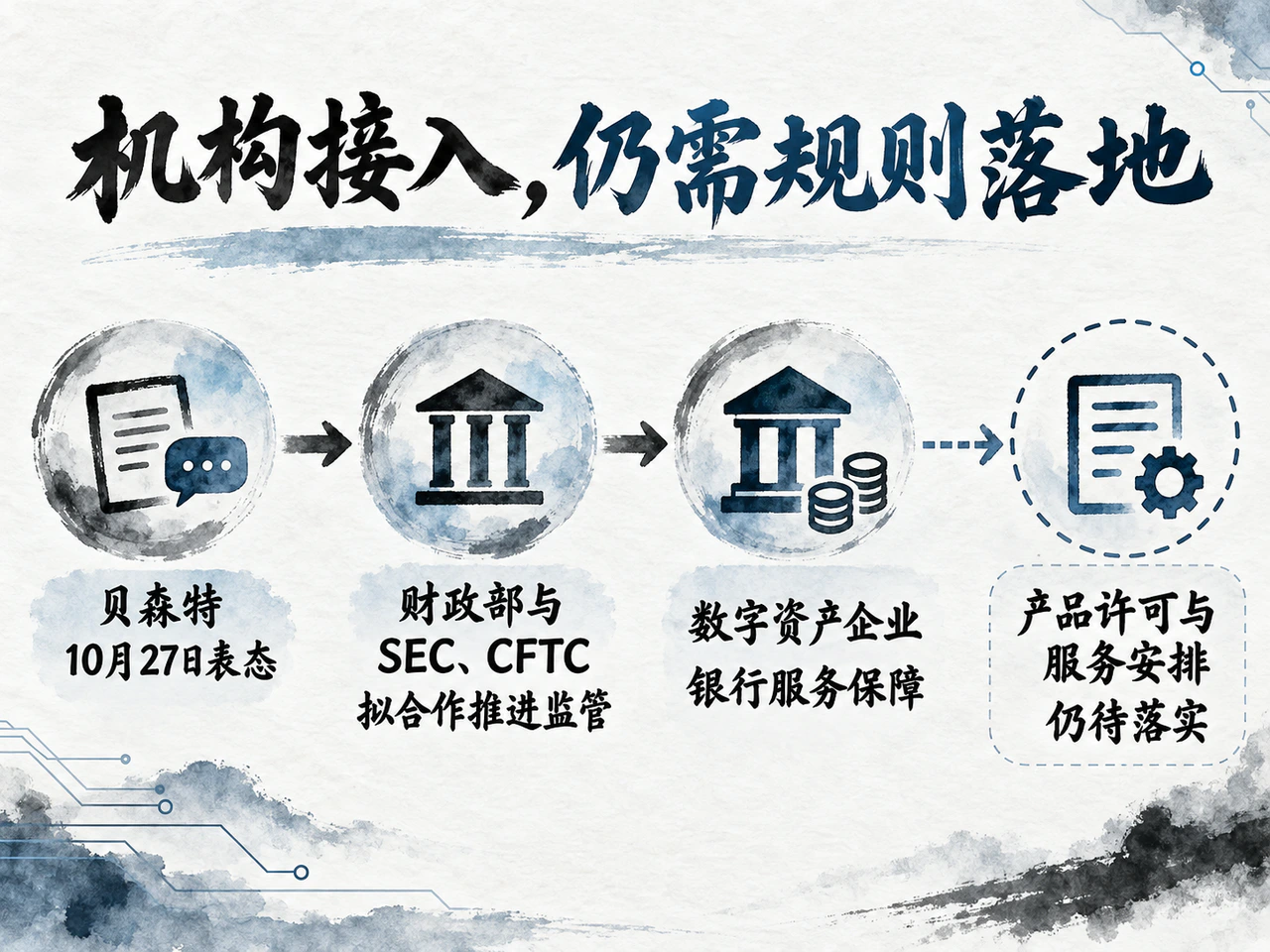
Speaking at Ripple’s conference on October 27, U.S. Treasury Secretary Scott Bessent said the Treasury could work with the SEC and CFTC to advance regulation and establish safeguards for digital asset companies’ access to banking services. He also cited stablecoins’ potential to expand dollar use and demand for reserves as part of his policy case. How that support translates into durable rules, product approvals and banking-service arrangements remains to be implemented.
The day’s developments suggest that bringing digital assets into a wider range of financial activities increasingly depends on clearly defined issuers, custody responsibilities and uses. Banks expanding services, funds obtaining index licenses and listed companies objecting to stock tokenization are together shifting the market’s attention from which assets can move on-chain toward who provides the services, what rights investors receive and how the assets can be used.
Follow the original-article link for further details.