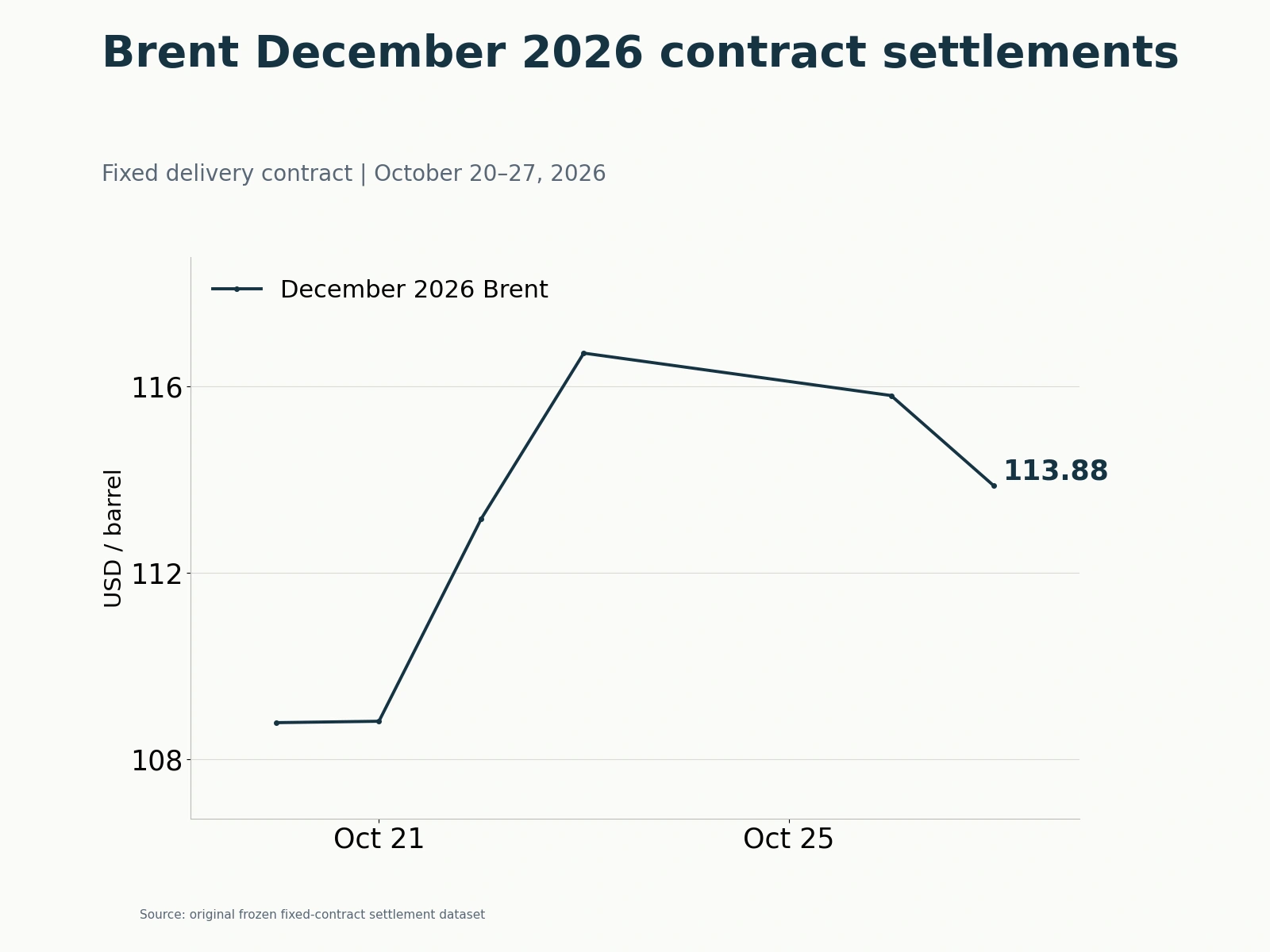
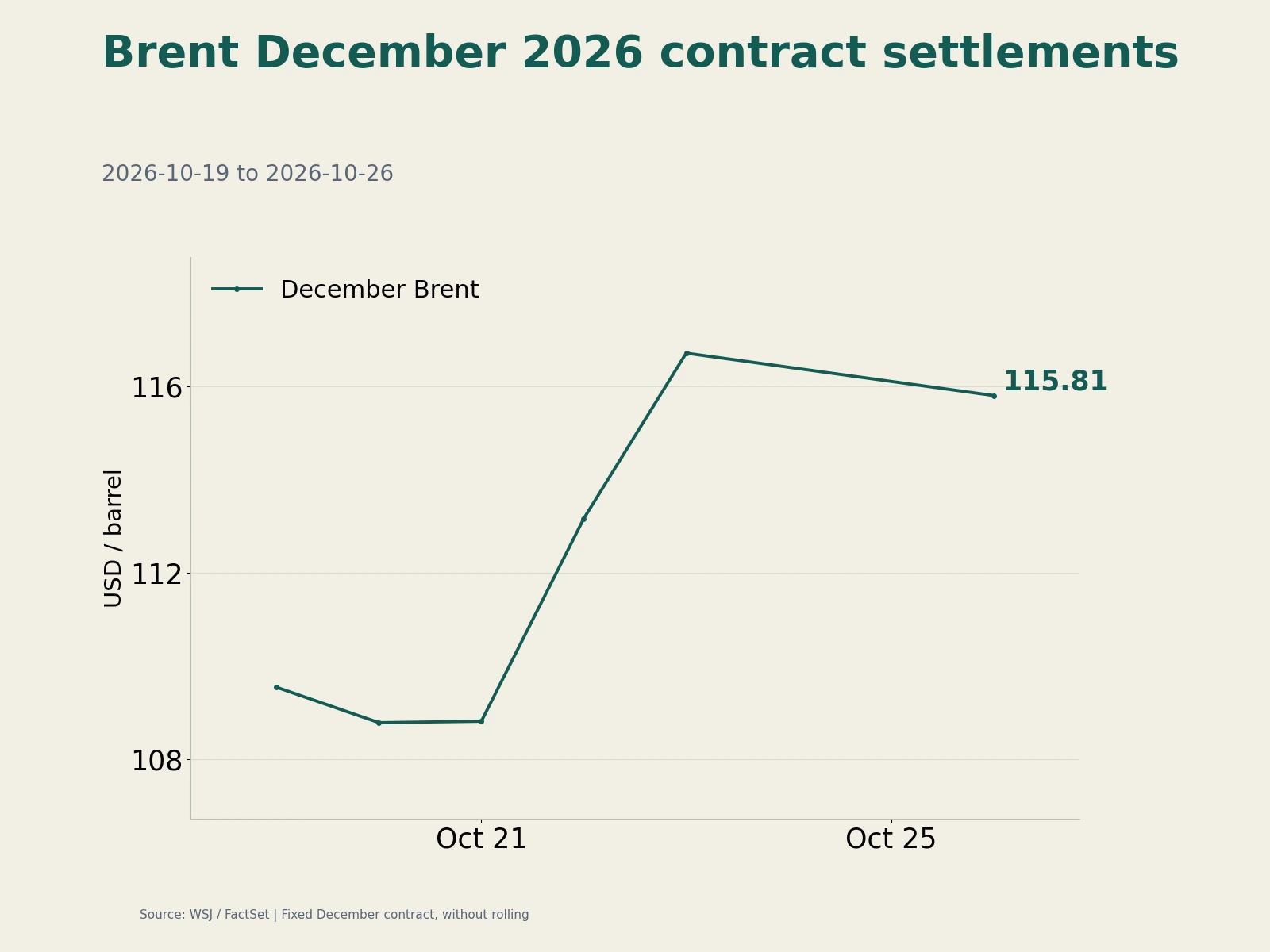
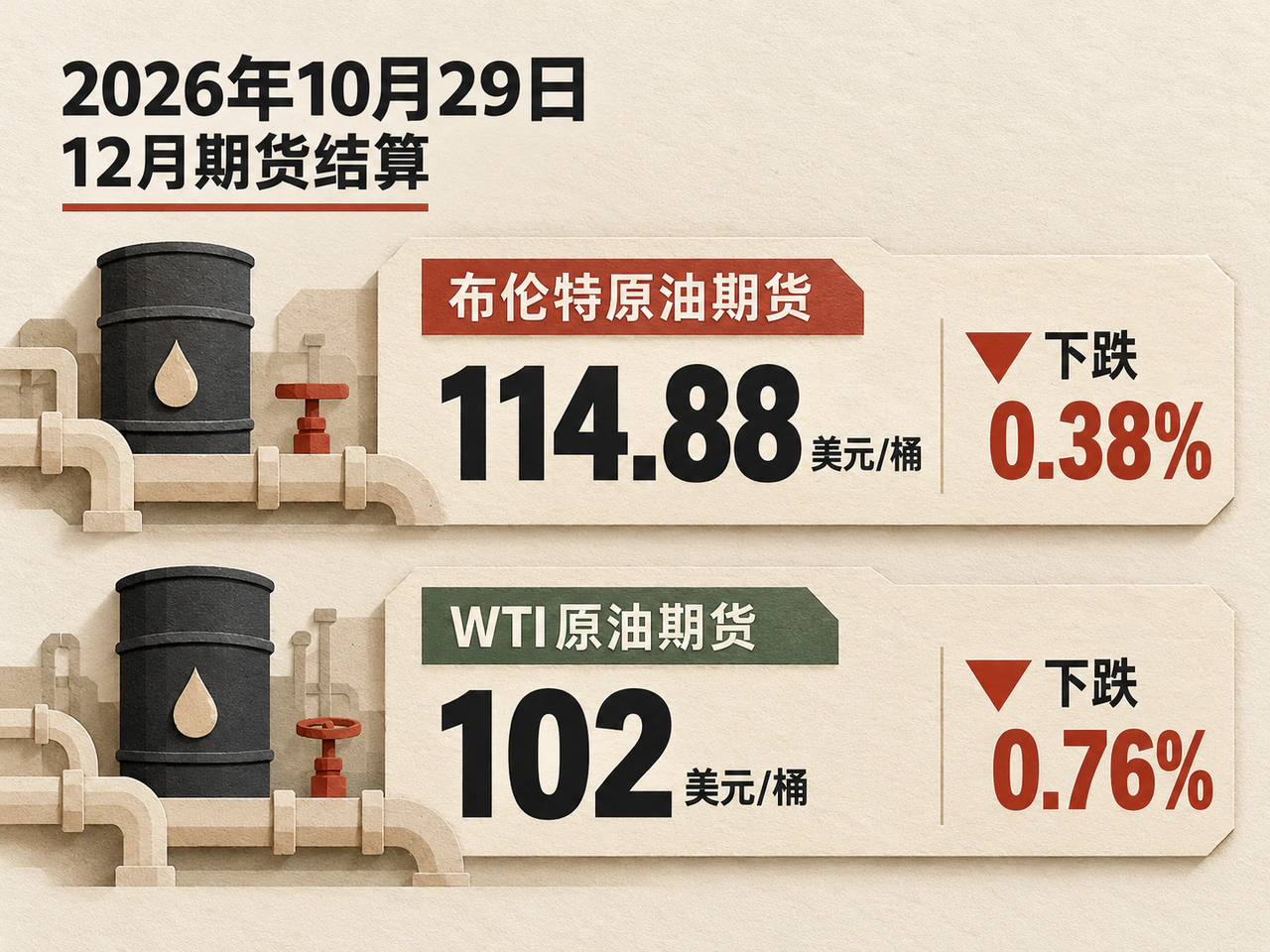
On October 29, 2026, international oil prices ended a volatile session slightly lower. According to Reuters, front-month December Brent crude futures settled down $0.44, or about 0.38%, at $114.88 per barrel; WTI crude futures settled down $0.78, or about 0.76%, at $102 per barrel.
Both benchmarks fell more than $2 intraday before recovering most of their losses. News of renewed U.S.–Iran contacts eroded part of the supply risk premium, but the risk of attacks on Middle Eastern energy facilities, constrained exports, and low diesel inventories together limited the downside. Following gains of about 1.3% for Brent and 3% for WTI the previous day, the October 29 pullback amounted to a modest correction in an elevated risk premium. A material recovery in supply still needs to be confirmed by physical deliveries.
U.S.–Iran Contact Signals Ease the Premium; Reports of Attacks on Saudi Facilities Narrow the Losses
Tentative diplomatic contacts initially reduced the market's risk premium. Reuters, citing other reports, said U.S. Vice President Vance had written to Iran's security chief in an effort to create room for negotiations to resume; Qatari mediators had also proposed a new ceasefire plan. A senior Iranian official, however, rejected the plan as unacceptable. Although the market picked up signals of continuing contacts between the two sides, firm arrangements for normal oil shipments to resume remained absent.
Subsequent reports of attacks on energy facilities pushed security risks back into prices. On October 29, the Houthis claimed to have attacked Saudi Arabia's Ras Tanura and Rabigh refineries and Abqaiq facilities. Saudi authorities did not immediately confirm those claims; the Saudi-led coalition said it had intercepted a ballistic missile fired toward the country's east. Again Capital analyst John Kilduff said the latest attack reports helped oil recover some of its intraday losses.
For the crude market, the central channel through which geopolitical risk affects prices is whether refinery processing, pipeline transport, and port loading can operate normally. A unilateral claim of an attack is enough to heighten market caution, while persistent disruption to Middle Eastern exports directly changes supply and demand. With both factors in play, sudden security incidents can easily interrupt the cooling effect of diplomatic contacts on oil prices.
U.S. Crude Draws and Diesel Shortages Support Backwardation; Russian Refinery Restarts Offer a Path to Relief
Although diplomatic reports reduced part of the premium, the crude futures curve continued to indicate tight near-term physical supply. A CMB market report released on the morning of October 29 showed that both WTI and Brent remained in backwardation, with nearby contracts priced above later-dated contracts. This suggests that buyers remain willing to pay a premium for prompt crude deliveries while still allowing for a recovery in supply further out.
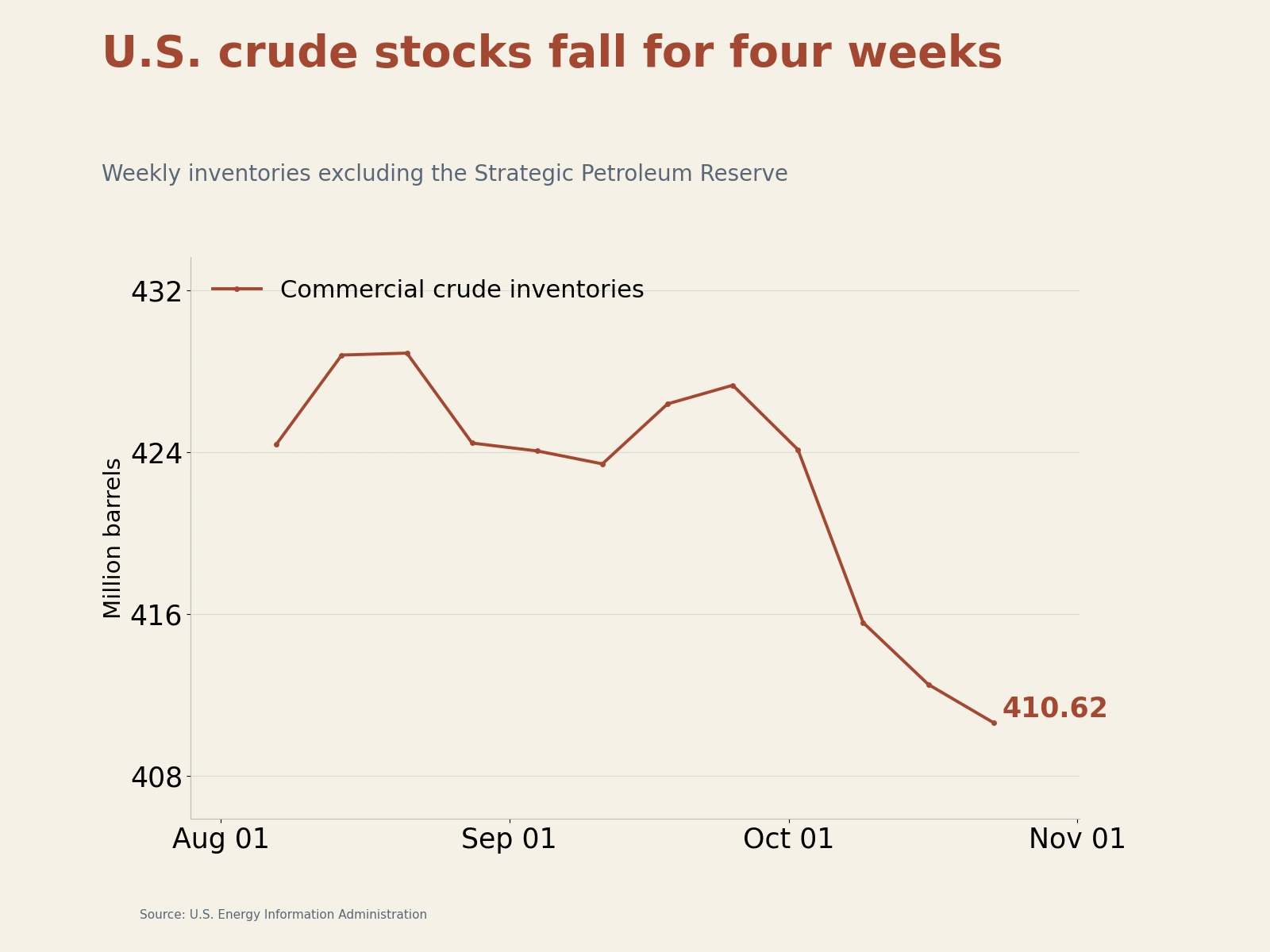
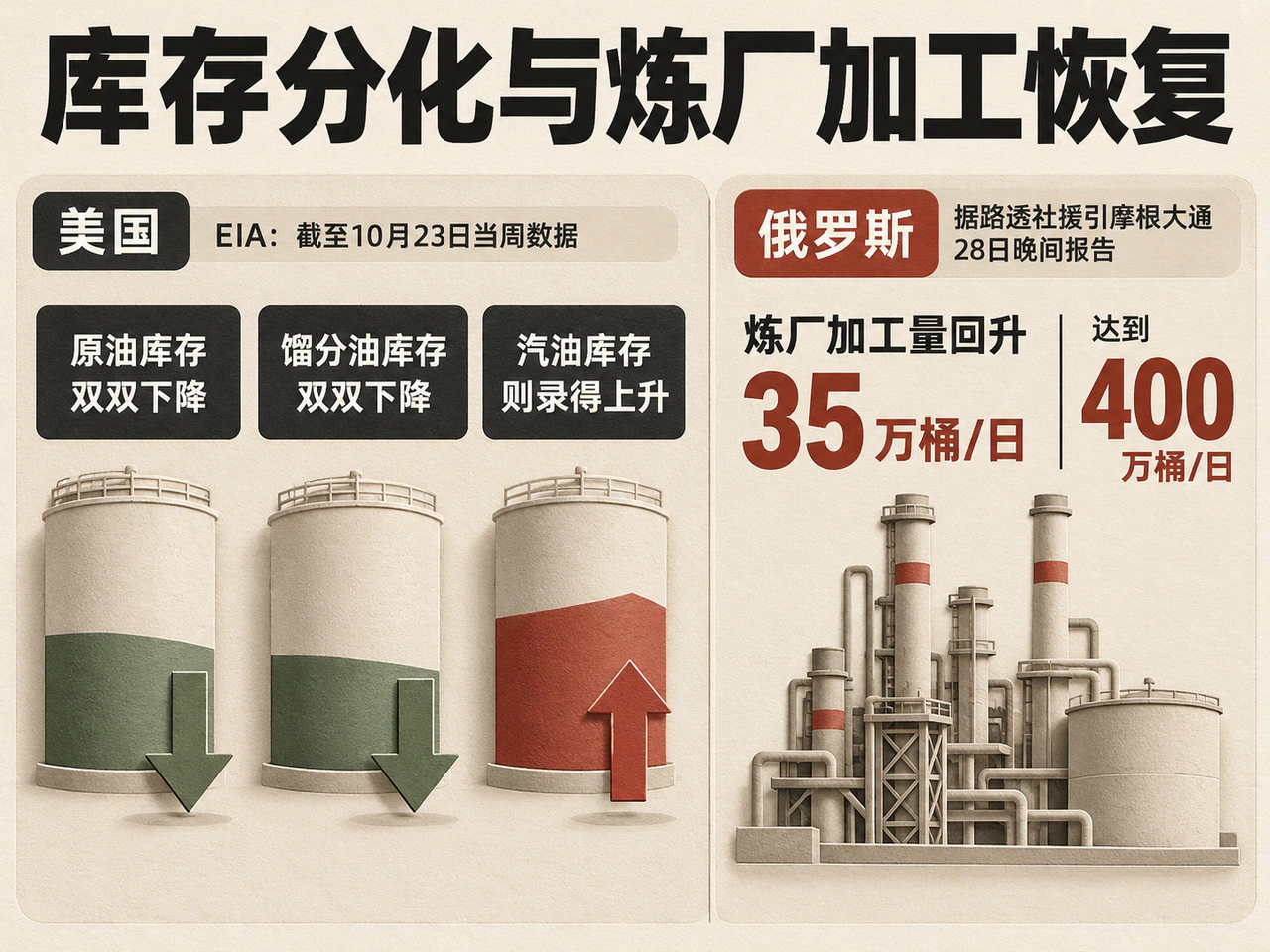
The resilience of nearby prices stems mainly from crude inventory draws and winter diesel shortages. According to Reuters, U.S. Energy Information Administration (EIA) data released on October 28 for the week ended October 23 showed declines in both U.S. crude and distillate inventories, while gasoline stocks rose. The divergence in product inventories suggests that end-user demand has not strengthened across the board, but crude draws combined with tight winter diesel supply continue to underpin nearby prices. Kpler also noted that the EIA's export figure for the week exceeded its own vessel-tracking estimate. Whether inventory draws persist will depend on subsequent data revisions and developments over several consecutive weeks.
The diesel shortage also helps explain why oil prices remain elevated despite expectations of a gradual recovery in crude supply. In its October 6 outlook, the EIA projected that tight diesel supply would continue to stimulate refiners' demand for crude purchases even as Middle Eastern crude production and exports gradually increased. Assuming a gradual easing of transport restrictions, the EIA forecast an average Brent spot price of $105 per barrel in the fourth quarter, falling to $84 per barrel in 2027. Immediate delivery risks remain concentrated in nearby prices.
A recovery in Russian refining capacity nevertheless offers a potential route to easing diesel tightness. Reuters, citing a JPMorgan report issued on the evening of October 28, said there had been no further confirmed attacks on Russian refining facilities since the October 15 strike on the Ryazan refinery. Russian refinery throughput rose by 350,000 barrels per day last week to 4 million barrels per day. If that recovery continues, additional diesel supply could ease winter purchasing pressures and, in turn, compress the portion of refining margins attributable to product shortages.
OPEC+ to Discuss Production on November 1; Physical Deliveries and Diesel Inventories Come into Focus

On producer policy, seven core OPEC+ members decided on October 4 to leave their November production targets unchanged, with their next meeting scheduled for November 1. With Gulf members' actual output already below their quotas, the nominal allocations offer limited guidance. The meeting's assessment of Middle Eastern export routes and progress in restoring production will have a more direct bearing on market judgments about deliverable supply.
Looking ahead, whether the oil market can move from headline-driven pricing toward looser physical fundamentals depends on four key signals: whether U.S.–Iran contacts lead to concrete negotiations and transport arrangements; whether confirmed changes emerge in operations and loading at the Saudi facilities concerned; whether the recovery in Russian refinery throughput translates into diesel exports; and whether U.S. distillate inventories and nearby crude spreads show sustained declines. If supply recovers alongside meaningful inventory replenishment, a fall in oil prices will have firmer physical foundations. Conversely, renewed disruption to facilities or shipping would leave low product inventories amplifying the response in nearby prices.