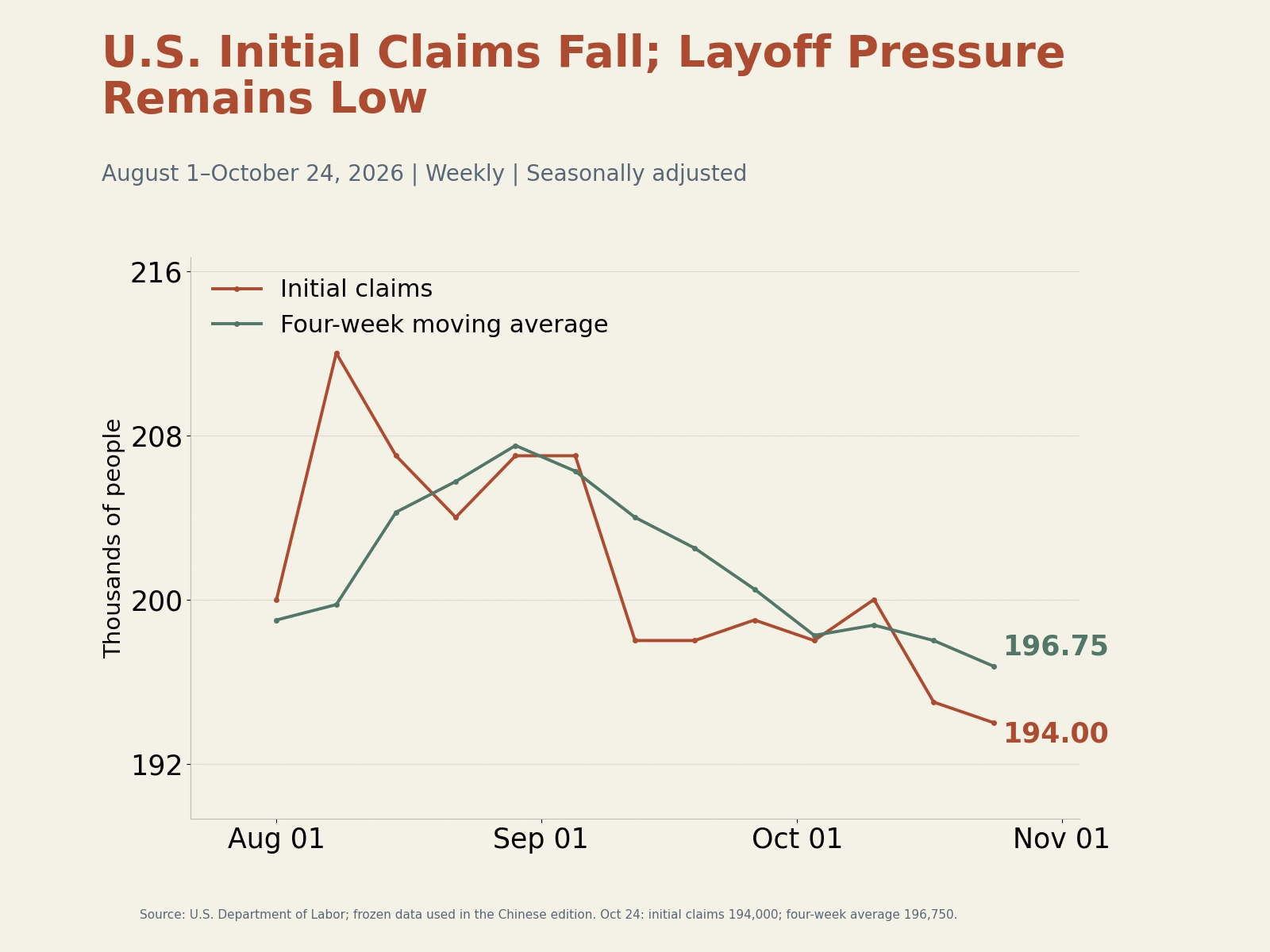
On October 30, 2026, Dallas Fed President Lorie Logan said in a speech at Davidson College that, given the current economic outlook, the Federal Reserve still needed at least two more interest rate increases of 25 basis points each. On the same day, St. Louis Fed President Alberto Musalem also argued, at a Shadow Open Market Committee event in New York, that further monetary tightening would be needed soon. Following the Fed's pause in rate increases this week, their latest remarks refocused the policy debate on how much further rates needed to rise and how quickly policymakers should proceed.
Logan Calls for at Least 50 Basis Points More as Inflation and Financial Conditions Support Tightening
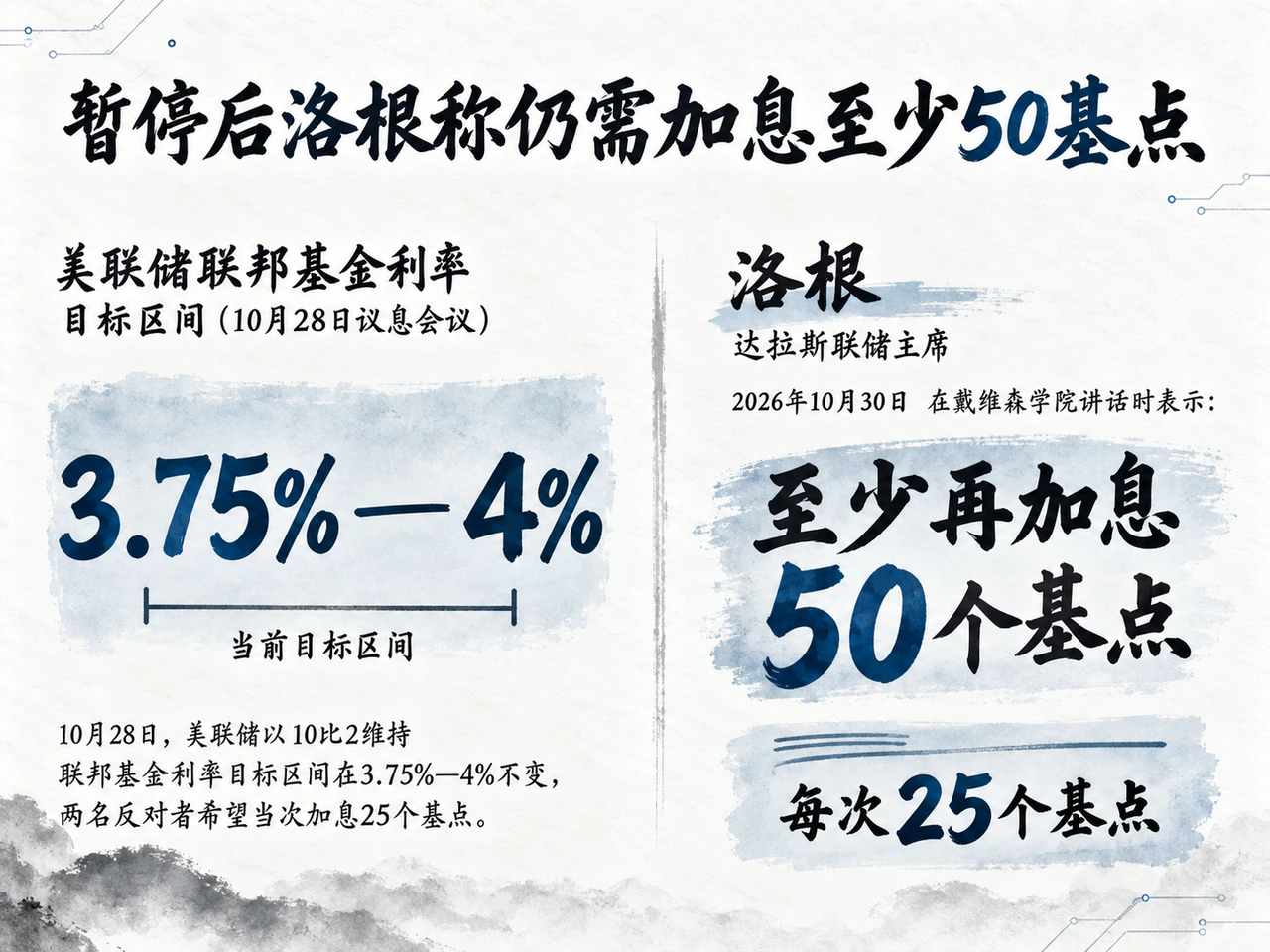
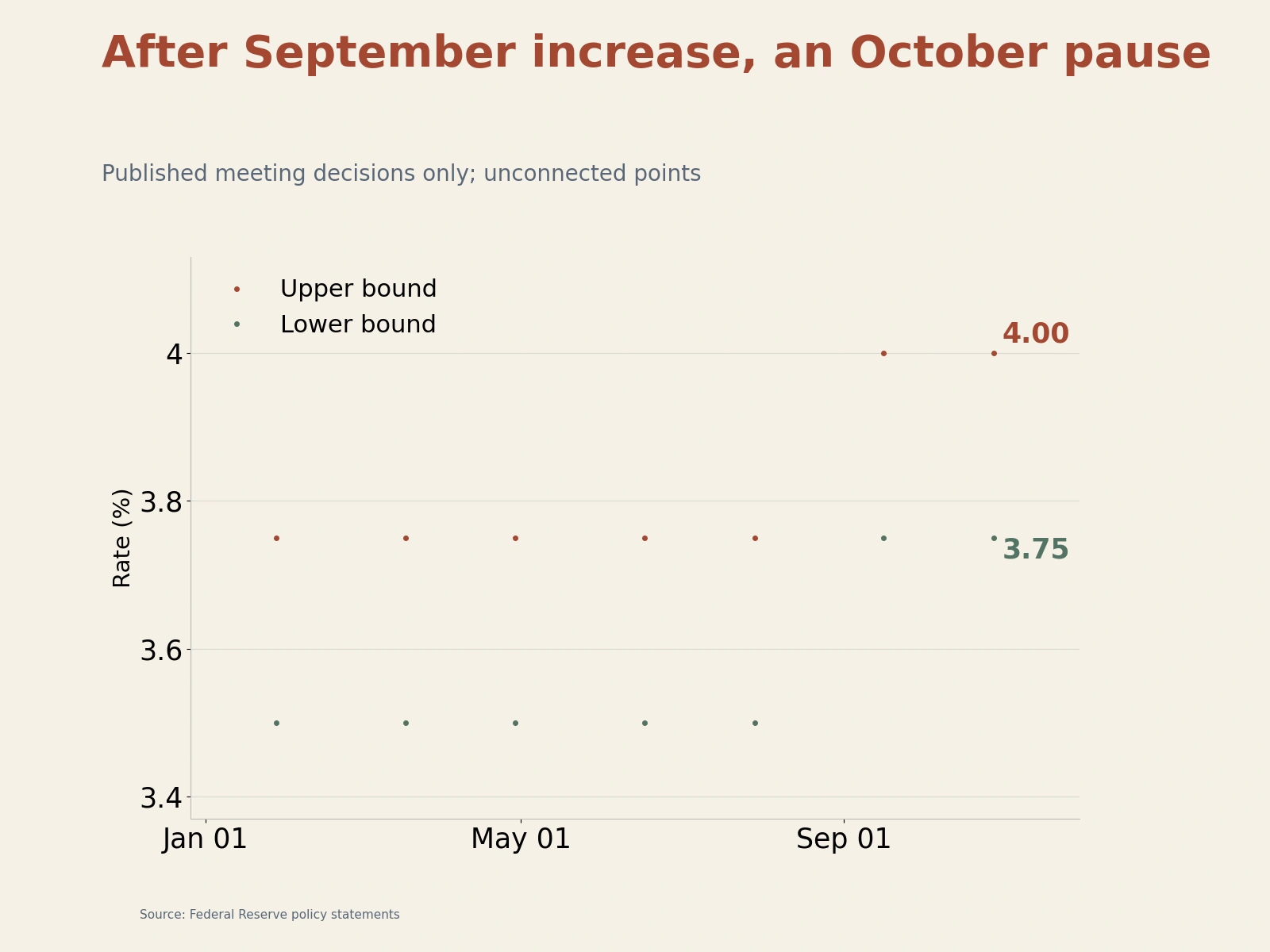
At its October 28 policy meeting, the Fed voted 10–2 to keep the federal funds rate target range unchanged at 3.75%–4%, with the two dissenters favoring a 25-basis-point increase at that meeting. Logan supported the decision to hold rates steady. Explaining her position on October 30, she said that slowing the pace of adjustment would help households, businesses and markets adapt to higher rates, reducing the risk of cooling economic activity too much. When markets understand the direction of policy, the precise timing of an individual increase has a relatively limited effect on long-term borrowing costs.
Logan was clear about the policy destination: the current target range needed to rise by at least another 50 basis points to become somewhat restrictive and bring inflation back onto a path toward target. After those two increases, the Fed could pause again to assess economic and financial conditions. Musalem placed greater emphasis on timing, arguing that small adjustments made earlier generally cause less disruption than abrupt, larger moves later.
These calls for tightening rest on a shared assessment of growth and prices. Logan sees consumer spending and business investment as solid, and the labor market as broadly balanced or even slightly tighter. Citing September's 3.1% year-over-year rise in the core personal consumption expenditures price index, she said price pressures were widespread across goods and services and could not be attributed solely to tariffs and energy shocks. She also pointed to rising equities, credit spreads near historical lows and banks' willingness to lend as factors keeping financial conditions supportive of the economy. On that assessment, even higher long-term market interest rates do not automatically substitute for the policy tightening the central bank still needs to deliver.
Q3 Wage Growth Slows to 0.7%, Supporting Gradual Rate Increases
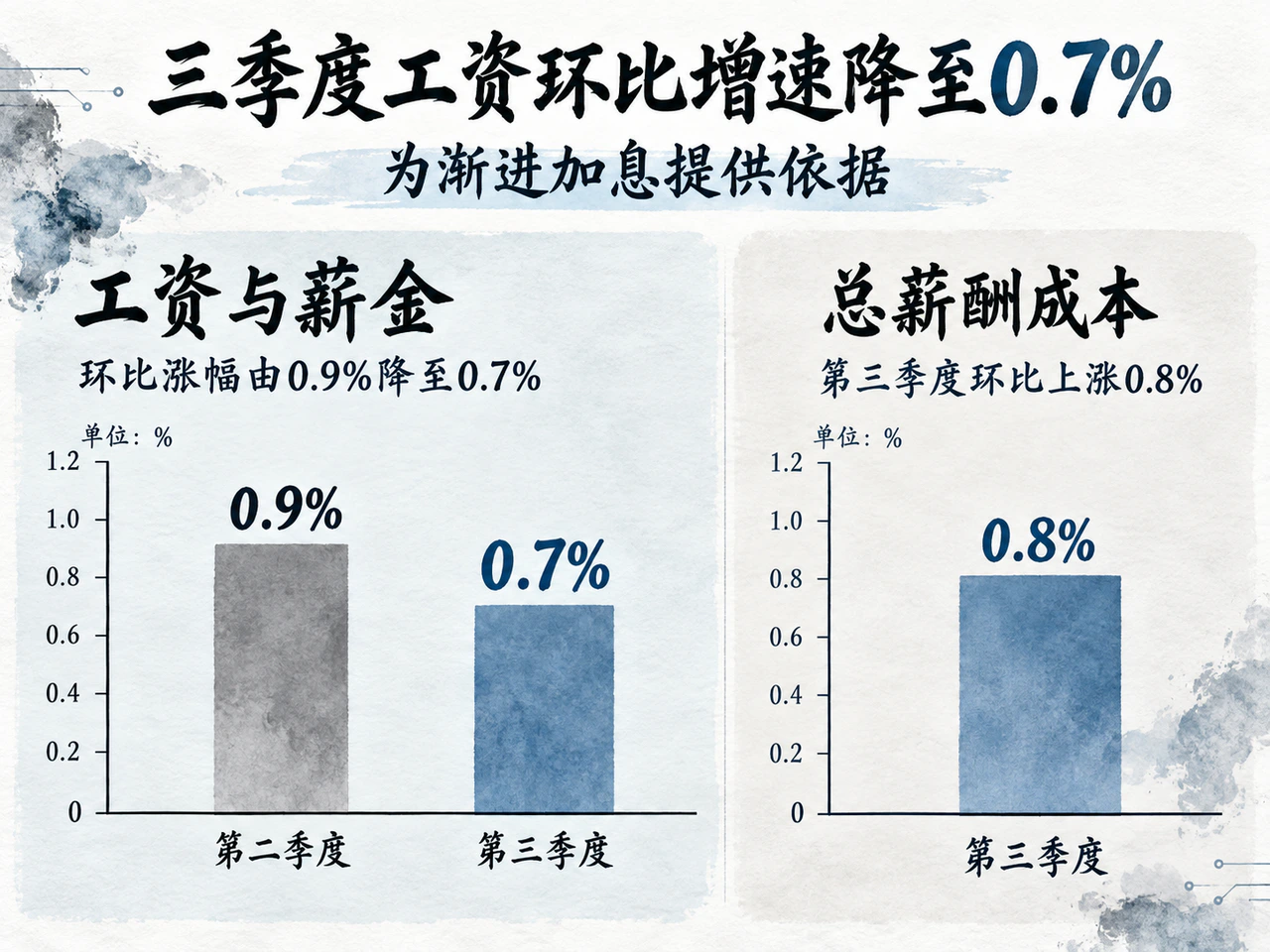
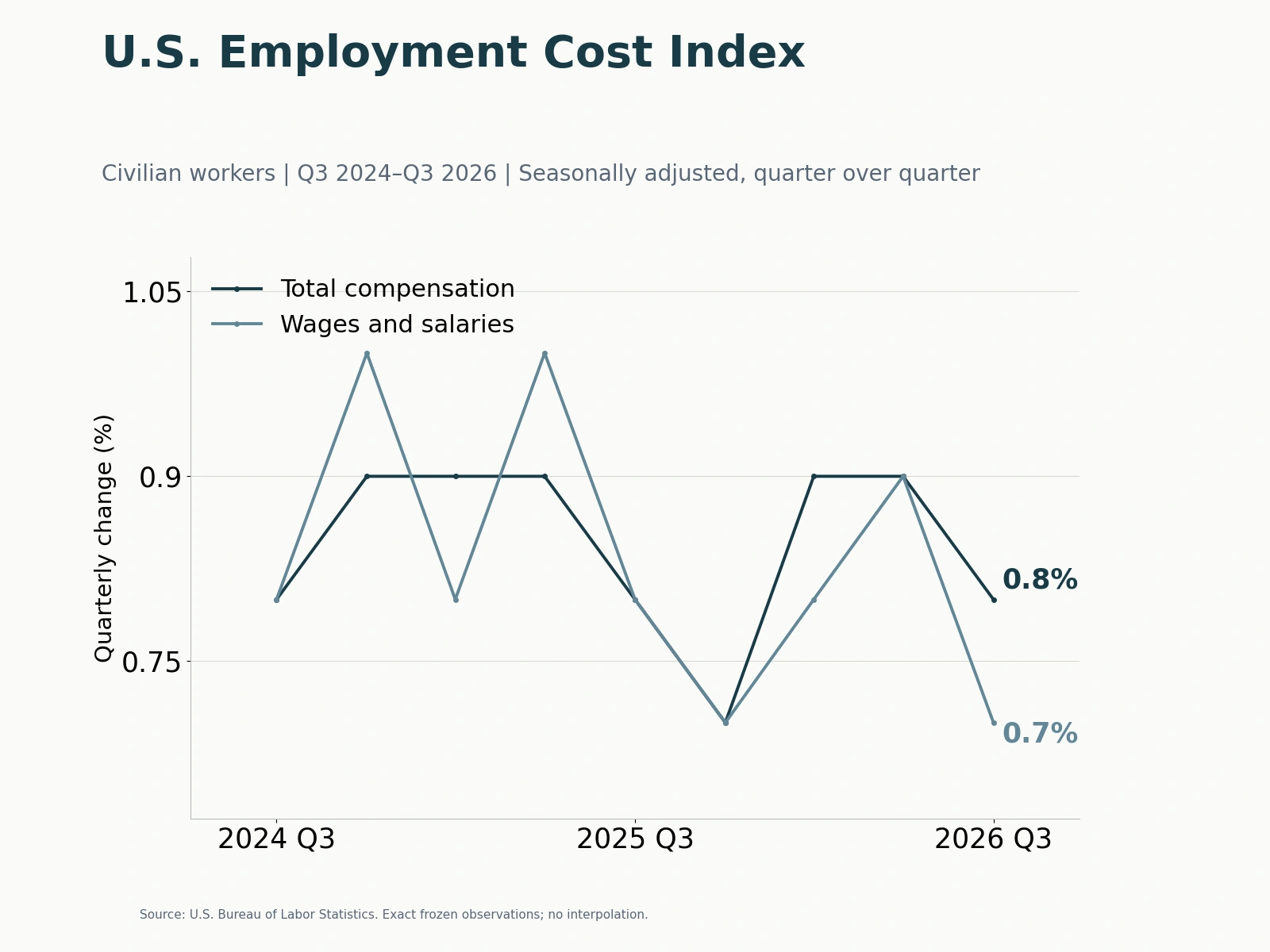
The third-quarter Employment Cost Index, released by the U.S. Bureau of Labor Statistics the same day, provided another piece of evidence in favor of gradual policy adjustment. On a seasonally adjusted basis, total compensation costs for civilian workers rose 0.8% from the previous quarter, down from 0.9% in the second quarter. Within that total, quarterly growth in wages and salaries slowed from 0.9% to 0.7%, while benefit costs rose 0.9%. On a non-seasonally adjusted basis, year-over-year growth in total compensation costs held at 3.4%. Wage growth slowed from 3.2% to 3.1% year over year, while growth in benefit costs accelerated from 3.8% to 3.9%.
Cooling wage growth gives the Fed more reason to maintain a gradual pace as it continues tightening. But still-firm benefit costs and the absence of a further decline in annual total compensation growth show that employers' labor cost pressures have yet to ease across the board. That also tempers the case for immediately accelerating rate increases, placing the pace and required scale of tightening more firmly at the center of the policy disagreement.
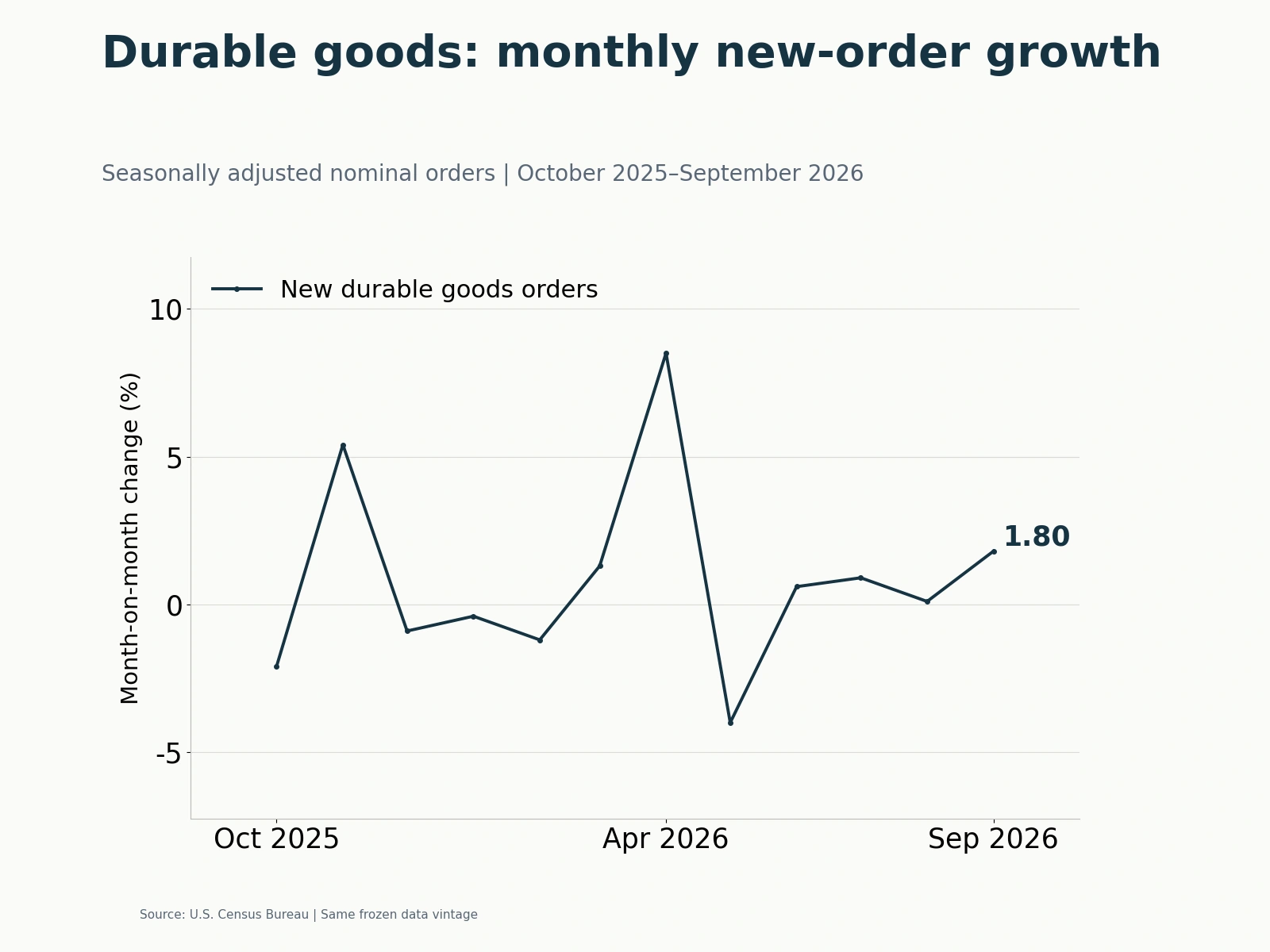
The next key tests include September's Job Openings and Labor Turnover Survey data on November 3, the preliminary third-quarter productivity and costs release on November 5, and the October employment report on November 6. If job openings, wages and productivity together show a further improvement in the balance between labor supply and demand, there will be more room for gradual policy adjustment. If employment remains solid while price pressures continue to spread, the case made by officials for further rate increases will strengthen.