On October 30, 2026, international oil prices rose more than 2%, settling at their highest levels since late April. An attack on a tanker in the Strait of Hormuz caused fears of disruption to Middle Eastern supply to outweigh hopes that diplomatic mediation would ease tensions. The central issue driving prices higher is whether crude can be shipped on time, rather than a sudden strengthening of global demand.
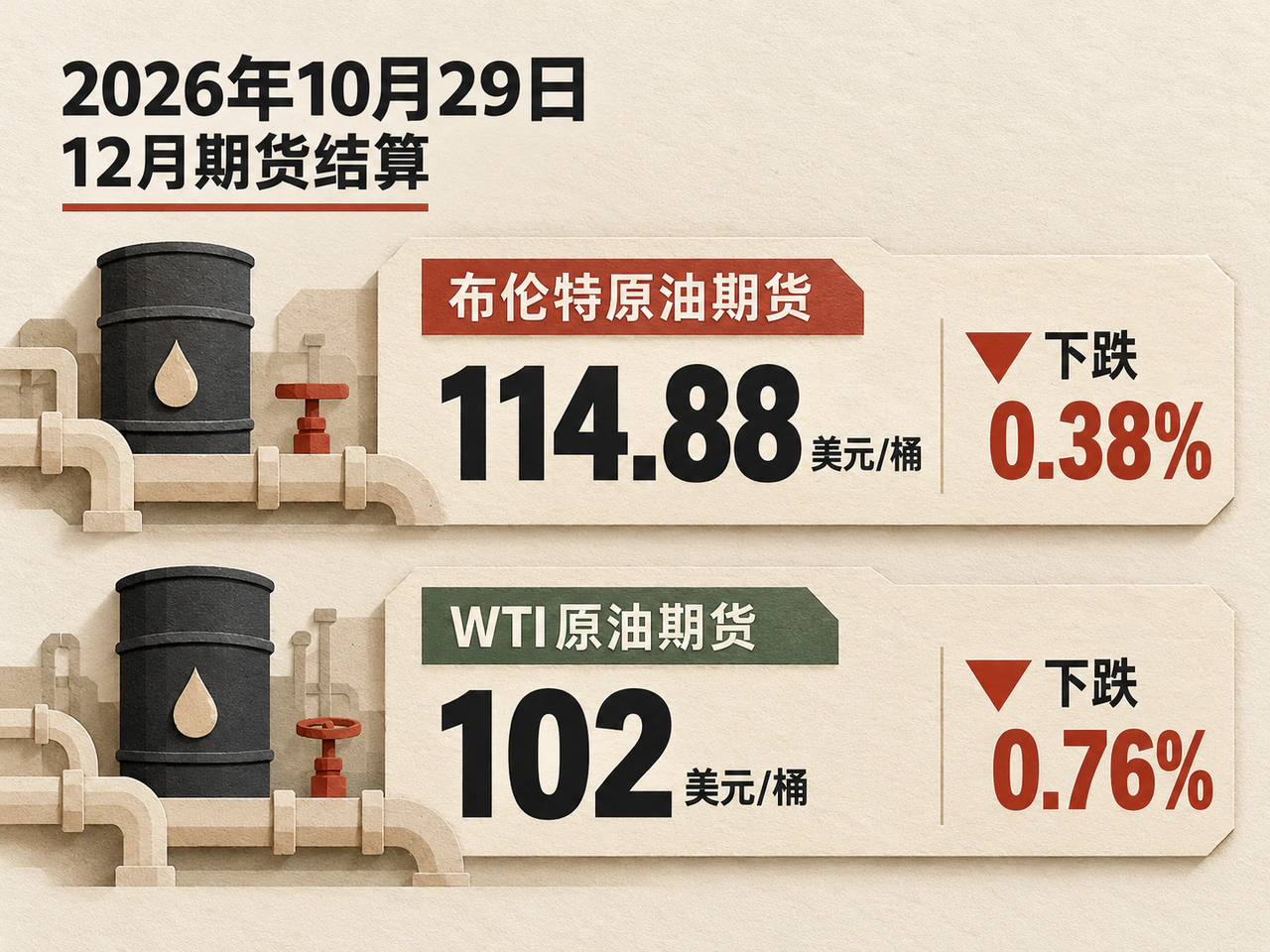
According to Reuters' market close report, the December Brent crude futures contract, which expired that day, rose $2.76, or 2.4%, to settle at $117.64 a barrel. The more actively traded January contract for the following year rose $2.63 to settle at $113.43 a barrel. WTI crude futures gained $2.12, or 2.08%, to settle at $104.12 a barrel. On the benchmark basis used in that report, Brent and WTI gained 13.6% and 15.2%, respectively, over October.
Brent's Front-Month Premium Reaches $4.21 as the Strait Attack Coincides with a Recovery in Saudi Exports
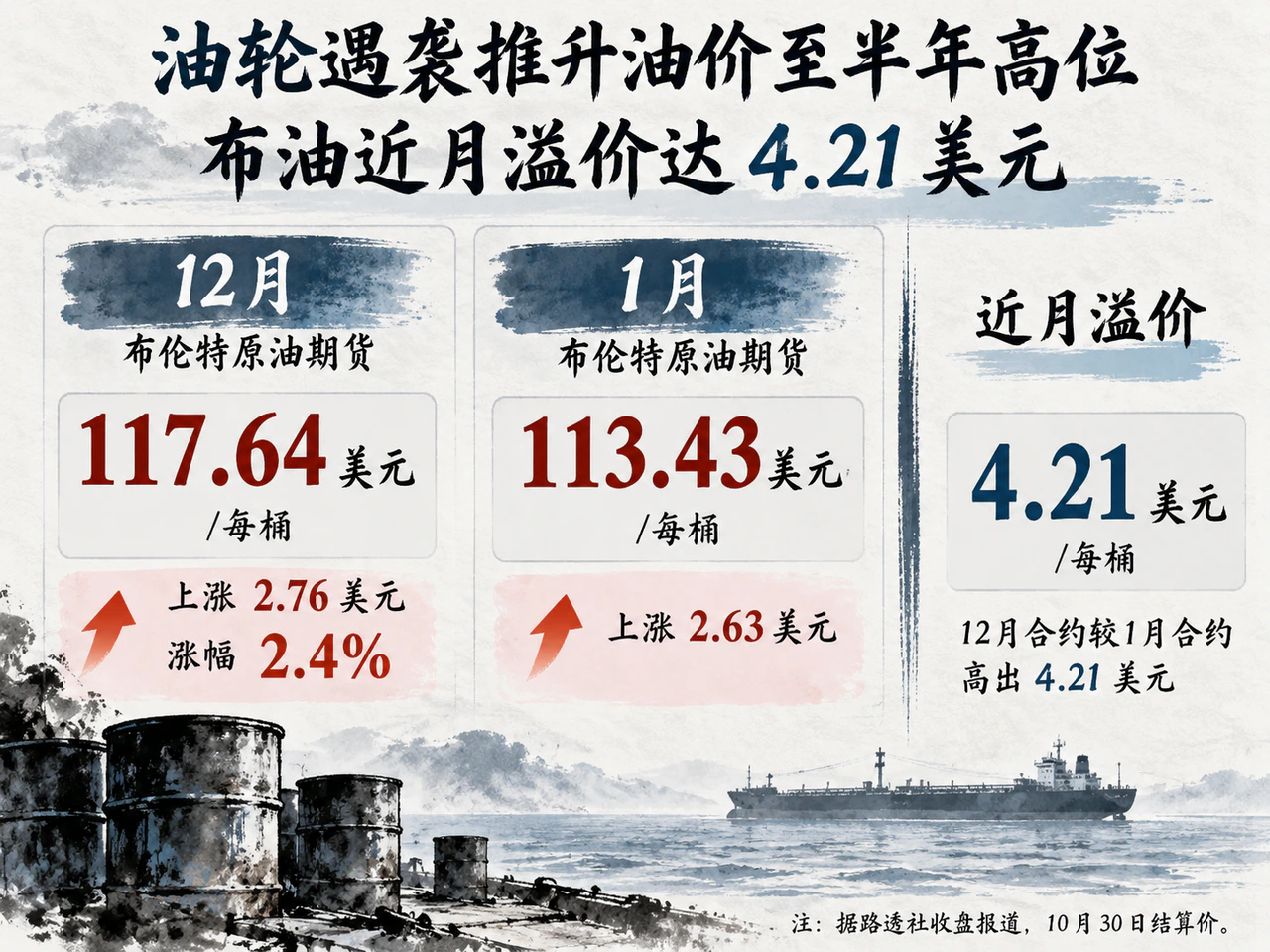
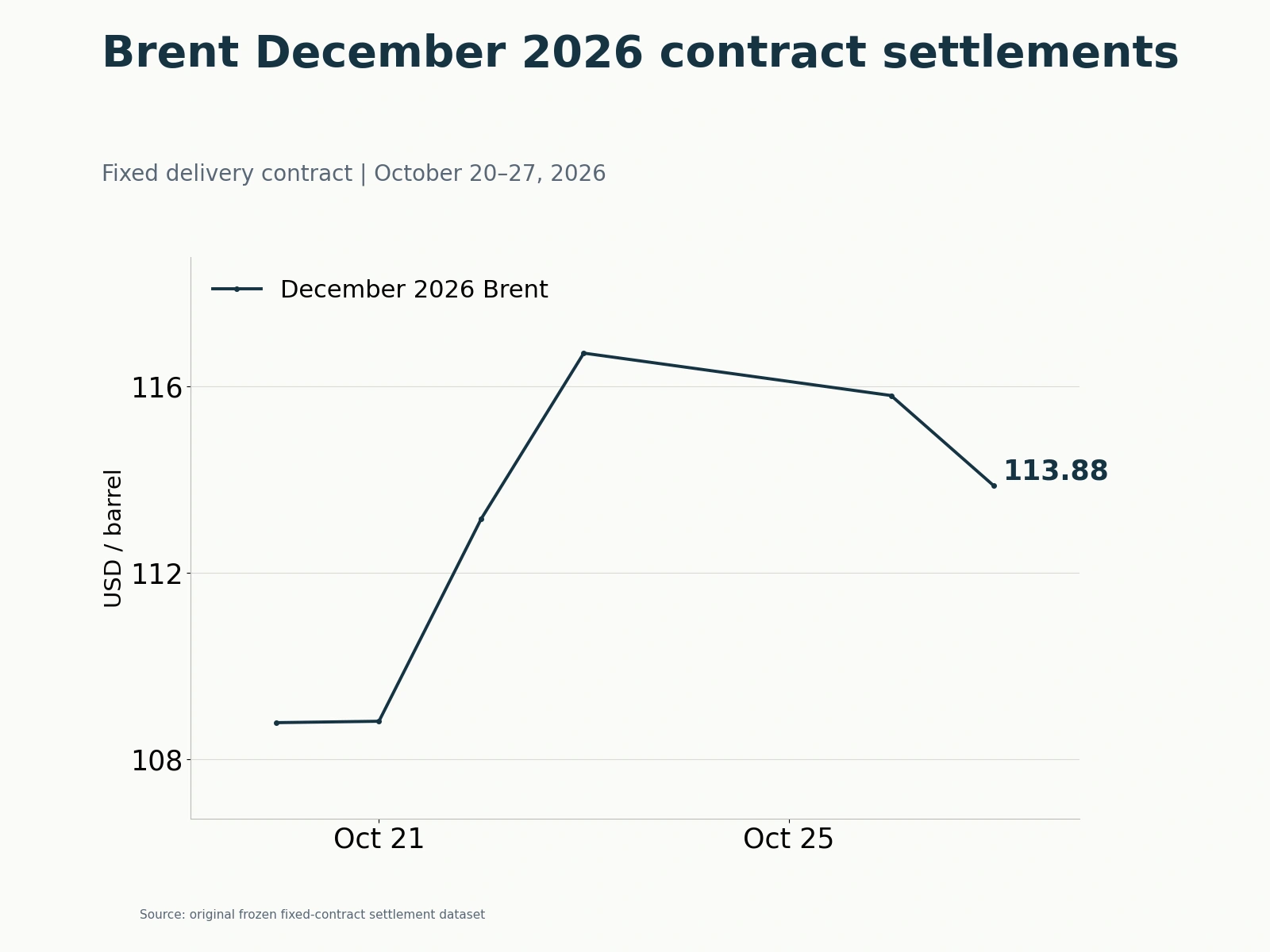
The settlement spread between December Brent and the following January contract reached $4.21 a barrel, marking pronounced backwardation, with the near-month contract priced above the deferred contract. Crude approaching delivery is more expensive than crude for later delivery, underscoring the value of prompt supplies and shipping schedules. Both contracts rose on the same day, showing that supply risk was not confined to the expiring December contract. Because December expired that day, the price displayed on a continuous futures quote may shift lower when it rolls to the cheaper January contract. Assessing this rally requires comparing the same contract's settlement prices across the two days, as well as the spread between near and deferred months. A price drop caused by the contract roll does not mean that supply pressures have eased.
The elevated front-month premium stems directly from an unexpected incident threatening Middle Eastern oil flows. According to reporting on October 30, the United Kingdom Maritime Trade Operations office disclosed that a tanker in the Strait of Hormuz had been attacked on October 29 with an explosive device attached by a small boat. Responsibility remained unclear. The strait is a critical waterway linking Gulf producers to international markets. Any deterioration in shipping security there will feed into delivery costs through freight rates, insurance and voyage scheduling.
Meanwhile, Yemen's Houthis claimed on Thursday to have attacked Saudi Arabia's Ras Tanura and Rabigh refineries and the Abqaiq facilities, while the Saudi-led coalition said it had intercepted a cruise missile. For oil prices, the key question is whether the facilities' actual operations and loading activities are disrupted. However, Reuters reported on the same day that two of three tanker-tracking firms assessed Saudi crude exports to have increased in October from September. The coexistence of attack risks and recovering exports has sustained a high risk premium without turning the supply picture into an unremittingly worsening shortage.
US Crude and Distillate Stocks Are Below Five-Year Averages, While a Gasoline Build Limits Demand-Driven Upside
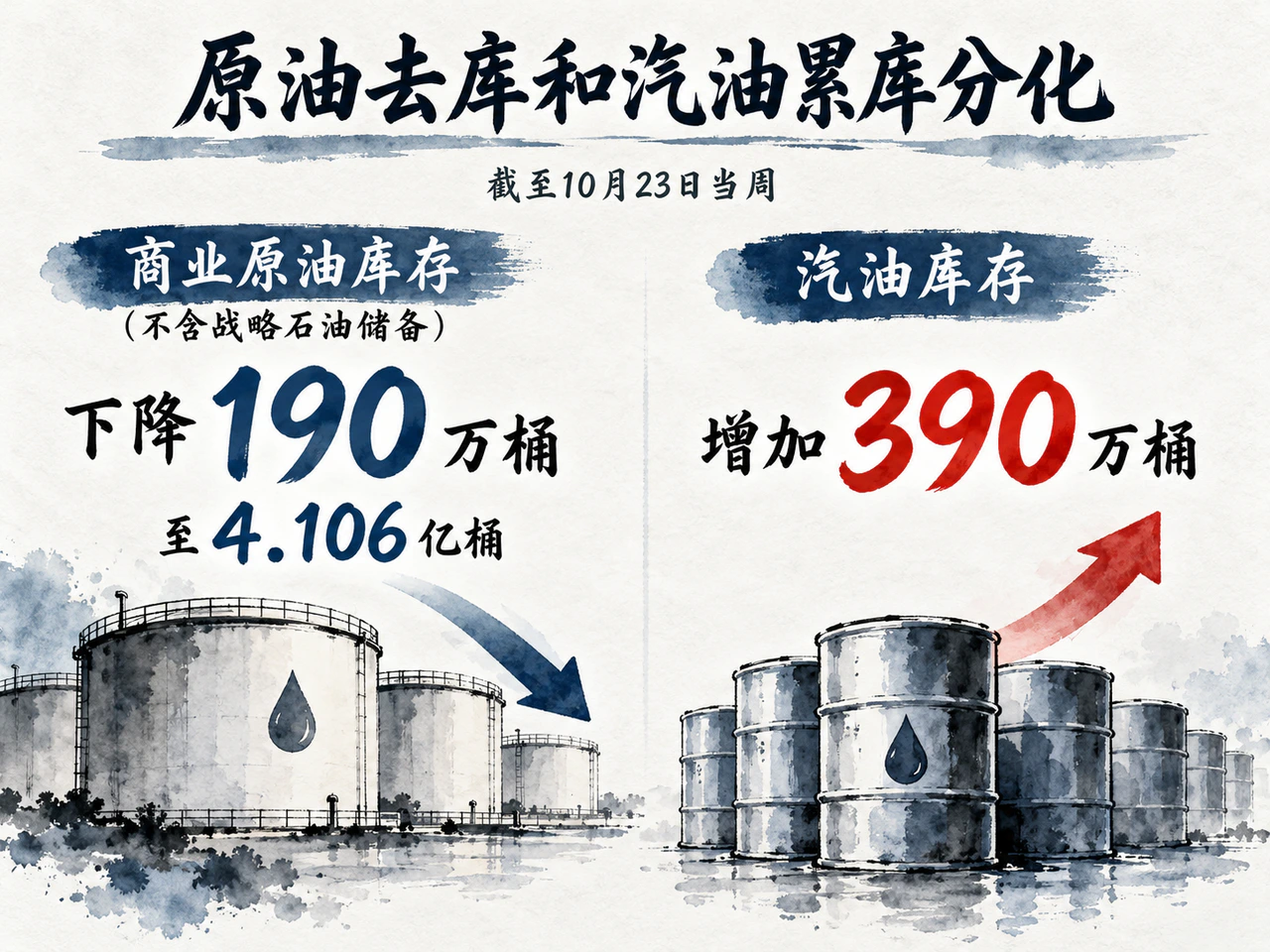
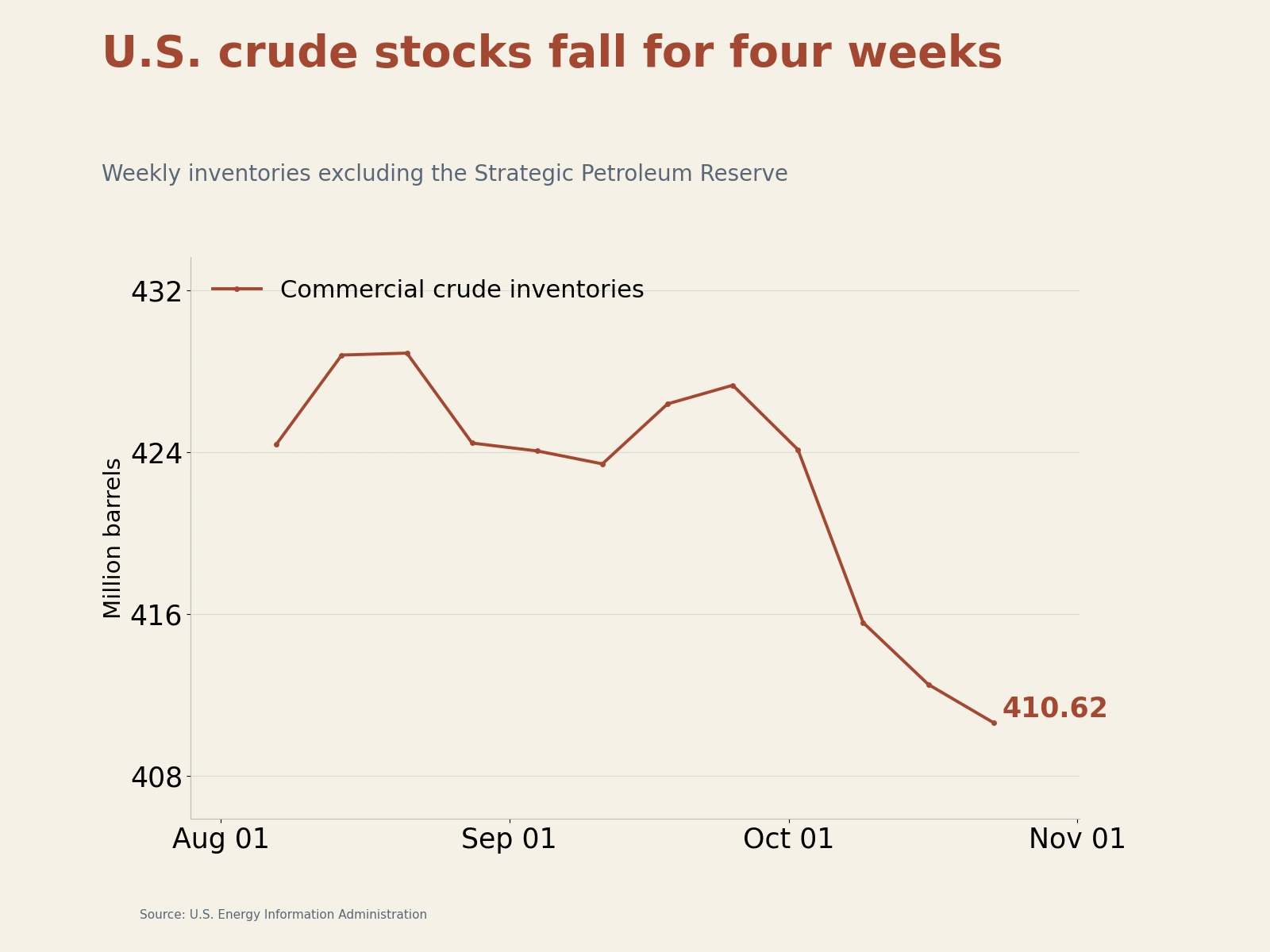
US inventory data provided a measure of fundamental support for oil prices. According to Rigzone's October 30 account of the US Energy Information Administration's latest weekly report, released on October 28, US commercial crude inventories excluding the Strategic Petroleum Reserve fell by about 1.9 million barrels to 410.6 million barrels in the week ended October 23, leaving them 4% below the five-year average for that time of year. Distillate inventories fell by 1.5 million barrels and stood 10% below their five-year average.
The picture within refined products was mixed, however. US gasoline inventories rose by 3.9 million barrels over the same week. Over the preceding four weeks, gasoline product supplied was down 0.7% from a year earlier, while distillate product supplied was down 0.6%. Refinery inputs averaged about 16.5 million barrels a day that week, with capacity utilization at 92.8%. Tight crude and diesel inventories lifted the price of prompt supplies, while the gasoline build and weak consumption indicators limited the scope for demand to drive prices further upward.
Other supply and demand information disclosed on Friday was also mixed. Citing the EIA's monthly report, Reuters said US crude production increased in August while demand for crude oil and petroleum products declined. The number of active US oil rigs also rose by two. On supply disruptions, Libya's National Oil Corporation said valves on the Hamada pipeline had been closed, interrupting flows of about 15,000 barrels a day. The incident added to localized risks, but its small scale was insufficient to explain the rise in global benchmark prices on its own.
US-Iran Diplomacy and the Approaching OPEC+ Meeting: Actual Oil Flows and Calendar Spreads Will Test the Risk Premium
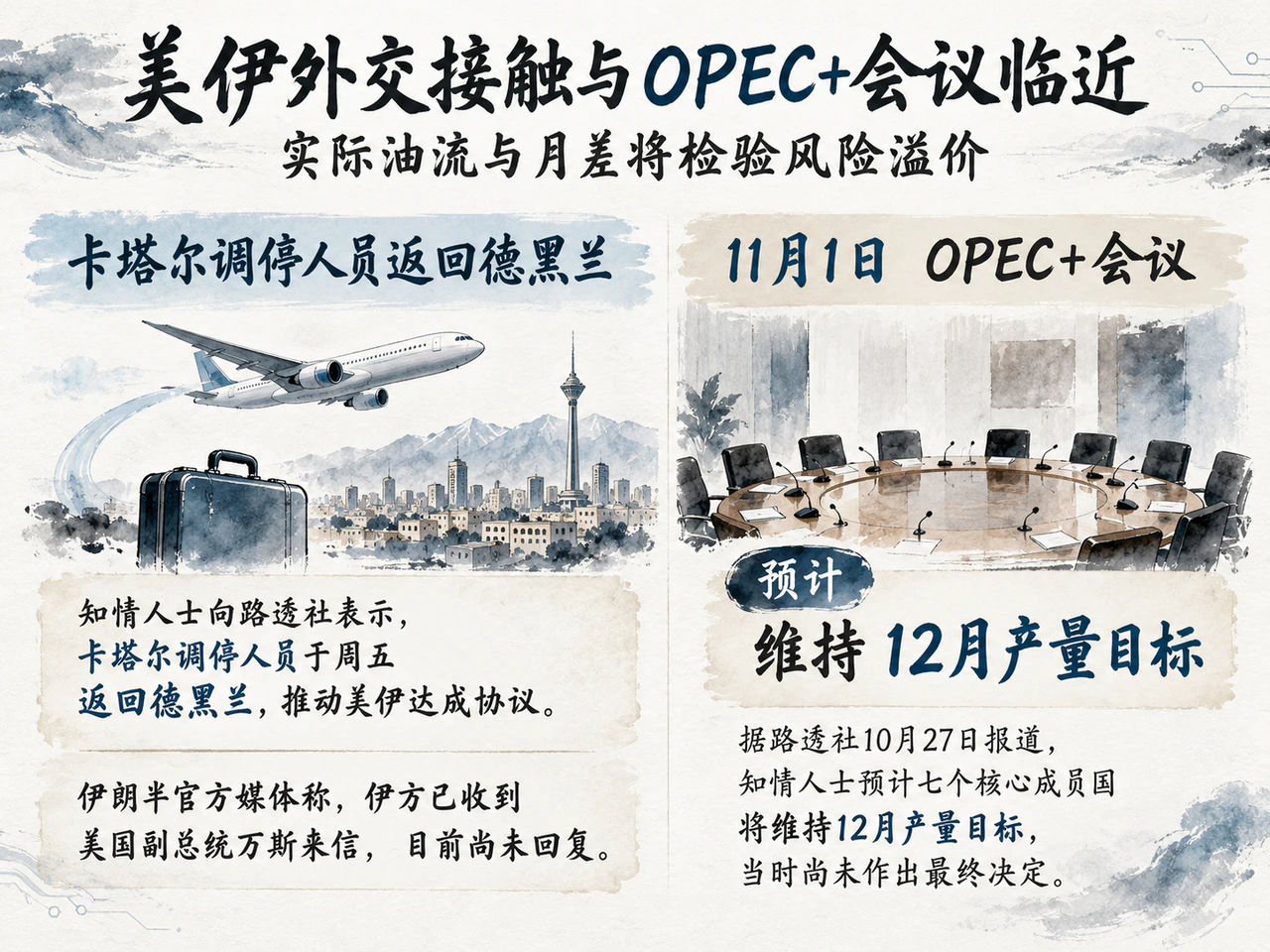
Diplomatic channels remain open on the other side of the geopolitical contest. People familiar with the matter told Reuters that Qatari mediators returned to Tehran on Friday to pursue an agreement between the United States and Iran. Iranian semi-official media said Iran had received a letter from US Vice President Vance but had not yet replied. Markets are therefore pricing in two possibilities at once: diplomatic talks could improve the outlook for shipping, or military escalation could push delivery costs higher still.
The OPEC+ meeting scheduled for November 1 is another important event to watch. According to an October 27 Reuters report, people familiar with the matter expected seven core members to keep their December production targets unchanged, although no final decision had been made at that point. For the current market, how much crude Gulf members can actually produce and export matters more than their quota targets.
Looking ahead, four concrete signals will determine whether the current front-month premium can persist. First, a continued recovery in voyages through the Strait of Hormuz and Saudi loadings would weaken the support that transport constraints provide to oil prices. Second, a sustained narrowing of adjacent-month Brent spreads after the contract roll would signal less pressure on timely delivery. Third, continued draws in US crude and distillate stocks, without a further increase in the gasoline build, would make fundamental support more solid. Fourth, diplomatic arrangements would need to translate into practical measures to secure shipping and restore supply before there is a basis for the risk premium to decline further.