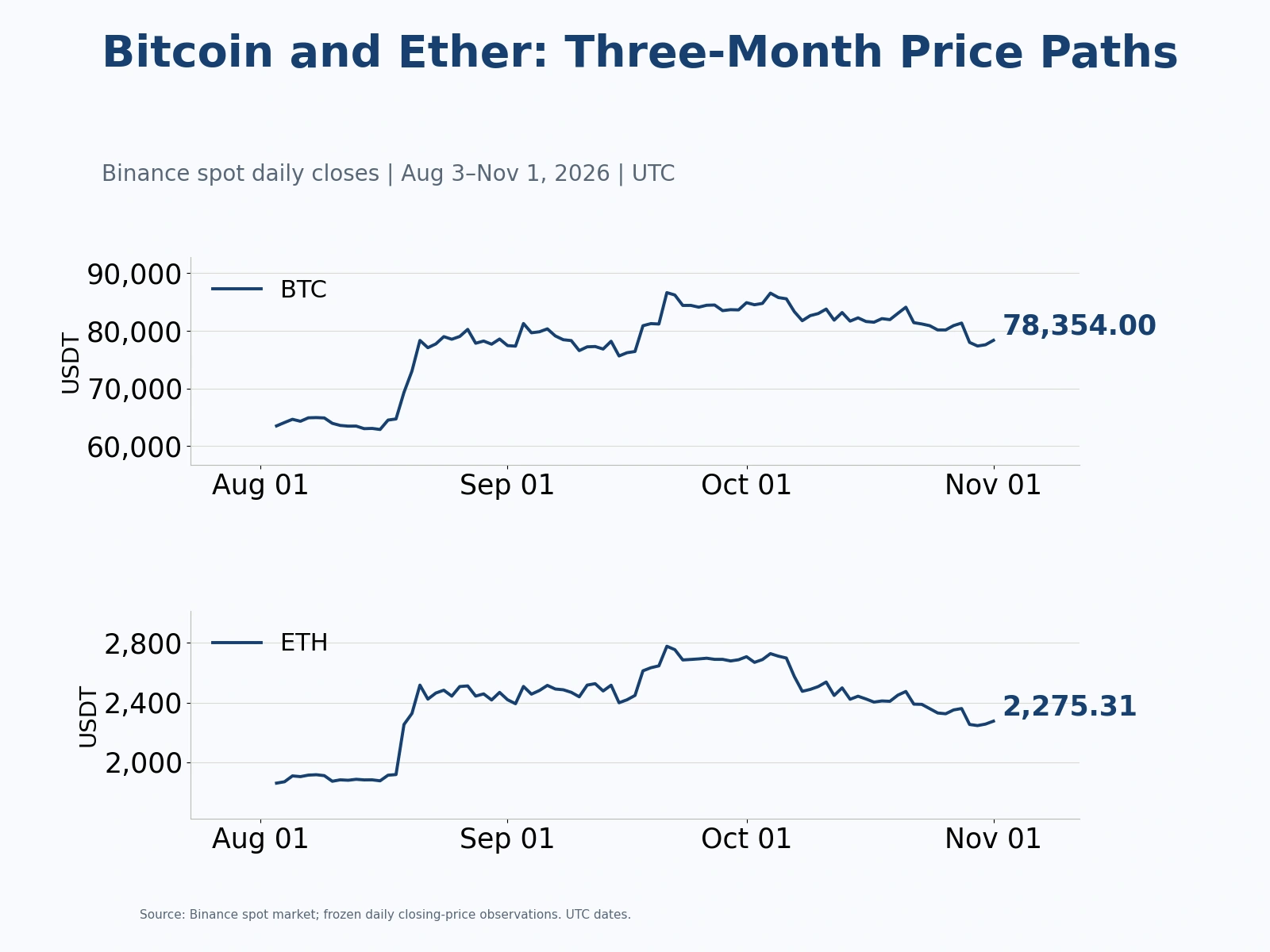
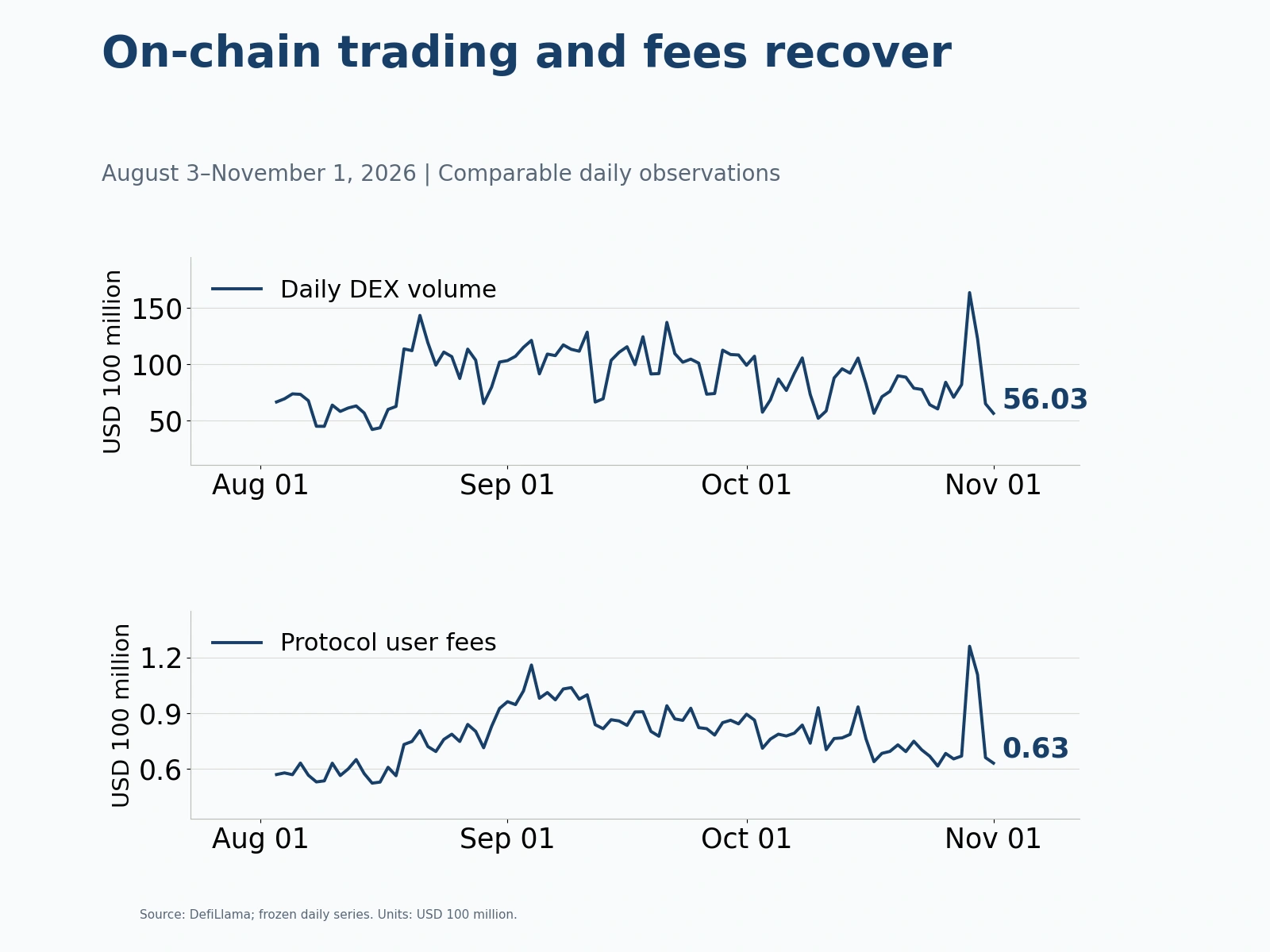
On October 30, 2026, U.S. spot Bitcoin ETFs recorded net outflows of $643.2 million in a single day, wiping out the $440.8 million of cumulative net inflows over the preceding four trading days. From October 26 to 30, Bitcoin ETFs posted net outflows of $202.4 million and U.S. spot Ethereum ETFs lost $431.4 million, bringing combined net outflows to $633.8 million. Funding pressure was concentrated on the final trading day before the weekend.
The two assets did not turn at the same time. Bitcoin still attracted additional allocations early in the week, while Ethereum saw net outflows for five consecutive trading days. In derivatives, BTC perpetual futures funding rates remained positive, while ETH rates weakened. Together with a contraction in stablecoin supply, this left the week's funding picture marked by weaker spot buying support and persistent futures exposure.
Four days of Bitcoin ETF inflows erased; Ethereum redemptions continue for five days

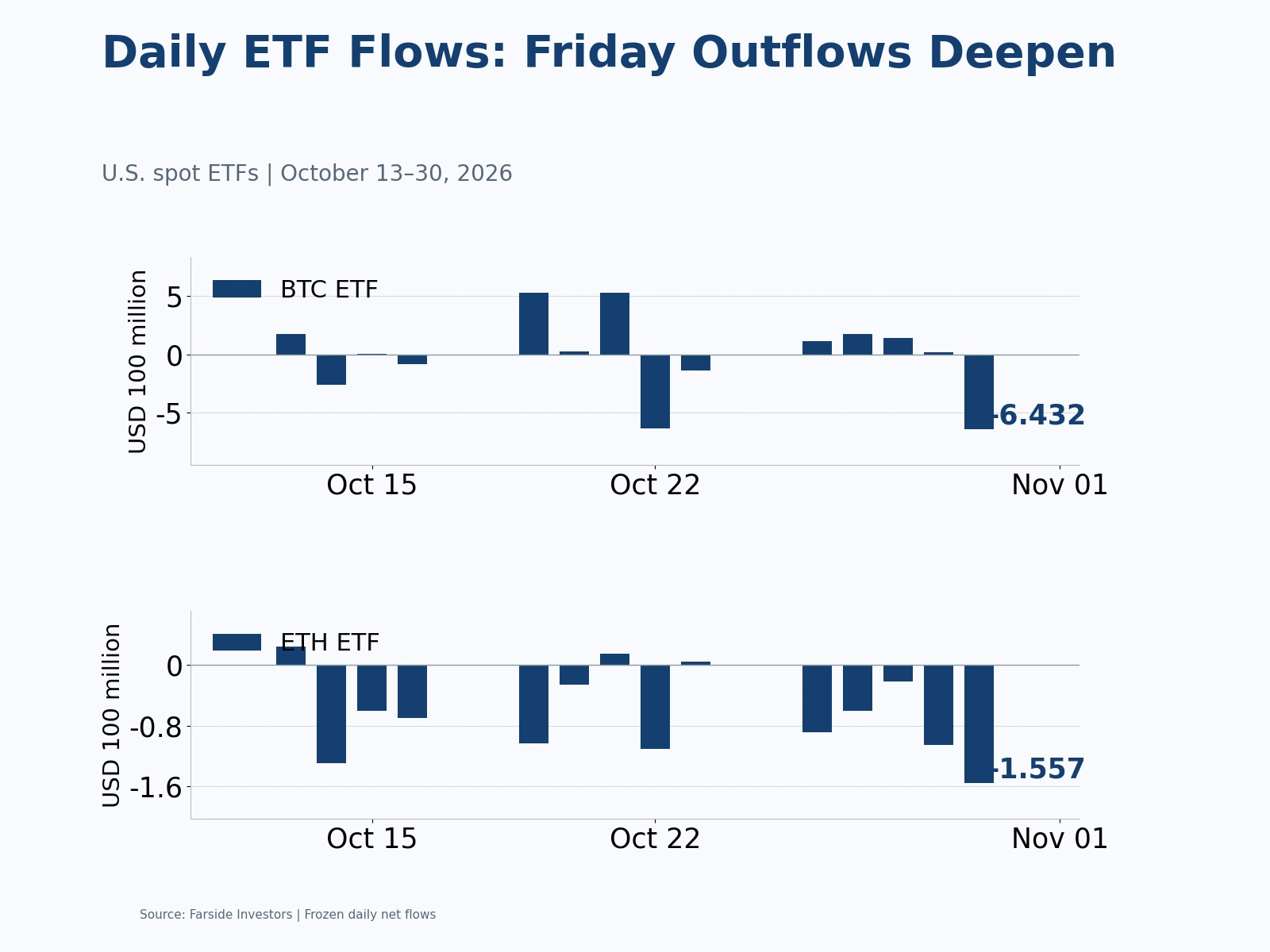
Daily figures from Farside Investors show Bitcoin ETF net inflows of $110.3 million, $176.0 million and $137.3 million from Monday through Wednesday, followed by another $17.2 million on Thursday, for a four-day total of $440.8 million. Friday's $643.2 million net outflow was 1.46 times those inflows. Focusing only on the consecutive inflows early in the week would overstate the stability of allocation demand.
Friday's redemptions spanned several major issuers: BlackRock's IBIT lost $233.7 million, Fidelity's FBTC $201.0 million and ARKB $129.5 million, while BITB and GBTC saw outflows of $25.7 million and $53.3 million, respectively. The withdrawals were broader than an isolated adjustment in a single product.
Full-week results nevertheless differed across products. Supported by inflows early in the week, IBIT finished with net inflows of $176.9 million, while FBTC posted net outflows of $166.0 million. Even as aggregate Bitcoin ETF flows turned negative, flows continued to diverge among the largest products. ETF creations and redemptions reflect only net demand at the product level; assessing the investor base and the motives behind those flows requires holdings disclosures.
Ethereum's redemptions were more persistent. Net outflows over the five trading days were $88.6 million, $60.2 million, $21.4 million, $105.5 million and $155.7 million, with Friday recording the week's largest daily withdrawal. ETHA lost $391.1 million over the week. Inflows into FETH during the first four days left it with weekly net inflows of $63.1 million, but these were insufficient to offset redemptions elsewhere.
In the preceding week, October 19–23, Bitcoin ETFs attracted net inflows of $301.2 million, while Ethereum ETFs lost $220.7 million. This week, Bitcoin flows shifted from positive to negative and Ethereum redemptions nearly doubled. A relative preference for Bitcoin gave way to pressure on both major categories of spot ETF, with the constraints on Ethereum allocations more pronounced.
Stablecoin supply shrinks by about $4 billion in six days; BTC perpetual open interest rises 1.7%

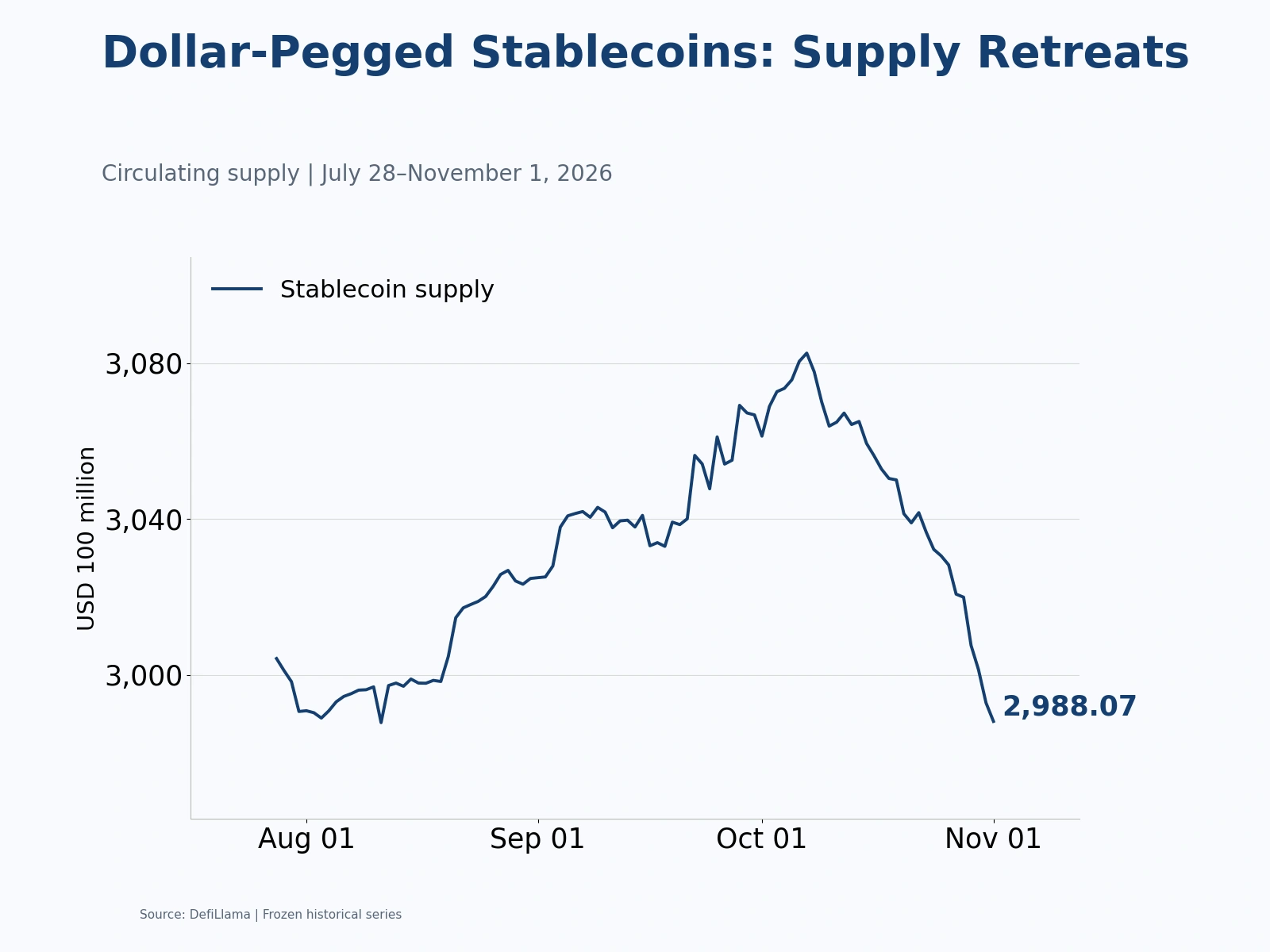
The supply of on-chain dollar funding also contracted. DefiLlama's historical series shows the circulating supply of dollar-pegged stablecoins falling from $302.822 billion at 00:00 UTC on October 26 to $298.807 billion at 00:00 UTC on November 1, a decline of about $4.02 billion, or approximately 1.33%, in six days.
Stablecoins serve several purposes, including trade settlement, collateral, payments and cash management. A decline in circulation reduces the stock of on-chain dollars supporting these activities. Alongside concurrent net ETF redemptions, this tightens the funding conditions for additional spot demand. Whether a subsequent rebound can attract sustained buying will depend on whether stablecoin supply stabilizes and ETF inflows spread beyond the largest products.
Derivatives signals were mixed. For Binance's BTCUSDT perpetual contract, all 21 funding settlements this week were positive, averaging about 0.00805% per eight hours, above the preceding week's roughly 0.00579%. Longs continued to pay shorts, with rates remaining positive through the weekend.
For ETHUSDT, eight of the 21 settlements over the same period were negative. The average rate was approximately 0.00211%, down from about 0.00486% in the preceding week. Ethereum longs' reduced willingness to pay funding was consistent with persistent spot ETF redemptions. The widening BTC–ETH funding-rate gap reflected divergent demand for leverage on the same venue.
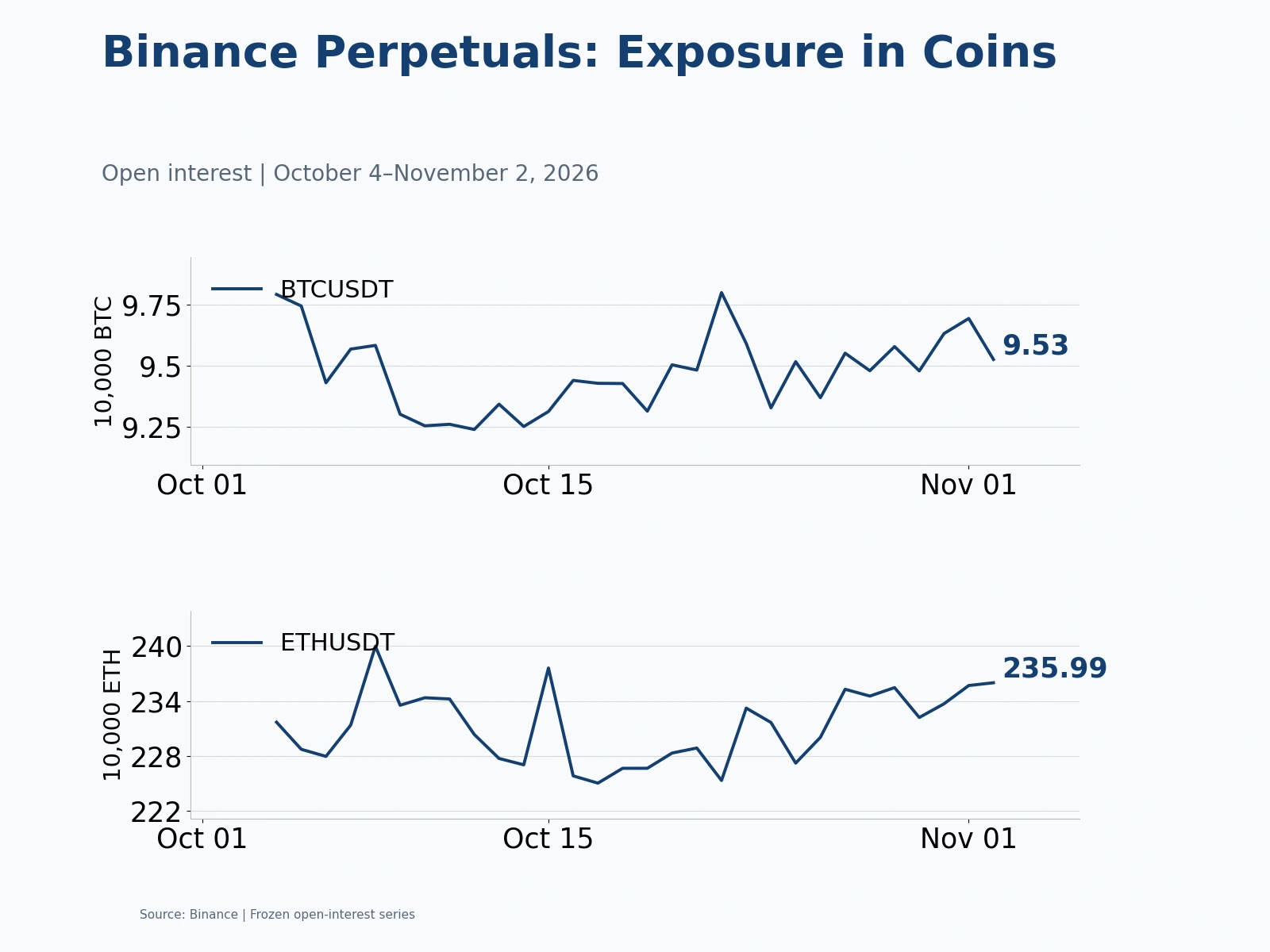
Open-interest data also show why a decline in BTC's dollar notional value does not necessarily mean a reduction in futures exposure. From 00:00 UTC on October 26 to 00:00 UTC on November 2, Binance BTCUSDT open interest rose from 93,700 BTC to 95,300 BTC, an increase of about 1.7%, while its dollar notional value fell from $7.505 billion to $7.460 billion. ETHUSDT open interest rose from 2.3004 million ETH to 2.3599 million ETH, an increase of about 2.59%. Because dollar notional values are affected by price, this measure alone is insufficient to assess changes in futures exposure.
The central feature of this week's funding picture was weaker spot buying support without a reduction in futures exposure. Bitcoin's positive funding rates indicated that longs remained willing to bear funding costs, while rising open interest showed no clear withdrawal of leveraged capital. Ethereum, meanwhile, faced more persistent ETF redemptions and weaker willingness to pay for futures exposure. If prices alone recover in the next trading week, without an improvement in ETF subscriptions or stablecoin supply, the funding foundation of that rebound will still need to be tested.
Click “Read the original” for full details.