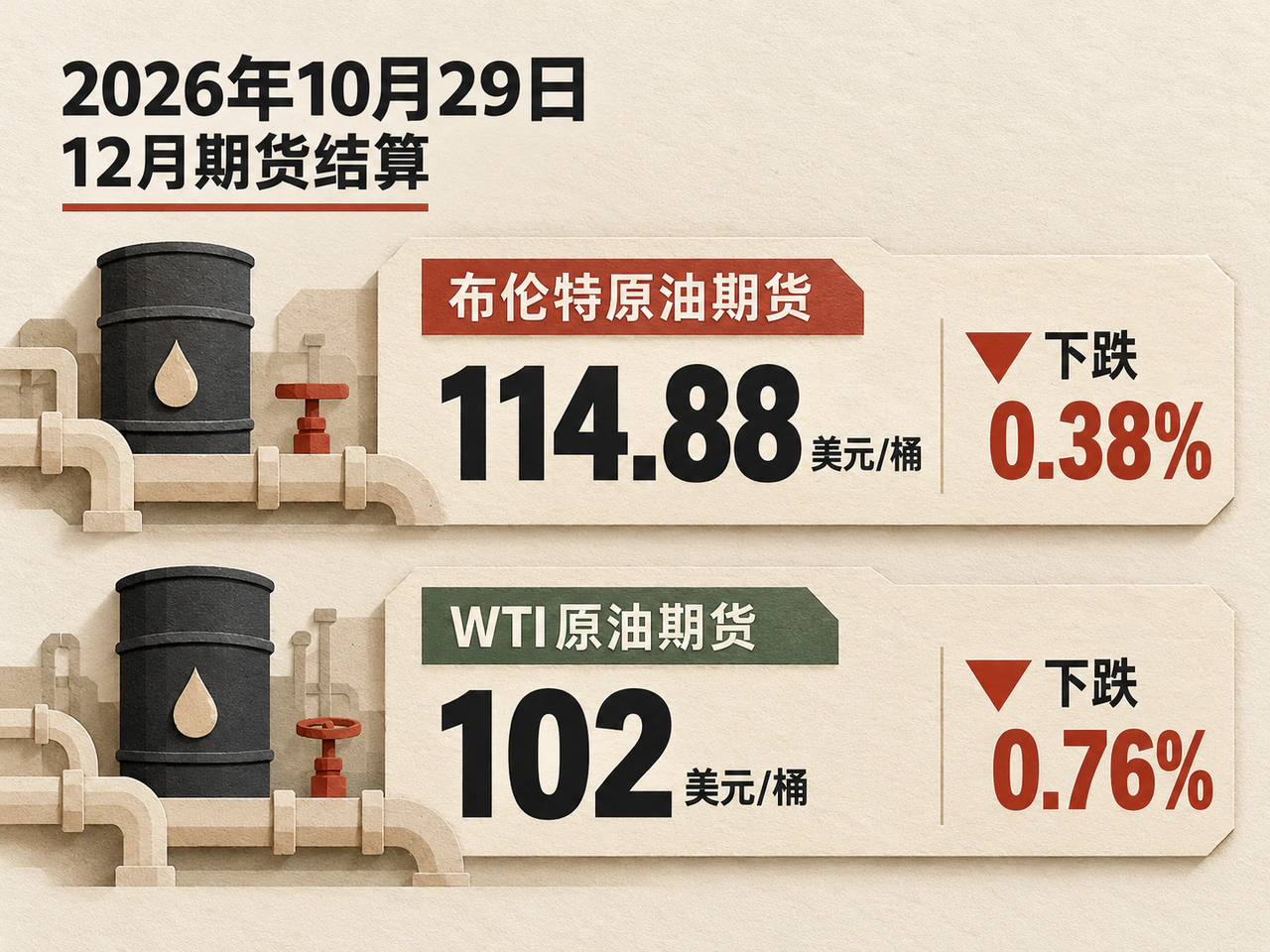
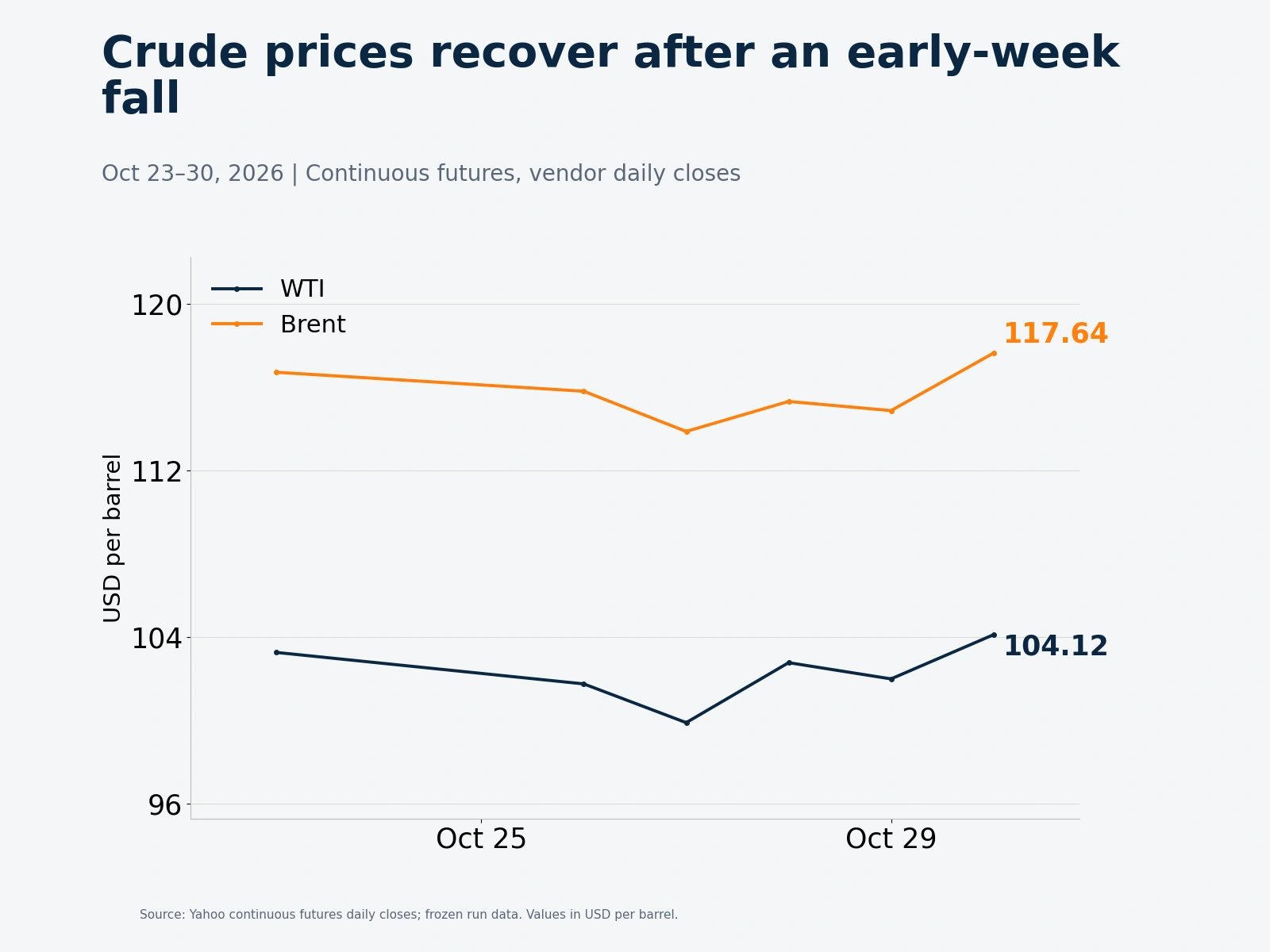
International oil prices fell and then recovered during October 26–30, ending the week modestly higher. On November 1, seven OPEC+ members added to the supply-policy picture with a decision on December production. Based on Yahoo's daily closing prices for continuous futures contracts, WTI rose from $103.27 a barrel on the previous Friday to $104.12, a weekly gain of 0.82%; Brent advanced from $116.72 to $117.64, up 0.79%. Hopes for a diplomatic easing reduced the risk premium early in the week, before falling US inventories and an attack on a vessel in the Gulf brought supply security back to the center of pricing.
WTI and Brent fell to $99.90 and $113.88 a barrel, respectively, on Tuesday, then both recovered to their highest daily closes of the week before the weekend. With oil prices elevated, the market continued to weigh competing forces: transport and delivery risks supported near-term crude, while signals from demand and recovering supply restrained the appetite to chase prices higher.
Hormuz tanker attack sustains a premium for near-term delivery

From the start of the week through midweek, expectations of diplomatic easing and supply risks took turns influencing prices. PFL's reports during the week identified hopes for diplomatic easing as an important backdrop to price declines on Monday, Tuesday and Thursday; reports of attacks on Saudi energy facilities and fears of a potential military escalation, meanwhile, supported prices in the middle of the week. On Friday, the United Kingdom Maritime Trade Operations office reported that small boats had approached a tanker in the Strait of Hormuz and that an explosive device had been placed on the vessel. The attackers' identities were unclear at the time. This gave shipping-security concerns a more concrete event to price in.
Transport risks extend beyond the volume of oil produced. Whether vessels can leave port safely, insurance and freight costs, and uncertainty over delivery times all affect what refiners pay to secure feedstock. The Houthis claimed attacks on Saudi refineries and production facilities, reinforcing perceptions of risk. At the same time, Reuters reported that two of three ship-tracking companies estimated Saudi crude exports had increased in October from September. Rising export estimates alongside security incidents help explain why oil remained expensive but posted only a limited weekly gain.
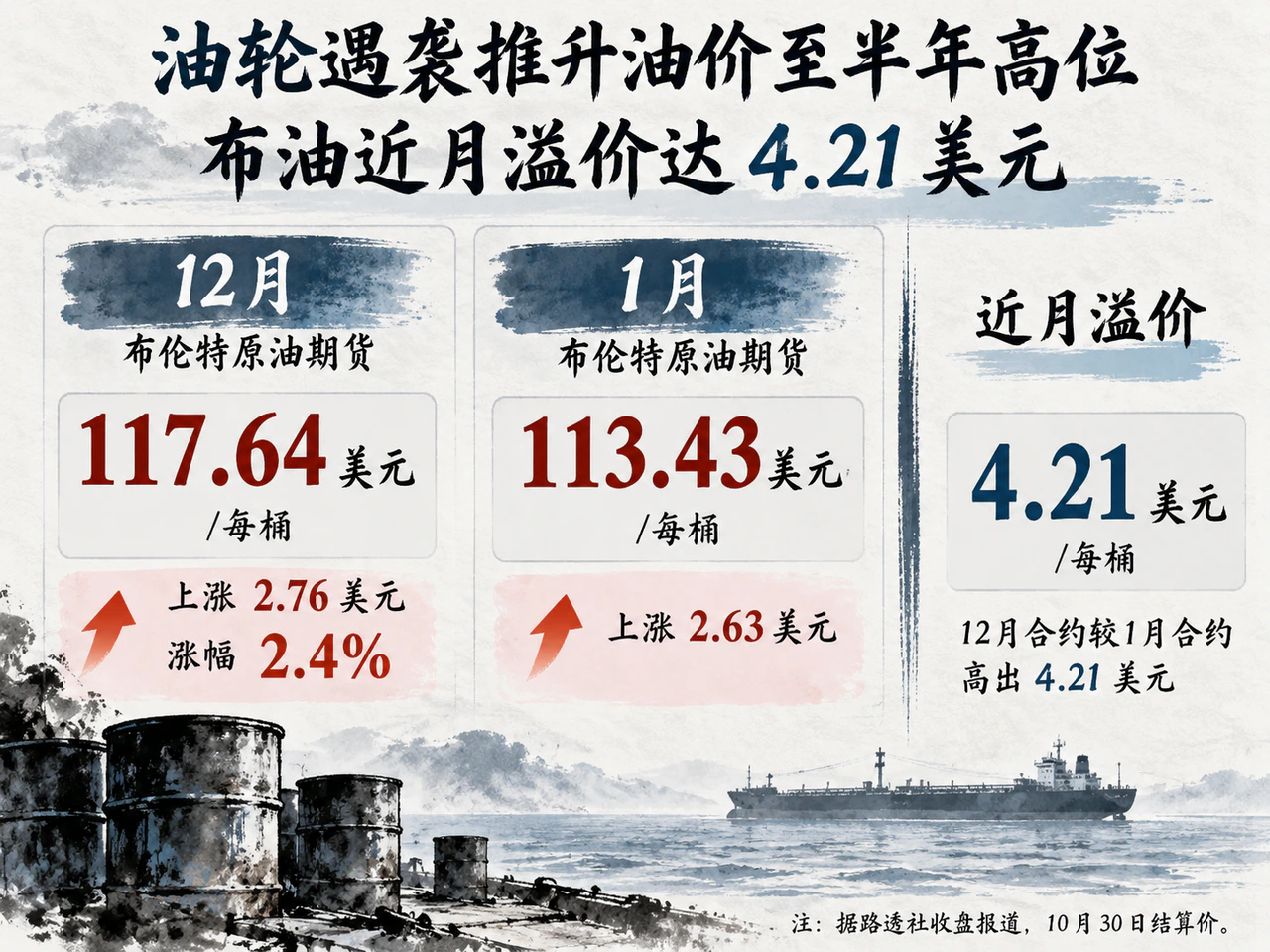
The futures curve also showed a higher price for near-term delivery. Reuters reported that the December Brent contract, which expired on October 30, settled at $117.64, while the more actively traded January contract stood at $113.43, a difference of $4.21. A higher front-month price than a later-month price is backwardation, reflecting the relative expense of immediate delivery. Expiry can also amplify differences between contracts. In November, watching the new front-month contract and its spread to the following month will be more informative than directly comparing continuous quotes across the contract roll.
US crude and distillate stocks fall as end demand remains weak
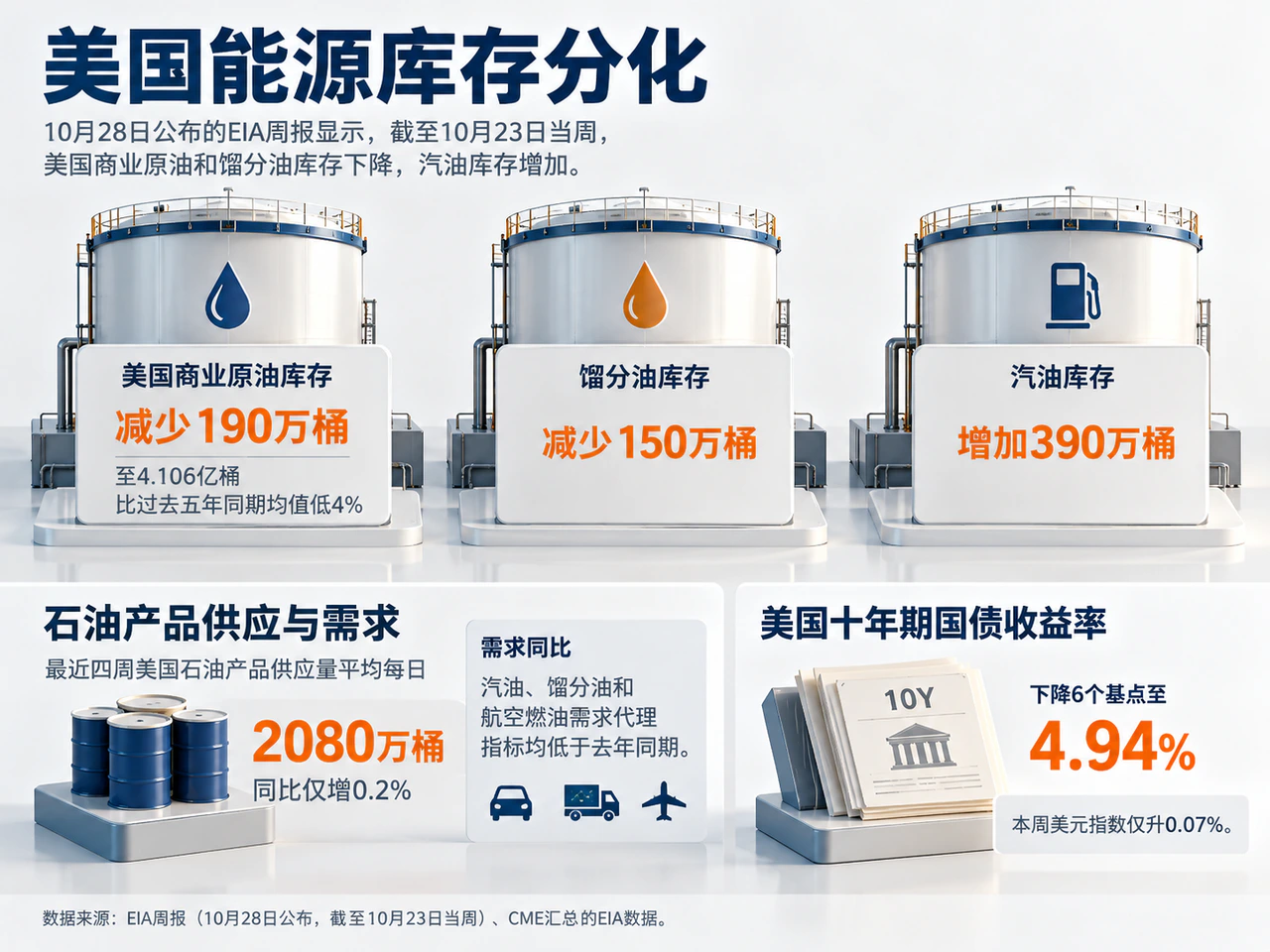
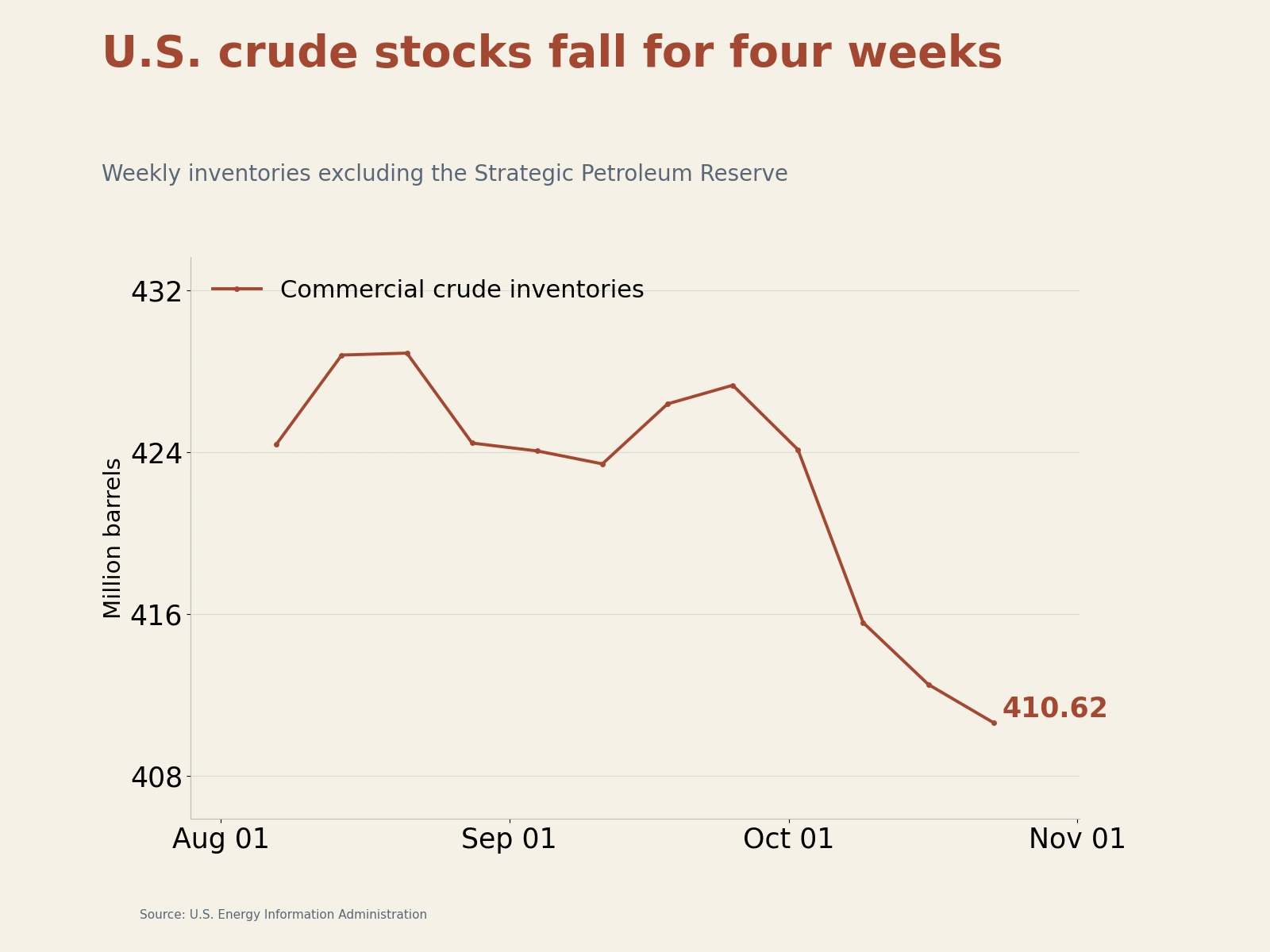
The EIA's weekly report, released on October 28, showed that US commercial crude inventories fell by 1.9 million barrels to 410.6 million barrels in the week ended October 23, leaving them 4% below the five-year average for that time of year. Distillate stocks fell by 1.5 million barrels, while gasoline inventories rose by 3.9 million barrels. Tight crude and distillate inventories provided fundamental support for the midweek price rebound.
The inventory draw coincided with higher exports. The EIA estimated that crude exports rose to 4.85 million barrels a day, up 1.4 million barrels a day from the previous week. Reuters cited a Kpler analyst as saying that the loadings the company tracked were about 1 million barrels a day below the EIA figure. Subsequent data will be needed to confirm the scale of the shift in US crude flows toward overseas buyers; export revisions and refinery operations will also help explain the single-week inventory draw.
End demand did not provide matching support. EIA data compiled by CME showed that US petroleum products supplied averaged 20.8 million barrels a day over the latest four weeks, up just 0.2% from a year earlier. Demand proxies for gasoline, distillate and jet fuel were all below their year-earlier levels. Low crude inventories coexisted with limited growth in end demand. After supply disruptions lift prices, consumers' ability to absorb those prices still affects the durability of the rally.
Financial conditions offered little directional guidance for oil this week. The US Dollar Index rose just 0.07%, while the 10-year US Treasury yield fell 6 basis points to 4.94%. With little weekly movement in the dollar, oil's turning points tracked shifts in supply news and diplomatic expectations more closely.
OPEC+ holds December production requirements steady; actual exports remain to be tested

On November 1, seven OPEC+ members, including Saudi Arabia and Russia, decided to maintain December required production at the levels corresponding to September and scheduled their next meeting for November 29. The announcement came after Friday's close and provided clarity on December supply policy. Near-term oil prices will still depend on how much of the production targets translates into actual exports, and whether that crude can reach buyers smoothly.
Four signals now matter most. Vessel security in Hormuz and actual Saudi loadings will determine whether supply risks ease. Brent's front-month spread after the contract roll will test whether the premium for immediate delivery persists. Subsequent revisions to US crude exports and inventories will clarify the strength of the drawdown. Four-week demand trends for gasoline and distillate will show whether high prices continue to suppress consumption. If shipping recovers, the front-month premium narrows and demand weakens at the same time, support for elevated oil prices will diminish. If the recovery in exports suffers another setback, low inventories will amplify the price impact of supply events.