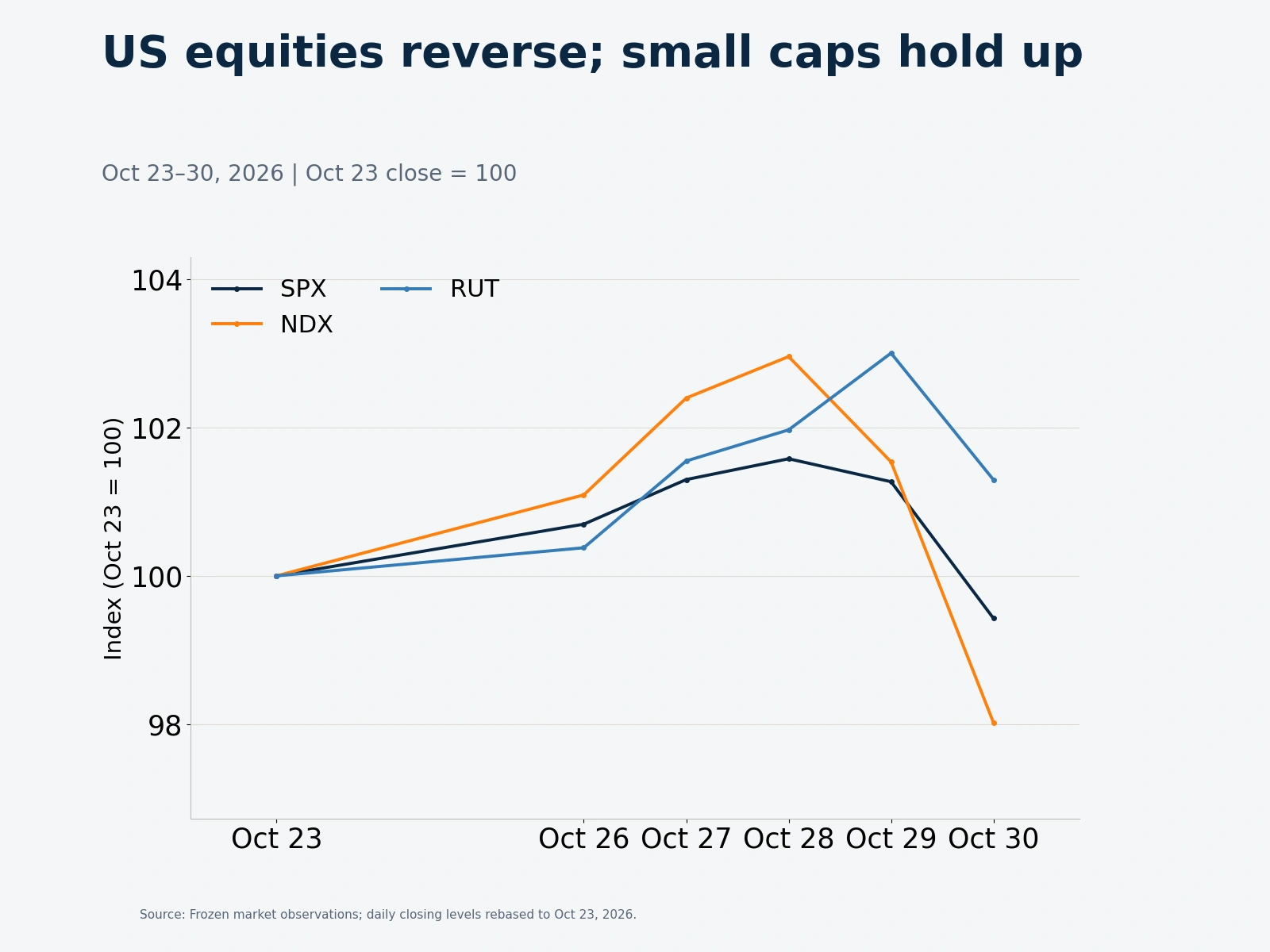
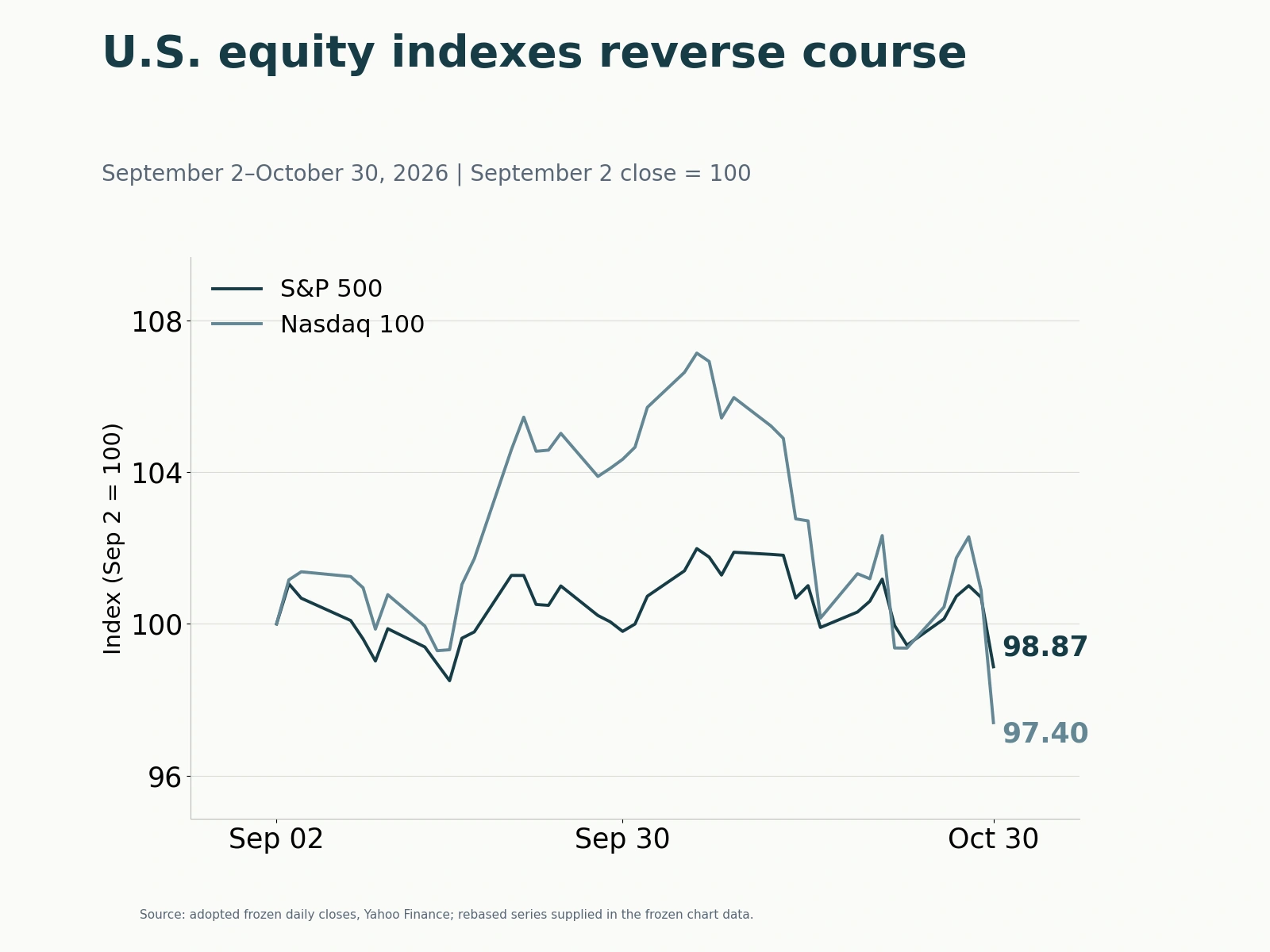
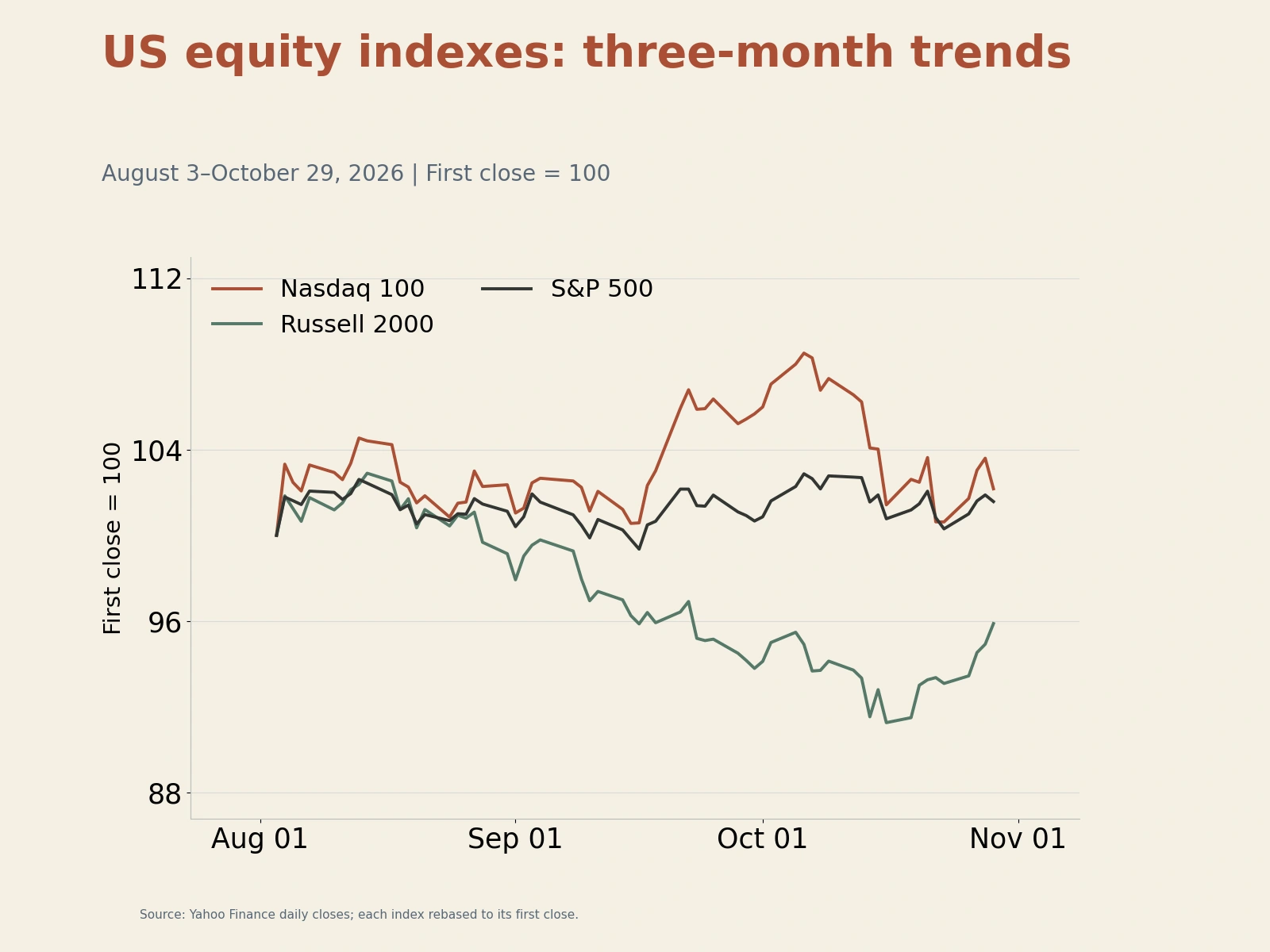
On November 2, 2026, news of diplomatic mediation in the Middle East sent Brent crude futures settlements down 7.63%, U.S. manufacturing expanded at a faster pace in October, and U.S. stocks surrendered their early gains, producing a pronounced divergence across asset markets. Lower oil prices eased inflation concerns and cost pressures on downstream industries, helping push the 10-year Treasury yield lower, while spot gold rebounded from the earlier liquidity-driven selloff. Strong manufacturing output, however, supported a further rise in the 2-year Treasury yield. In equities, large financing deals and acquisitions tied to AI infrastructure prompted investors to reassess returns on capital spending. Technology heavyweights led the market lower: the Nasdaq 100 fell 1.39% and the S&P 500 lost 0.51%, while the Dow Jones Industrial Average bucked the decline to gain 0.41%.
U.S. October manufacturing PMI rises to 55.5, supporting short-term rates as narrowing inflation compensation lowers long-term yields
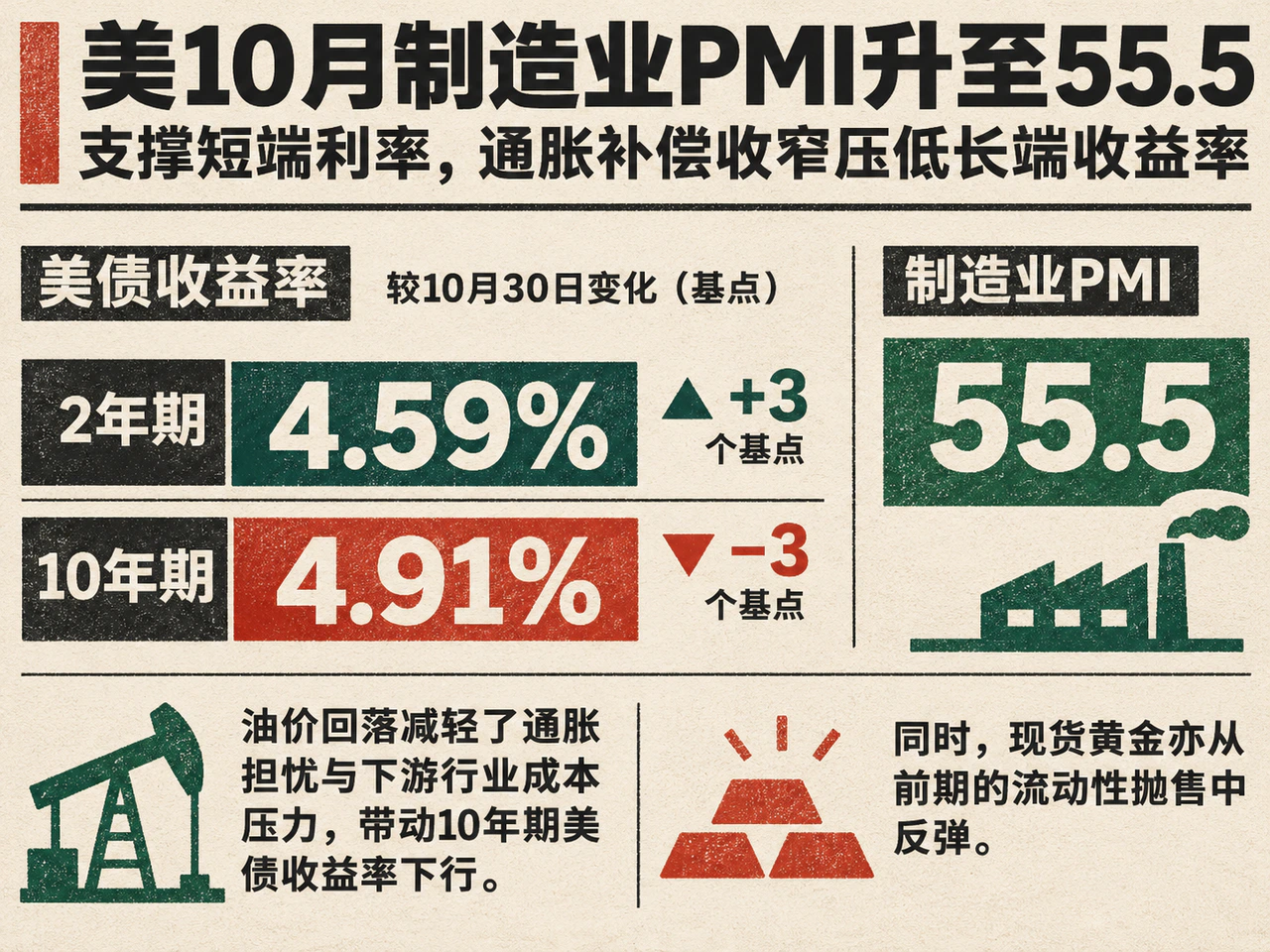
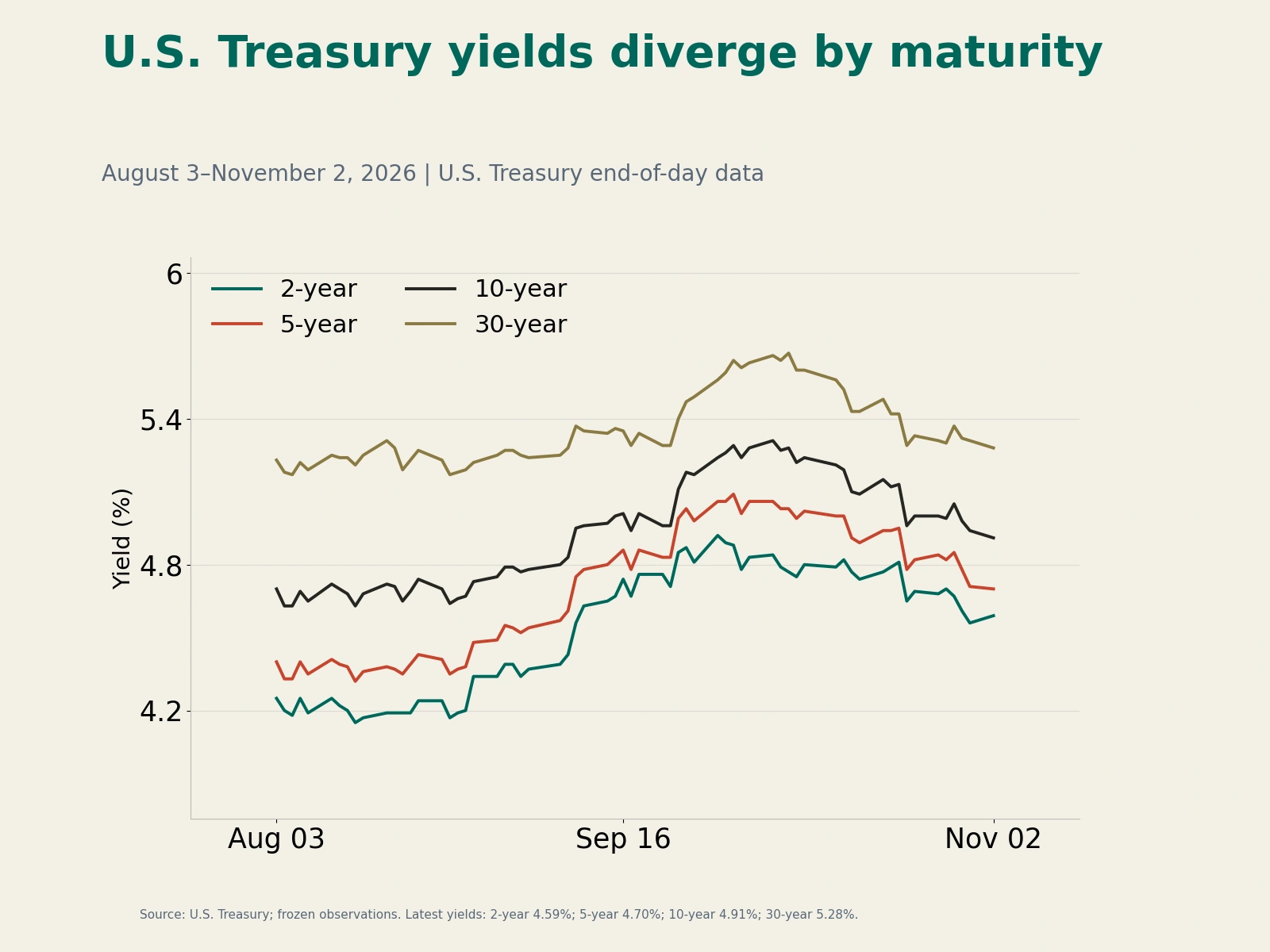
The U.S. Treasury's end-of-day yield curve showed a flattening on November 2. The 2-year Treasury yield rose 3 basis points from October 30 to 4.59%; the 5-year yield fell 1 basis point to 4.70%; and the 10-year and 30-year yields each declined 3 basis points, to 4.91% and 5.28%, respectively. The spread between 10-year and 2-year Treasury yields narrowed from 38 basis points to 32 basis points.
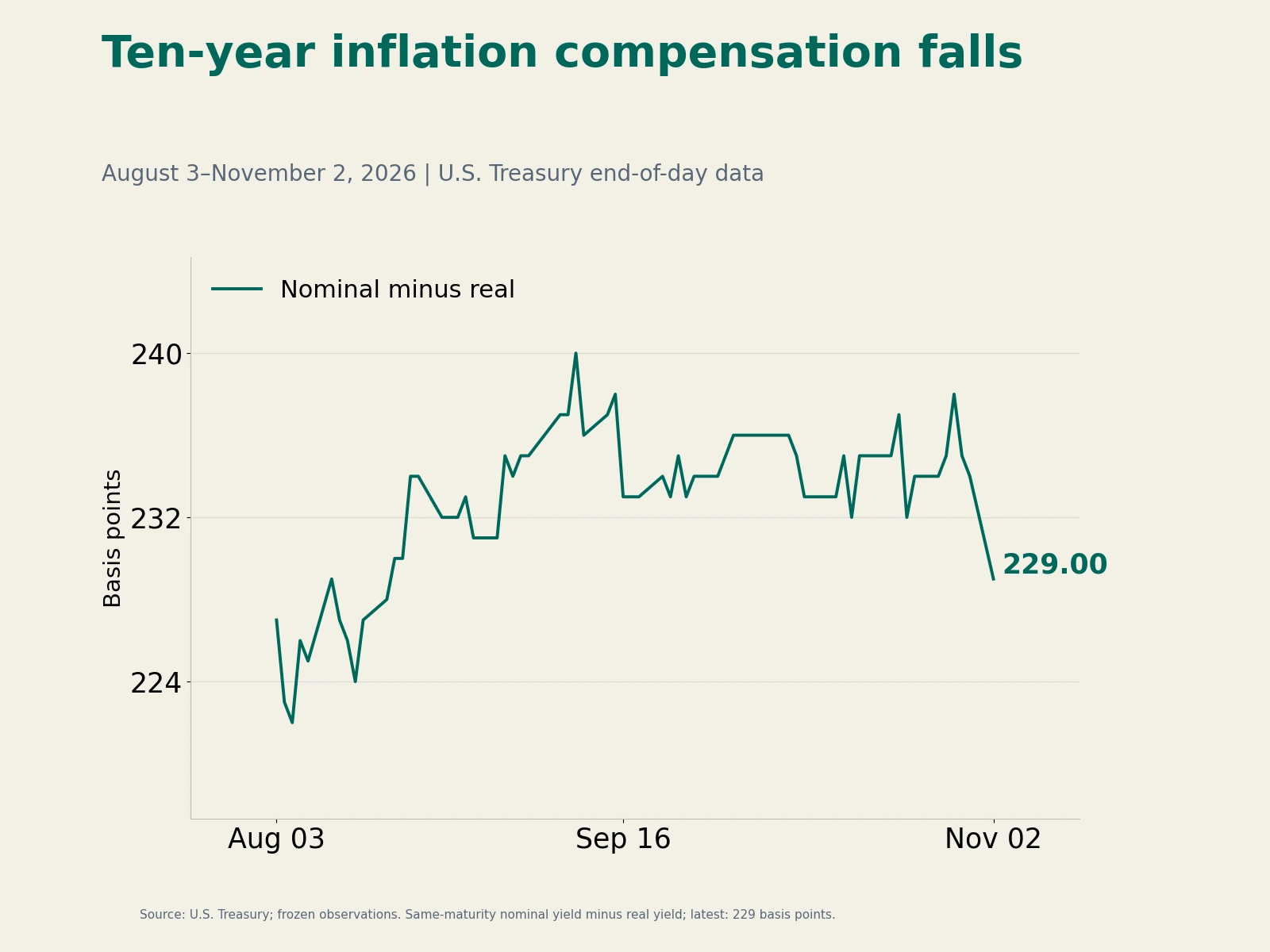
Real yields continued to rise even as long-term nominal yields fell. The 10-year Treasury real yield increased from 2.60% to 2.62%, and the 5-year real yield rose from 2.25% to 2.31%. The gap between nominal and real yields of the same maturity, which reflects a combination of inflation expectations, risk compensation and liquidity factors, narrowed substantially: from 234 to 229 basis points at the 10-year maturity and from 246 to 239 basis points at the 5-year maturity. This offset the upward pressure that rising real yields exerted on nominal yields.
Resilient activity data were the main factor supporting higher short-term rates and real yields. The October U.S. ISM Manufacturing PMI, released that day, rose from 54.5 to 55.5, exceeding the market forecast of 54.6 and again approaching July's high of 55.6. Among its components, the production index jumped from 56.7 to 59.0 and the new orders index increased from 55.3 to 55.5. The customers' inventories index remained low at just 41.6, while manufacturers' raw-material inventories index recovered from 48.6 to 51.4. Rising orders, low inventories at customers and active restocking by manufacturers together supported the outlook for production.
The supply-chain and price components illustrated the cost constraints accompanying the expansion in output. Although the ISM prices index fell from 77.9 to 75.2, indicating that purchasing-cost increases had become less widespread, it remained well above the 50 threshold. The supplier deliveries index stood at 59.1, indicating that deliveries continued to slow. Surveyed machinery manufacturers reported strong demand from data centers and infrastructure, while some businesses said semiconductor and defense orders were straining delivery capacity. Transportation equipment manufacturers, meanwhile, said higher prices were discouraging some customers from making purchases.
Employment showed only modest improvement compared with the strength of output and capital spending, with the October ISM manufacturing employment index edging down from 52.7 to 52.4. In its November 2 economic commentary, the U.S. Treasury cited previously released data showing that real U.S. GDP grew at an annualized rate of 3.4% in the third quarter and business fixed investment increased 12.7%, while nonfarm payrolls rose by an average of just 51,000 a month over the same period. The marked divergence between corporate capital spending and hiring has put the October nonfarm payrolls report, due November 6, in focus. Whether employment and hours worked can keep pace with expanding production will directly affect how strongly economic growth feeds through to household income and consumption.
Treasury trims fourth-quarter net borrowing estimate to $618 billion as dollar credit spreads widen
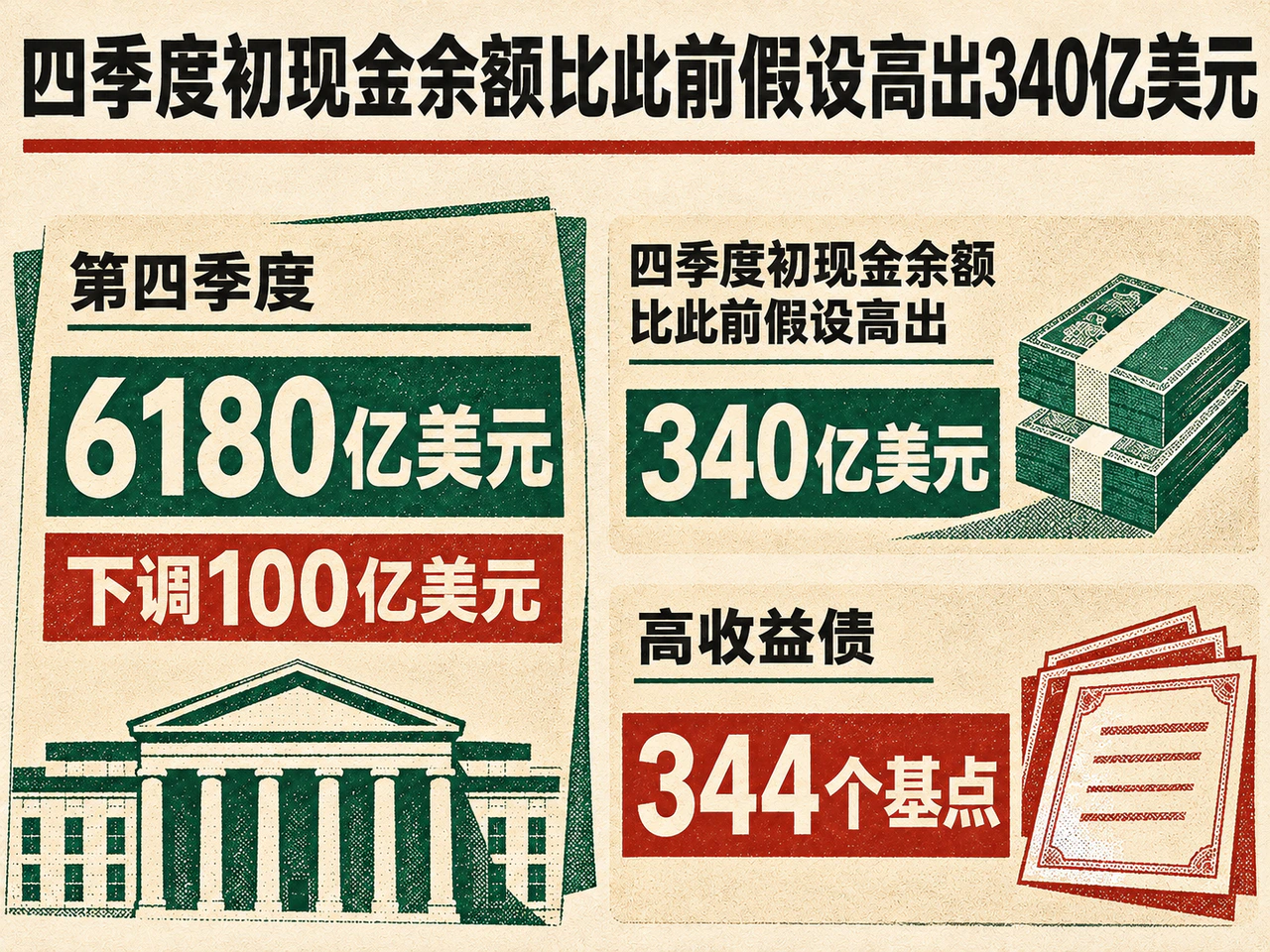
On the supply side, the U.S. Treasury projected $618 billion of privately held net marketable borrowing in the fourth quarter of 2026, $10 billion less than its August estimate, while leaving its assumed year-end cash balance unchanged at $850 billion. The reduction mainly reflected a cash balance at the start of the fourth quarter that was $34 billion higher than previously assumed. Excluding that change in the opening cash buffer, borrowing requirements actually increased by $24 billion. The Treasury also projected $800 billion of net borrowing in the first quarter of 2027, assuming a quarter-end cash balance of $1 trillion. Markets are awaiting the quarterly refunding details scheduled for 8:30 a.m. Eastern Time on November 4, particularly the allocation of issuance between short-term Treasury bills and medium- and long-term coupon securities, to assess the duration supply that investors will need to absorb.
Widening credit spreads also constrained corporate financing costs in the secondary market. ICE BofA index data updated on November 2, with an observation date of October 30, showed the U.S. investment-grade corporate bond option-adjusted spread (OAS) at 94 basis points, up 5 basis points from the previous trading day and 8 basis points from October 28. The high-yield bond OAS stood at 344 basis points, widening by 18 basis points from the previous trading day and 30 basis points from October 28. Higher issuer risk premiums partly offset the modest decline in risk-free benchmark yields.
Against a backdrop of elevated dollar funding costs, the currency mix of issuance in Hong Kong's offshore bond market has shifted markedly toward the renminbi. Citing Bloomberg data, 21jingji.com reported on November 2 that year-to-date dim sum bond issuance, excluding certificates of deposit, had reached RMB1.05 trillion by October 15, surpassing the RMB931.6 billion issued in all of 2025. Over the same period, Chinese issuers sold $51.6 billion of dollar bonds, down 42.1% year on year. The report quoted HSBC debt capital markets professionals as saying that lower renminbi funding costs, investor allocation demand and companies' actual need for renminbi funds had jointly driven the expansion in dim sum bonds. For issuers whose revenue is primarily denominated in renminbi, currency hedging costs and matching debt-service obligations to revenue currencies are also important reasons to switch to renminbi financing.
Diplomatic hopes send Brent down 7.63%; spot gold rebounds 2.1% to $3,957
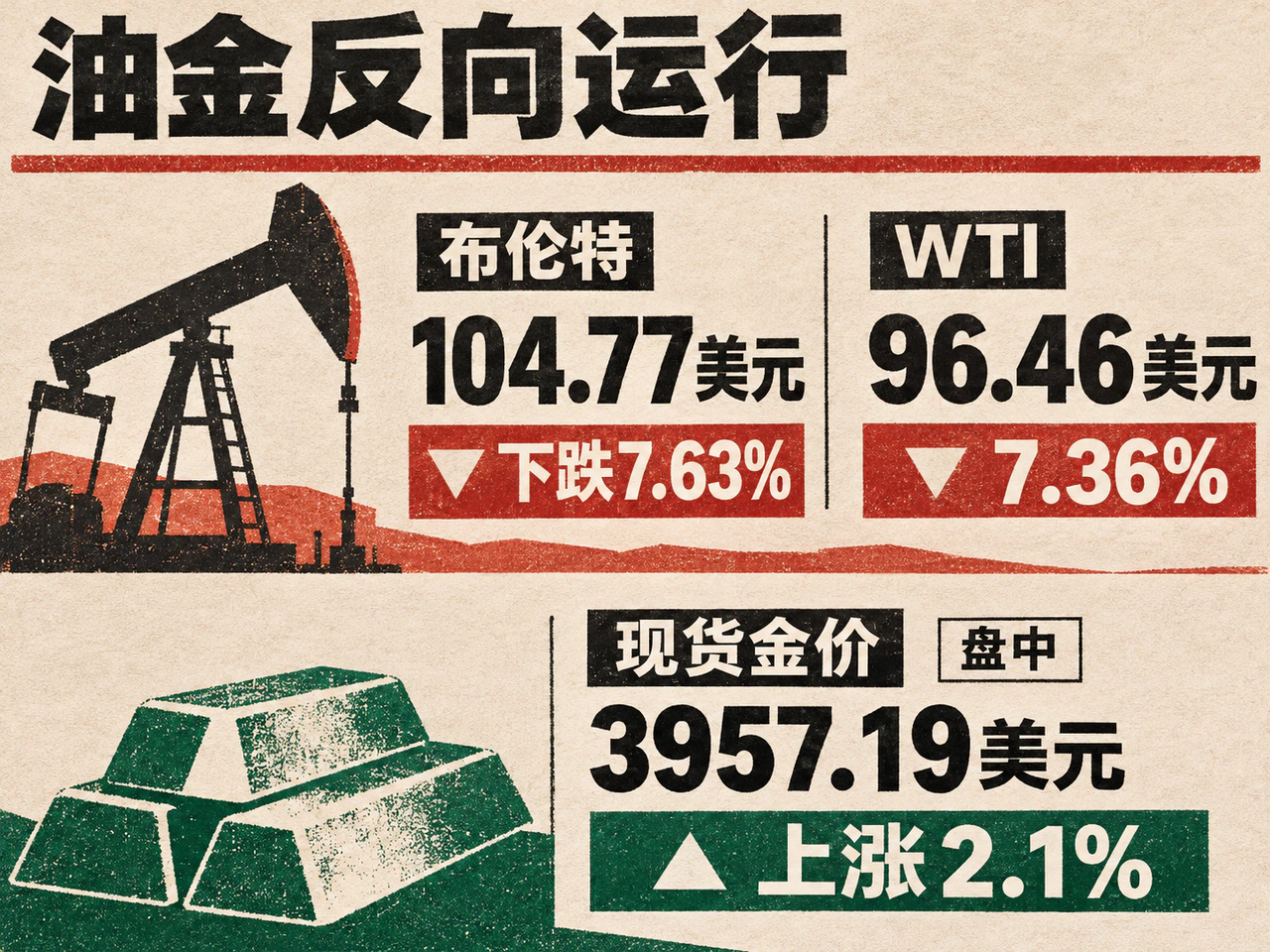
Oil and gold moved in sharply opposite directions in commodity markets. According to Reuters' November 2 market-close report, Brent crude futures for January delivery the following year settled at $104.77 a barrel, down 7.63% from that contract's October 30 settlement of $113.43. WTI crude was quoted at $96.46 a barrel, down 7.36%. OPEC had announced on November 1 that seven member countries would maintain September's required production levels through December, leaving supply policy unchanged. The sharp selloff therefore mainly reflected a repricing of geopolitical and diplomatic expectations. Reports of continued contact between Iran and Qatari mediators, alongside authorization for peace negotiations, prompted the oil market to rapidly reduce its premium for supply-disruption risk. UBS analyst Giovanni Staunovo noted that markets had been worrying about an escalation of the conflict the previous week, but diplomatic news at the start of this week had directly reversed the direction of trading. Raymond James analyst Pavel Molchanov cautioned, however, that hopes for peace talks had repeatedly emerged over the past several months without materializing. Whether the oil-price decline can last still depends on negotiations translating into tangible improvements in shipping and energy supply.
Spot gold stabilized and recovered as inflation expectations eased and liquidity pressures abated. Reuters' intraday report put spot gold up 2.1% at $3,957.19 an ounce. During the October 30 selloff in U.S. technology shares, some investors had sold gold to meet margin calls, briefly driving the price to a one-year low. Zaner Metals analyst Peter Grant said that, alongside a technical recovery as the liquidity shock faded, the sharp oil-price decline easing inflation concerns and a softer dollar had both supported gold's rebound.
Falling energy prices quickly redistributed profit expectations across U.S. equity sectors. The energy ETF XLE closed down 3.96%, reflecting the damage to revenue expectations for upstream oil and gas producers. Airlines and cruise operators, for which fuel accounts for a large share of costs, benefited substantially: United Airlines, Southwest Airlines and Carnival closed up 4.8%, 3.6% and 4.2%, respectively.
AI financing and a $100 billion-plus acquisition push the Nasdaq 100's three-session loss above 6%; Apple and Palantir deliver strong after-hours earnings
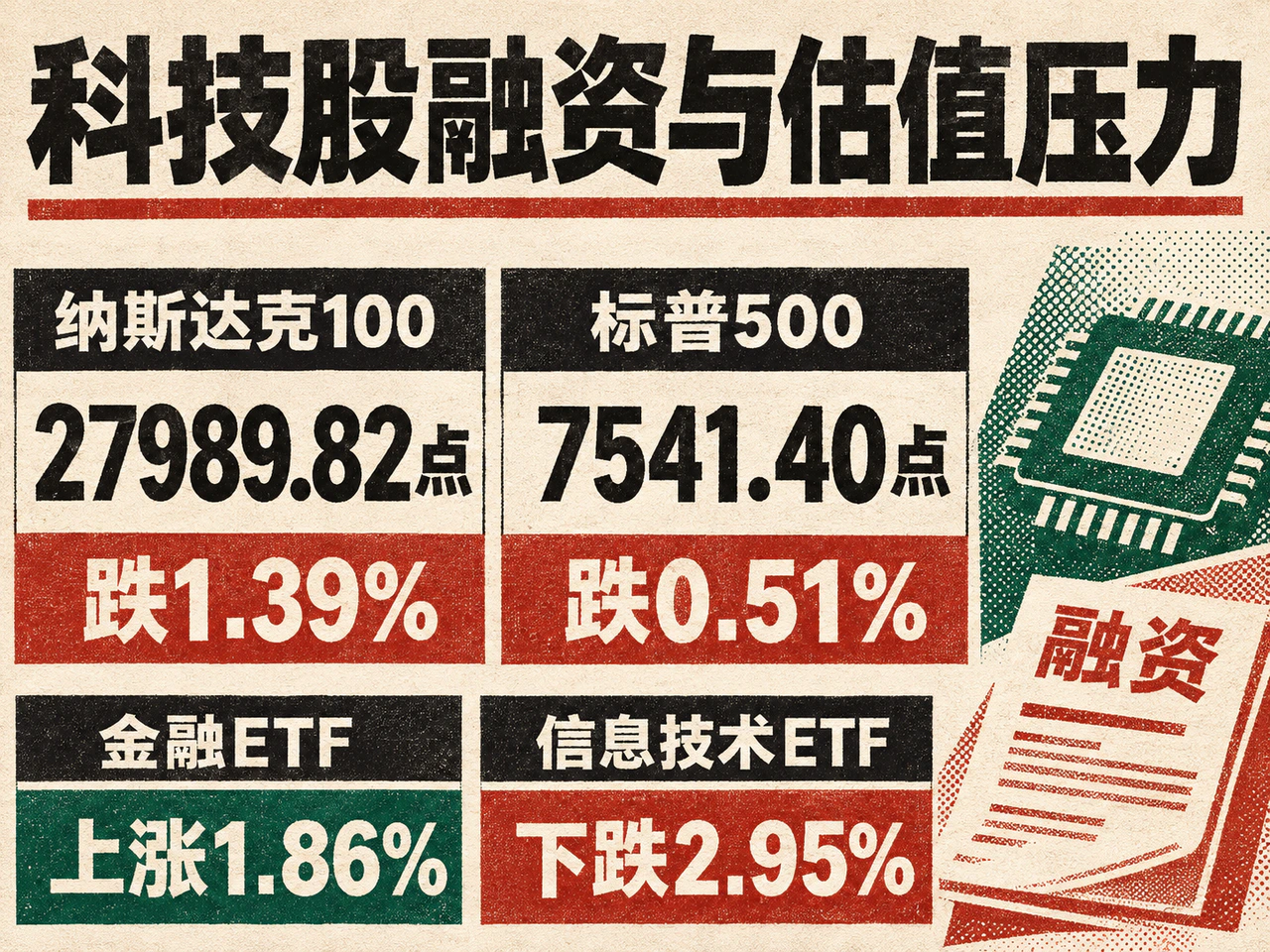
Major U.S. stock indexes diverged on November 2. The S&P 500 closed at 7,541.40, down 0.51%; the Nasdaq 100 finished at 27,989.82, down 1.39%; the Dow Jones Industrial Average ended at 51,983.98, up 0.41%; and the Russell 2000 closed at 2,805.88, down 0.21%. According to the Associated Press, nearly 70% of S&P 500 constituents rose that day. The financial ETF XLF gained 1.86%, but the information technology ETF XLK fell 2.95%, leaving technology heavyweights as the main drag on the broader market.
The recent valuation correction in U.S. equities has been heavily concentrated in technology. Over the three trading sessions from October 28 to November 2, the Nasdaq 100 fell about 6.12%. The VIX volatility index rose from 16.91 to 21.15 over the same period, including a 1.73-point increase on November 2 alone. Individual stocks continued to face heavy intraday selling: Nvidia and Alphabet were each up as much as 2.6% early on November 2, but closed down 1.3% and 0.3%, respectively.
Financing plans at leading technology companies have intensified scrutiny of the time needed to earn a return on AI investment. Citing Bloomberg that day, Yahoo Finance reported that Oracle planned to raise $20 billion, split equally between $10 billion of bonds and $10 billion of equity, to support AI capital spending and dividend payments. Alphabet also planned a €6 billion bond sale. Alongside growing demand for computing capacity, investors have begun to weigh more rigorously the interest costs of new borrowing, equity dilution and the speed at which enormous capital outlays can generate free cash flow. Bank of America economists warned in a November 2 report that, if the valuation correction in AI continued, it could spill over into the U.S. and global economies through slower corporate capital spending and household wealth effects.
Differences over pricing were equally apparent in industry dealmaking. Marvell and Lumentum announced an all-stock acquisition agreement that day under which each Lumentum share would be exchanged for 4.5 Marvell shares. Based on October 28 share prices, before takeover rumors affected trading, the transaction implied an enterprise value of about $115 billion for Lumentum. The deal aims to combine the companies' electrical interconnect, optical interconnect and laser technologies to serve AI infrastructure. It is expected to close in the first half of 2028, subject to shareholder and regulatory approvals. With investors cautious about the acquisition premium and longer-term integration returns, Marvell and Lumentum shares plunged 12.7% and 18.6%, respectively, that day.
Major earnings releases after the U.S. market close on November 2 nevertheless provided positive profit signals. According to Yahoo Finance, Apple reported fiscal fourth-quarter revenue of $114.48 billion and earnings per share of $2.10, both above market expectations of $113.47 billion and $2.00. iPhone revenue was $57.58 billion, also beating the $56.49 billion forecast. In its own after-hours release, Palantir reported third-quarter revenue of $2.313 billion, up 96% year on year, and adjusted earnings per share of $0.44. It raised its full-year revenue guidance to $8.530 billion–$8.534 billion. Strong results in consumer electronic devices and enterprise AI software offered investors fresh fundamental benchmarks.
China's manufacturing PMIs diverge as the PBOC introduces fixed-rate overnight reverse repos at 1.25%
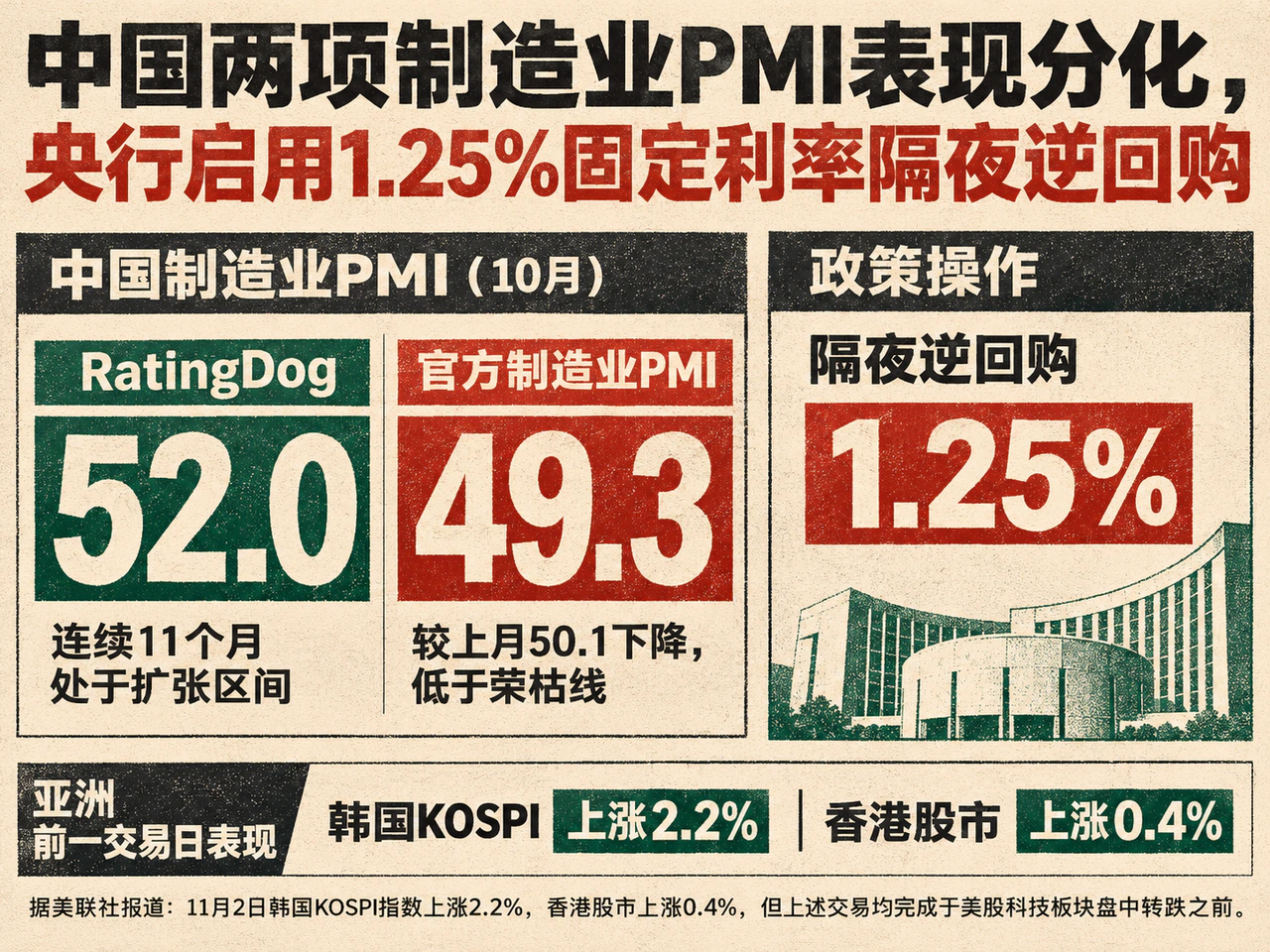
In Asia, China's manufacturing surveys revealed structural divergence. The October RatingDog China Manufacturing PMI, released on November 2, registered 52.0, slightly below September's 52.1 but marking its 11th consecutive month in expansion. Output growth was the fastest since April, while new export orders rose for a fourth consecutive month, albeit at the slowest rate in three months. Competitive pressure on market prices led factory-gate prices to fall for the second time in three months, even as input costs continued to increase, squeezing margins in intermediate and downstream industries. By contrast, the official October manufacturing PMI, released on October 31, fell from 50.1 to 49.3, with production and new orders indexes at 49.8 and 49.4. High-tech manufacturing and equipment manufacturing PMIs remained in expansion at 51.3 and 50.6, respectively. Differences in sample composition contributed to the divergence between the two surveys, which together pointed to structural expansion in industry alongside pressure on final demand.
China made a significant adjustment to its money-market operating framework on November 2. The People's Bank of China began conducting overnight reverse repos every working day through quantity tenders at a fixed interest rate of 1.25%. At the same time, it switched 7-day reverse repos to fixed-quantity, interest-rate tenders with multiple-price allotment, primarily to address temporary funding fluctuations around tax-payment dates and month-end. The reference rate for spreads on related instruments also shifted to the overnight reverse repo rate. Ming Ming, chief economist at CITIC Securities, said the 1.25% rate was broadly consistent with the current central level of DR001. The adjustment aligns routine liquidity injections more closely with the overnight funding market, while the 7-day instrument supplements funding needs spanning multiple days.
For cross-market transmission, Asia-Pacific equities must absorb signals in both directions because of the time difference with U.S. trading. The Associated Press reported that South Korea's KOSPI rose 2.2% and Hong Kong stocks gained 0.4% on November 2, but both markets had closed before U.S. technology shares reversed into losses during their session. Valuation corrections in U.S. semiconductor and internet stocks, Apple's stronger-than-expected after-hours hardware sales figures, and the benefits of lower oil prices for shipping and airline costs will interact to influence the pricing of related Asian supply chains in subsequent trading. Japan's cash equity market is closed for Culture Day on November 3, delaying its concentrated response until November 4.
Polling gap narrows on the eve of U.S. midterms; South Africa and Rwanda face suspension of AGOA duty-free benefits
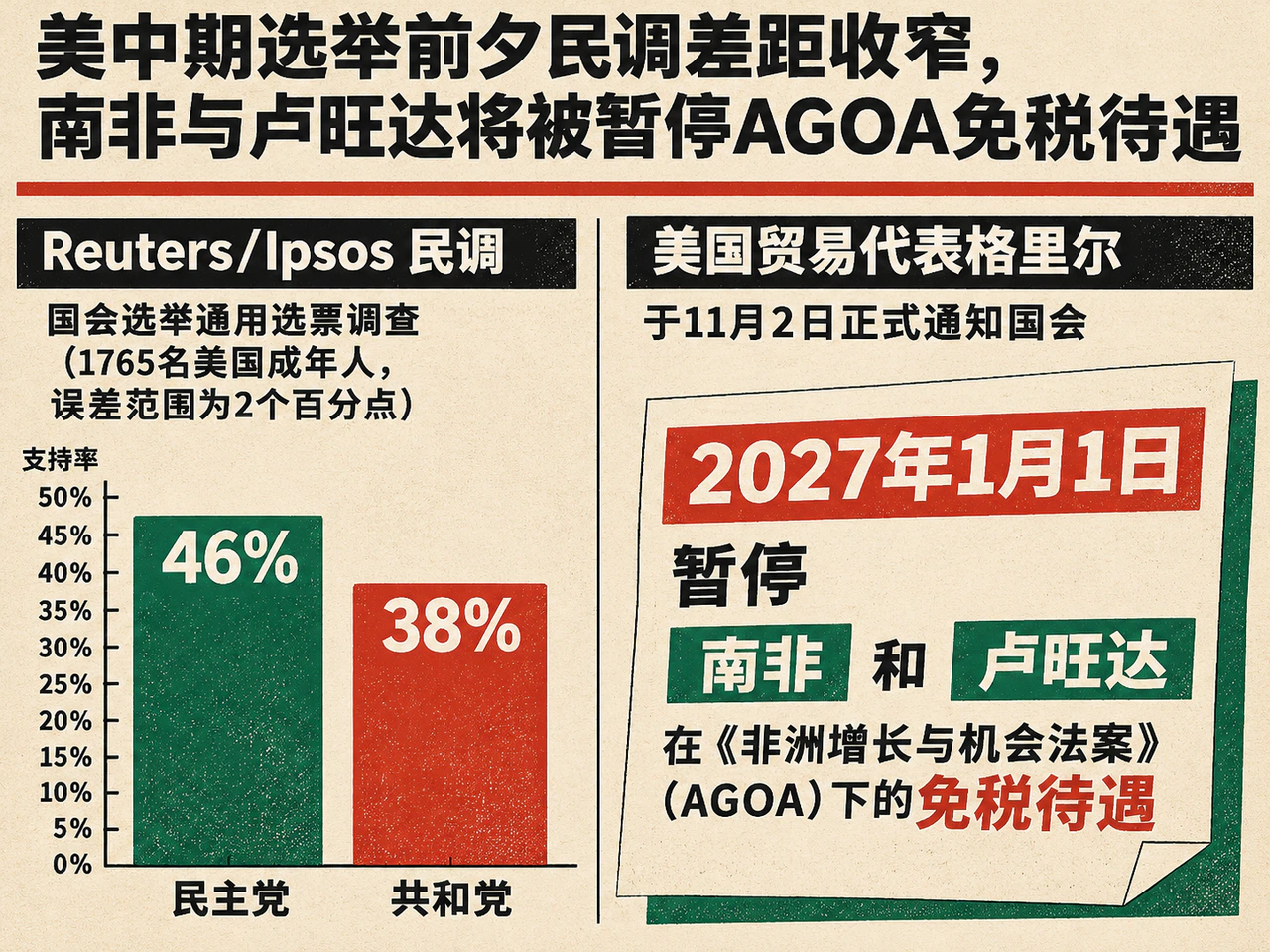
On the political and policy calendar, the November 3 U.S. midterm elections will determine control of both chambers of Congress, shaping subsequent fiscal legislation, budget negotiations and sector-specific regulatory agendas. A Reuters/Ipsos poll released after the U.S. market close on November 2 showed Democrats and Republicans with 46% and 38% support, respectively, on the generic congressional ballot. The survey covered 1,765 U.S. adults and had a margin of error of 2 percentage points. The Democratic lead narrowed from 11 percentage points a week earlier to 8 percentage points. Because national polling and the distribution of seats across individual districts differ, markets will need actual vote counts before reassessing the conditions for advancing policy.
Concrete trade-policy measures have already been announced. U.S. Trade Representative Greer formally notified Congress on November 2 that South Africa's and Rwanda's duty-free benefits under the African Growth and Opportunity Act (AGOA) would be suspended from January 1, 2027. According to Reuters, South Africa exported about $1.7 billion of goods to the United States under the program in 2025, mainly automotive parts, citrus fruit and wine, while Rwanda's covered exports included coffee. The removal of duty-free treatment will directly affect orders and profits at the exporters concerned and could also feed through to supply-chain adjustments and local-currency exchange rates.
Overall, lower crude prices and faster manufacturing output have eased energy-inflation concerns and improved operating conditions for some traditional cyclical industries. Elevated real yields, wider credit spreads and close scrutiny of returns on AI capital spending, however, continue to constrain the scope for highly valued technology shares to advance. The U.S. midterm election results, the maturity mix in the Treasury's quarterly refunding and the October nonfarm payrolls report will be the next key events shaping the evolving balance of cross-asset pricing.