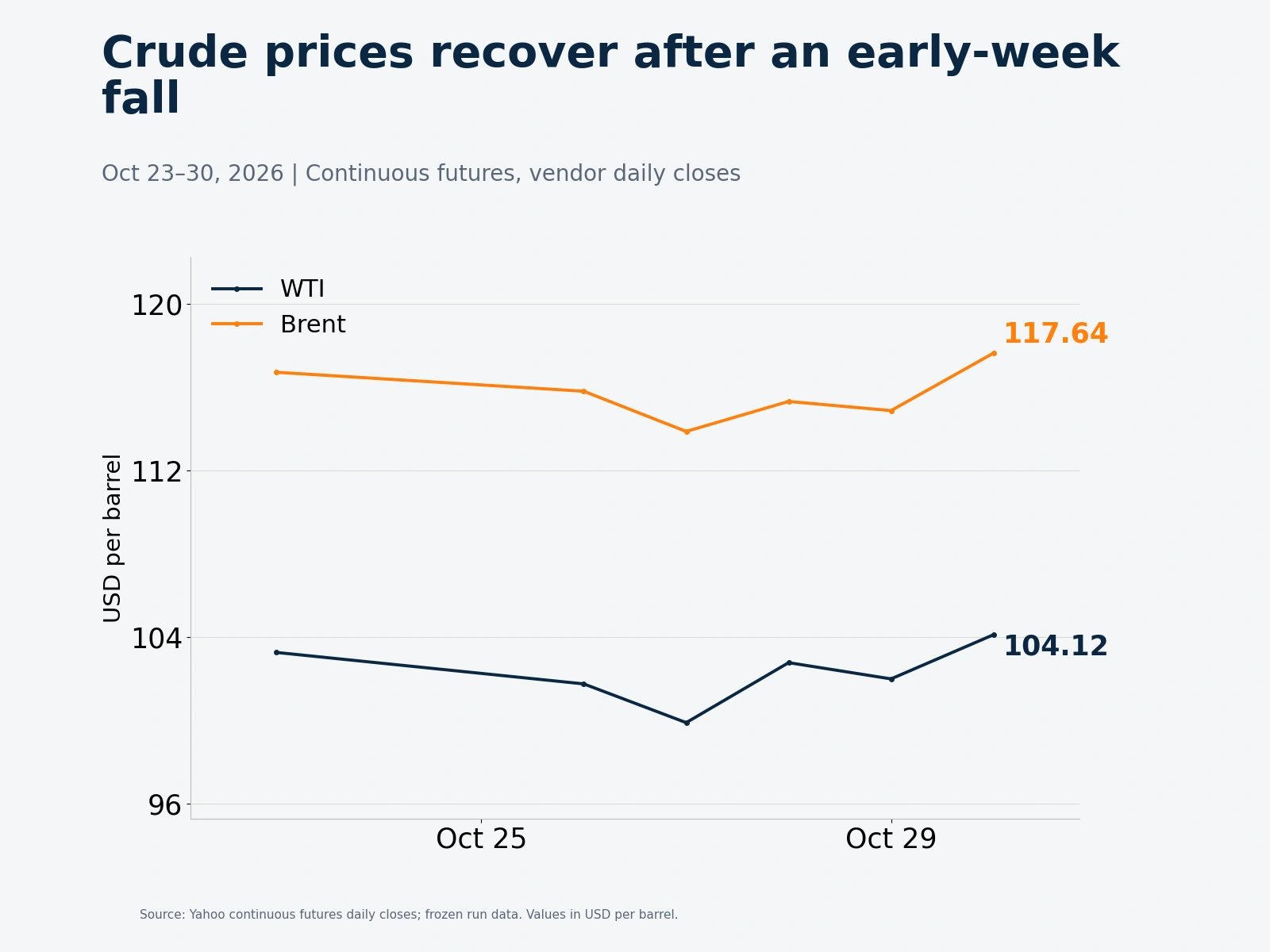
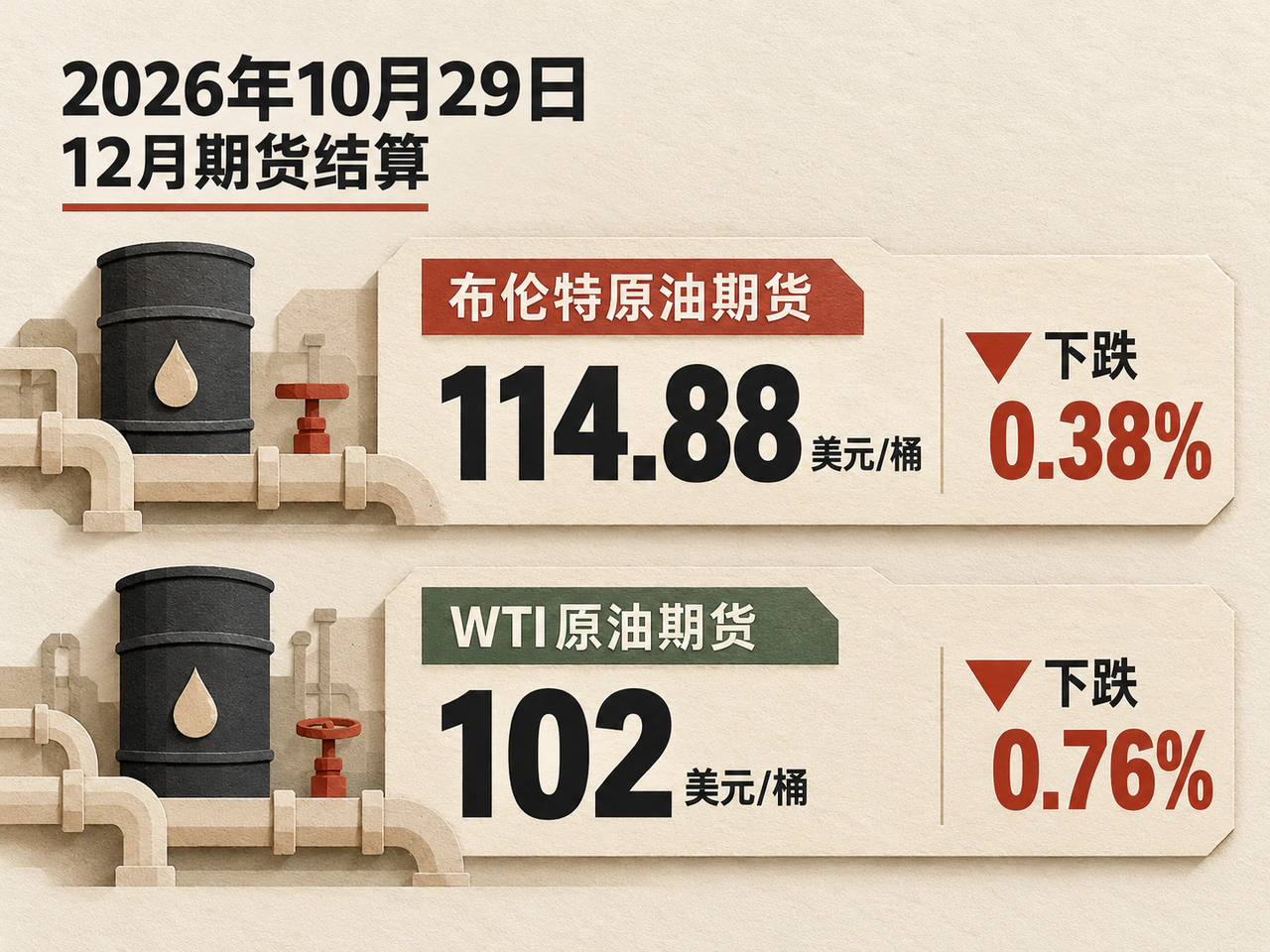
On November 2, 2026, progress in mediation between Iran and Qatar drove a sharp decline in international oil prices. According to Reuters' closing report, Brent crude futures settled at $104.77 a barrel, down $8.66, or 7.63%, from the previous trading day; the WTI crude futures price quoted in the report was $96.46, down $7.66, or 7.36%. The market initially marked down the risk of an escalation in the conflict, while expectations of a supply recovery ran ahead of actual cargo flows.
The sell-off followed a strong rally in October. Brent had just ended the month at a six-month high, as traders had feared renewed escalation in the Middle East after the U.S. midterm elections. Diplomatic contacts over the weekend shifted the direction of near-term risks, unwinding some of the geopolitical premium that had built up.
Iran Reports Partial Authorization for Talks as Shipping Signals Remain Mixed
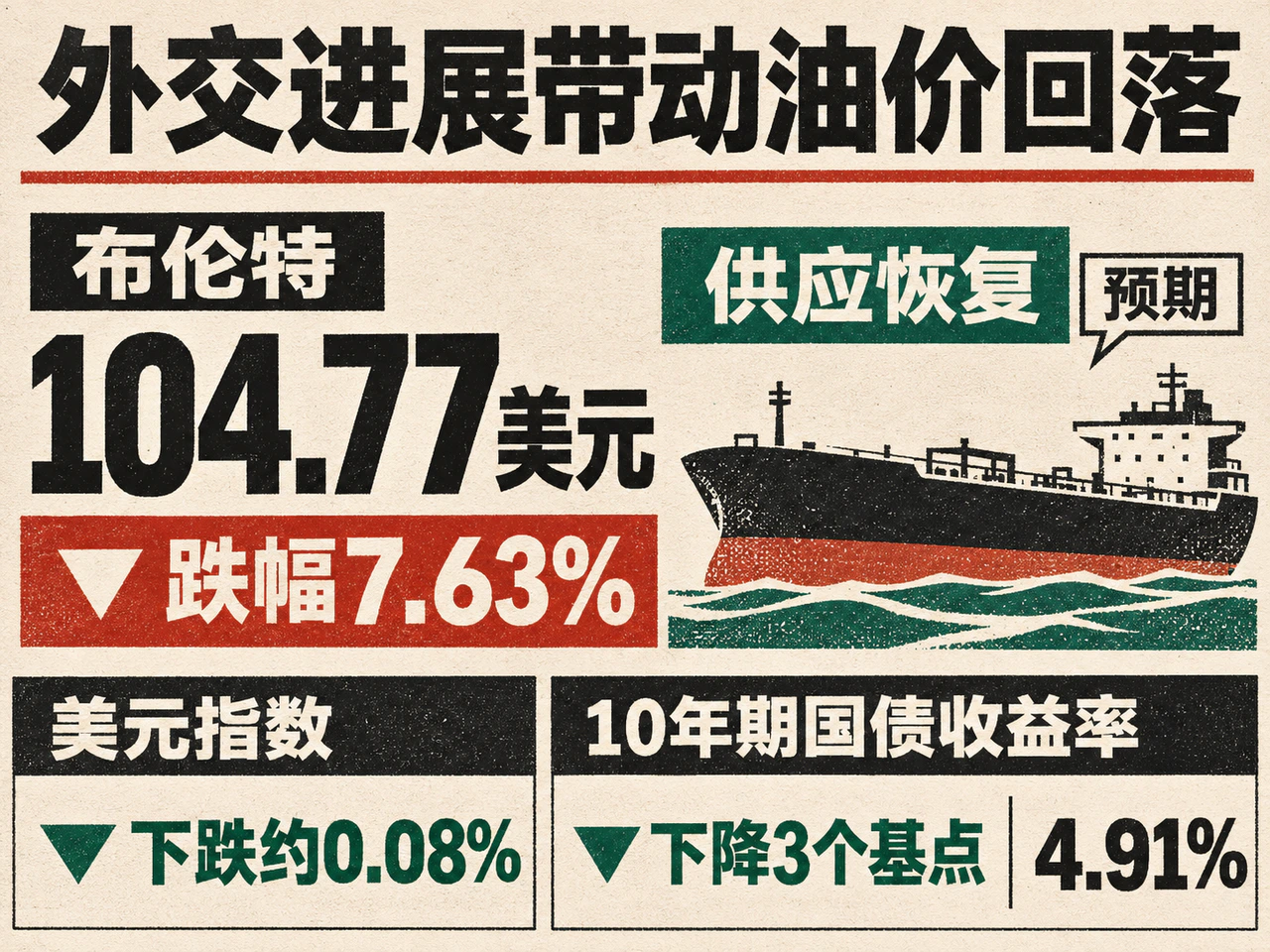
Reuters reported that Iranian negotiators and Qatari mediators had held several days of discussions. Iran's president said the government had received partial authorization for peace negotiations and would try to resolve the issues through dialogue. Trump also said on Monday that an agreement to end the war could be reached. UBS analyst Giovanni Staunovo attributed the move in oil prices to the market's acute sensitivity to news from the Middle East: concerns about escalation drove prices higher last week, while diplomatic progress sent them sharply lower at the start of this week.
Shipping conditions offer two signals that coexist. Attacks on tankers have increased, leaving safe passage and insurance arrangements important. At the same time, Reuters cited two of three vessel-tracking firms as saying that Saudi crude exports in October exceeded September's level. If diplomatic mediation can reduce transport risks, cargo flows already showing signs of recovery would be more likely to translate into sustained supply. This gives the market a tangible basis for rapidly reducing the risk premium.
Exchange rates and interest rates do not support an explanation in which a surging dollar depressed oil prices. Over the same period, the dollar index closed down only about 0.08%, while the 10-year U.S. Treasury yield fell 3 basis points to 4.91%. The modest declines in both the dollar index and long-term nominal yields are out of proportion to the drop of more than 7% in oil prices. This move was more closely tied to oil-specific expectations about geopolitical supply risks.
The Contract Roll Crosses Expiry: $117.64 Is Not a Direct Comparison
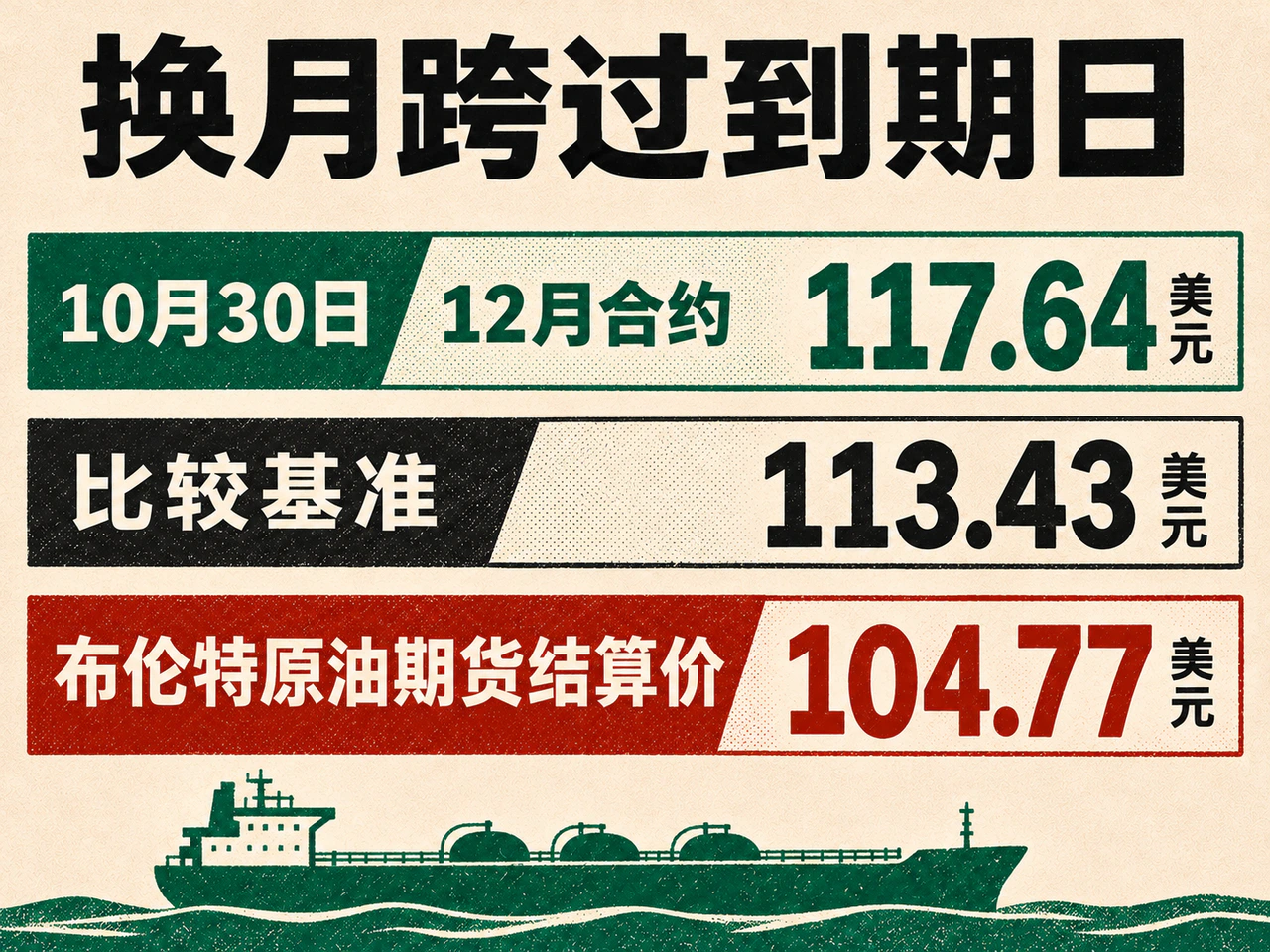
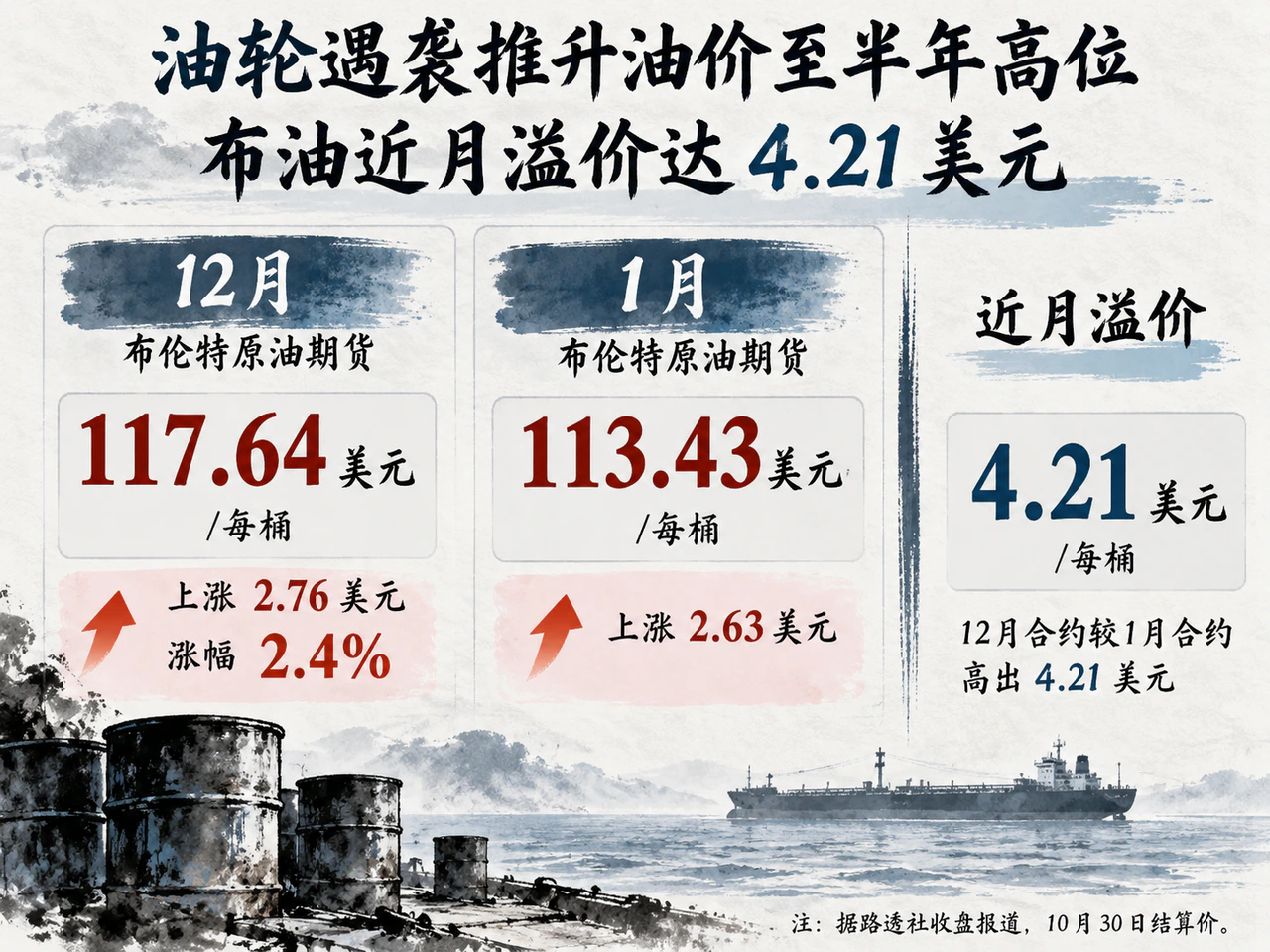
The decline in Brent also coincided with a contract roll. ING noted that the December 2026 contract, which expired on October 30, had a final settlement price of $117.64; the contract replacing it as the front month was then trading above $113. The expiring contract settled well above its successor, indicating a willingness to pay a premium for earlier delivery of crude: a backwardated market, with near-term prices above those for later delivery.
It would therefore be incorrect to subtract Monday's new front-month price directly from $117.64 to calculate a one-day decline in the same contract. The $104.77 price and $8.66 decline reported by Reuters imply a comparison base of $113.43. When a continuous price quotation crosses an expiry date, the price change includes both the market decline and the effect of rolling to the next contract.
OPEC+ Keeps December Targets Unchanged, While Transport Still Constrains Actual Supply
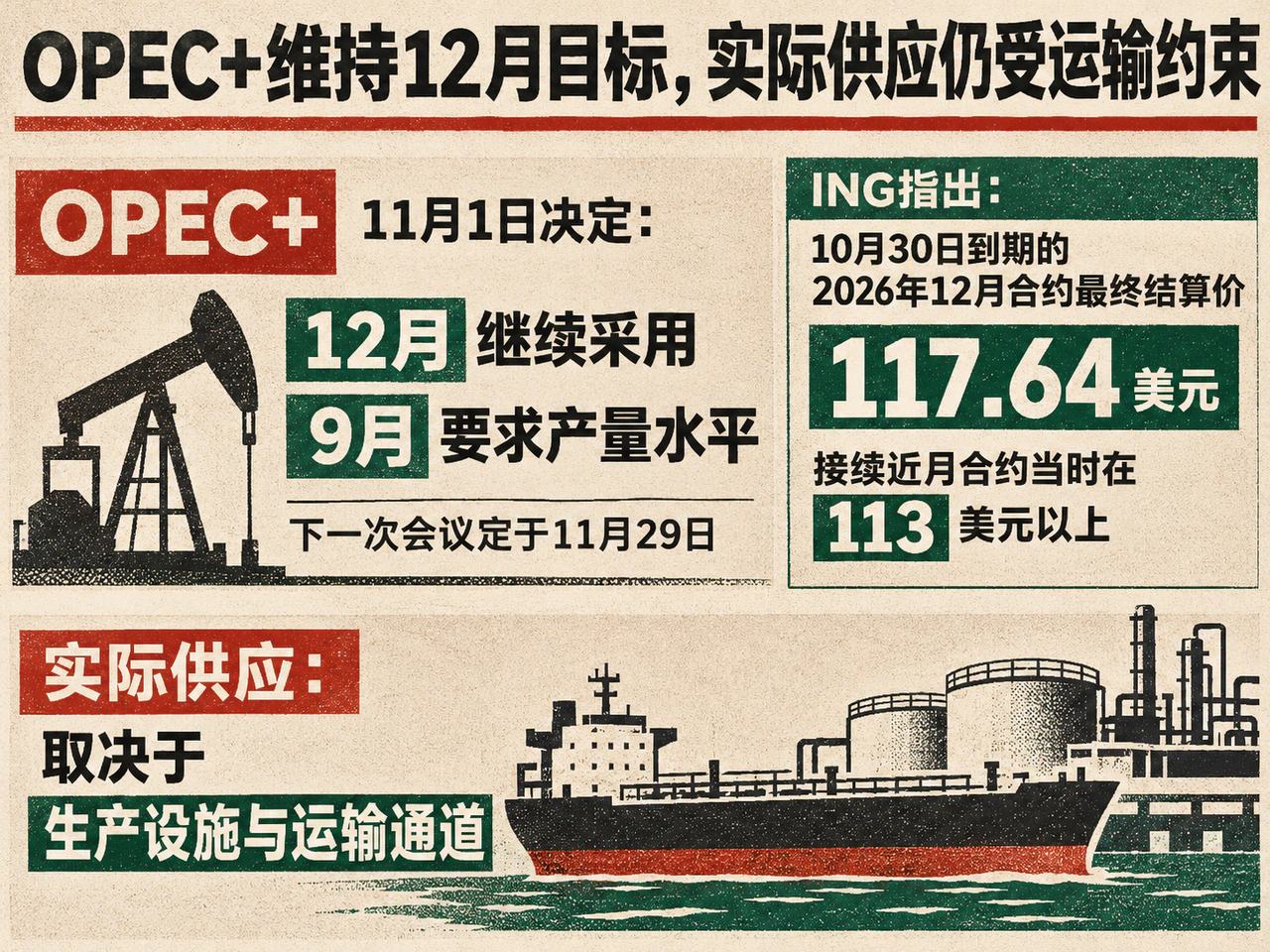
There was no new adjustment to supply policy itself. On November 1, seven participating OPEC+ countries decided to retain September's required production levels for December, with the next meeting scheduled for November 29. ING also noted that supply disruptions in the Persian Gulf had left most members producing below their targets. Unchanged quotas mean there has been no further adjustment to the targets; the volume of crude that can actually be loaded onto ships and delivered to refineries still depends on production facilities and transport routes.
U.S. Gasoline Stocks Build as Global Onshore Inventories Continue to Fall
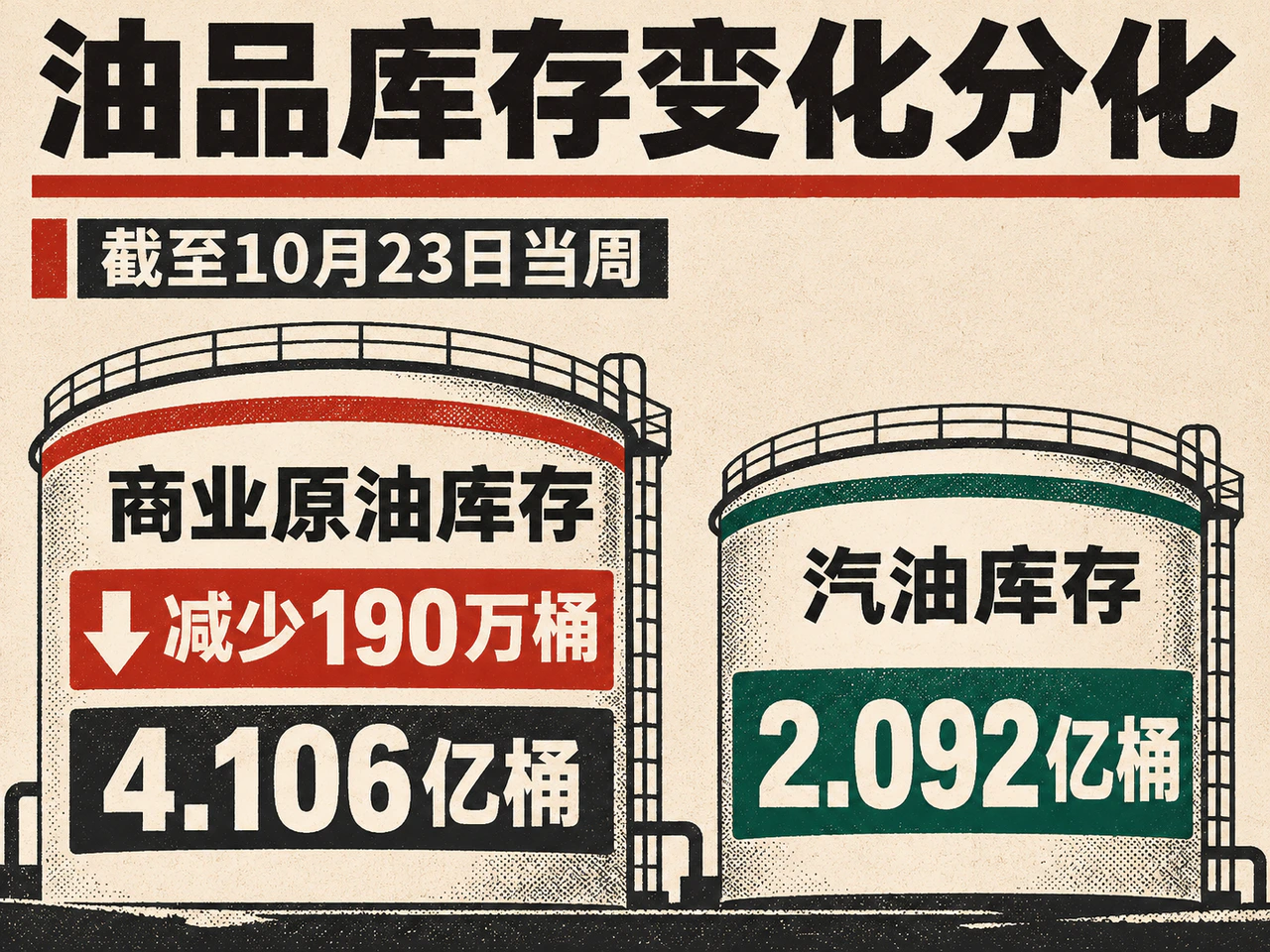
U.S. inventory changes show that different petroleum categories are moving in different directions. Data released on October 28 for the week ended October 23 showed commercial crude inventories falling by 1.9 million barrels to 410.6 million barrels, distillate stocks declining from 104.3 million to 102.8 million barrels, and gasoline stocks rising from 205.3 million to 209.2 million barrels. Drawdowns in crude and distillates provide some support for front-month prices, while the gasoline build indicates that end-user demand and refinery output remain out of alignment.
Globally, the International Energy Agency's October report estimated that supply rose by 2.5 million barrels a day in September from the previous month, to 102.3 million barrels a day. Yet onshore inventories still fell by 113 million barrels, while inventories on water increased by 103 million barrels. Recovering exports have put more crude into transit, and replenishing onshore stocks will take time. The agency also forecast that global oil demand in the fourth quarter would fall by 2.5 million barrels a day from a year earlier, as high oil prices and economic pressures weaken consumption. Recovering supply and falling demand both point to downward pressure on prices further out, while crude available for delivery in the short term continues to support front-month contract prices.
Four Variables Will Determine Whether the Oil Price Decline Continues
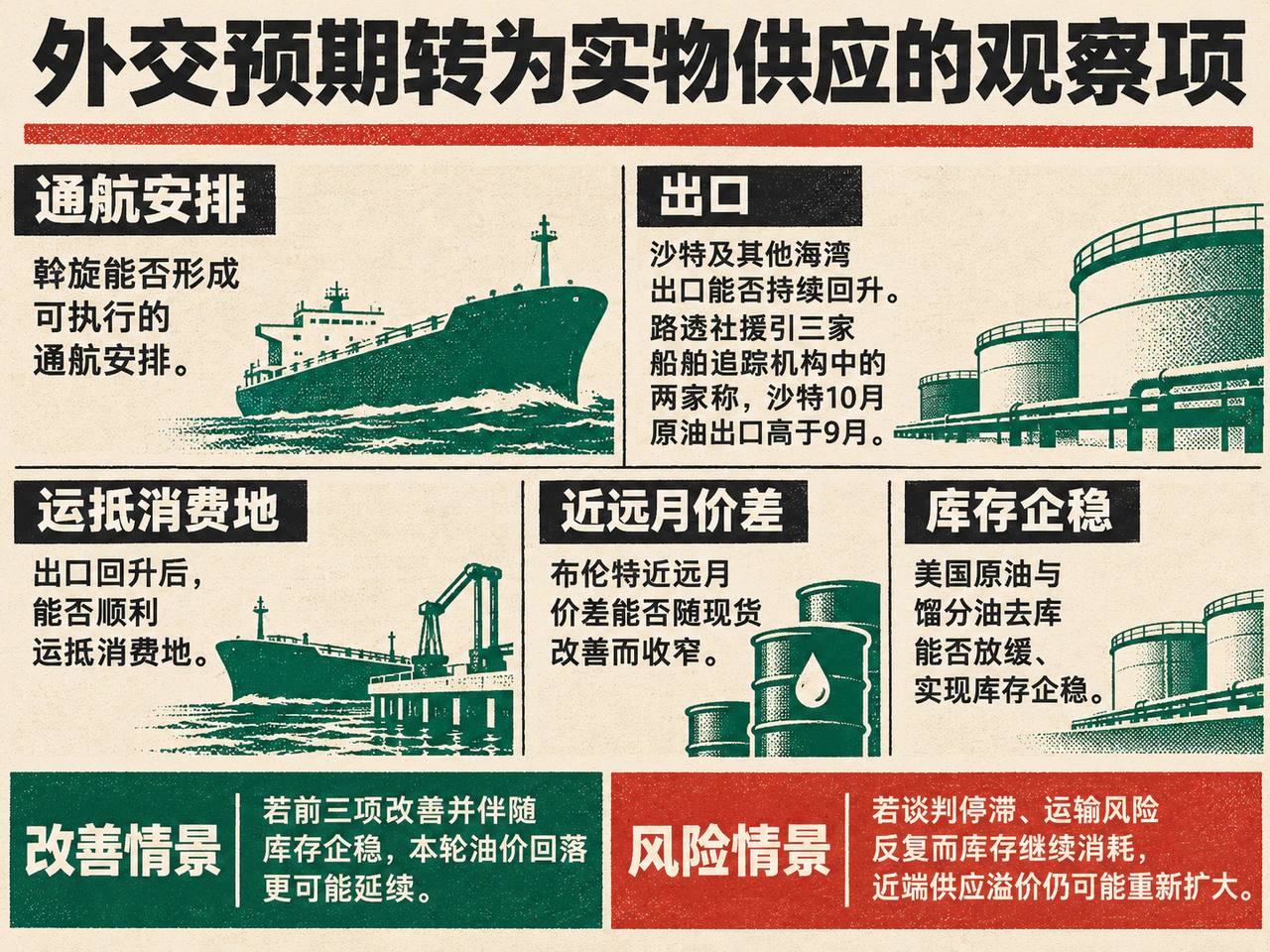
Four specific developments merit attention: whether mediation produces workable arrangements for shipping access; whether Saudi and other Gulf exports continue to recover and reach consuming markets without disruption; whether Brent's near- versus deferred-month spread narrows as physical supply improves; and whether drawdowns in U.S. crude and distillate inventories slow. If the first three improve alongside stabilizing inventories, the current decline in oil prices is more likely to continue. If negotiations stall, transport risks recur and inventories keep being depleted, the premium for near-term supply could widen again.