On November 3, 2026, U.S. job openings and factory orders both exceeded expectations, pushing Treasury yields higher, yet semiconductor stocks still lifted the Nasdaq 100 by 0.68%. In commodities, crude oil settlement prices fell further, while gold came under pressure during European trading. The divergence across asset classes shows that resilient demand can support corporate revenue, but interest rates, the scale of debt financing and the speed at which investment generates returns are jointly determining the valuations investors are willing to pay for growth.
After the U.S. cash equity market closed, AMD's strong data center growth provided fresh evidence of demand for AI hardware. Meanwhile, the regulatory and fiscal paths at stake in the U.S. midterm elections, together with the forthcoming Treasury issuance schedule, left uncertainty over the long-term cost of capital. Technology stocks had clear support from industry fundamentals, but the recovery in broader risk appetite remained constrained.
U.S. September job openings rise unexpectedly to 7.523 million; Treasury yields climb across maturities
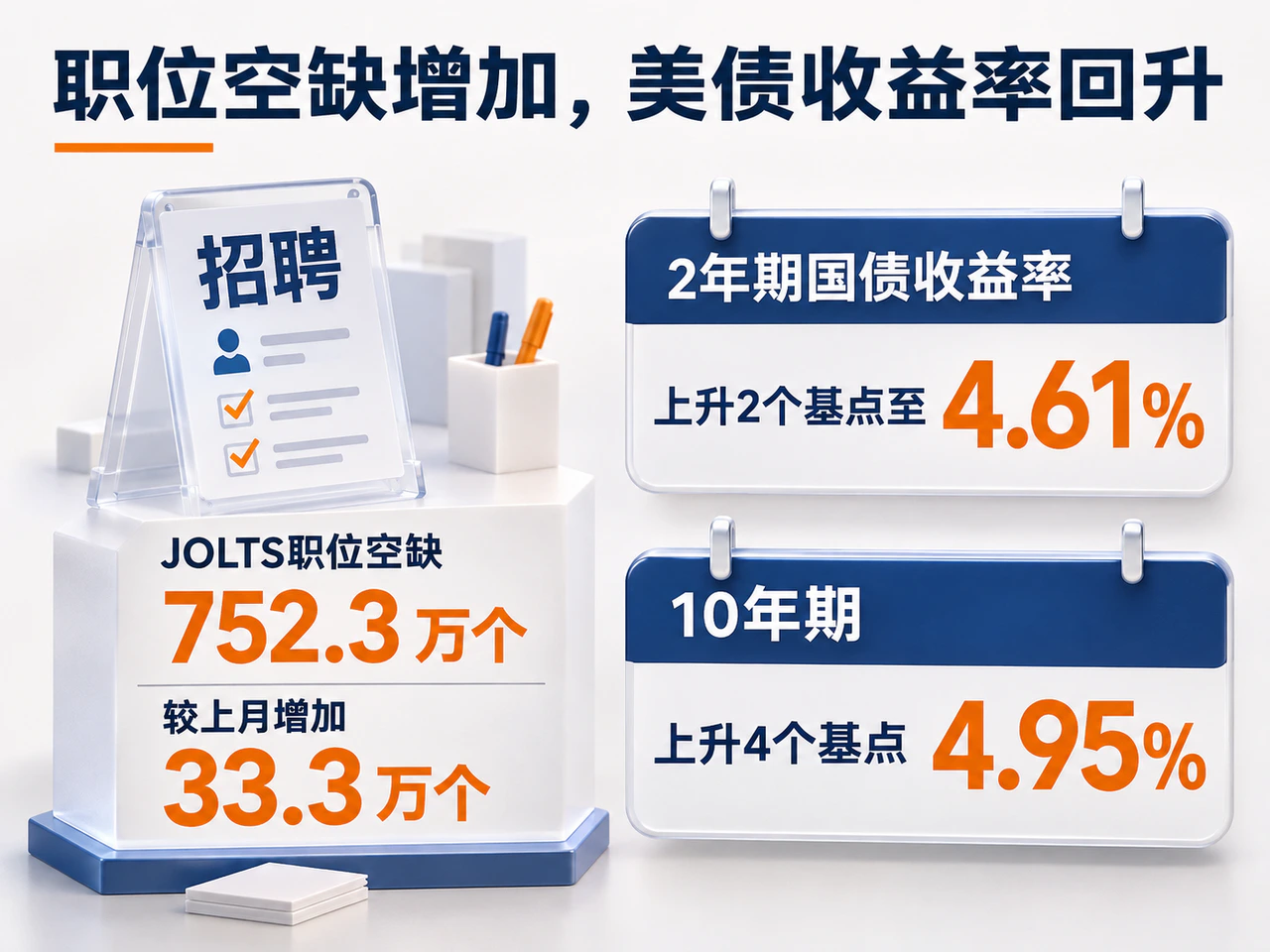
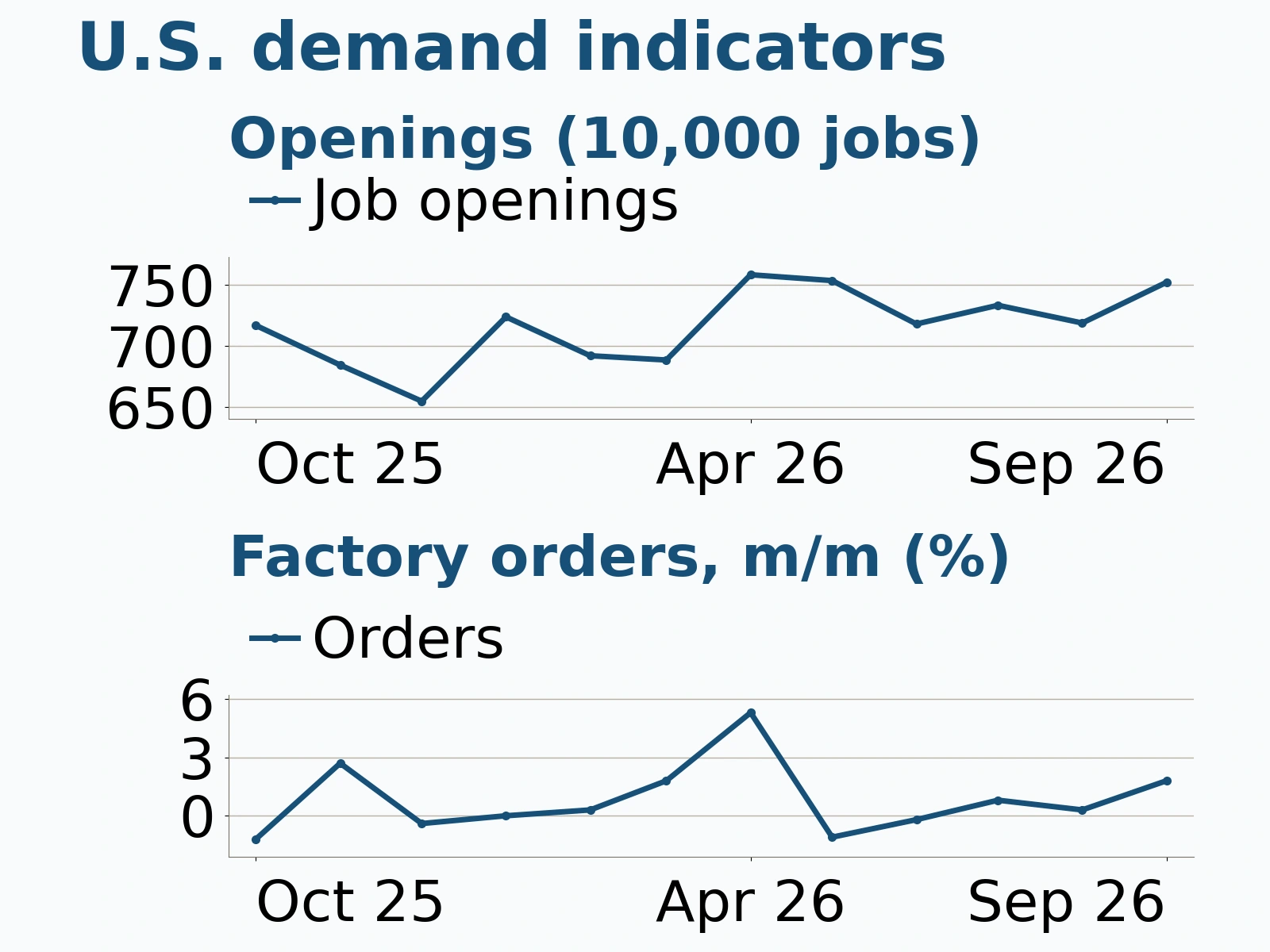
U.S. data released on November 3 showed that September JOLTS job openings reached 7.523 million, above the 7.1 million expected in a Reuters poll and up 333,000 from August's upwardly revised 7.19 million. The job openings rate rose from 4.3% to 4.5%, indicating that employers' demand for labor remained resilient at the end of September.
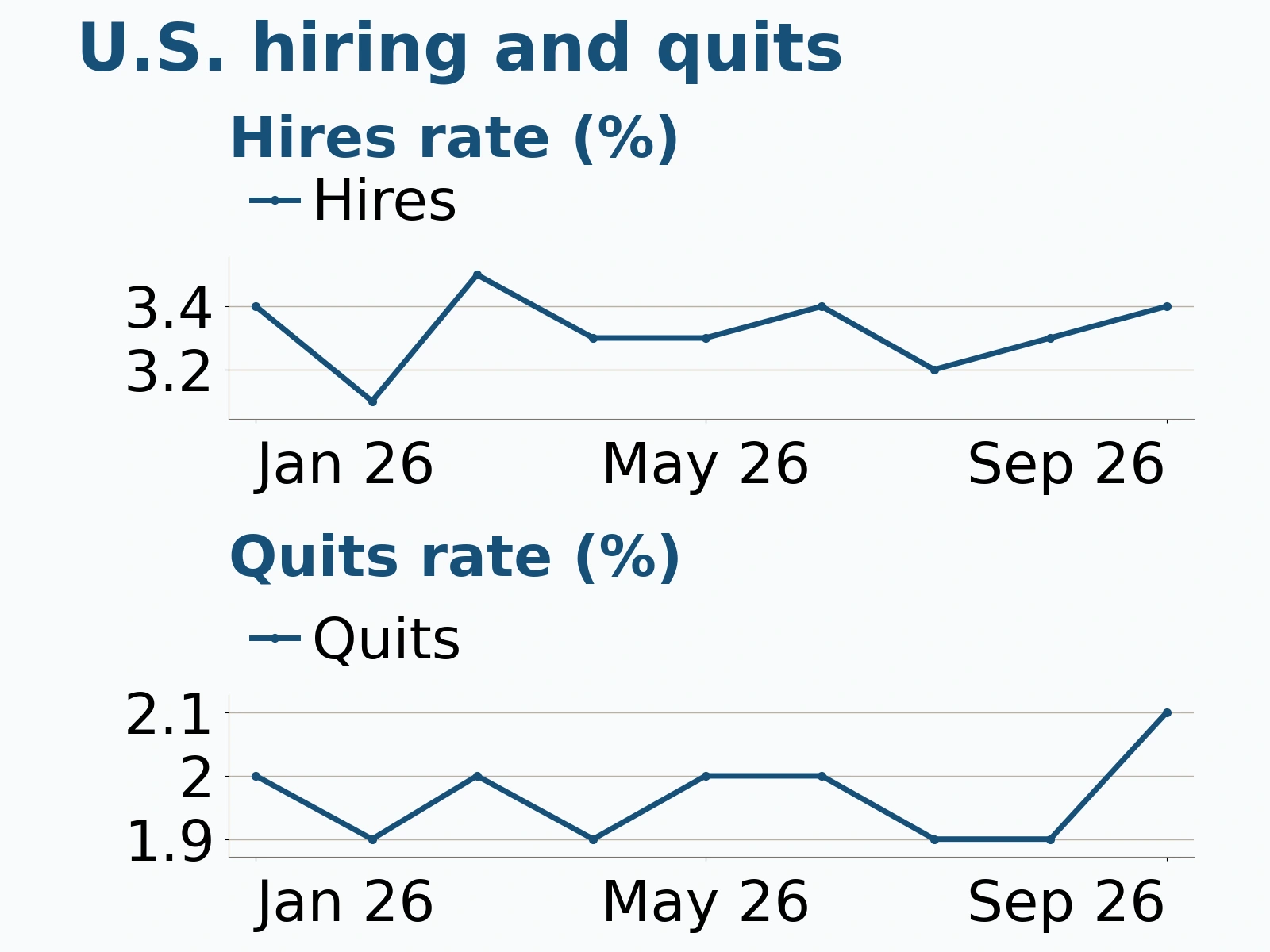
Actual hiring, however, varied markedly by industry. Hires increased by 131,000 in September to 5.402 million, and the hires rate recovered from 3.3% to 3.4%. Layoffs and discharges fell by 127,000 to 1.641 million, while the quits rate rose from 1.9% to 2.1%. Accommodation and food services added 158,000 hires, providing the main support for the month's hiring rebound. In manufacturing, however, job openings increased by 54,000 while hires fell by 34,000; professional and business services likewise saw openings rise as hires declined. Improved hiring intentions and low layoffs help support household income, but the pace of actual recruitment is uneven across industries.
U.S. manufacturers' new orders for September, released the same day, rose a seasonally adjusted 1.8% from the previous month to $677.2 billion, exceeding the market forecast of 1.3%; August's increase was revised to 0.3%. Transportation equipment orders rose 4.6%, the main driver of the increase in durable goods orders. Manufacturing shipments increased 1.3%, outpacing inventory growth of 0.4%, and the inventories-to-shipments ratio fell from 1.47 to 1.46. These data are not adjusted for price changes, however, and were also affected by energy prices: the nominal value of petroleum and coal product shipments increased 5.2% during the month.
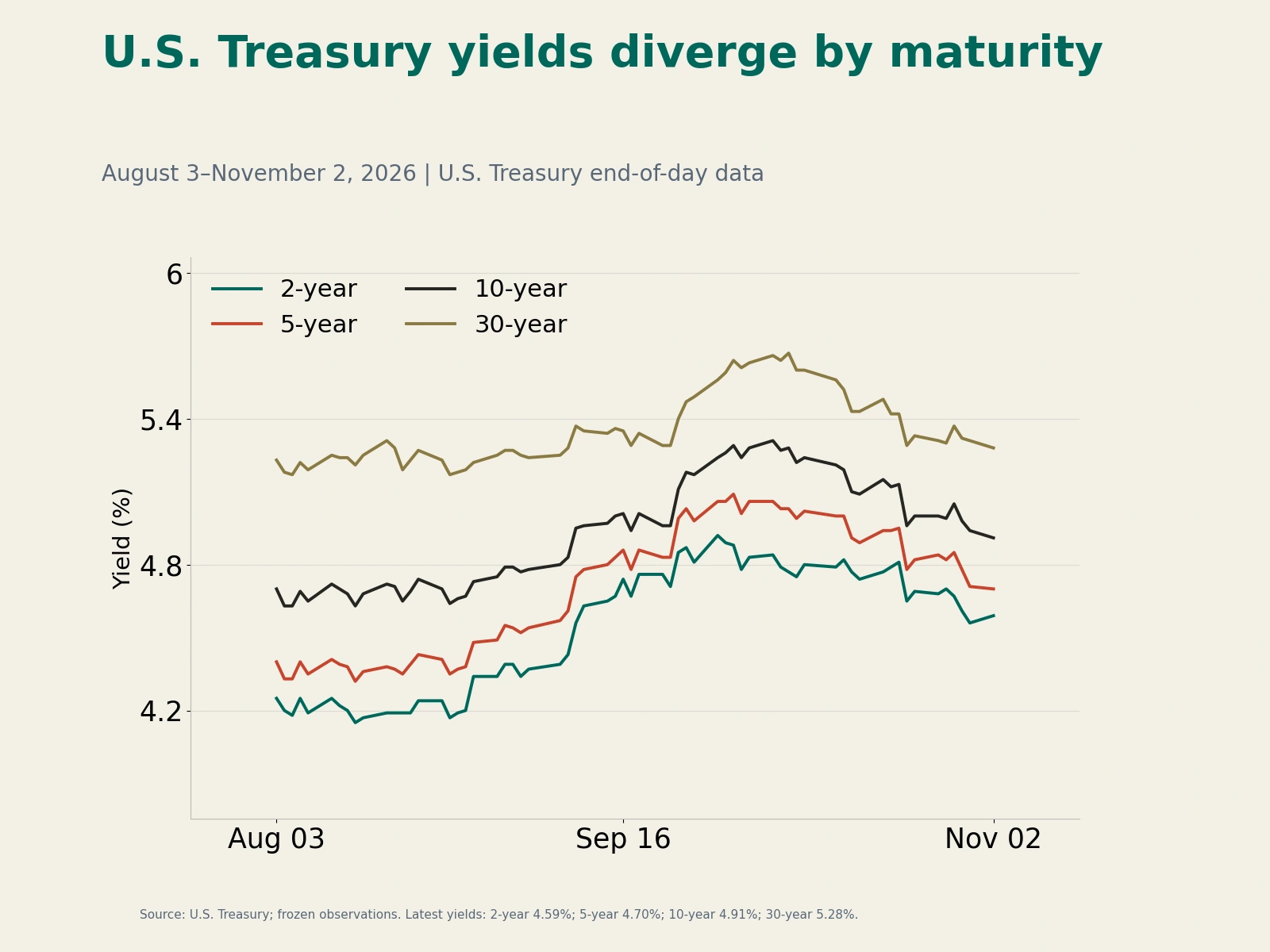
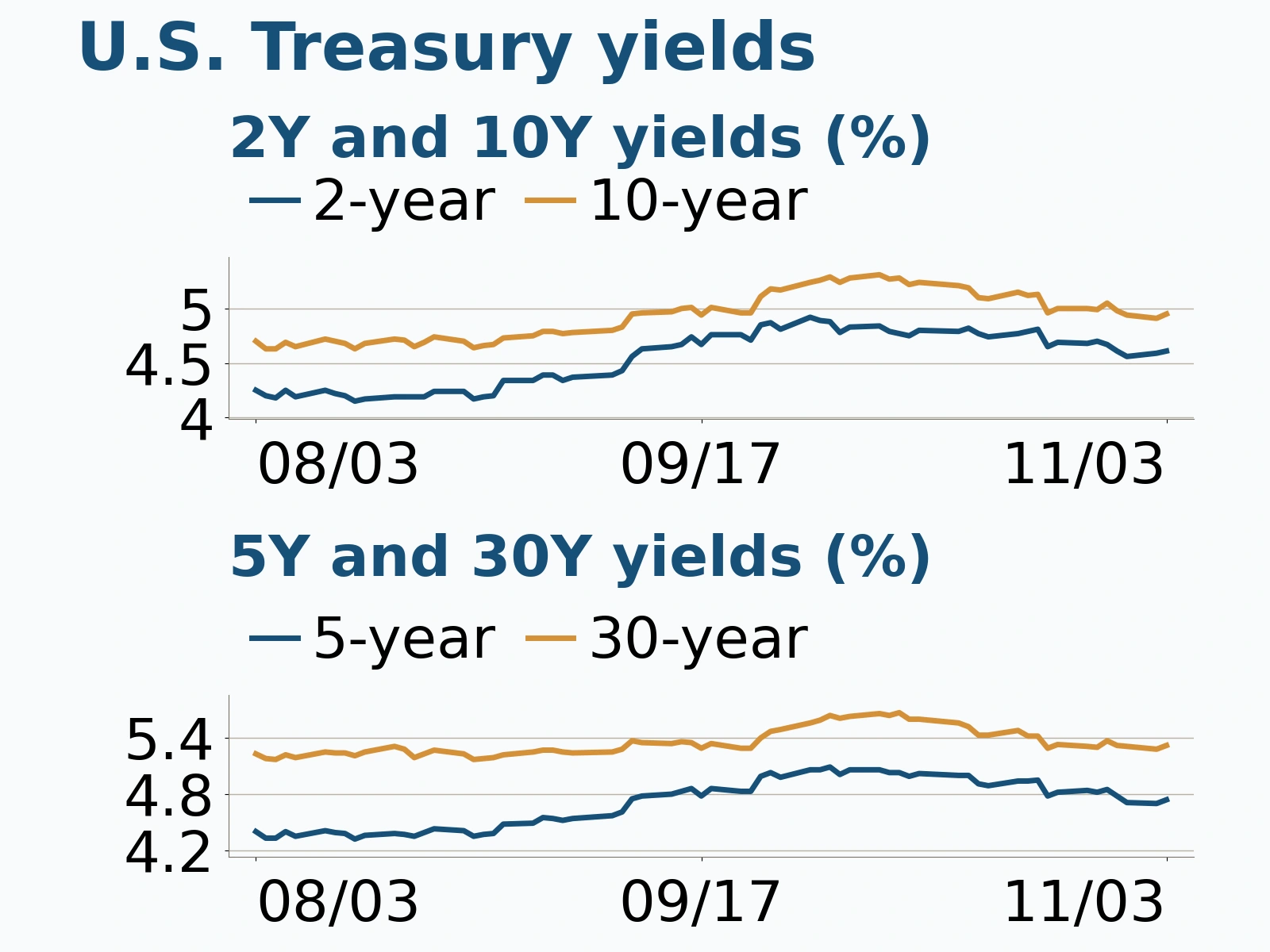
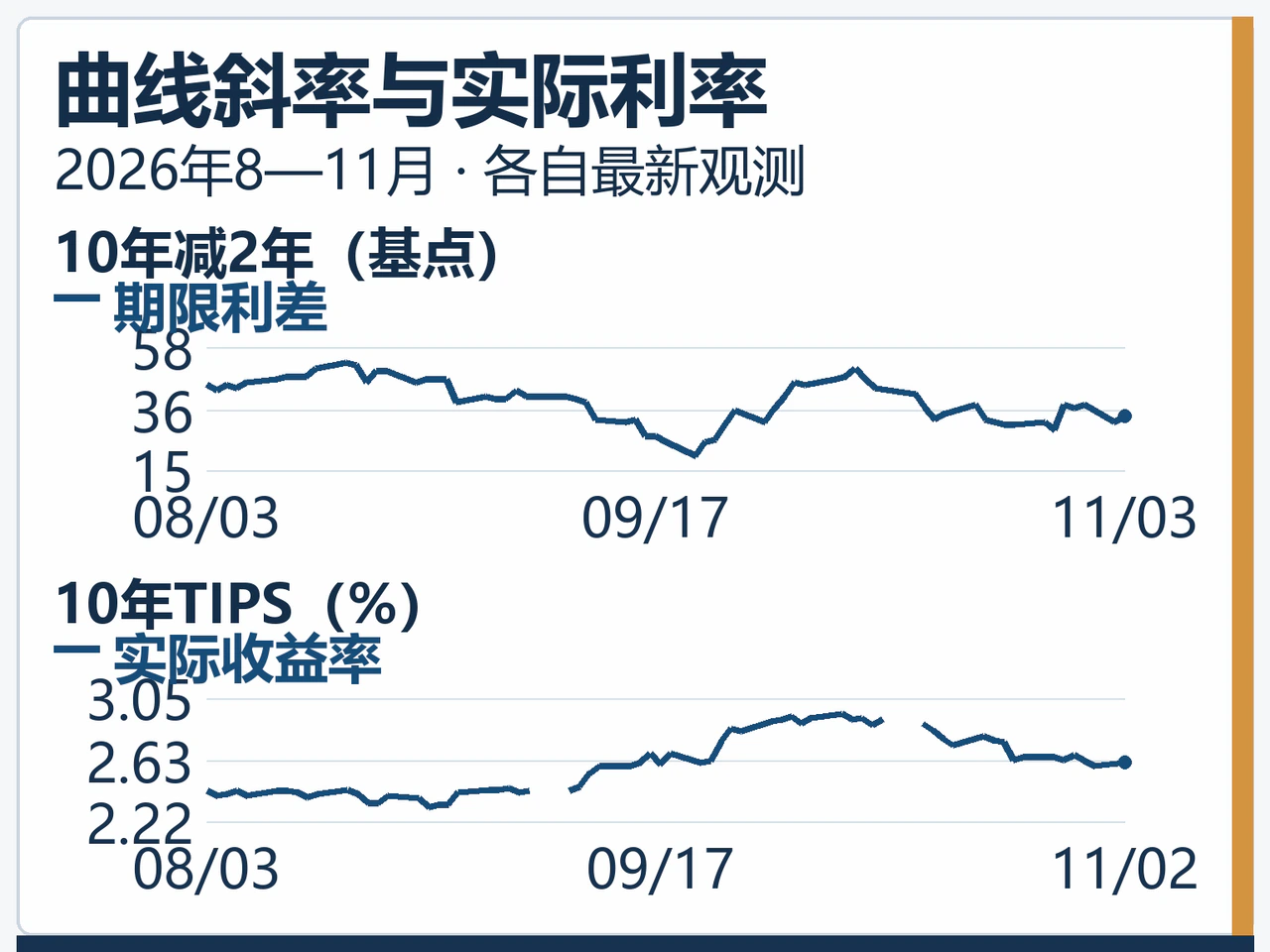
The strong economic data weakened expectations that a rapid deterioration in employment would force interest-rate cuts, and Treasury yields rebounded. The U.S. Treasury's November 3 end-of-day curve showed the two-year yield up 2 basis points from November 2 to 4.61%. Five-, 10- and 30-year yields each rose 4 basis points, to 4.74%, 4.95% and 5.32%, respectively. The 10-year minus two-year spread widened from 32 to 34 basis points. The slightly larger increase in intermediate and long-term yields raised the benchmark cost of long-term financing.
Over a longer horizon, the one-day move has not reversed the recent decline in Treasury yields. The two- and 10-year yields on November 3 were still 23 and 36 basis points below their respective October 5 levels of 4.84% and 5.31%. The next key test is the October nonfarm payrolls report, due at 8:30 a.m. Eastern Time on November 6, which will help establish whether hiring intentions are translating into actual job growth. The Reuters poll currently forecasts a 65,000 increase in nonfarm payrolls and an unemployment rate of 4.2%.
Chip stocks lead the Nasdaq 100 up 0.68% as AI debt financing comes under scrutiny
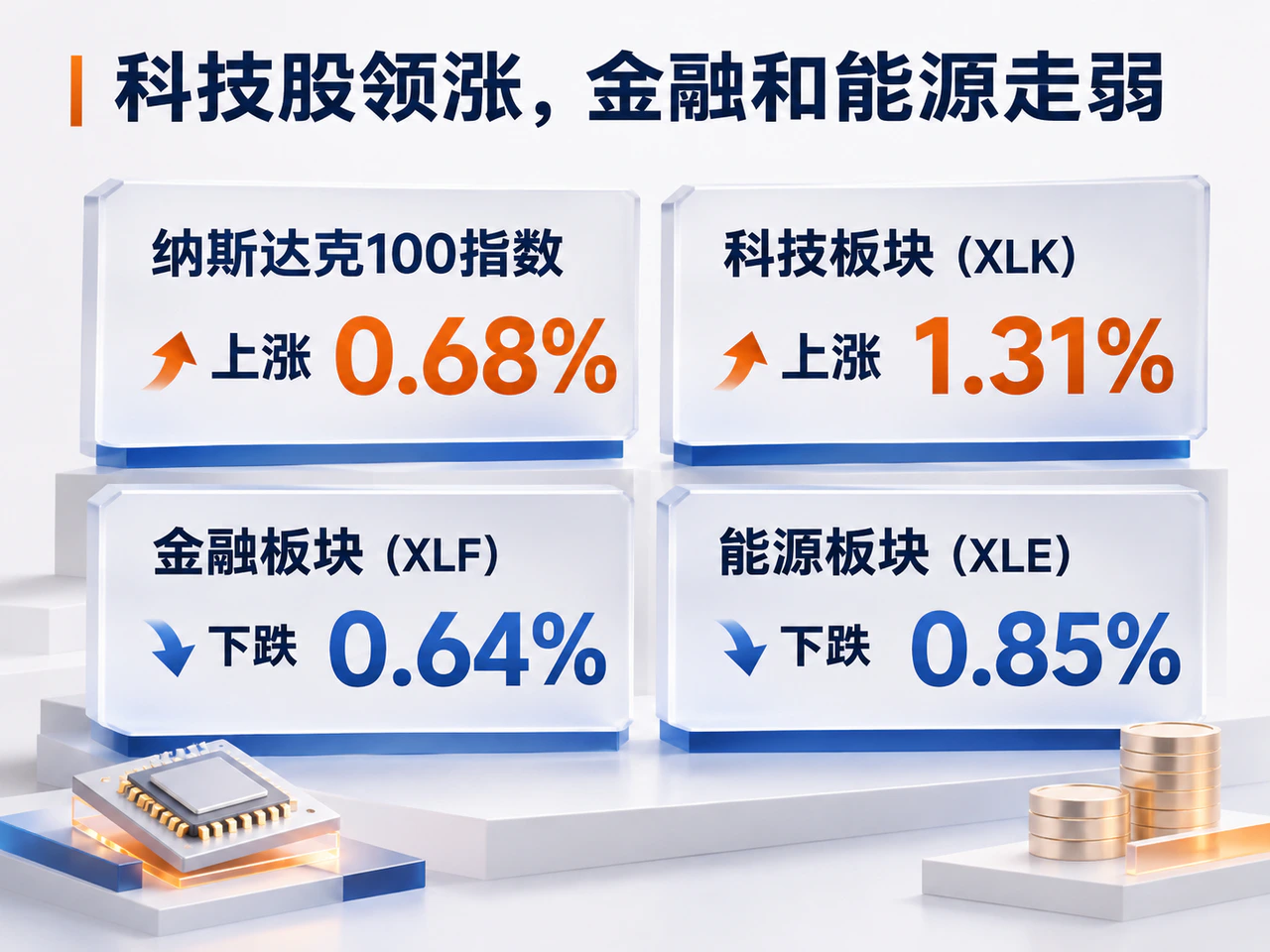
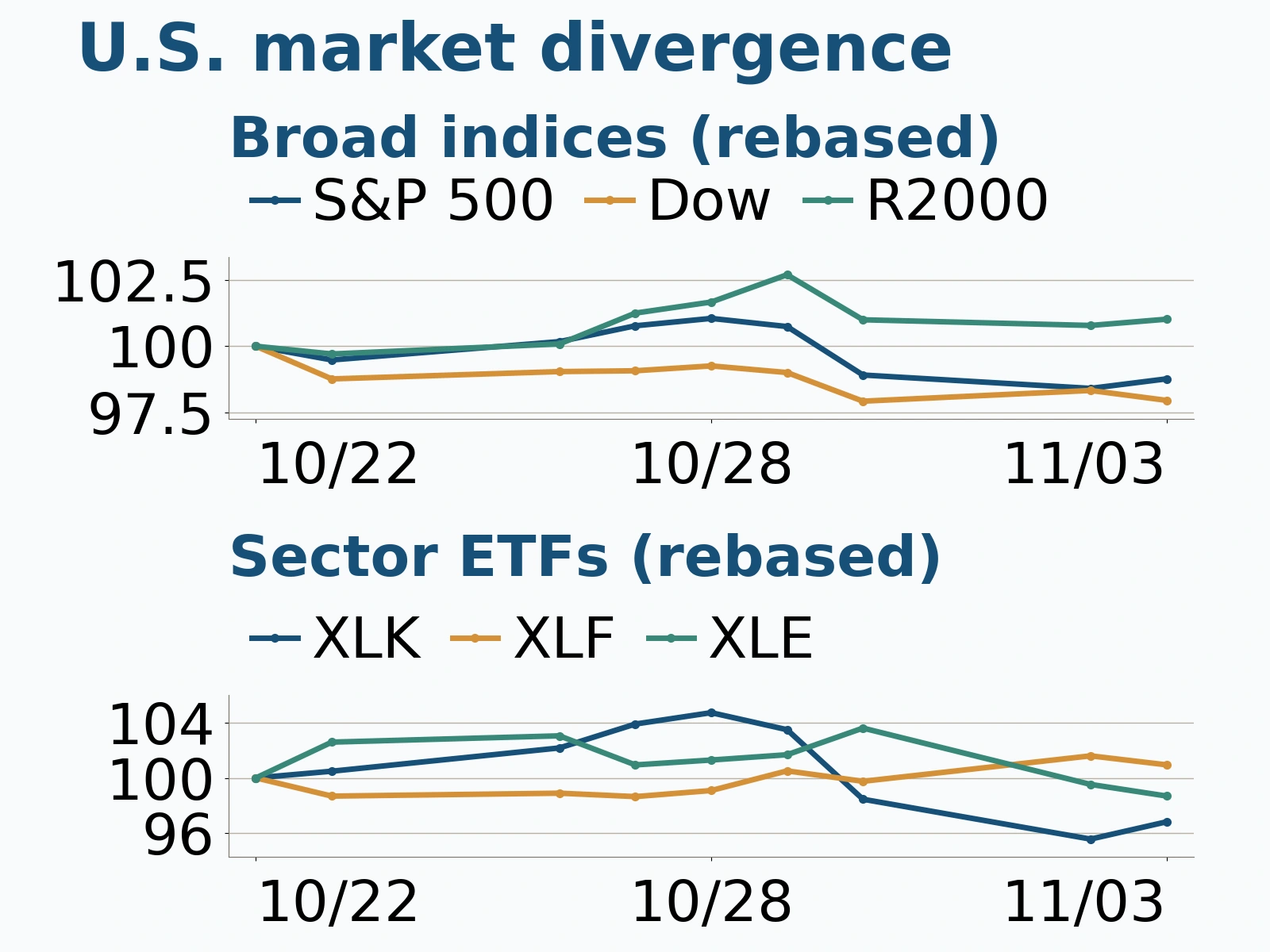
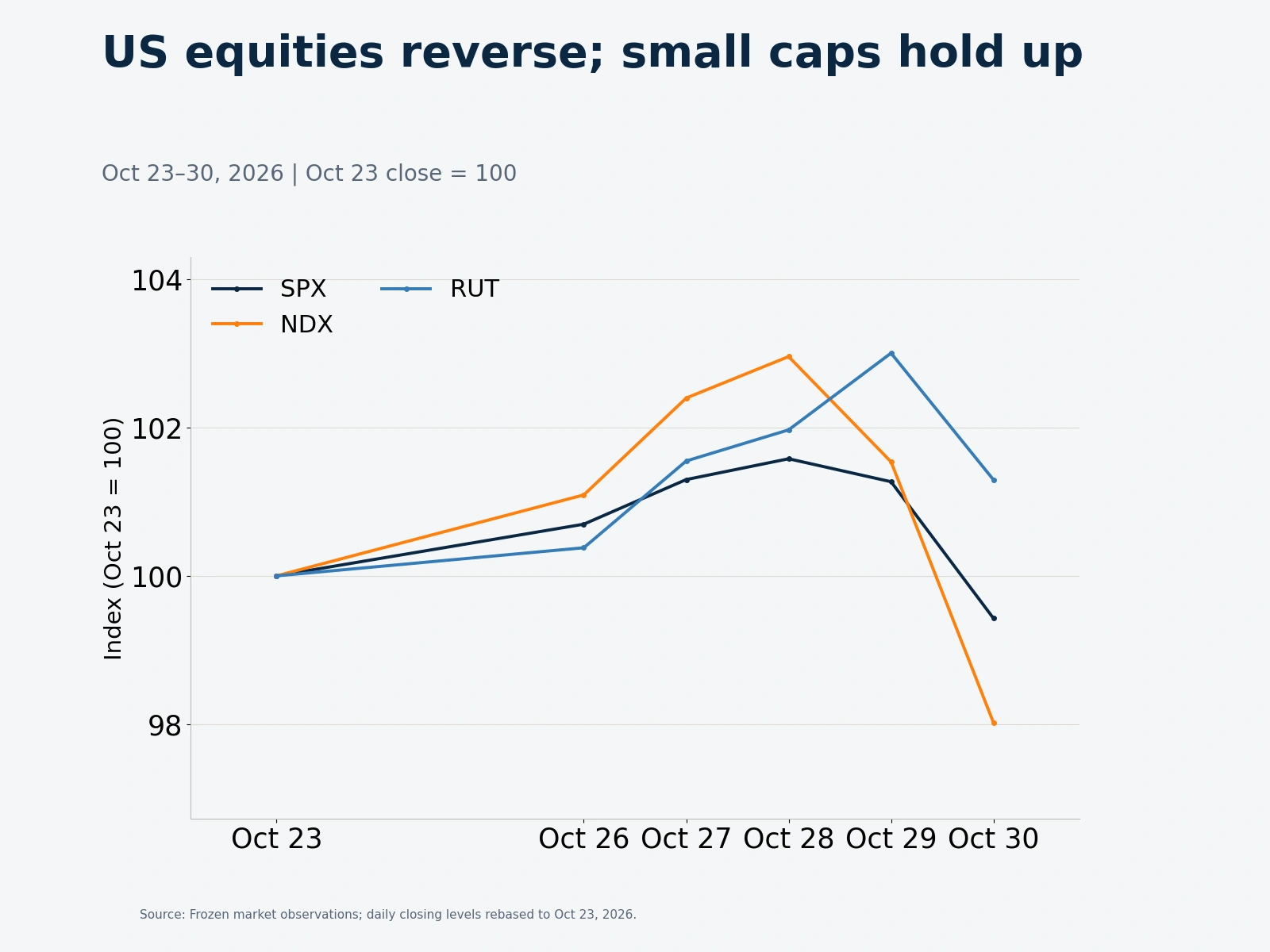
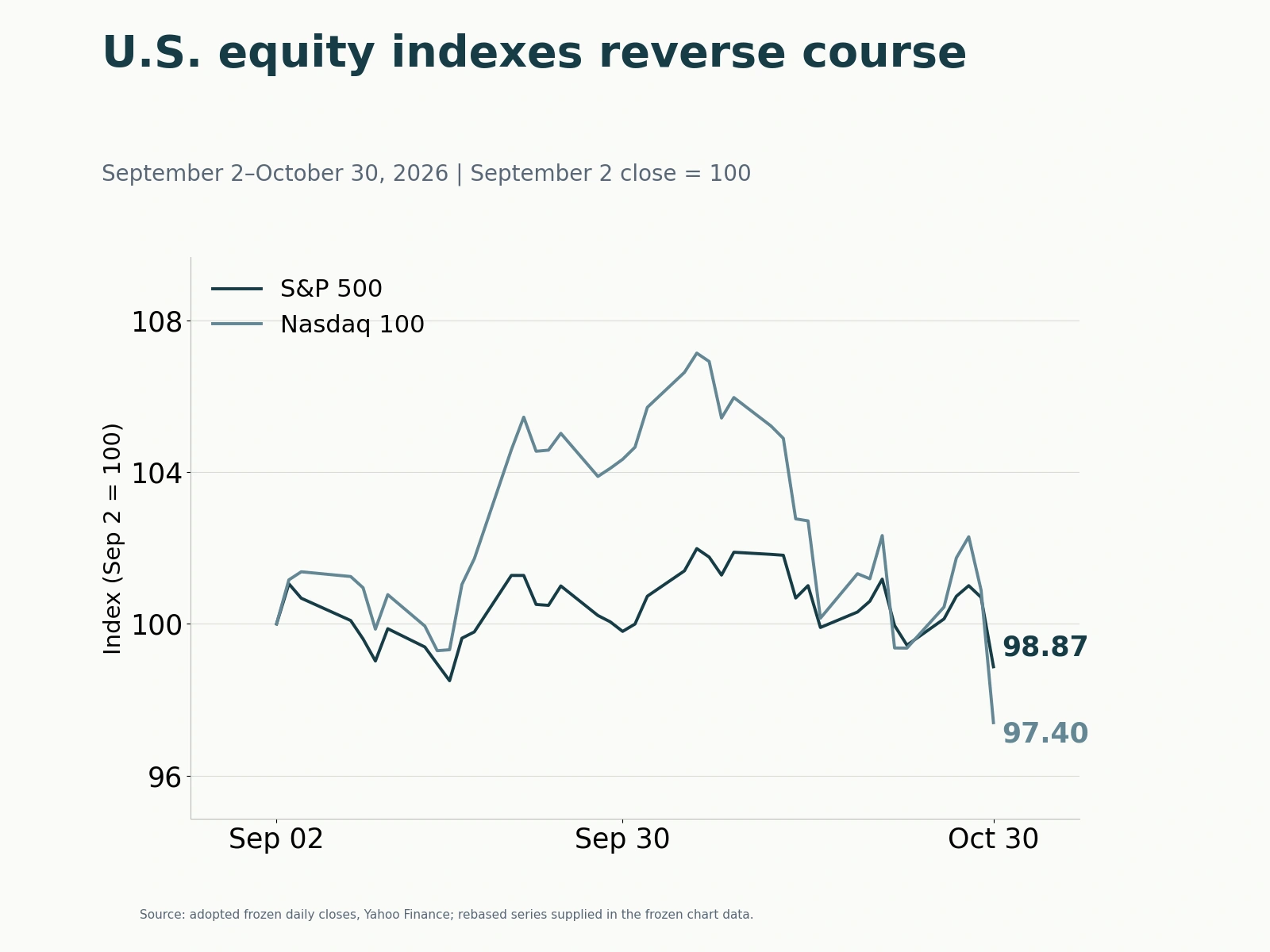
U.S. equities diverged on November 3. The S&P 500 closed at 7,568.92, up 0.36%, and the Nasdaq 100 finished at 28,180.26, up 0.68%. The Dow Jones Industrial Average fell 0.38% to 51,786.72, while the Russell 2000 gained 0.23%. Among sector ETFs, technology (XLK) rose 1.31%, while financials (XLF) and energy (XLE) declined 0.64% and 0.85%, respectively. Buying was heavily concentrated in technology stocks.
Individual stocks reflected investors' selectivity over earnings quality and capital expenditure. Among chipmakers, Nvidia and Micron Technology both gained more than 2%, Broadcom rose about 3%, and AMD gained more than 3% ahead of its results. Apple, by contrast, fell nearly 2% after the previous evening's weak margin outlook and disappointing iPad sales. Palantir also weakened after its results despite beating third-quarter revenue and profit expectations and raising its full-year revenue guidance. At current valuations, the extent to which companies meet expectations, and their subsequent capital investment needs, are driving a wider dispersion in share performance.
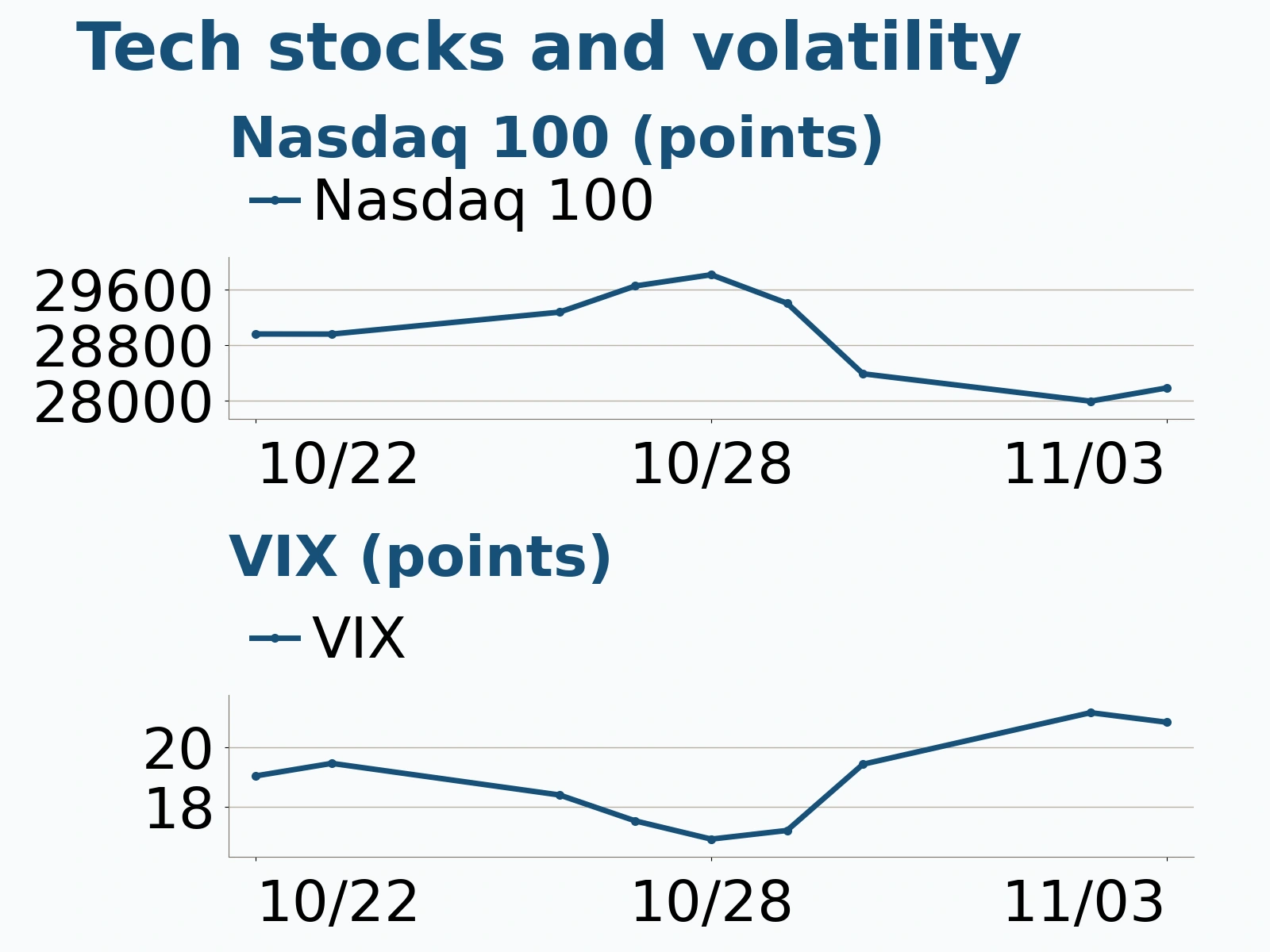
Looking at the recent swing in prices, the Nasdaq 100 had fallen from 29,813.16 on October 28 to 27,989.82 on November 2; the November 3 rebound recovered only a small part of those losses. Over the same period, the VIX rose from 16.91 to 21.15 before easing slightly to 20.83, leaving expected volatility elevated. Shawn Snyder, a strategist at Potomac Fund Management, said that although the AI trade was approaching oversold territory, concerns about the cost of capital and debt financing needs would persist. HSBC's Willem Sels similarly stressed that, despite strong earnings and economic cycles, the time lag between investment today and revenue realization in the future was the central tension.
The financing needs associated with AI capital expenditure have already reached the primary bond market. Quartz, citing Bloomberg on November 3, reported that Meta was marketing a five-tranche dollar bond offering with maturities ranging from five to 30 years. Its combined U.S. and European financing plans totaled at least $20 billion. Initial price guidance for the longest maturity was about 250 basis points above comparable Treasuries, with the final size and spreads still to be determined.
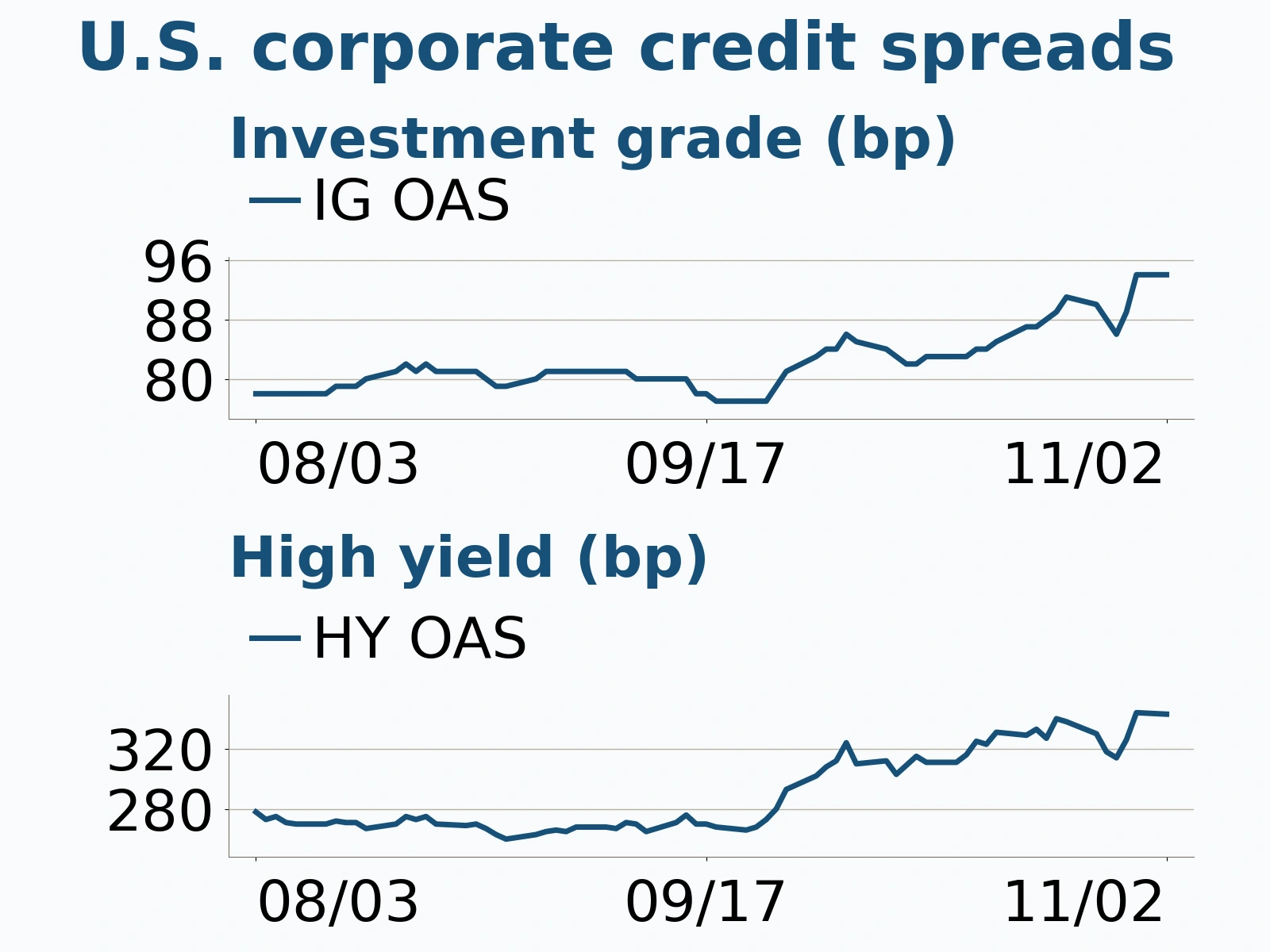
Broad credit spreads in the secondary market were relatively stable. ICE BofA indices disclosed on November 3 showed that the U.S. investment-grade corporate option-adjusted spread (OAS) on November 2 was unchanged from October 30 at 94 basis points, while the high-yield spread narrowed by 1 basis point to 343 basis points. Both, however, remained wider than on October 28, by 8 and 29 basis points, respectively. Long-duration dollar corporate bonds still have to absorb both fluctuations in benchmark Treasury yields and the earlier rise in credit risk premiums.
AMD jumps more than 7% after hours, confirming compute demand; Asia's technology supply chain faces divergent prospects
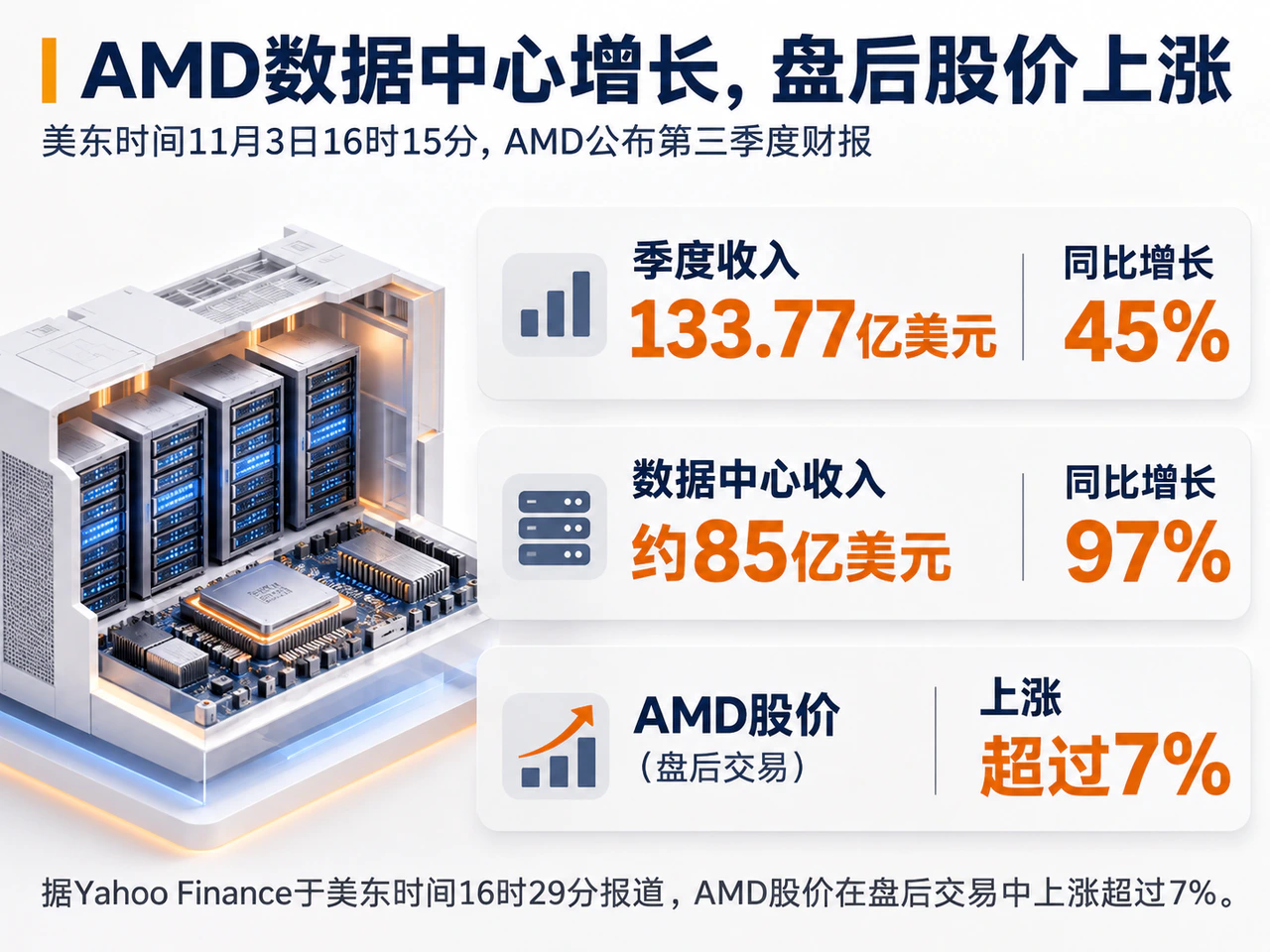
At 4:15 p.m. Eastern Time on November 3, AMD released its third-quarter results: revenue was $13.377 billion, up 45% year over year and 16% quarter over quarter, while non-GAAP earnings per share rose 74% year over year to $2.09. Demand for EPYC processors and the launch of the Instinct MI450 series GPUs helped data center revenue grow 97% year over year to approximately $8.5 billion. The company forecast fourth-quarter revenue of approximately $17 billion, plus or minus 3%; the midpoint implies year-over-year growth of about 66%. Yahoo Finance reported at 4:29 p.m. Eastern Time that AMD shares were up more than 7% in after-hours trading.
The results also showed uneven business performance and margin constraints. AMD's combined client and gaming revenue fell 8% year over year in the third quarter, including a 40% decline in gaming. The company forecast a fourth-quarter non-GAAP gross margin of about 55%, below the third quarter's 56%. Strong shipments from hardware suppliers directly corroborate demand for computing infrastructure, but the durability of this purchasing cycle will still depend on how quickly downstream cloud providers monetize applications and recoup their investment.
Because of the time difference, Asia's November 3 cash market trading had not yet reflected the U.S. close or AMD's earnings. South Korea's KOSPI fell 3.59% that day to 5,648.79. Hong Kong's Hang Seng Index gained approximately 0.57% to close near 23,525, but constituent Lenovo Group fell 6.11%. Japanese markets were closed for a public holiday.
As Asian markets reopen on November 4, AMD's guidance will provide demand-side support for South Korean memory chip companies, Japanese semiconductor equipment makers and Hong Kong-listed server-related businesses. The transmission into orders and profits, however, will depend on each company's customer mix and share of procurement. Meanwhile, Hong Kong-listed internet platform companies still need to balance AI capital expenditure, financing costs and commercialization revenue. Assets at different stages of the same supply chain may therefore continue to diverge.
Increased Middle Eastern physical supply weighs on oil; real interest rates constrain gold
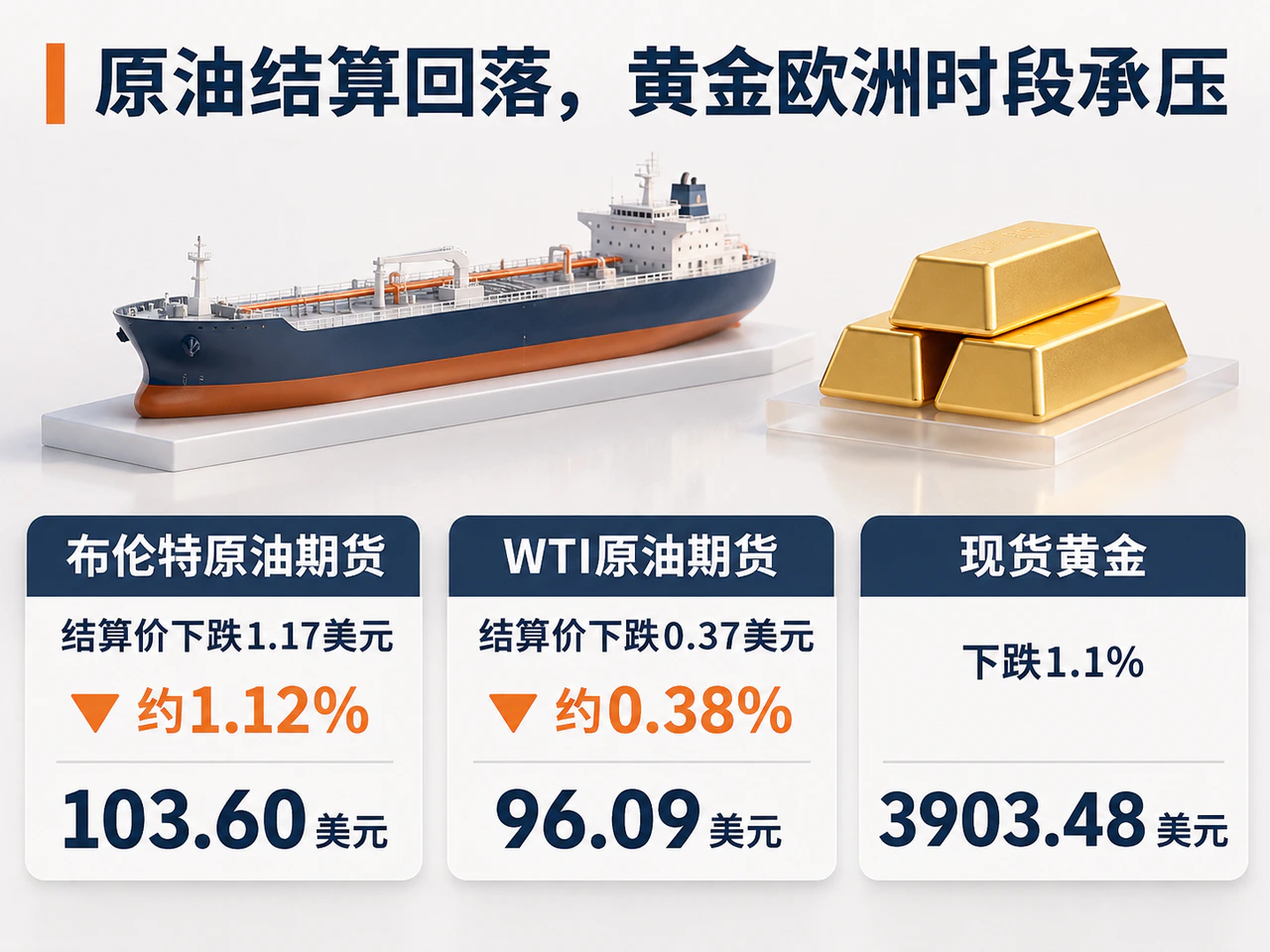
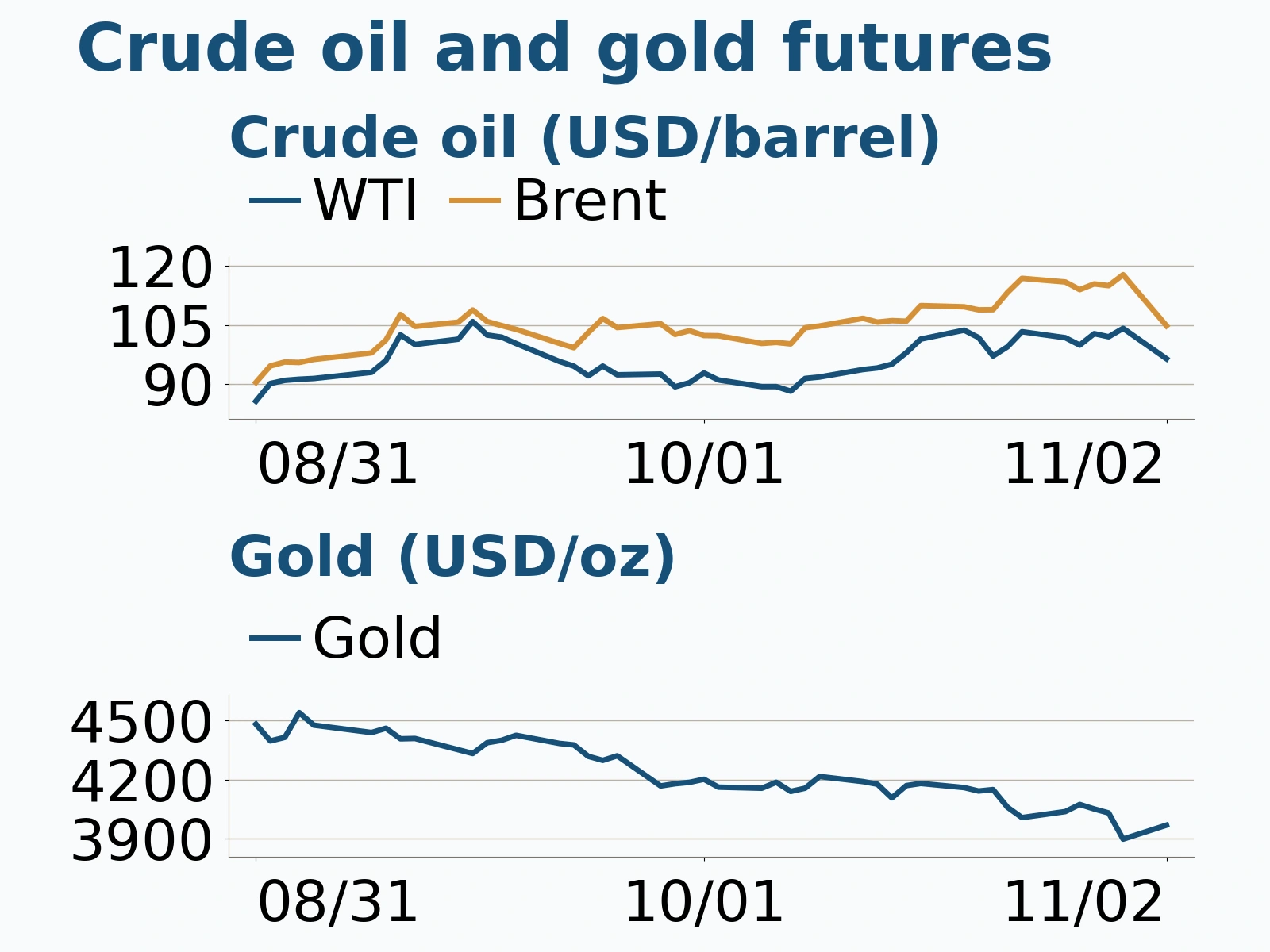
Commodities likewise reflected the interplay between supply-and-demand fundamentals and financial conditions. Reuters reported that Brent crude futures settled $1.17 lower, or approximately 1.12%, at $103.60 a barrel on November 3. WTI crude futures settled down $0.37, or approximately 0.38%, at $96.09 a barrel. After overnight trading reopened on the morning of November 4 Beijing time, the two recovered to $104.33 and $96.69, respectively. On geopolitics, Qatar's mediation continued, and diplomatic progress prompted oil to relinquish part of its risk premium. U.S. and Iranian accounts still differed on how close an agreement was, however, and the possibility of escalation continued to sustain intraday volatility.
A more tangible source of downward pressure on oil was the improvement in physical supply. Bloomberg reported on November 3 that, early in the week, November Dubai crude traded at a discount of approximately $2 a barrel to the December contract, with the nearer month below the later month, signaling relatively ample crude available for prompt delivery. Data compiled by Bloomberg showed that combined crude exports from Saudi Arabia, the United Arab Emirates, Iraq and Kuwait rose approximately 10% month over month in October to more than 15 million barrels a day. Increased near-term supply helps ease Asian refiners' crude procurement costs and global energy inflation pressures. Whether that increase persists matters more for the extent of an easing in elevated oil prices than any single day's diplomatic headlines.
Precious metals were primarily constrained by interest rates and holding costs. According to Reuters prices at 12:02 GMT on November 3, spot gold was down 1.1% at $3,903.48 an ounce, while December U.S. gold futures fell 1.4% to $3,913.80; an overnight snapshot on the morning of November 4 Beijing time showed the latter recovering to $3,938.60. As a non-interest-bearing asset, gold continues to face the opportunity cost imposed by high interest rates. The U.S. 10-year Treasury Inflation-Protected Securities (TIPS) real yield rose 2 basis points from October 30 to 2.62% on November 2, and nominal Treasury yields rose further on November 3.
The composition of gold demand was also diverging. Reuters, citing World Gold Council forecasts, reported that the council had cut its forecast for the full-year increase in gold investment demand from 400 tonnes to 200 tonnes because of weak bar and coin demand, while raising its forecast for purchases by global central banks. The opposing effects of central bank buying, private investment demand and interest costs make it difficult for a single safe-haven narrative to dominate gold prices. Oil and gold consequently weakened together.
U.S. midterm elections and quarterly refunding approach as policy focus shifts to financing and operating costs
November 3 was U.S. midterm election day, and markets were assessing policy paths under different combinations of congressional control. Mark Haefele, chief investment officer at UBS Global Wealth Management, said the most immediate effects of a change in congressional control would be stronger oversight of the executive branch and more difficult fiscal negotiations. For AI data center construction, potential investigations, hearings and approval procedures could lengthen the time before investments pay off, although analysts interviewed by Reuters generally expected no legislation severe enough to materially impede construction. Fiscal risks run in both directions. A divided Congress could intensify friction over government shutdowns and debt-ceiling negotiations. Republican control of both chambers, by contrast, could extend deregulation and bring tax cuts or a larger defense budget. While this would improve the corporate permitting environment, long-dated Treasuries would face greater financing supply and a higher fiscal risk premium.
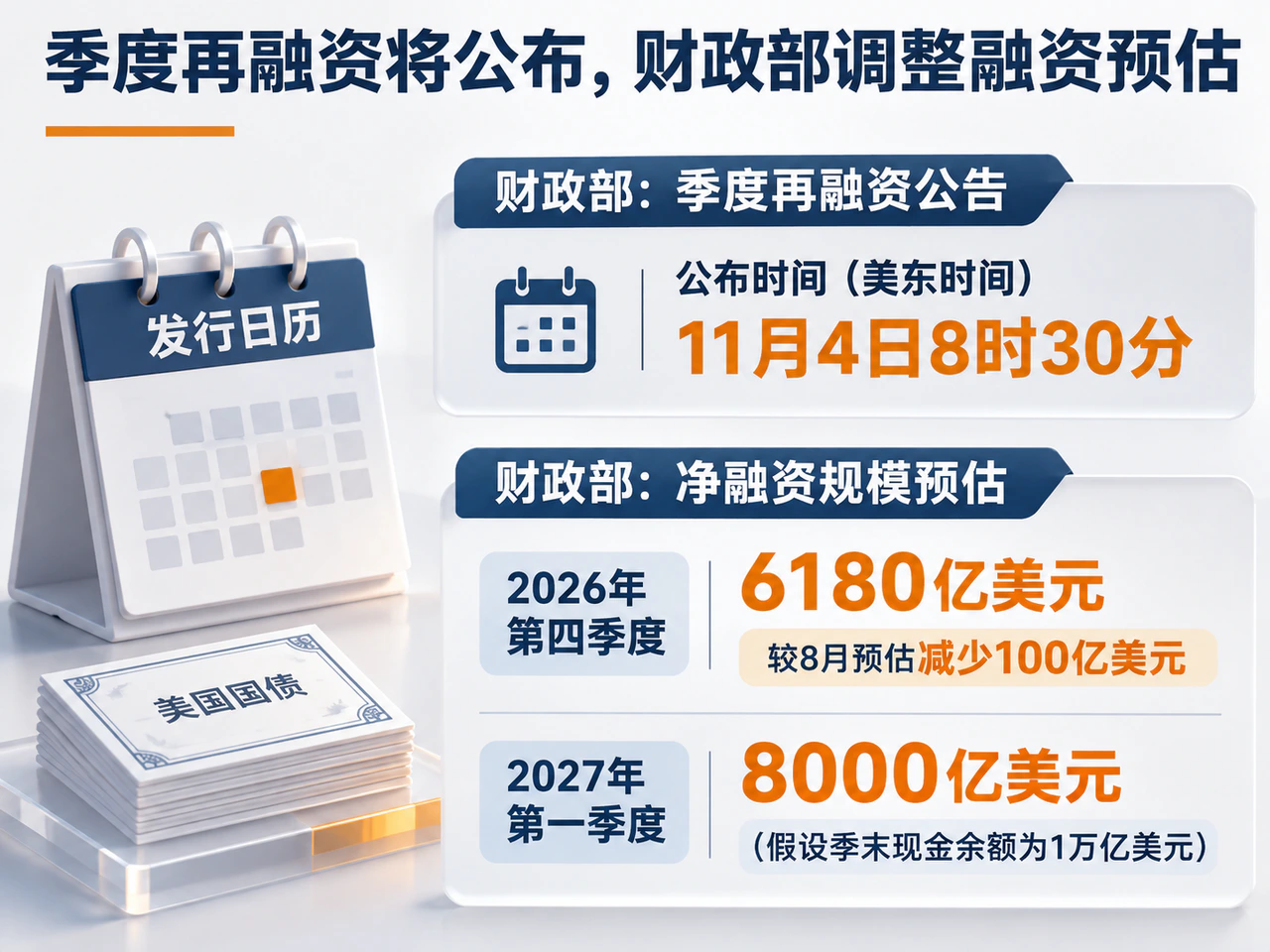
The more clearly defined near-term milestone for Treasury supply is the U.S. Treasury's quarterly refunding announcement, due at 8:30 a.m. Eastern Time on November 4. On November 2, the Treasury estimated net privately held marketable borrowing of $618 billion for the fourth quarter of 2026, $10 billion below its August estimate. The adjustment mainly reflected a higher-than-assumed opening cash balance; excluding that factor, estimated borrowing needs actually increased by $24 billion. The Treasury also projected net borrowing of $800 billion for the first quarter of 2027, assuming an end-of-quarter cash balance of $1 trillion. Primary dealers generally expected coupon auction sizes to remain unchanged in this announcement, with attention focused on the allocation across maturities and guidance on future changes in issuance sizes.
Several developments in industrial and regulatory policy centered on companies' operating and capital costs:
- North American trade negotiations: Trump said on November 3 that the United States was close to a trade agreement with Canada that would include tariff-free fertilizer. If finalized, it would help lower agricultural input costs.
- Energy asset acquisitions: Reuters, citing sources the same day, reported that a consortium led by Todd Boehly was preparing to acquire Lukoil's overseas assets through a securities swap. The proposed transaction's actual effect on supply will depend on whether the relevant oilfields and refineries can maintain normal operations after the transfer of ownership and the approval of operating licenses.
- European banking regulation: On November 3, ECB Supervisory Board member Pedro Machado supported reducing duplicate reporting and applying more proportionate supervision to smaller banks. He also advocated maintaining capital standards and retaining the output floor, which limits the extent to which internal models can reduce capital requirements. European banks may therefore see compliance costs fall, but their room for dividends, buybacks and credit expansion will remain subject to strict capital constraints.
China's central bank raises the foreign-currency deposit reserve ratio to 6% to ease one-way renminbi appreciation
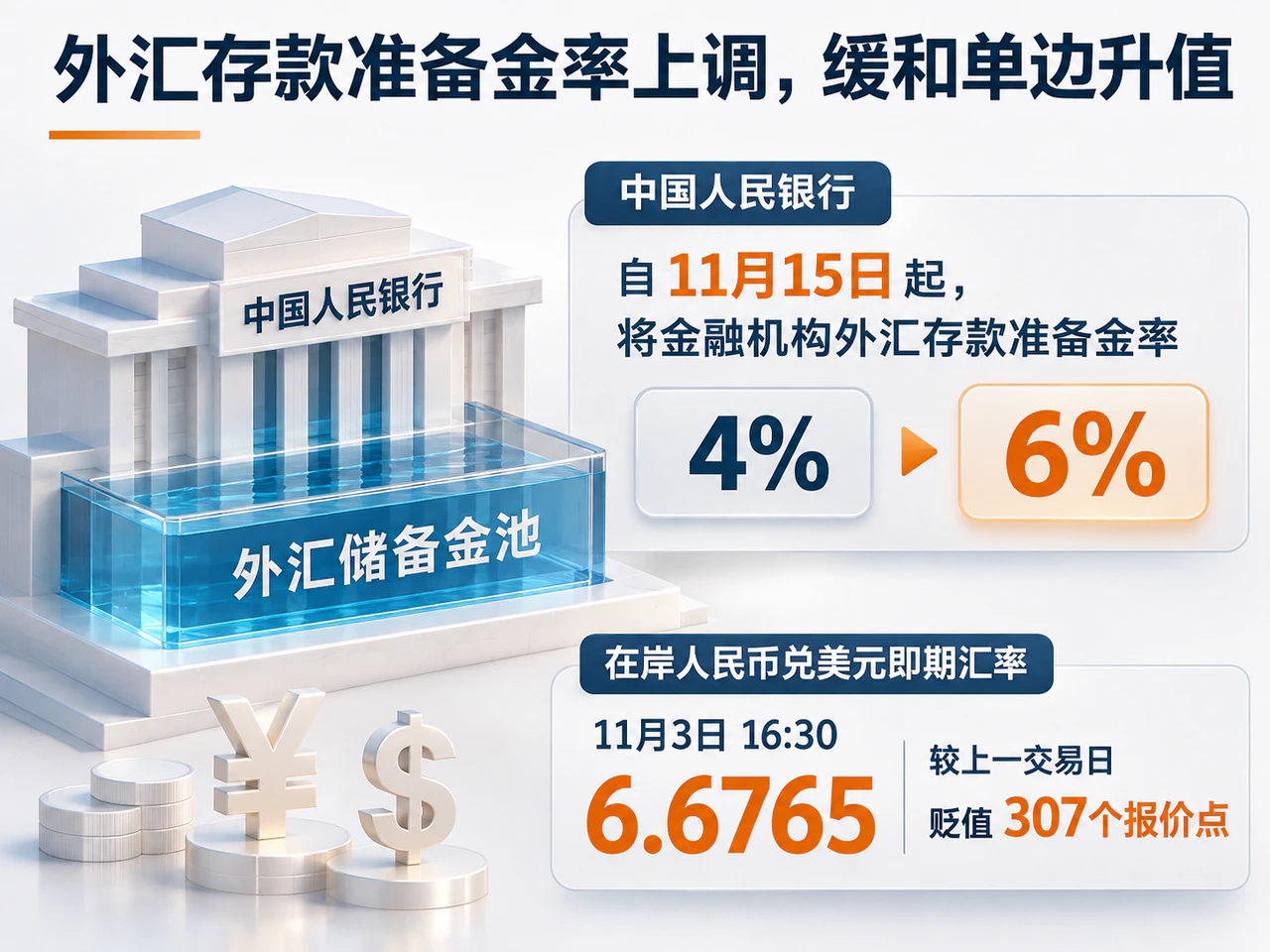
In Asian foreign-exchange markets, the People's Bank of China announced on November 3 that it would raise financial institutions' foreign-currency deposit reserve requirement ratio from 4% to 6%, effective November 15. The move followed a sustained strengthening of the renminbi, with the onshore currency appreciating past 6.65 per U.S. dollar on November 2. By increasing the amount of foreign currency banks must place in reserve and reducing the supply of available onshore foreign-exchange liquidity, the measure aims to ease one-way appreciation pressure. At 4:30 p.m. on November 3, the onshore renminbi spot rate closed at 6.6765 per dollar, a depreciation of 307 pips from the previous trading day.
Xinhua cited an estimate by Ming Ming, chief economist at CITIC Securities, that the adjustment would lock up approximately $20 billion to $25 billion in foreign-exchange liquidity within the banking system. For individual companies, a slower pace of renminbi appreciation helps ease currency translation pressure on exporters. At the same time, import procurement costs and foreign-currency debt repayment costs will rebalance as the exchange rate moves in both directions. Taken together, U.S. end-market industry demand, long-term dollar financing costs and renminbi exchange-rate flexibility will form the external constraints on the next phase of earnings and valuation reassessments for Asian companies.