On November 5, 2026, RedStone announced a partnership with Hadron, Tether’s asset tokenization platform, to provide issuers with pricing and net asset value data and infrastructure for fast settlement. The partnership shifts competition in real-world assets (RWAs) further toward how they are used after issuance. To serve as collateral, an asset must be transferable on-chain and convertible into cash quickly at liquidation. Recent operating data show that fees across public blockchains, trading applications and lending applications have moved in different directions. Business mix, sources of revenue and how much protocols retain explain more of the divergence than a broad measure of on-chain activity.
Ethereum fees rise 27.2% as Base fees fall 44.2%
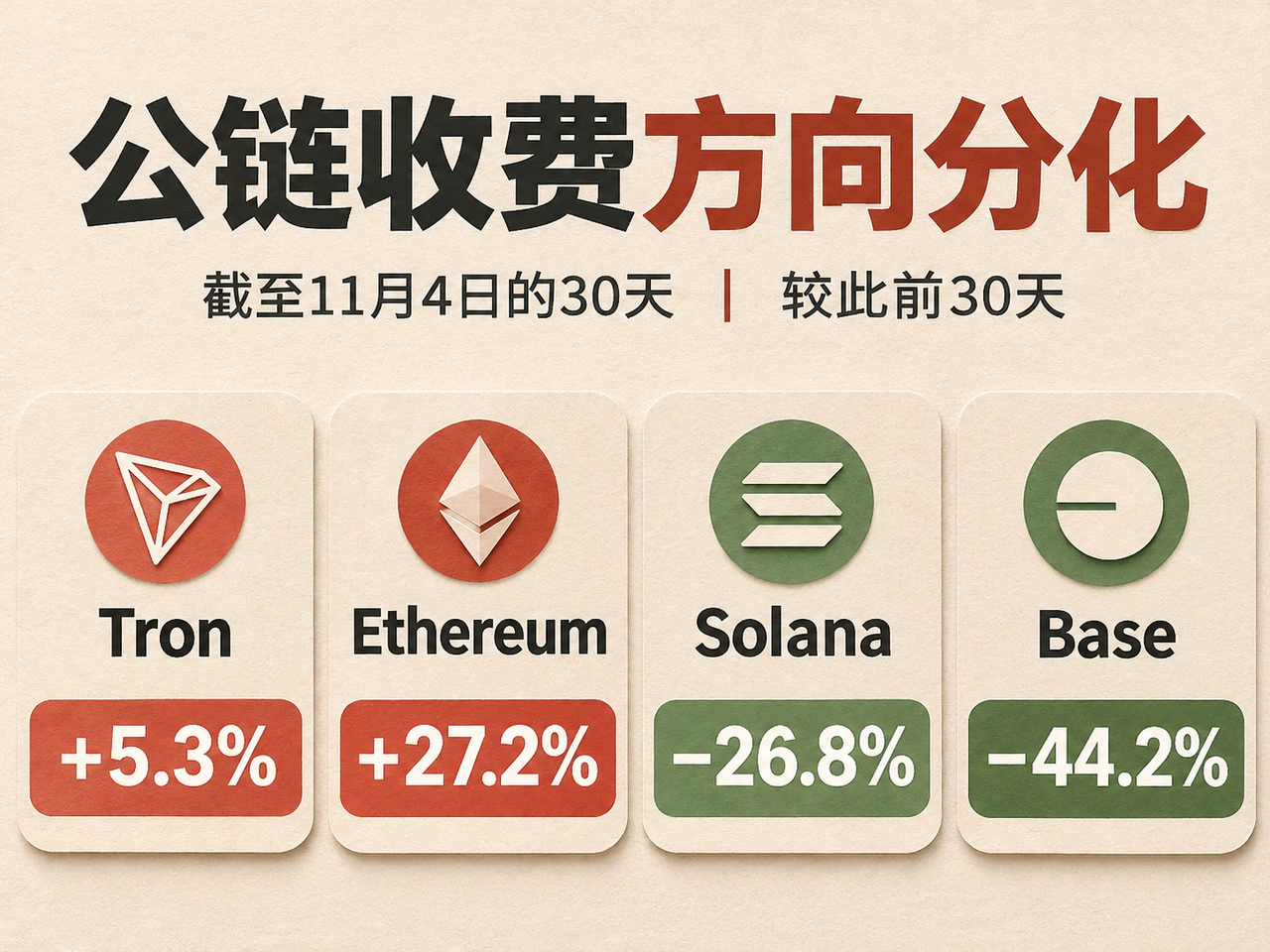
Using DefiLlama’s comparable full-day data, Tron generated about $24.89 million in on-chain fees in the 30 days through November 4, up 5.3% from the preceding 30 days. Ethereum rose 27.2% to about $21.40 million, Solana fell 26.8% to about $19.87 million, and Base fell 44.2% to about $2.51 million. All four networks provide blockspace for on-chain transactions, yet their fees moved in different directions.
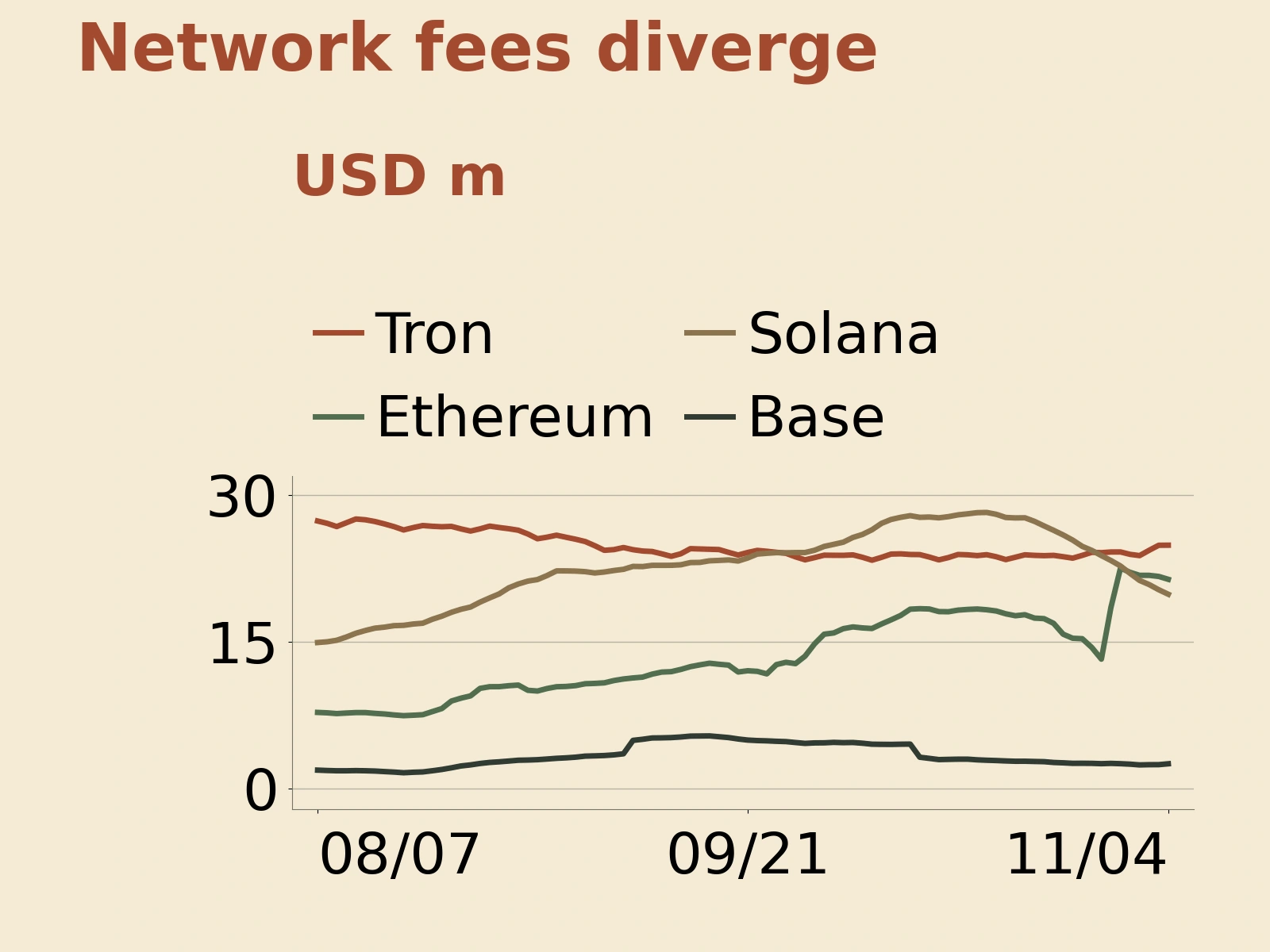
Fees are the costs users actually pay, reflecting the volume and mix of transactions and the fees charged per transaction. Ethereum’s rebound means users paid more in aggregate for its blockspace. The declines on Solana and Base need to be interpreted in light of changes in application activity and transaction costs. A low-fee network can handle more activity without a proportional rise in fees, so transaction counts alone say little about economic value.
Spot volume falls 16.5% as Aave user fees rise 6.1%
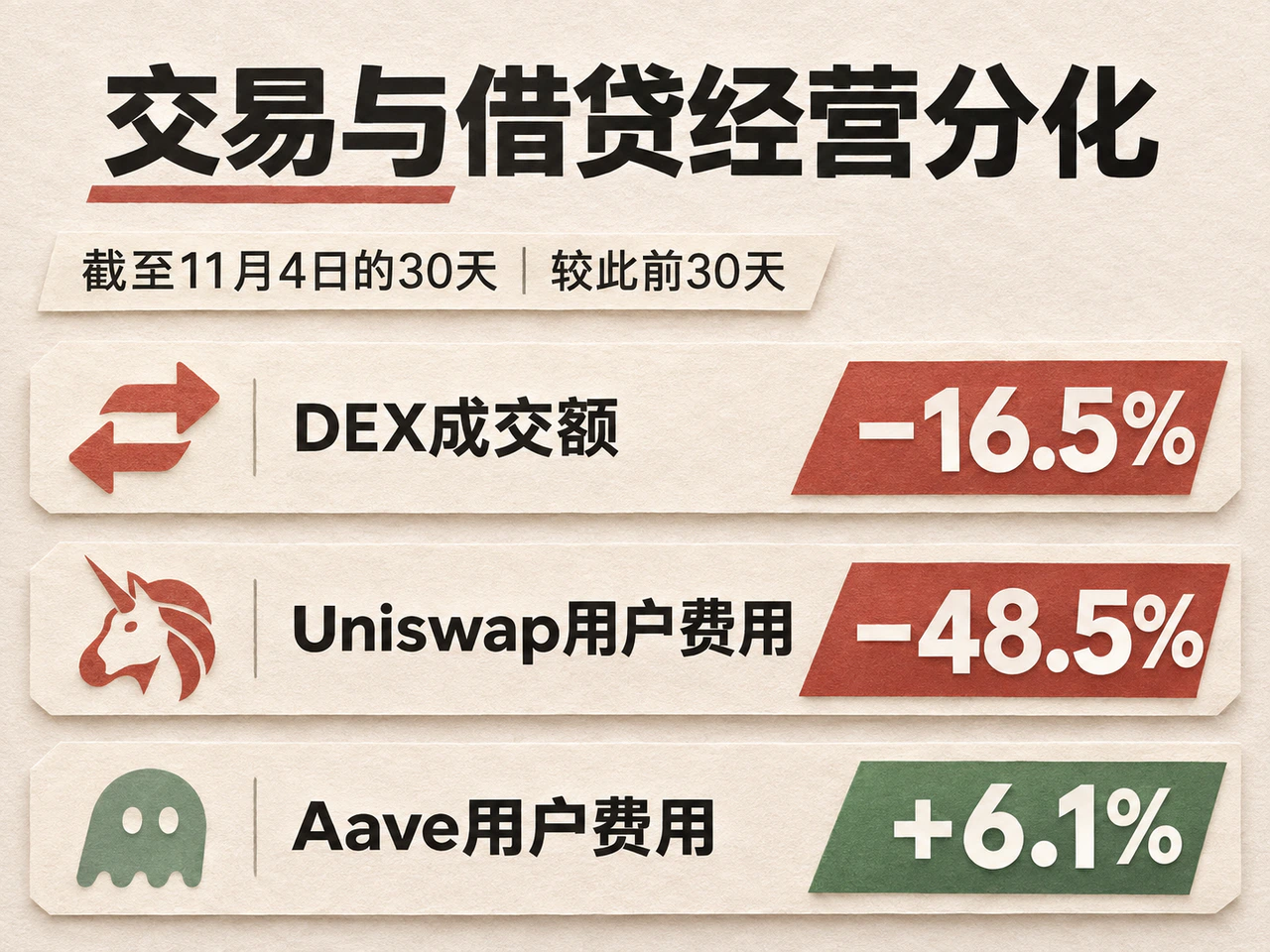
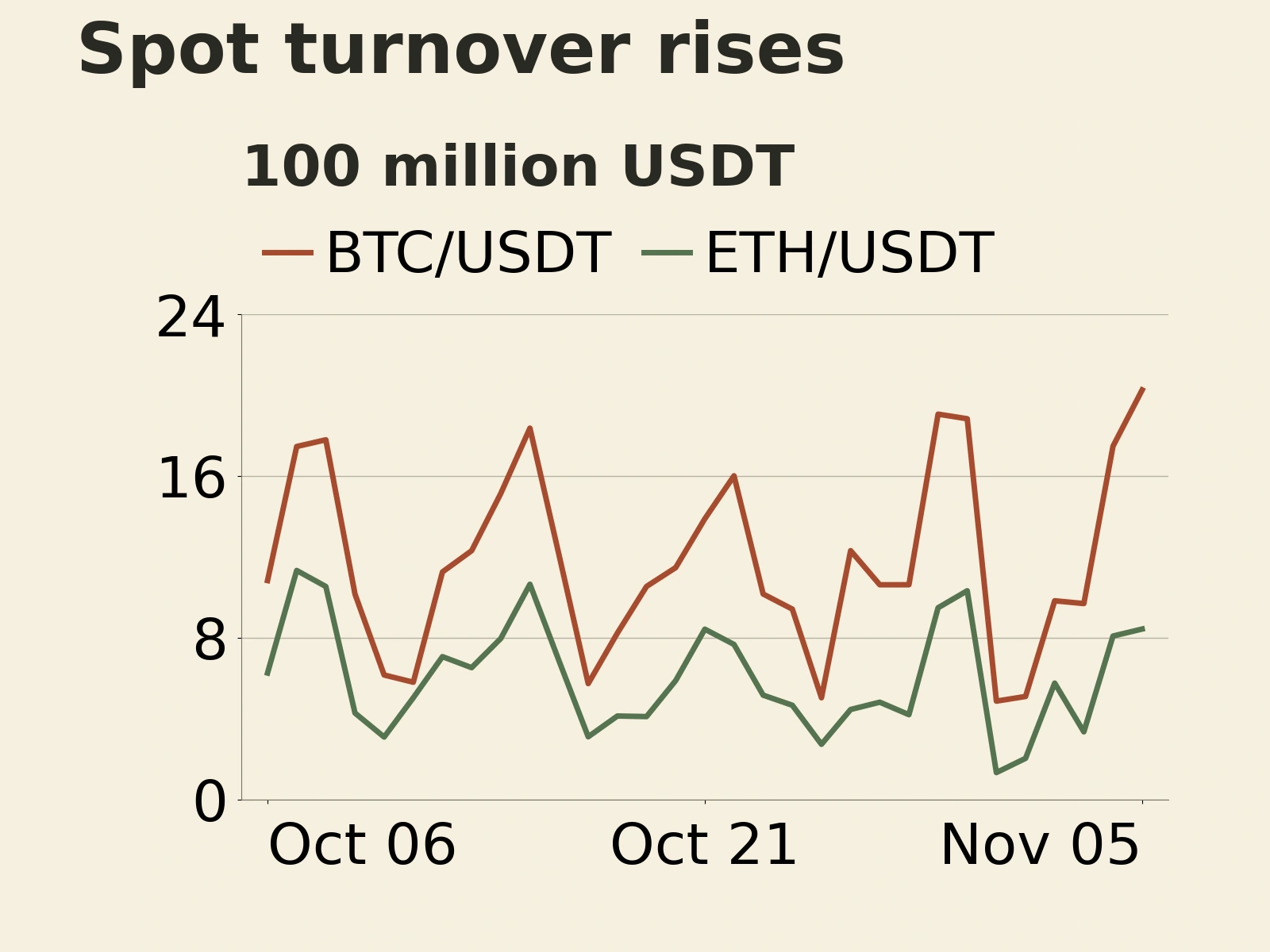
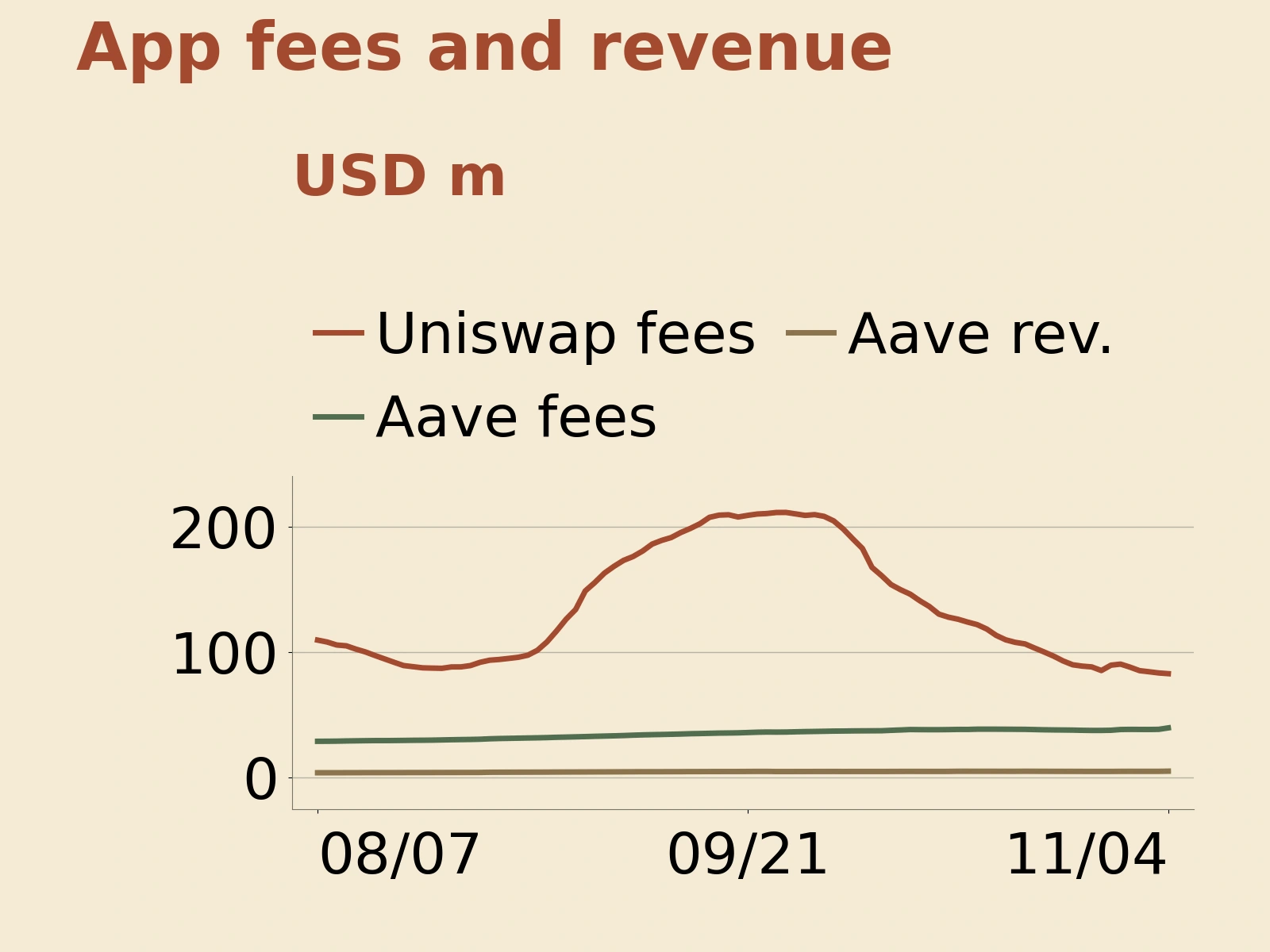
Application-level data also showed no broad-based recovery. Over the same period, spot trading volume on decentralized exchanges tracked by DefiLlama totaled about $250.4 billion, down 16.5% from the preceding 30 days. Uniswap’s user fees fell 48.5%, while Aave’s rose 6.1% to $39.63 million. Fees for trade execution and lending services have diverged, making business mix more informative than overall activity.
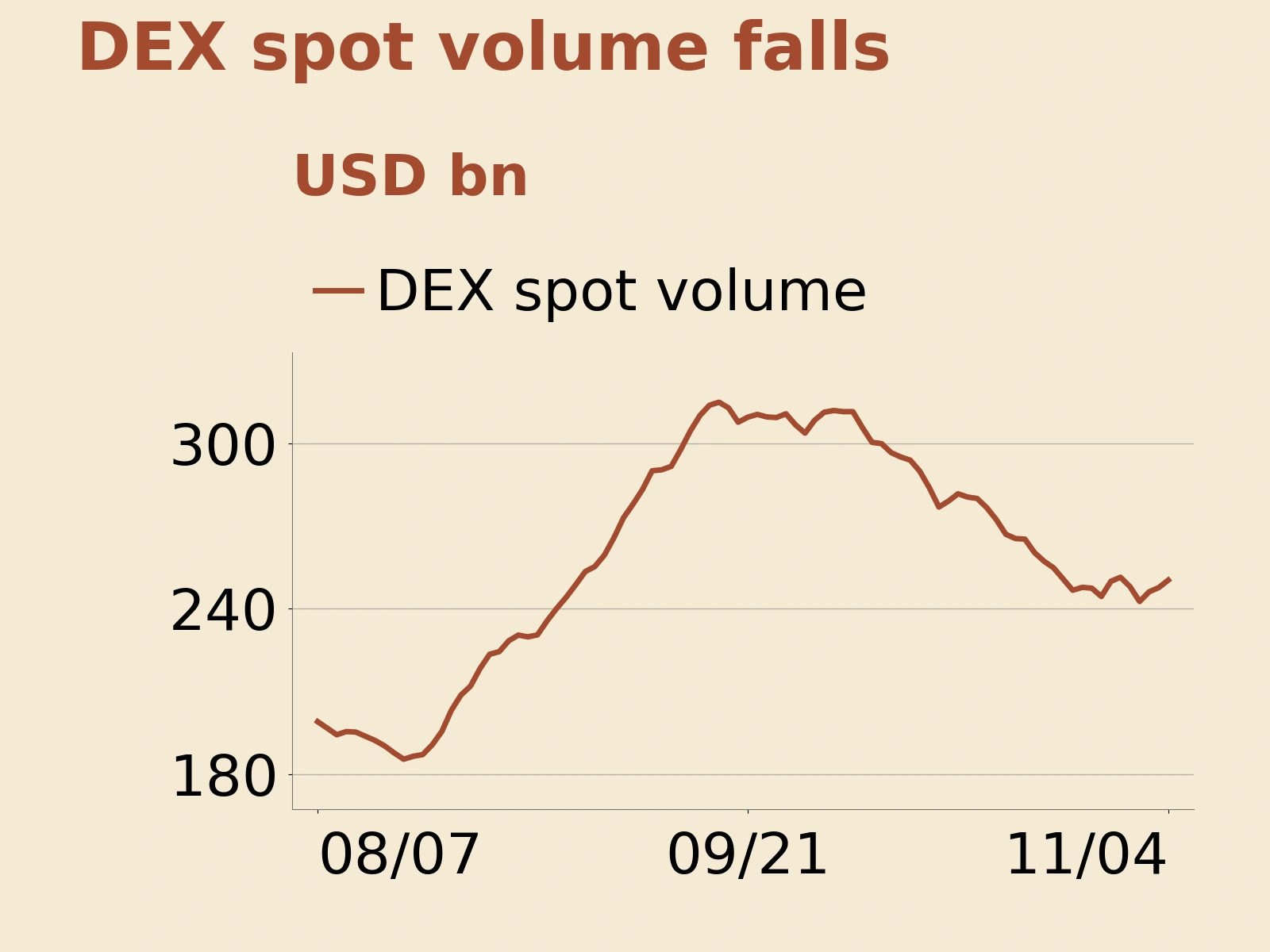
Aave’s protocol revenue over the same period was about $5.15 million, well below the total fees users paid. Most of the remainder went to compensate liquidity suppliers. Borrowing demand, funding costs and the share the protocol retains all shape its results. For tokenholders, the next question is whether protocol revenue flows through to the token via buybacks, burns or distributions. User fees, protocol revenue and tokenholder returns measure distinct things.
These differences also help explain the attention paid to real-world assets. Trading demand often follows swings in crypto prices, while corporate cash management, collateral and payment settlement have business cycles of their own. Whether these activities generate steady demand depends on whether the services address practical needs. In its November 5 announcement, Ondo said its tokenized products were available across 10 blockchains, with products linked to U.S. equities and ETFs spanning Ethereum, Solana and BSC. As issuers expand across chains, competition increasingly turns on how easily the assets can be transferred, pledged and sold or redeemed.
Competitive bidding speeds RWA liquidations and shifts the redemption wait to liquidity providers
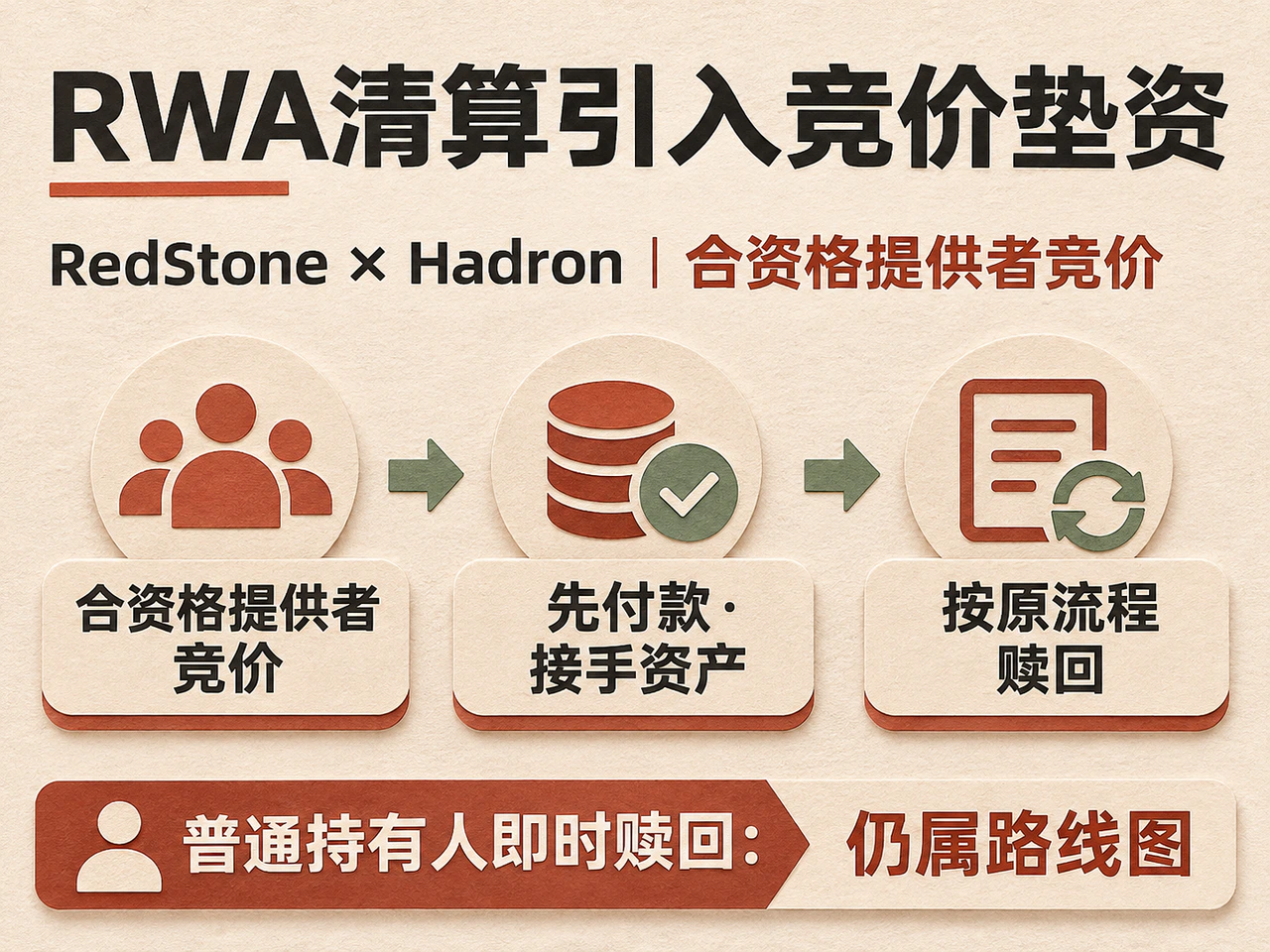
The RedStone–Hadron partnership addresses the time gap between selling collateral and redeeming the underlying asset. Lending protocols need to dispose of collateral quickly, while real-world assets follow their own redemption schedules. Putting fund shares on a blockchain can speed up the updating of transfer records, while the fund’s settlement calendar, investor eligibility rules and cash requirements still apply. Synchronizing price updates with cash settlement makes these assets easier to use in lending.
Under the design outlined in RedStone’s announcement, when a collateral position needs to be liquidated, liquidity providers whose business identities have been verified bid to take over the asset and pay for it immediately. They then redeem it through the issuer’s existing process. Issuer requirements for holder identity and allowlisting still apply, and several providers can share a large position. This lets the lending protocol recover cash sooner and shifts the wait for redemption to participants that are eligible and have the capital to fund it.
The mechanism puts a price on waiting. Providers tie up capital and take on price risk, redemption delays and the risk of unwinding the asset. The discount embedded in their bids compensates them for these costs and risks. In stable markets with enough bidders, competition can lower the cost of exiting. When market stress intensifies, less capital may be available to advance, discounts may widen and providers may be able to absorb smaller positions. The reliability of fast settlement ultimately depends on how much capital is actually available.
The two features are at different stages. RedStone lists liquidation settlement for lending protocols as an existing capability, while the announcement’s FAQ puts near-instant redemption for ordinary holders on the roadmap. The liquidation arrangement serves a specific use case. Redemption at net asset value on demand for all holders is a separate capability.
As tokenized assets expand across chains, oracles, compliant liquidators and liquidity providers will together determine whether those assets can serve as usable collateral. The indicators to watch are actual use as collateral, discounts on completed liquidations and the size of positions providers can absorb during periods of stress. Growth in issuance gives the business a base to build on. A reliable way to exit is what can turn the stock of issued assets into revenue from lending, settlement and other on-chain services.
Click “Read the original” for more details.