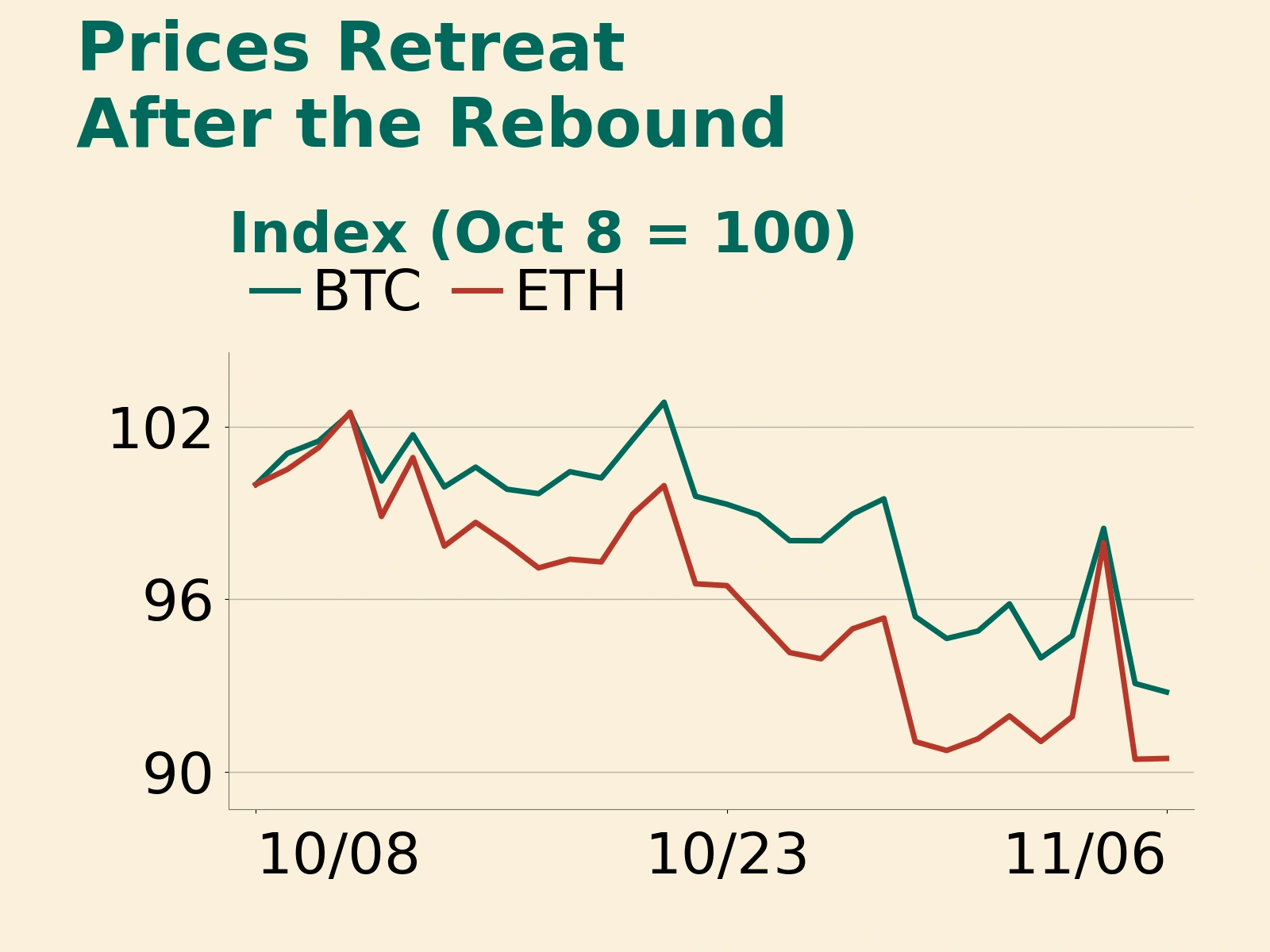
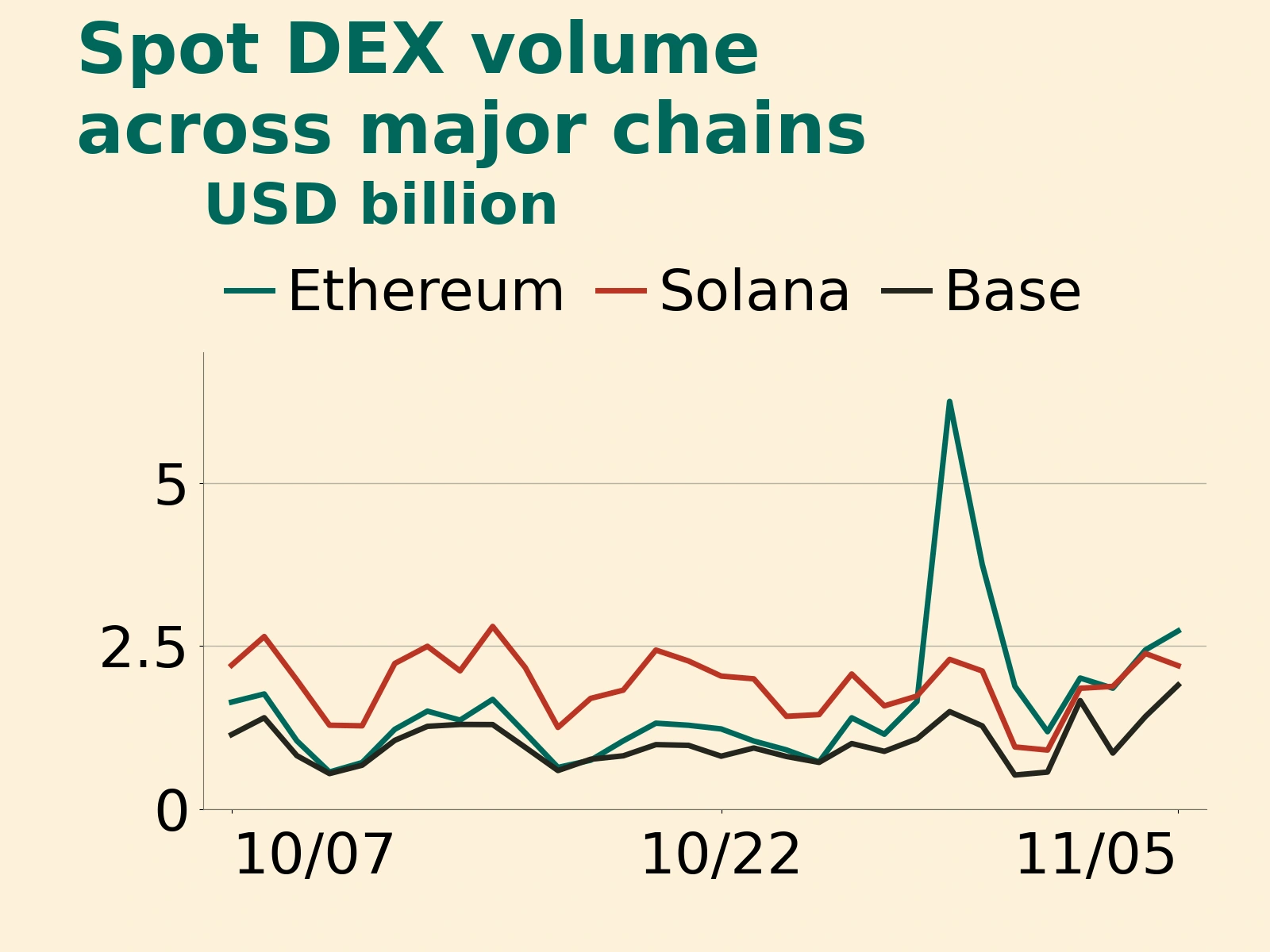
On November 5, 2026, U.S. spot Bitcoin and Ether ETFs recorded combined net outflows of $530 million, exceeding their combined inflows in the preceding trading session. On November 6 UTC, the circulating market capitalization of dollar-pegged stablecoins continued to decline, while open interest in two major Binance perpetual contracts recovered after the previous day's sharp sell-off. Spot allocation capital was still leaving as short-term derivatives positions began to rebuild, putting the two on diverging paths.
Spot ETFs return to net outflows as stablecoin market capitalization falls about 2% in a week

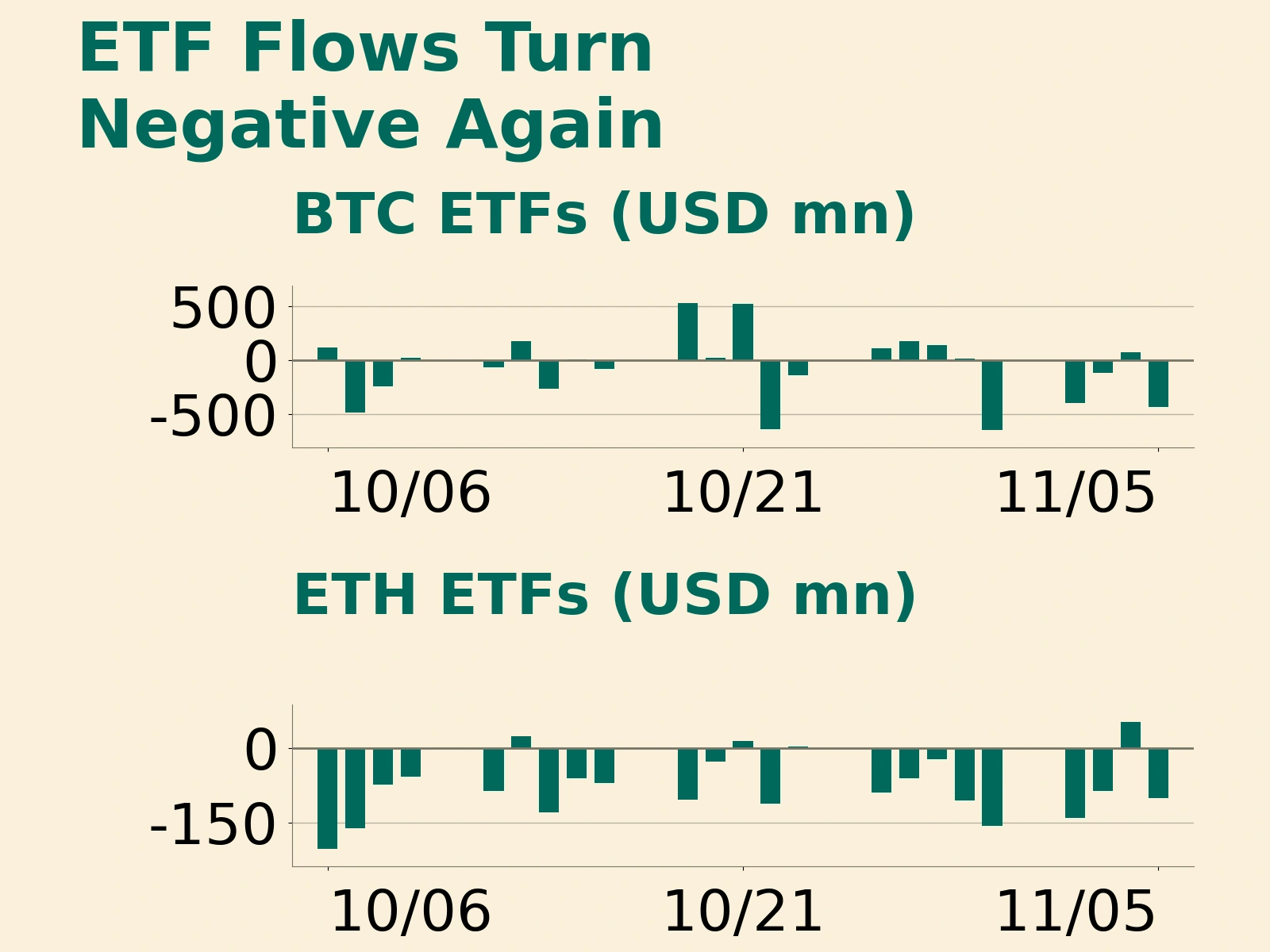
Farside data show that U.S. spot Bitcoin ETFs recorded net outflows of $430.2 million in the November 5 U.S. trading session, following net inflows of $74.6 million in the preceding session. Fidelity's FBTC swung from net inflows of $236.7 million to net outflows of $199.9 million, with the outflow equivalent to about 84% of the preceding day's inflow. BlackRock's IBIT recorded net outflows of $105 million on the same day. Together, the two funds accounted for approximately 71% of the day's net outflows from spot Bitcoin ETFs. Four other funds also recorded net outflows, while the remaining funds had zero net flows. Across the four U.S. trading days from November 2 to 5, spot Bitcoin ETFs recorded cumulative net outflows of $869.8 million.
Spot Ether ETFs recorded net outflows of $99.9 million on the same day, reversing the previous session's net inflows of $53 million. BlackRock's ETHA accounted for $75.2 million of the outflows. Cumulative net outflows from November 2 to 5 reached $271.9 million. The preceding day's subscriptions had been concentrated in a small number of funds. As redemptions resumed, cumulative net outflows widened for both product groups. Whether inflows can persist will depend on whether multiple funds turn to net inflows together in subsequent completed trading sessions.
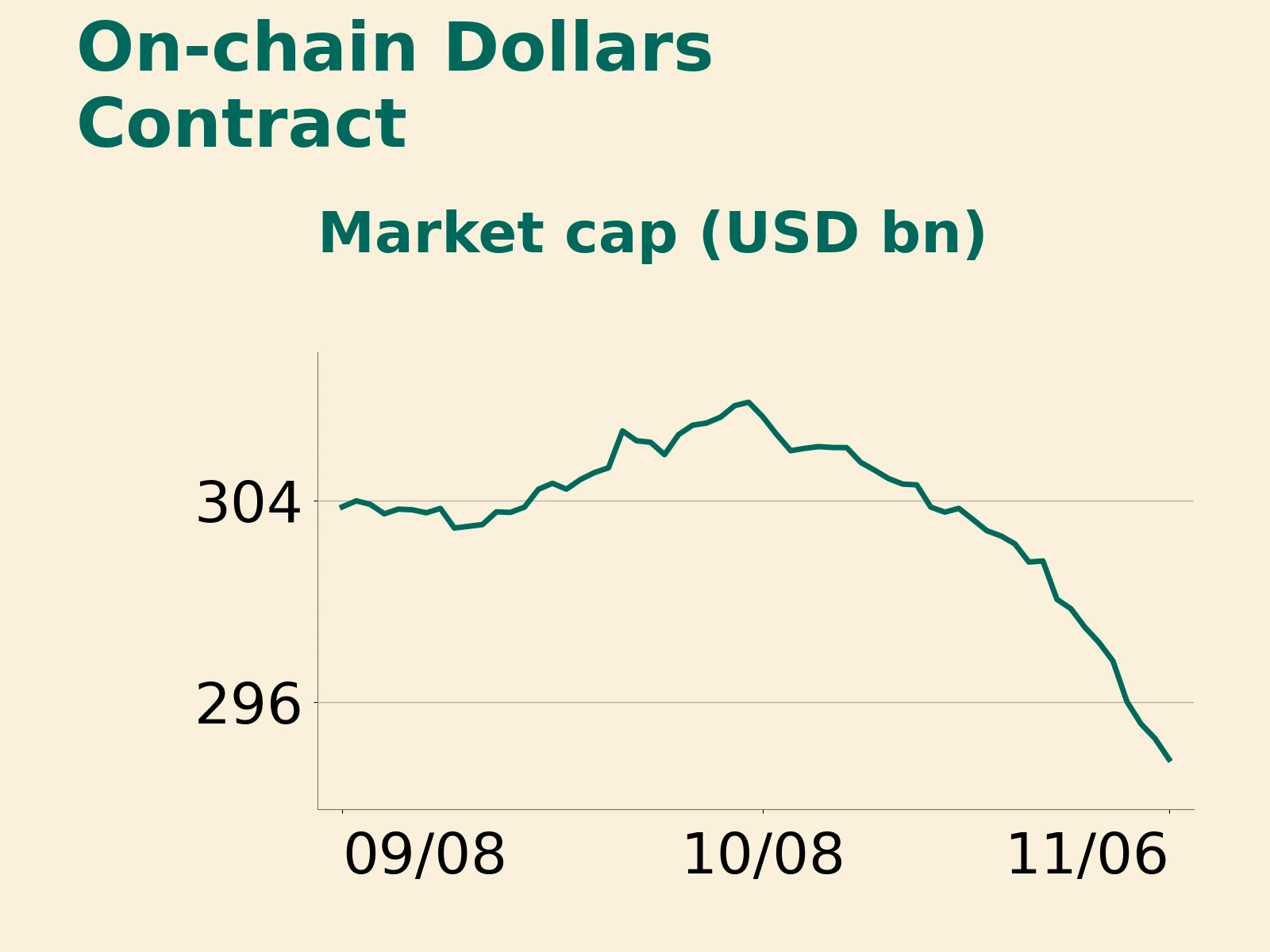
The pool of on-chain dollar assets was also shrinking. DefiLlama's observation at 00:00 UTC on November 6 put the circulating market capitalization of dollar-pegged stablecoins at $293.724 billion, down $824 million from a day earlier and $5.977 billion, or about 2.0%, from a week earlier. ETF creations and redemptions reflect net changes in the shares of U.S.-listed products, while stablecoin circulating market capitalization measures the size of the pool of on-chain dollar assets. Weakness in both data sets corresponds to spot allocation demand and the stock of on-chain assets available for settlement and collateral, respectively. When that asset pool keeps shrinking, a short-term recovery in trading activity may still be driven mainly by existing capital changing hands.
Longs account for 90.2% of liquidations as perpetual open interest recovers and implied volatility falls

On November 6, Phemex cited a CoinGlass dashboard screenshot it had received at around 03:32 UTC. Bitcoin contract liquidations over the preceding 24 hours totaled approximately $325 million, with longs accounting for 90.2%. This rolling 24-hour snapshot covered the sharp sell-off on November 5.
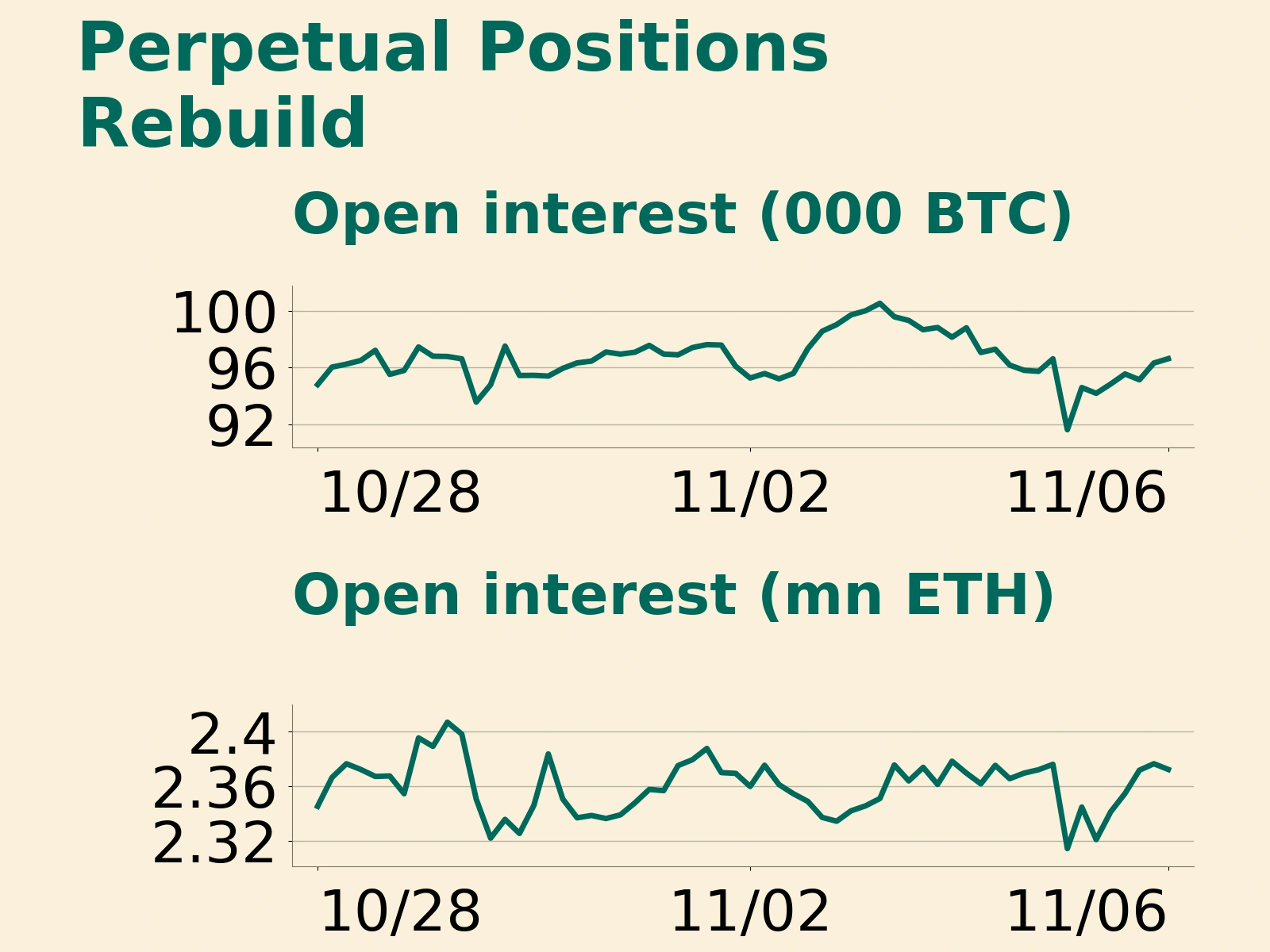
Binance open-interest data capture the contraction and subsequent rebuilding of positions. BTCUSDT perpetual open interest fell from 96,611 BTC at 12:00 UTC on November 5 to 91,617 BTC at 16:00, then recovered to 96,616 BTC at 20:00 on November 6. ETHUSDT perpetual open interest fell from approximately 2.3761 million ETH to 2.3143 million ETH over the same interval, before returning to 2.3724 million ETH. By 20:00 on November 6, open interest in both contracts, measured in units of the underlying coin, was close to its level before the sharp sell-off. Open interest counts outstanding contracts, and activity on both the long and short sides can drive it higher. Its recovery alone cannot establish which side dominated the new positioning.
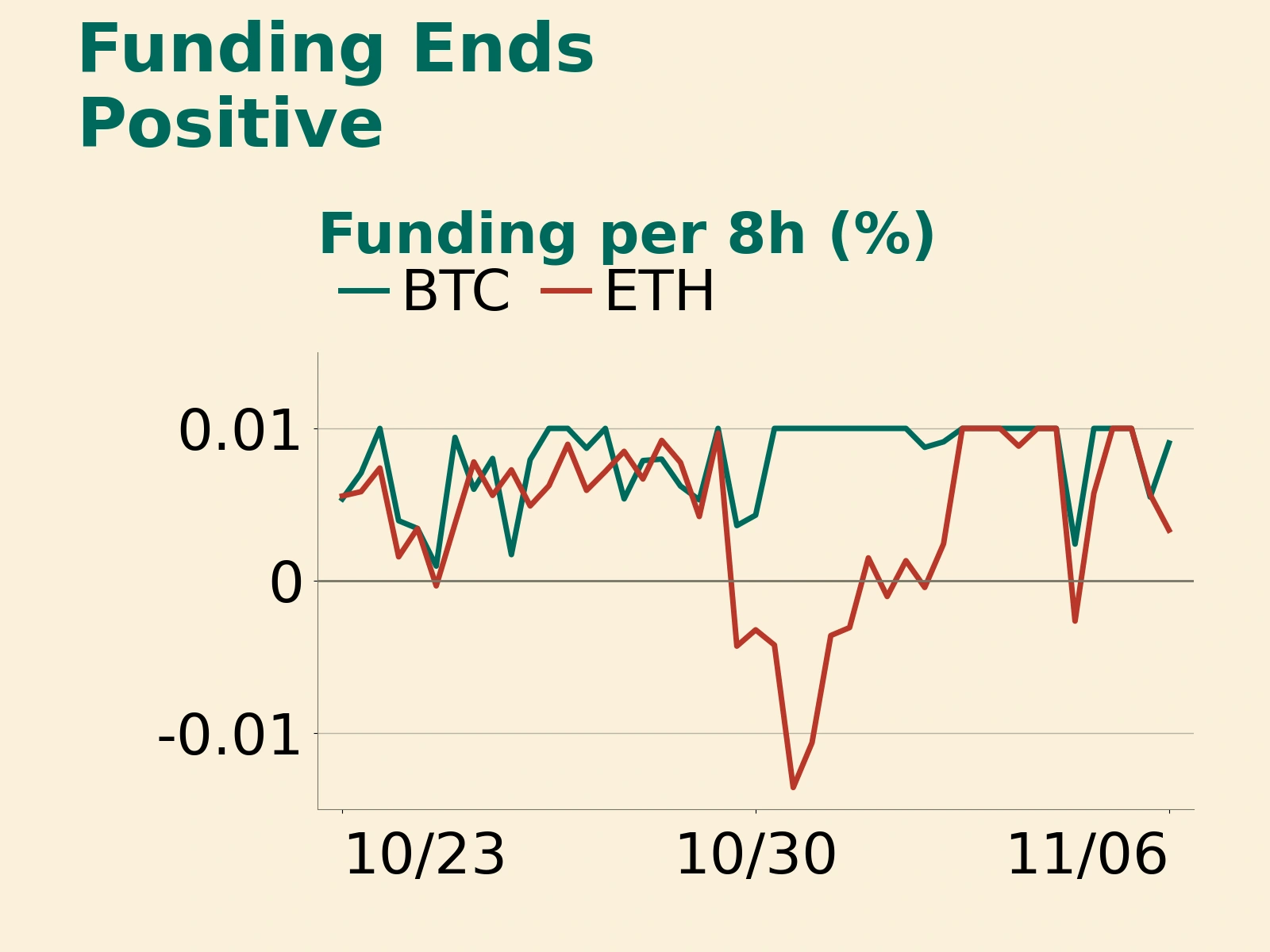
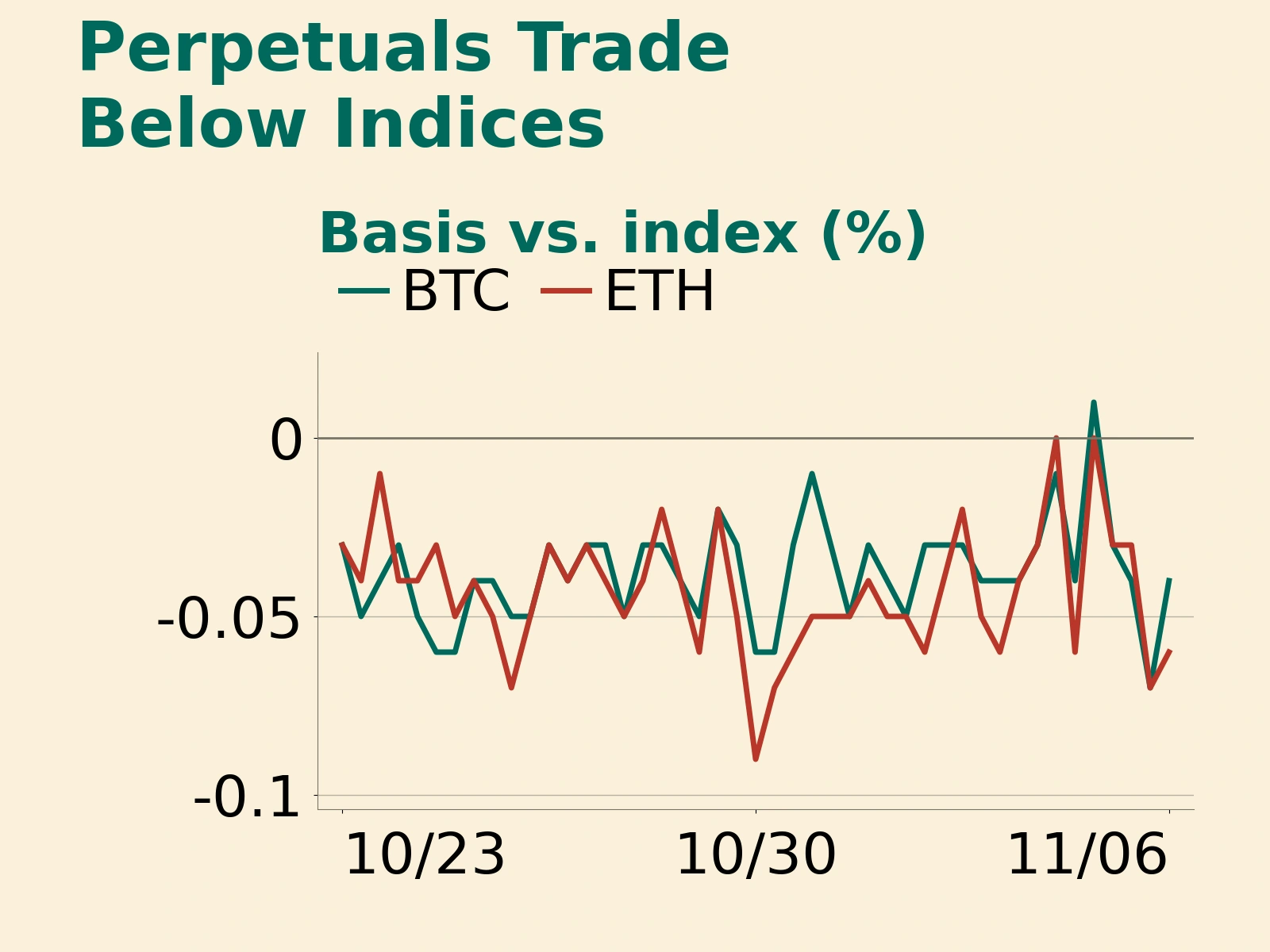
The rebuilding of positions was accompanied by perpetual prices remaining at a discount. At 16:00 UTC on November 6, the eight-hour funding rates for BTCUSDT and ETHUSDT perpetual contracts were 0.009043% and 0.003319%, respectively. Both were positive, meaning longs still paid shorts in that settlement. At the same time, the basis of Binance perpetual contracts relative to their indices was -0.04% and -0.06%, respectively. Funding rates refer to the relevant settlement period, while basis reflects the contemporaneous price spread. The latter shows that, even as the quantity of open positions recovered, both perpetual contracts were still priced below their spot indices.
Options-market pricing of future volatility, meanwhile, eased. A Deribit Bitcoin options snapshot recorded by Bitfinex on November 4 showed open interest equivalent to 30,310 BTC in the November 6 expiry, with call positions concentrated at the $82,000 and $85,000 strikes. The delivery price published by Deribit at 08:00 UTC on November 6 was $75,484.84, below both strikes.
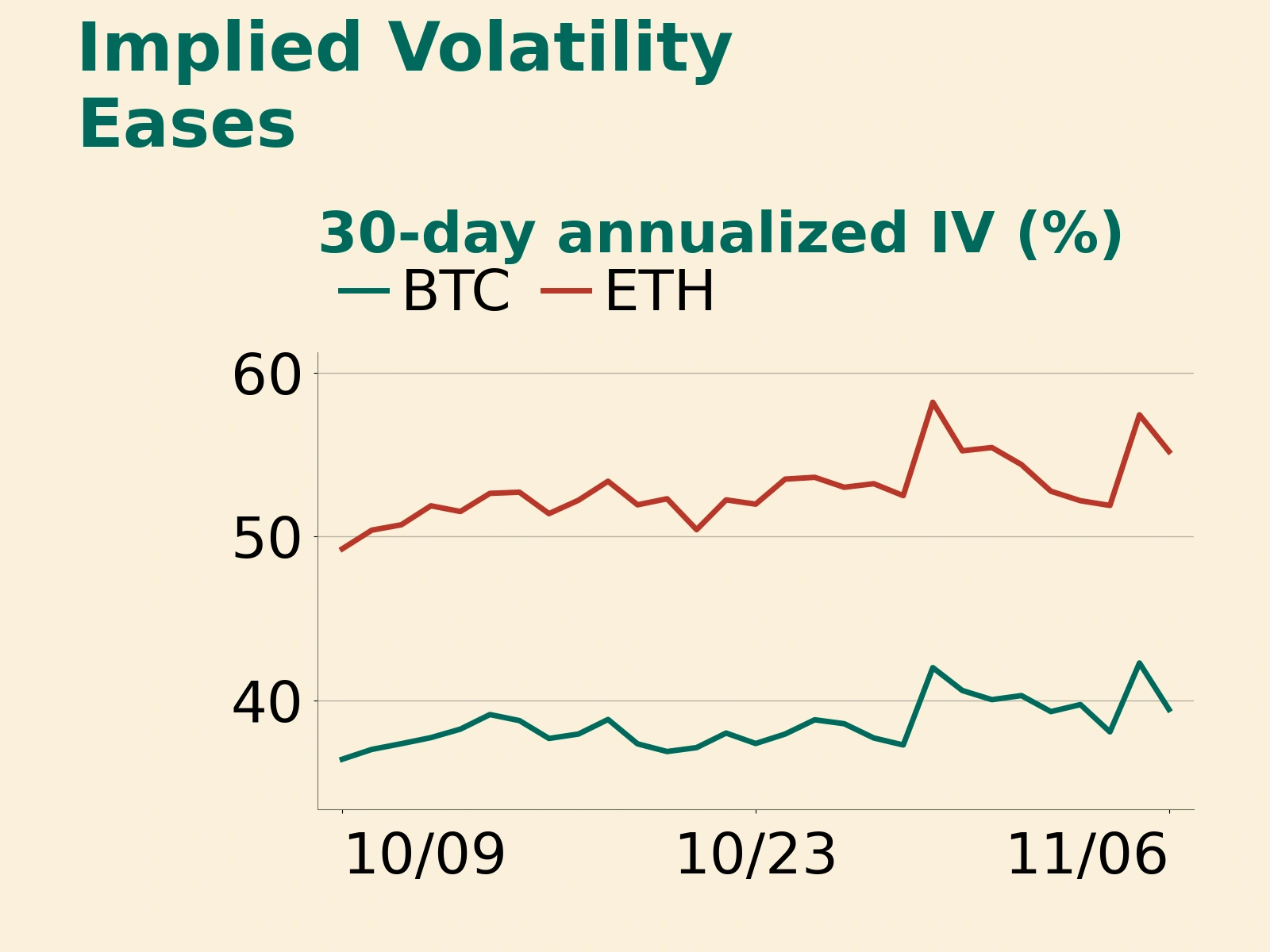
Using completed UTC end-of-day observations, BTC DVOL, which measures annualized implied volatility over the next 30 days, fell from 42.27 in the preceding session to 39.43. ETH DVOL declined from 57.44 to 55.20. Perpetual open interest had returned close to its pre-sell-off level, and the options market had lowered its pricing of future volatility. ETF creations and redemptions and stablecoin market capitalization, however, had yet to show a corresponding improvement in spot allocation. Data from the next completed trading sessions can help test whether this recovery extends to spot allocation.
Click Read Original for further details.