On November 10, 2026, U.S. spot Bitcoin and Ethereum ETFs continued to record net redemptions in the latest completed trading session, while the circulating market capitalization of dollar-pegged stablecoins declined. Yet open interest in Binance BTC and ETH perpetual futures increased in coin terms. Investment demand and the supply of on-chain dollar funding remained weak, even as derivatives exposure continued to build.
Bitcoin and Ethereum ETFs continued to see net outflows on November 9
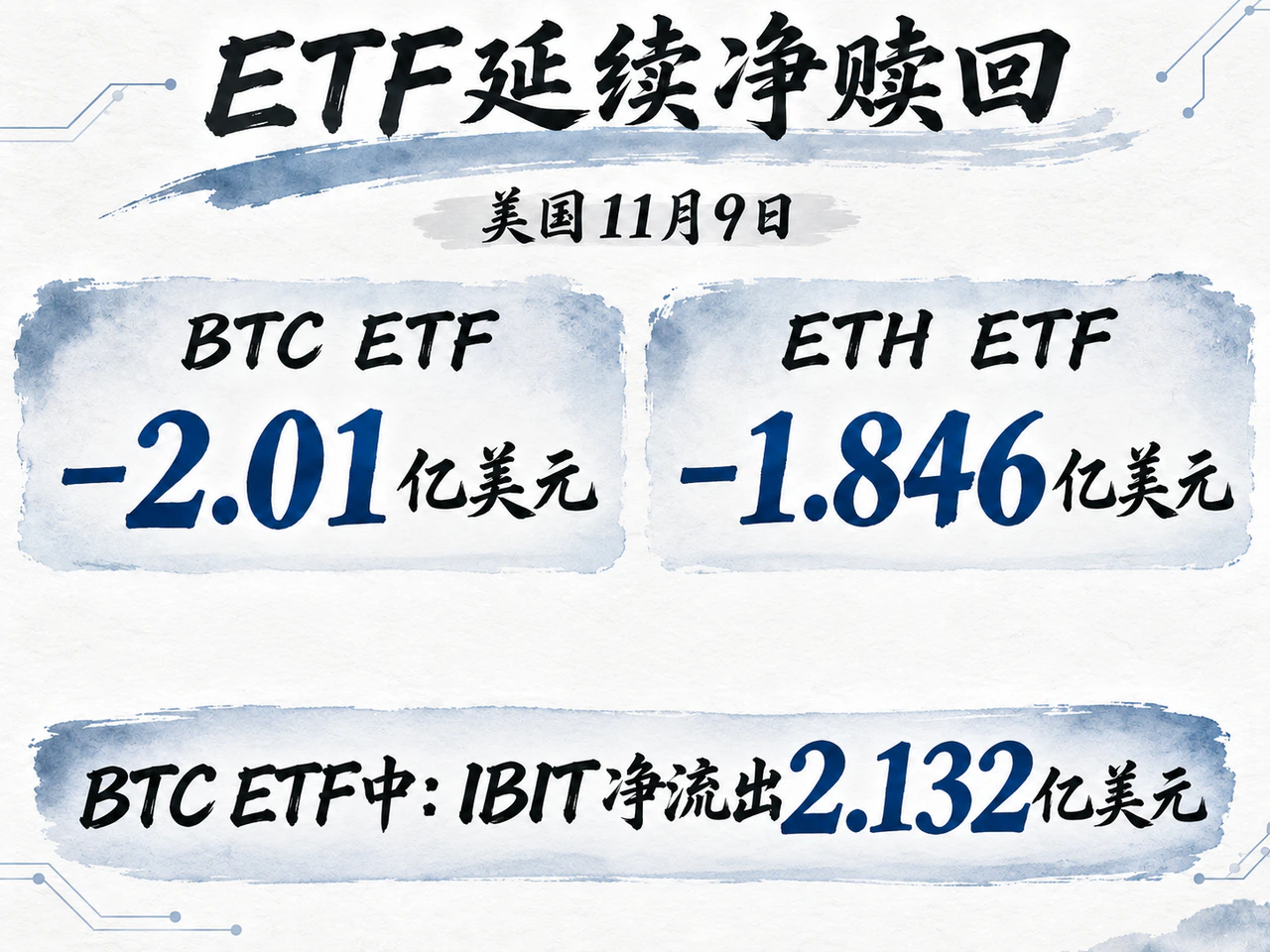
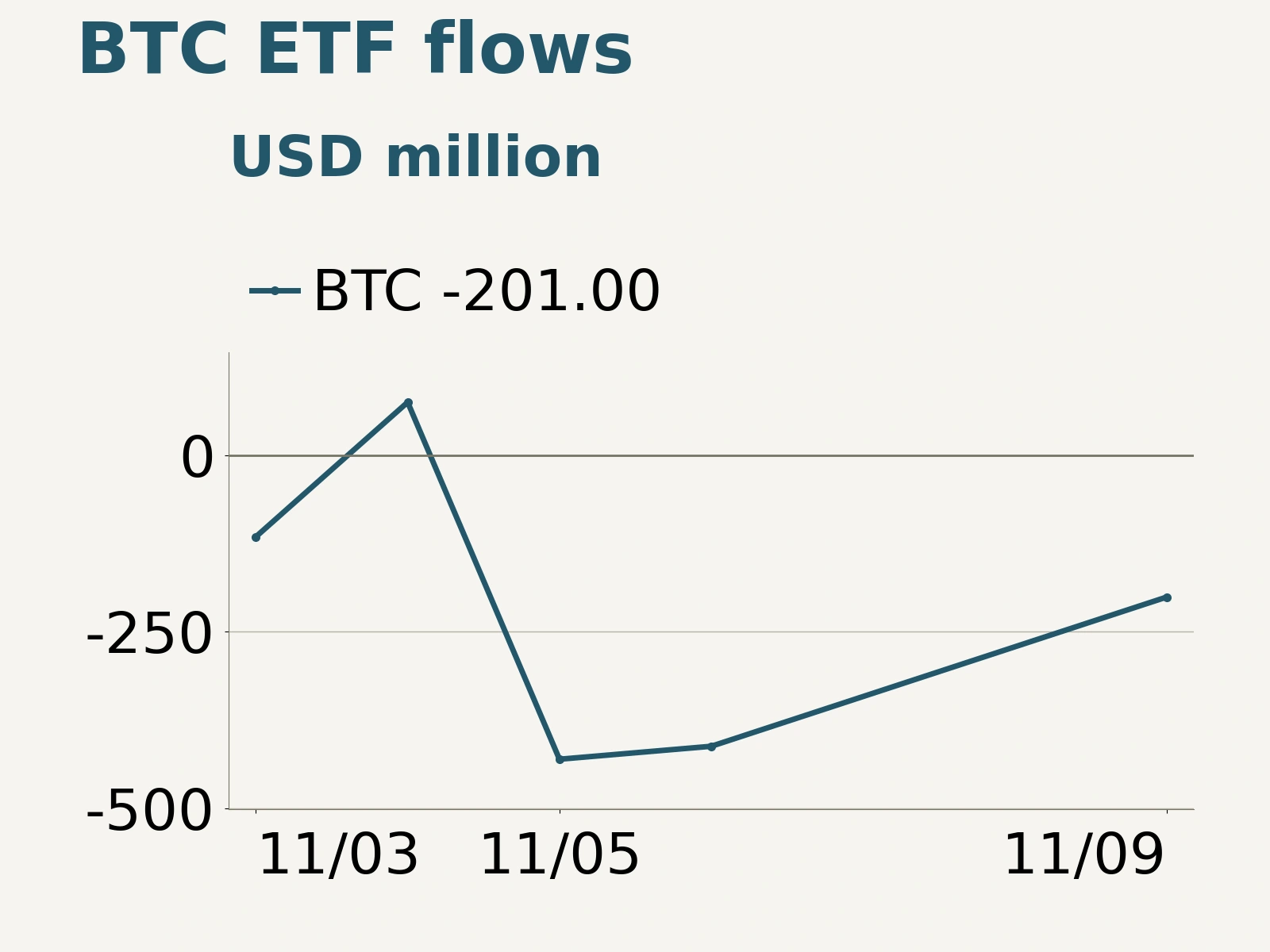
Farside's U.S. spot ETF flow data show net outflows of $201 million from Bitcoin products and $184.6 million from Ethereum products on November 9. Summing the same table, Bitcoin ETFs had already recorded $1.2817 billion in net outflows over November 2–6; the first trading session of the new week still failed to bring a return to net subscriptions.
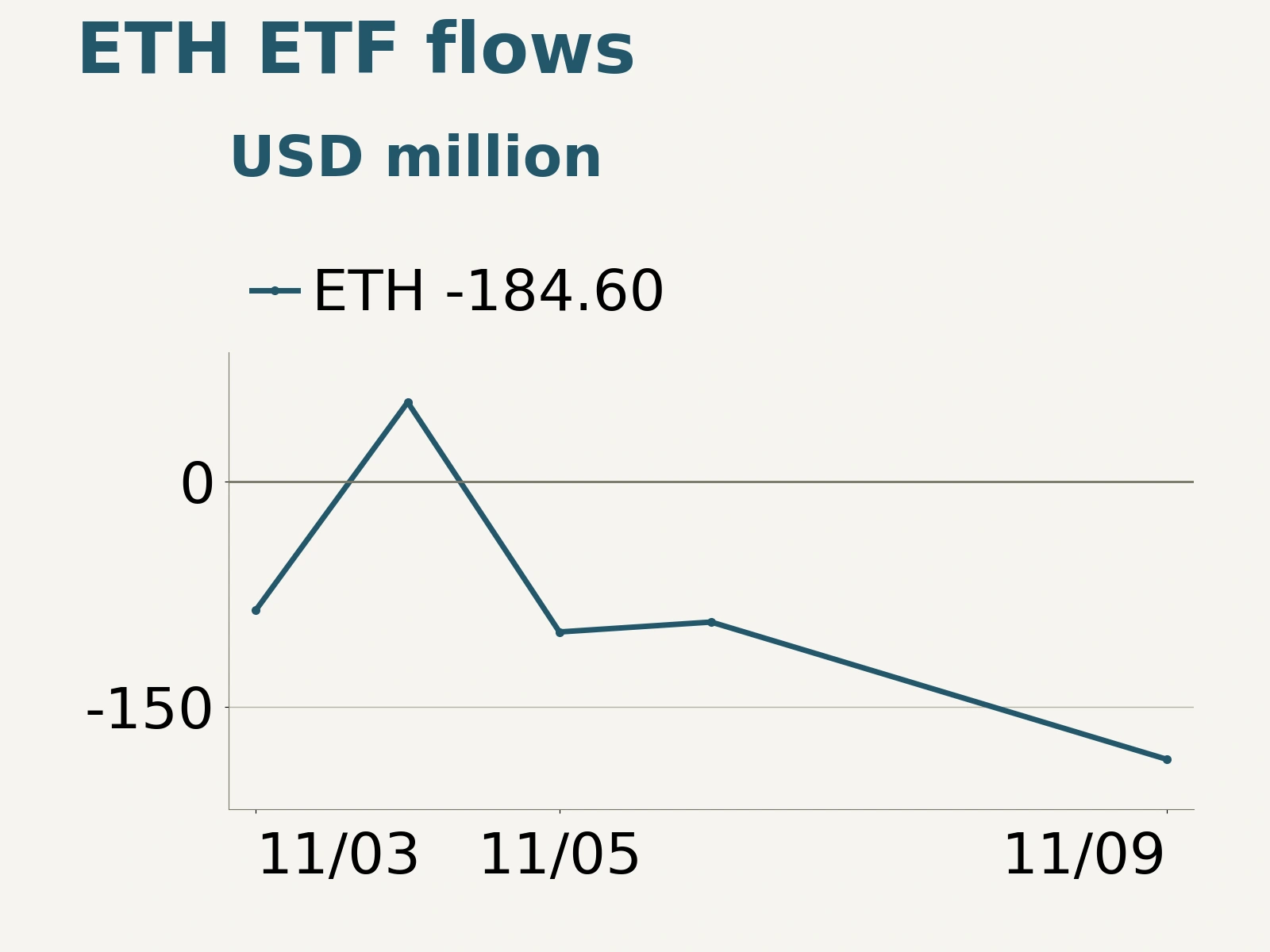
Flows diverged within the Bitcoin category. BlackRock's IBIT recorded net outflows of $213.2 million, while Morgan Stanley's MSBT attracted net inflows of $22.1 million; changes in the other products were relatively small. Subscriptions to MSBT were insufficient to offset the large redemptions from IBIT. Outflows were more widespread among Ethereum products: ETHA, ETHB and FETH lost $119.3 million, $20.8 million and $19.1 million, respectively.
In its October positioning report released on November 2, Coinbase noted that Bitcoin order-book bid depth had improved, but ETF demand had turned negative, while the rebound in leverage late in the month lacked sufficient support from spot holders and the options market. Localized improvements in buying interest have yet to translate into sustained investment demand through ETFs.
Stablecoin market capitalization falls by about $14.072 billion in a month

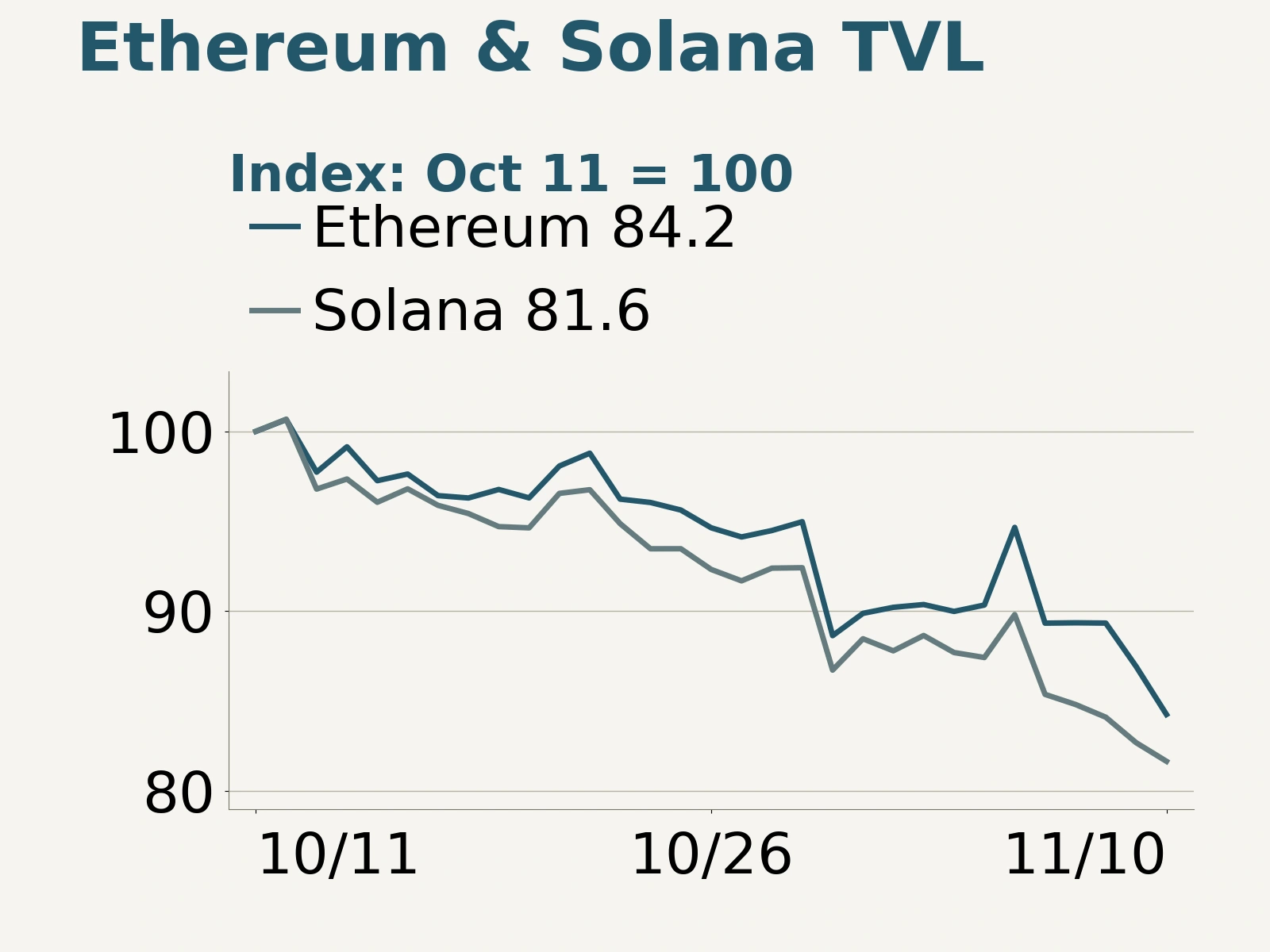
DefiLlama data show that at 00:00 UTC on November 10, the circulating market capitalization of dollar-pegged stablecoins stood at $292.026 billion, down $941 million from the previous day. It was approximately 4.60% below its October 11 level, a decline of about $14.072 billion over one month.
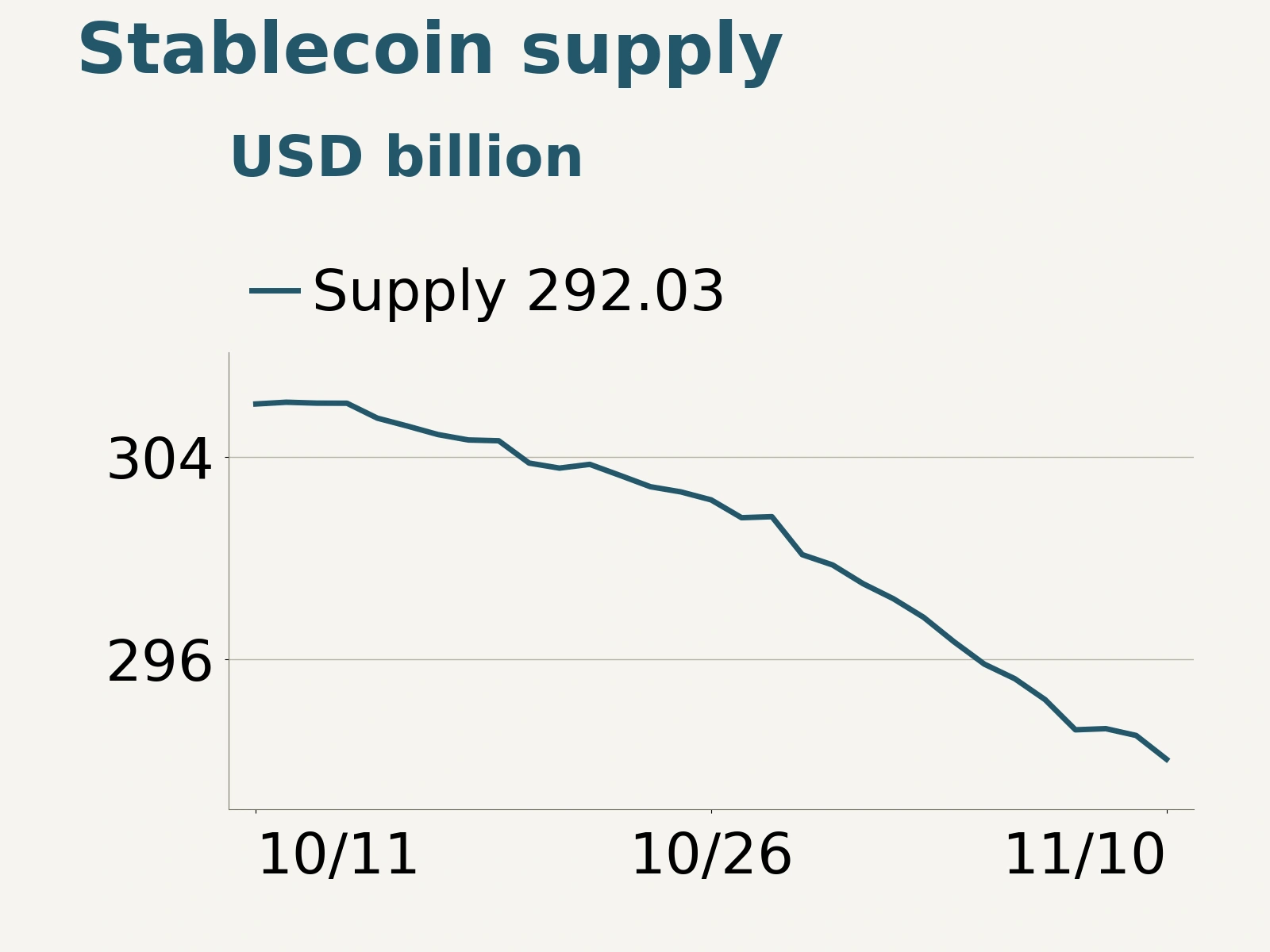
ETFs reflect investment demand through securities accounts, while stablecoins provide an important funding base for on-chain payments, lending, collateral and trading. Stablecoins are used for more than buying cryptoassets, so changes in their market capitalization cannot be equated directly with spot buying or selling. A continued contraction in the outstanding supply nevertheless reduces the buffer of dollar liquidity available on-chain.
At present, investment flows have yet to turn into sustained net subscriptions, and the stock of on-chain dollar tokens is also shrinking. A firmer funding foundation for a subsequent price recovery would require watching whether ETFs can attract sustained net subscriptions and whether the stablecoin supply can stabilize.
Open interest rises in coin terms as funding rates and implied volatility ease
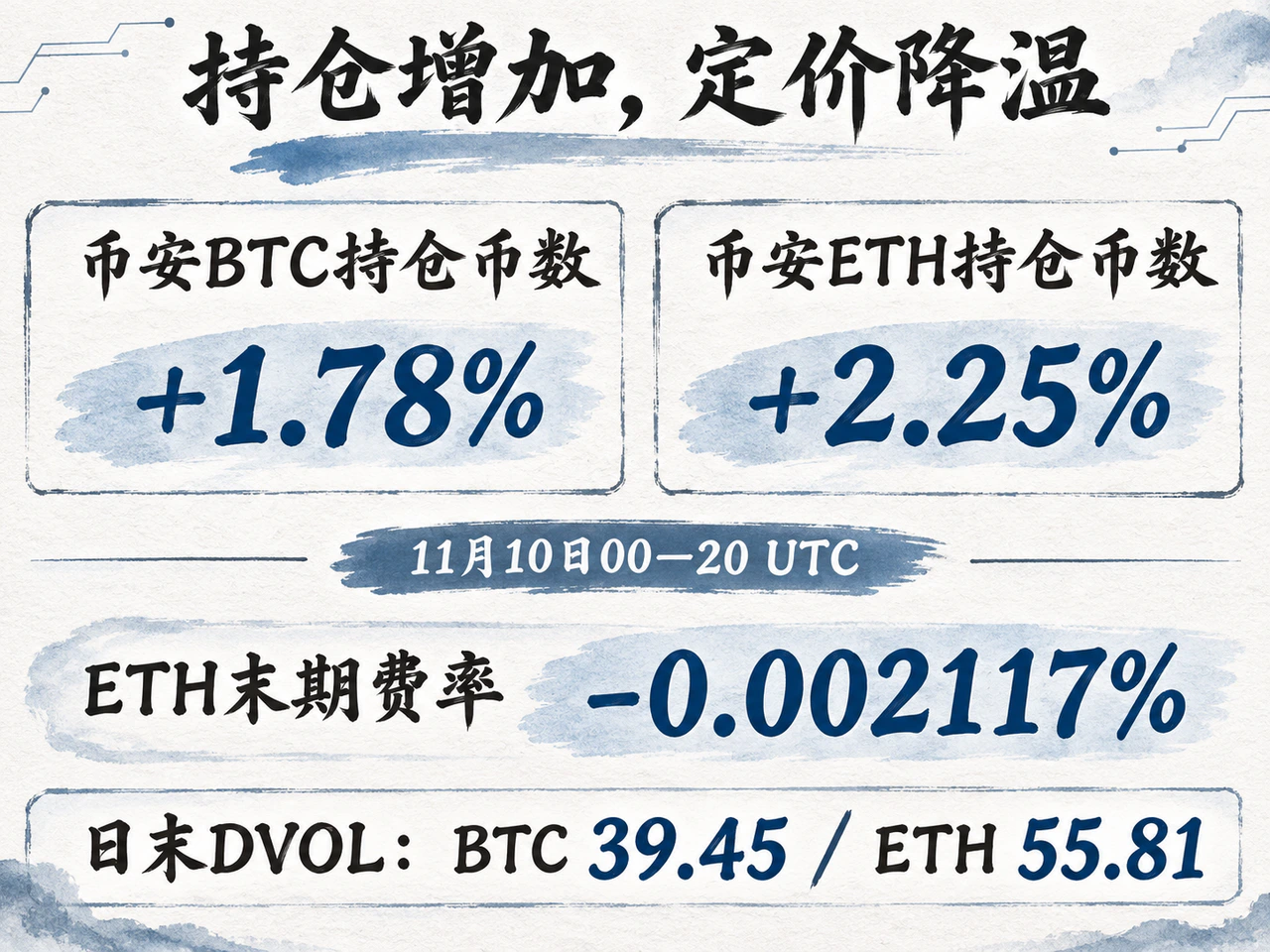
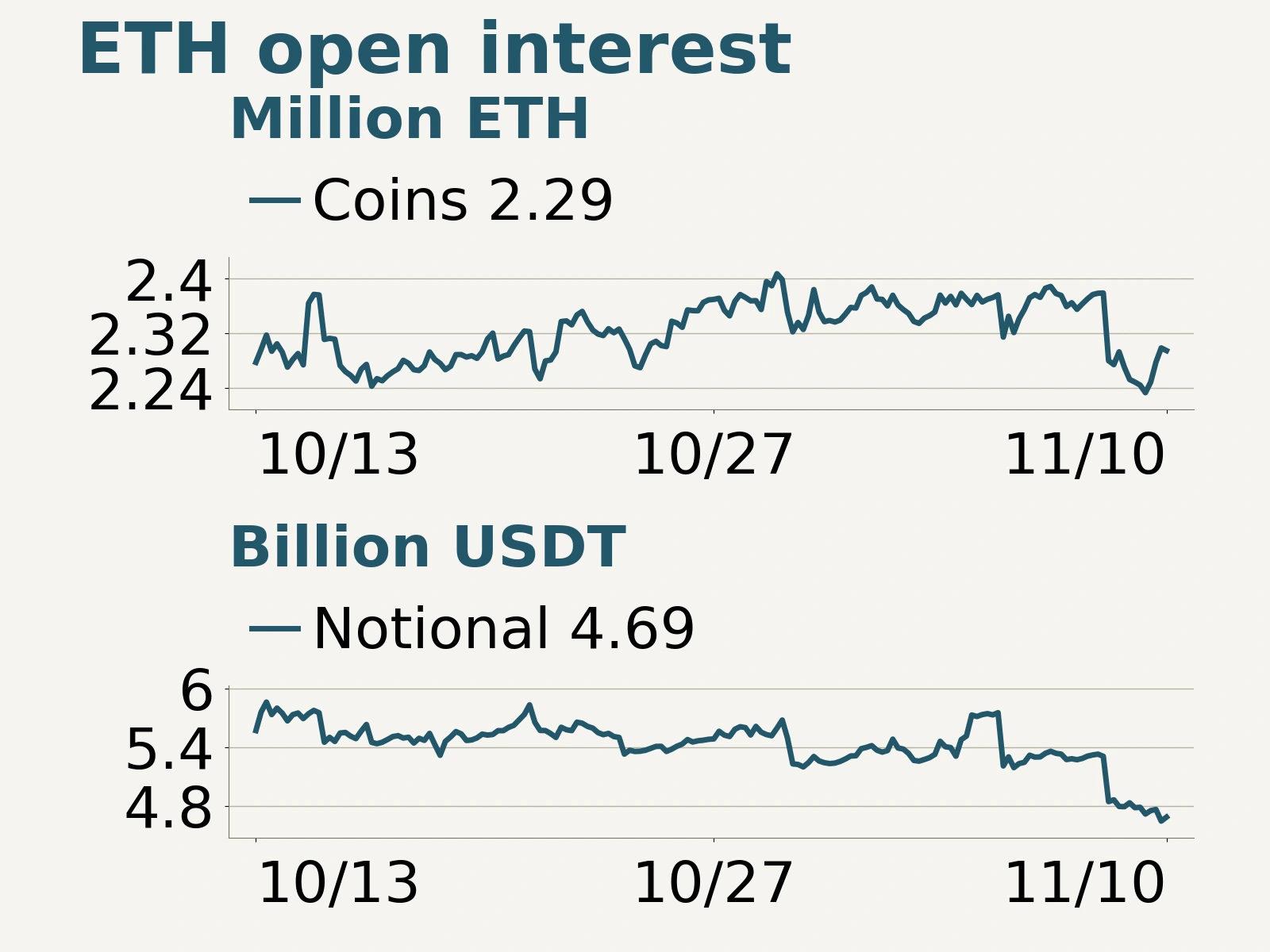
Between 00:00 and 20:00 UTC on November 10, open interest in Binance's BTCUSDT USD-margined perpetual futures rose from 98,579.43 BTC to 100,331.11 BTC, an increase of about 1.78%. ETHUSDT open interest rose from 2.2441 million ETH to 2.2946 million ETH, up approximately 2.25%. Over the same period, their notional open interest, measured in USDT, fell from 7.426 billion to 7.369 billion USDT and from 4.789 billion to 4.689 billion USDT, respectively. Falling coin prices reduced notional values, but coin-denominated open interest increased, showing that futures exposure on the exchange did not contract in tandem with its notional value.
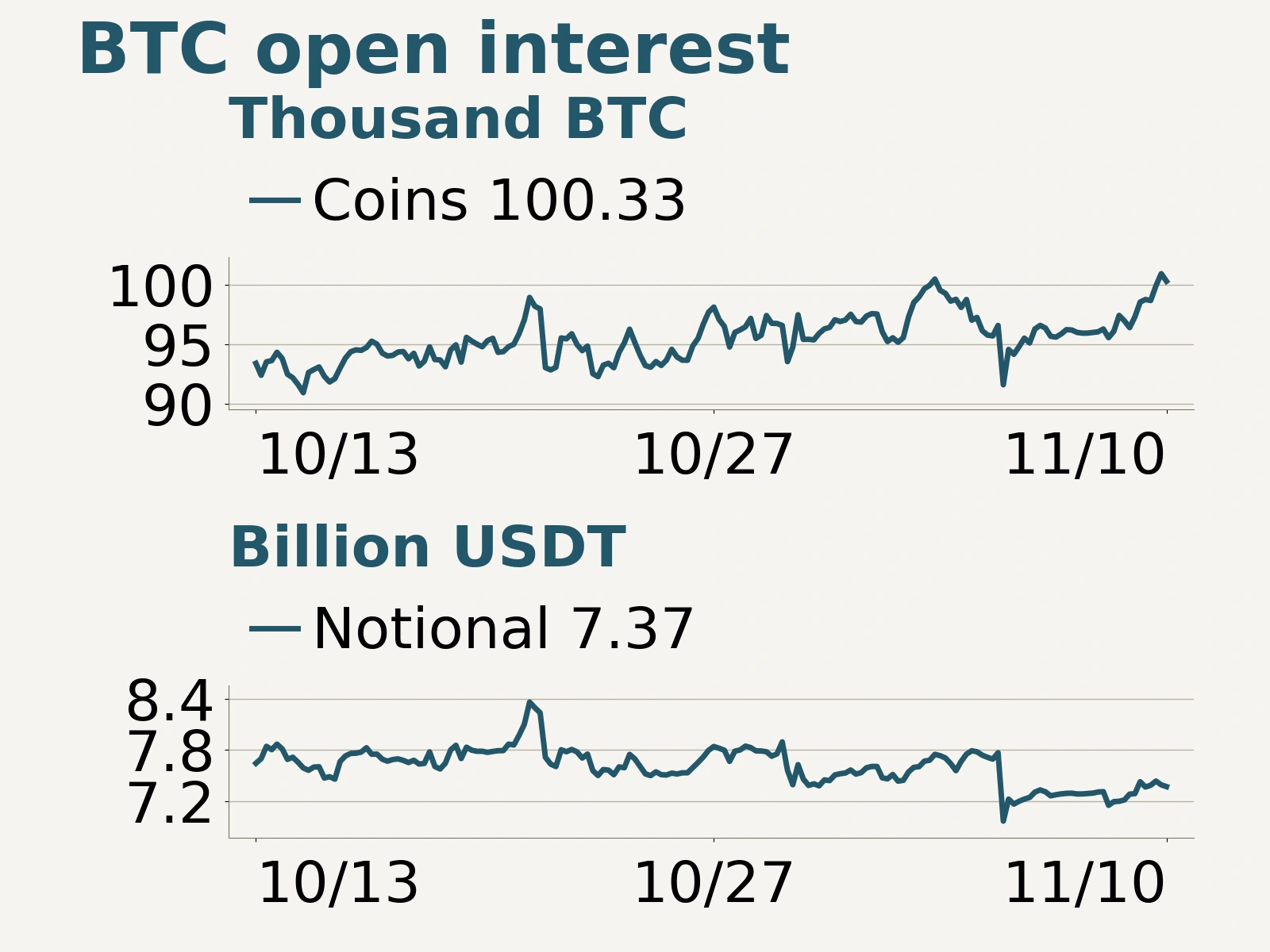
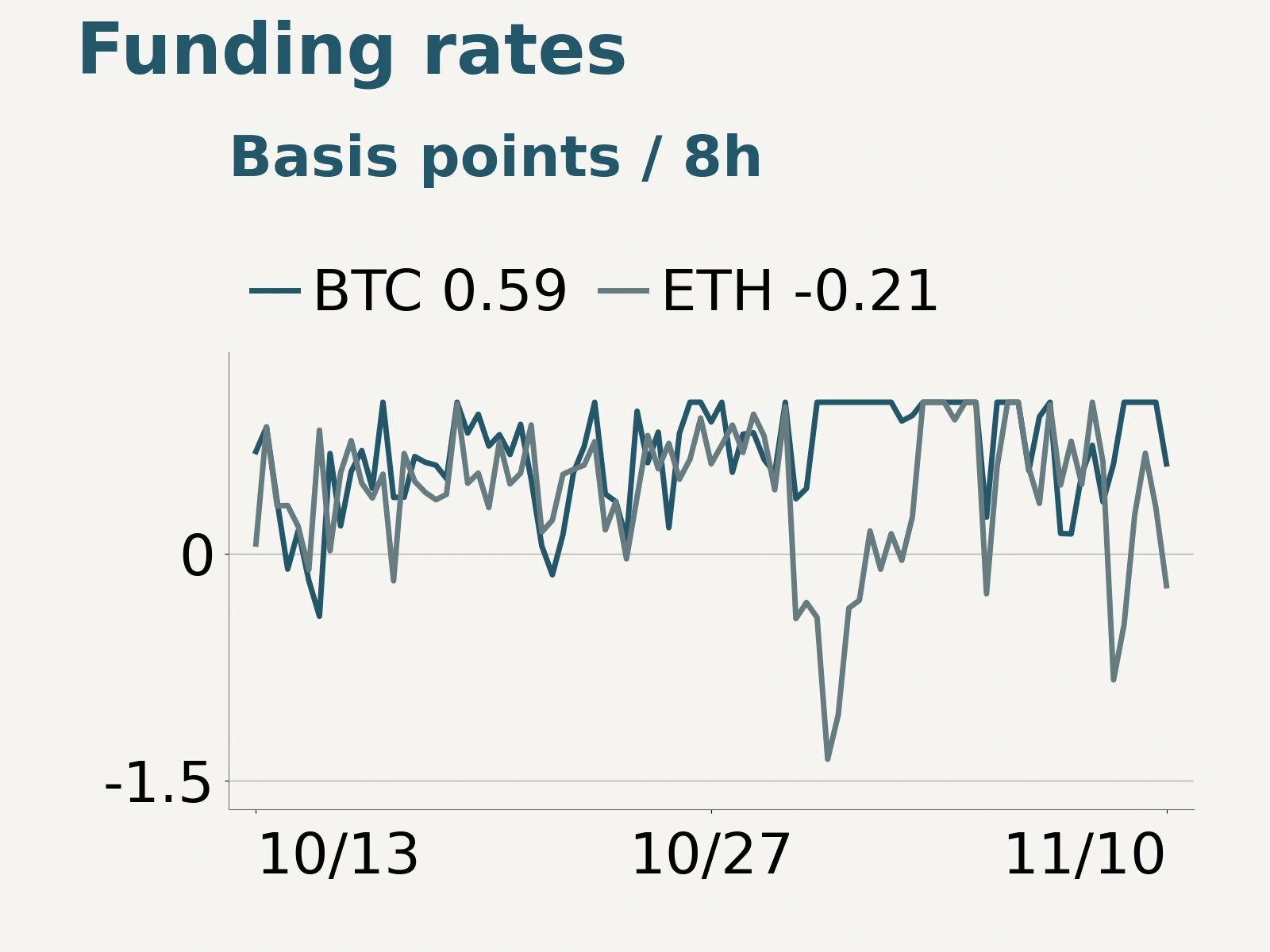
Funding rates also indicate a cooling willingness among longs to pay for exposure. Bitcoin's three eight-hour settlement rates that day were 0.01%, 0.01% and 0.005925%. Longs continued to pay shorts, but the rate fell in the final period. Ethereum's corresponding rates declined from 0.006634% to 0.003035% and then to -0.002117%, with shorts paying longs in the final period. Rising open interest alongside declining funding rates indicates that the expansion in positions was not accompanied by a stronger long-side premium.
The adjustment in leverage has already caused realized losses. On November 10, Bitkub cited CoinGlass data showing $356.16 million in liquidations over the rolling 24-hour period at the time of its report, including approximately $280.4 million in long liquidations. That rolling window shows that longs bore most of the pressure during the recent correction. The rebound in coin-denominated Binance open interest that day, however, indicates that forced liquidations did not produce a sustained contraction in futures exposure; positions were still being rebuilt or added.
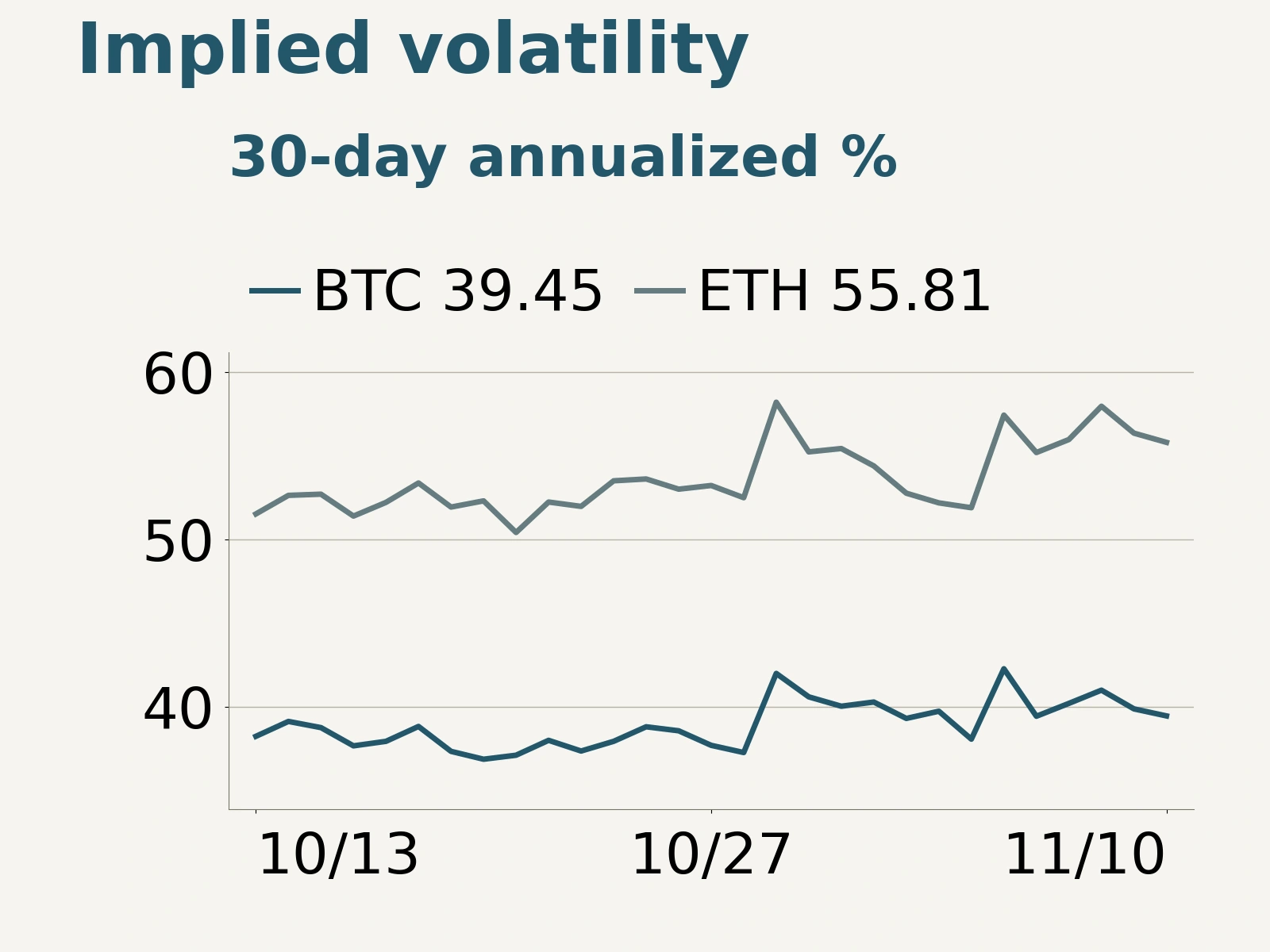
The expected magnitude of price swings priced into options eased slightly. Deribit's DVOL, a 30-day constant-maturity implied volatility index, ended the November 10 UTC session at 39.45 for Bitcoin and 55.81 for Ethereum, below the previous day's 39.87 and 56.36. DVOL measures expected volatility. This decline occurred alongside weak spot-market funding and rising futures open interest.
Taken together, ETF redemptions and a shrinking stablecoin supply weakened the funding foundation for spot markets. Rising coin-denominated futures open interest and falling funding rates show that trading appetite persisted, but the premium paid by longs did not strengthen. Sustained net subscriptions and stabilization in the stablecoin supply offer a more useful gauge of recovering buying capacity than a brief rebuilding of futures positions.
Click “Read the original” for the full details.