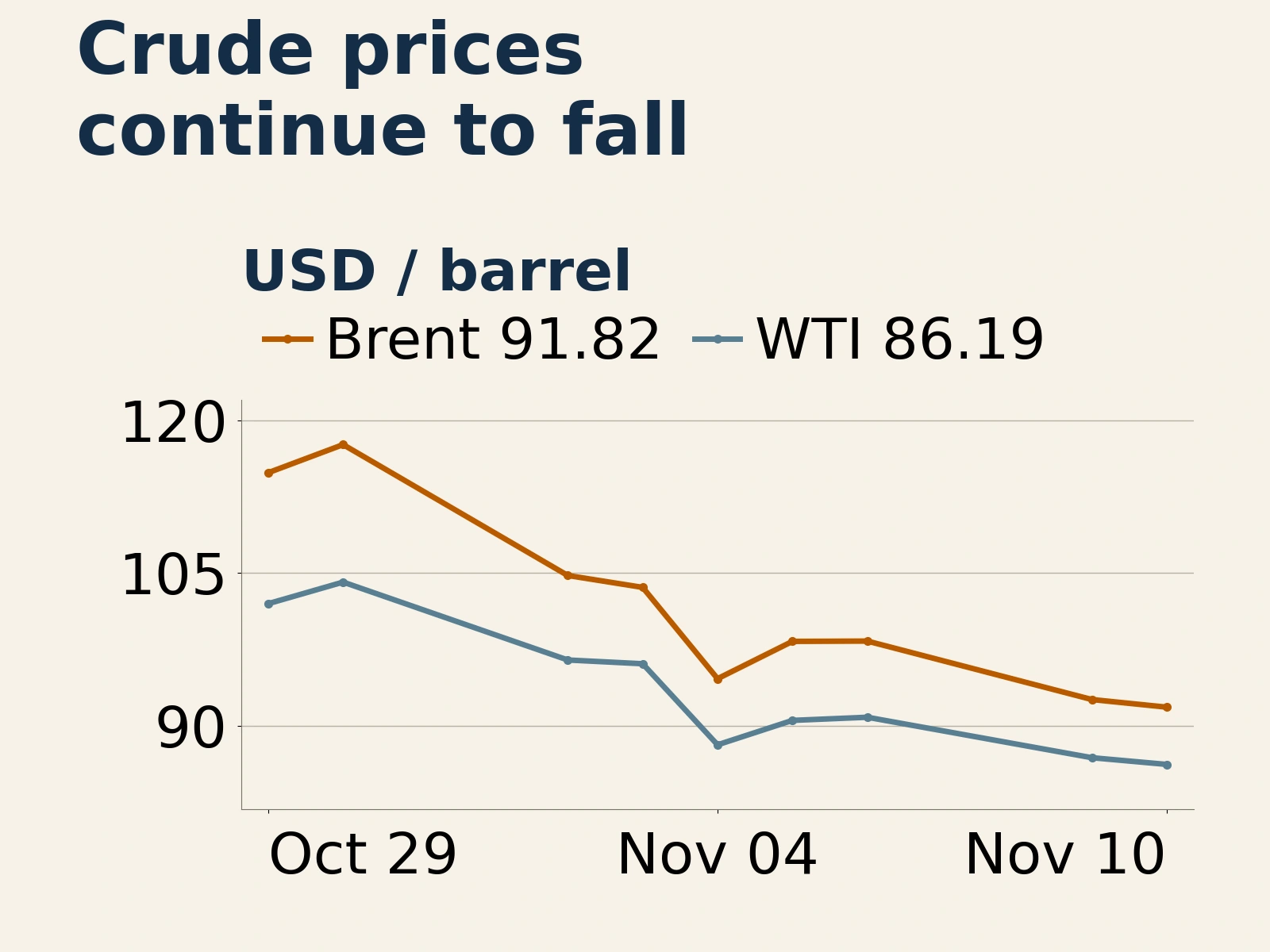
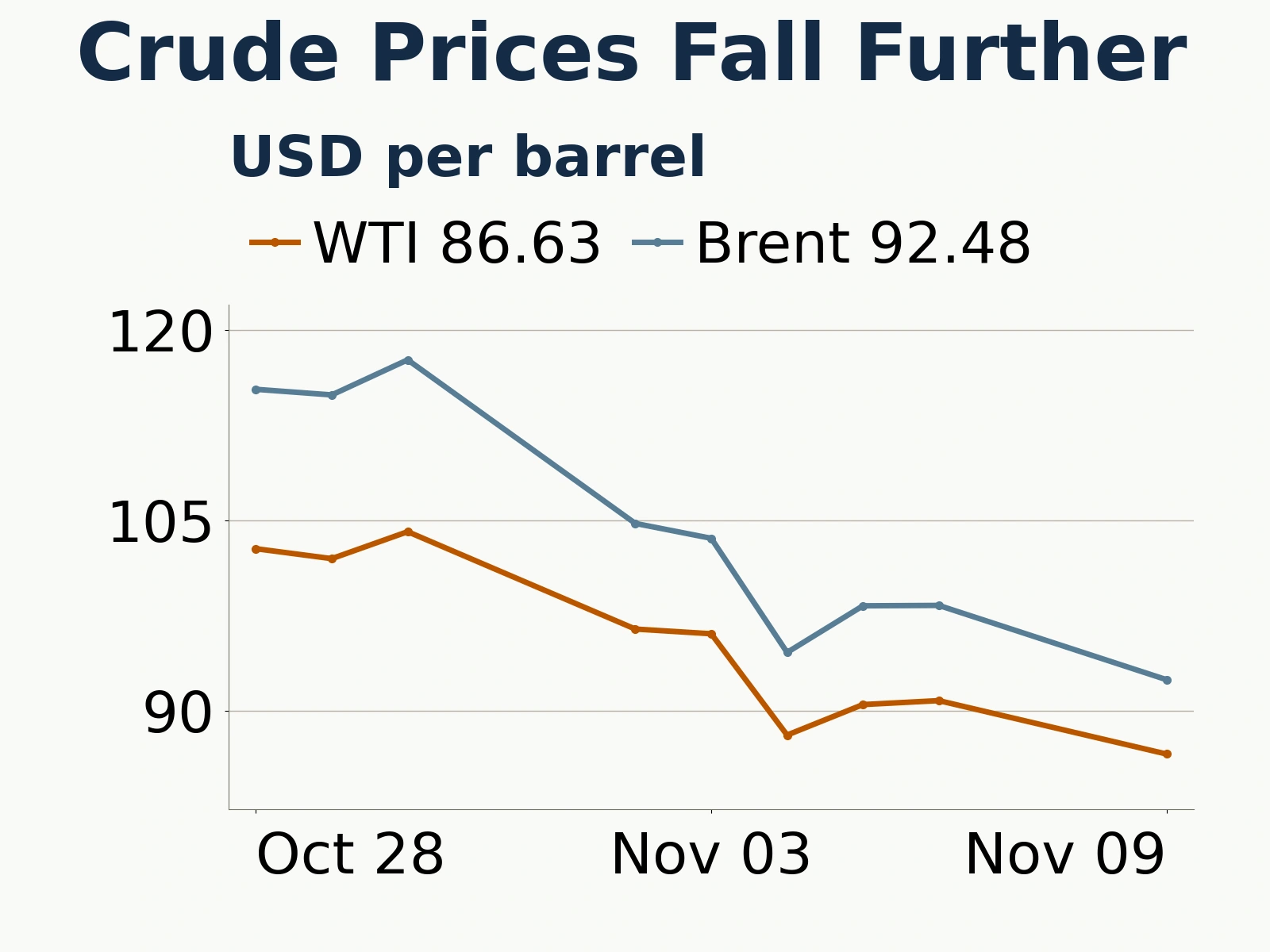
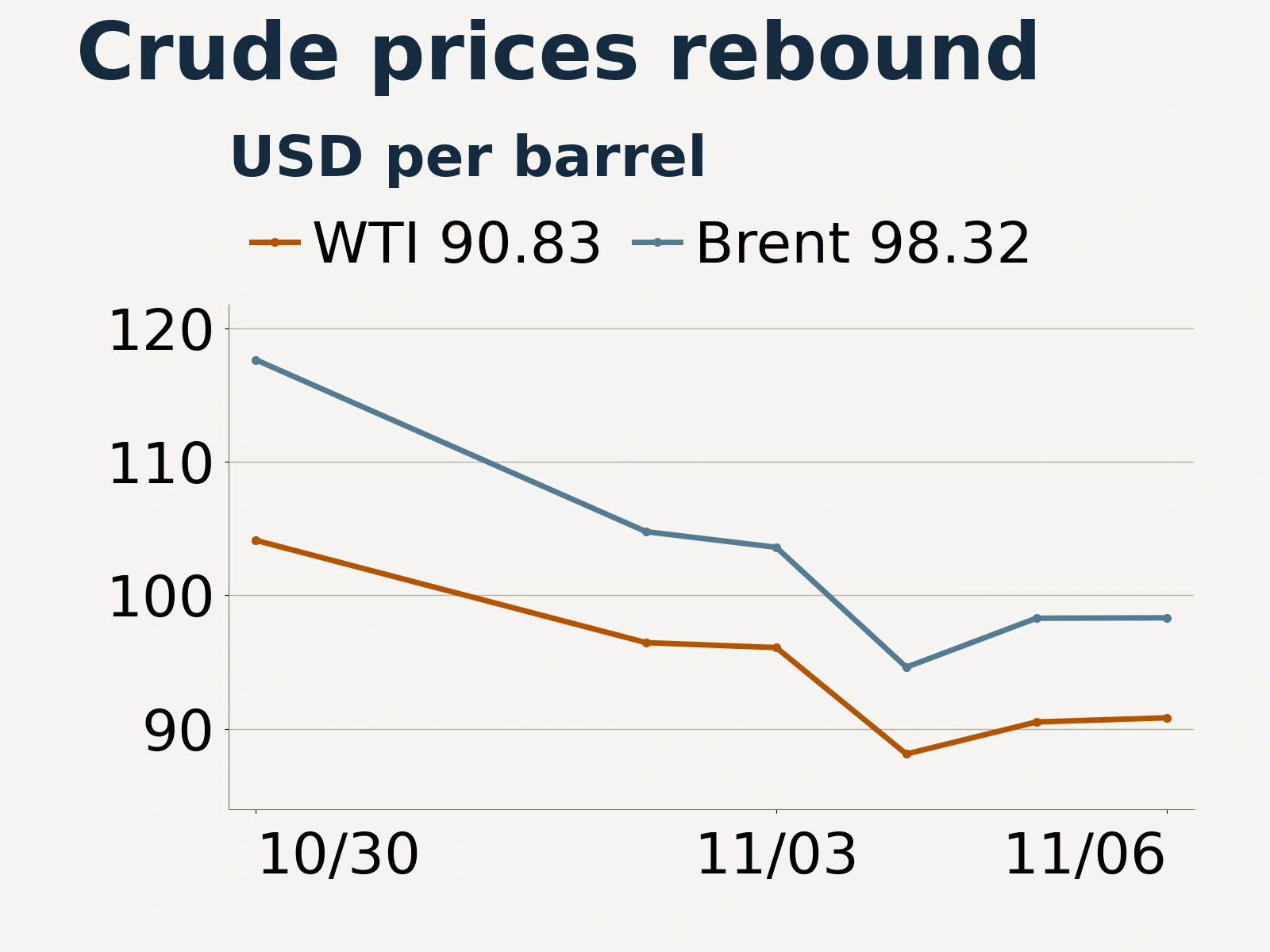
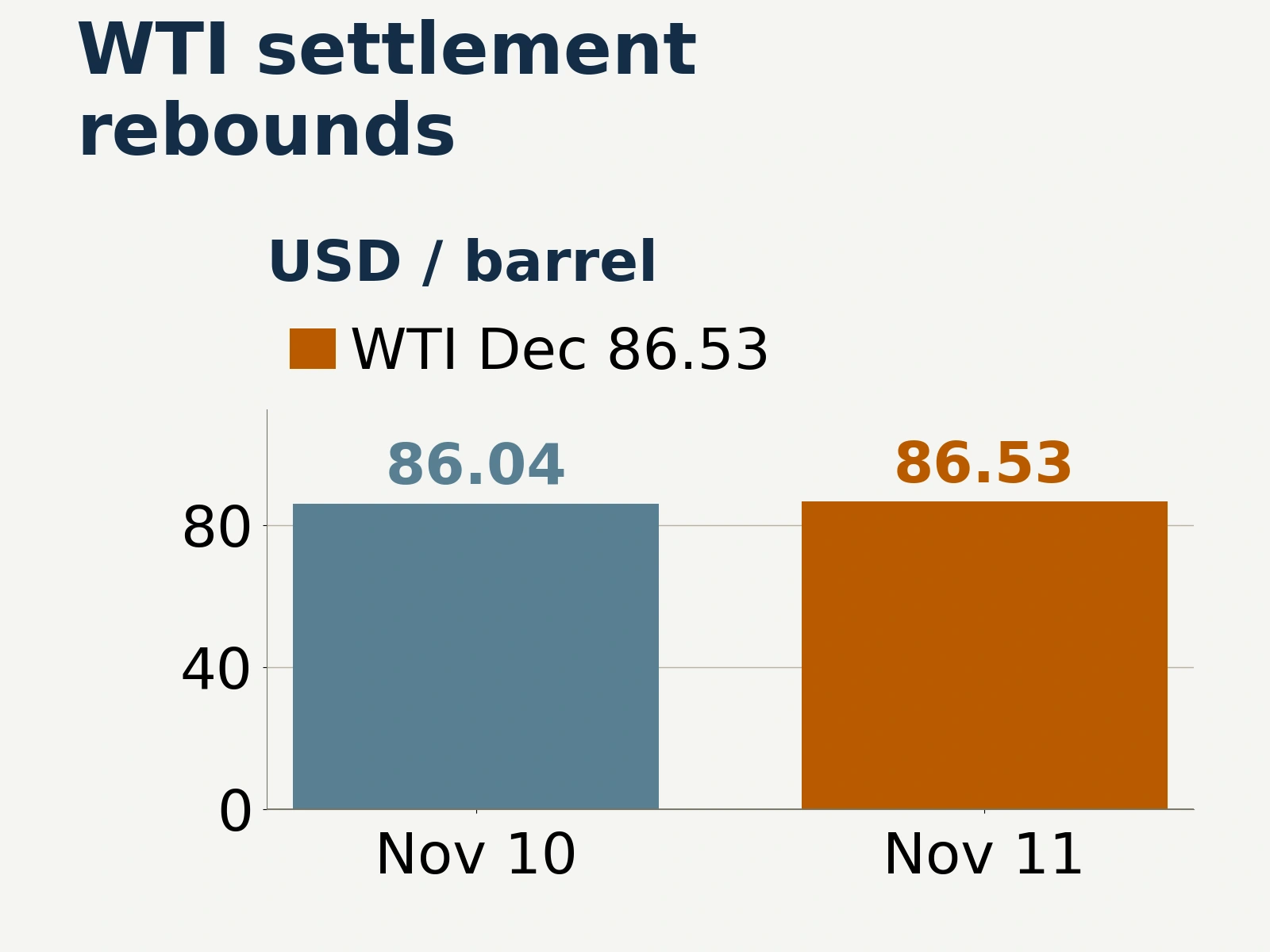
On November 11, 2026, crude oil rebounded after a series of declines. New York-traded WTI crude futures for December delivery settled at $86.53 a barrel, up $0.49, or 0.57%; Brent crude futures for January 2027 delivery settled at $92.76 a barrel, up $1.27, or 1.39%. Iran's rejection of demands to ship nuclear material abroad weakened expectations of a swift agreement. But Gulf production and exports are recovering, and the rebound came after a substantial contraction in the supply risk premium.
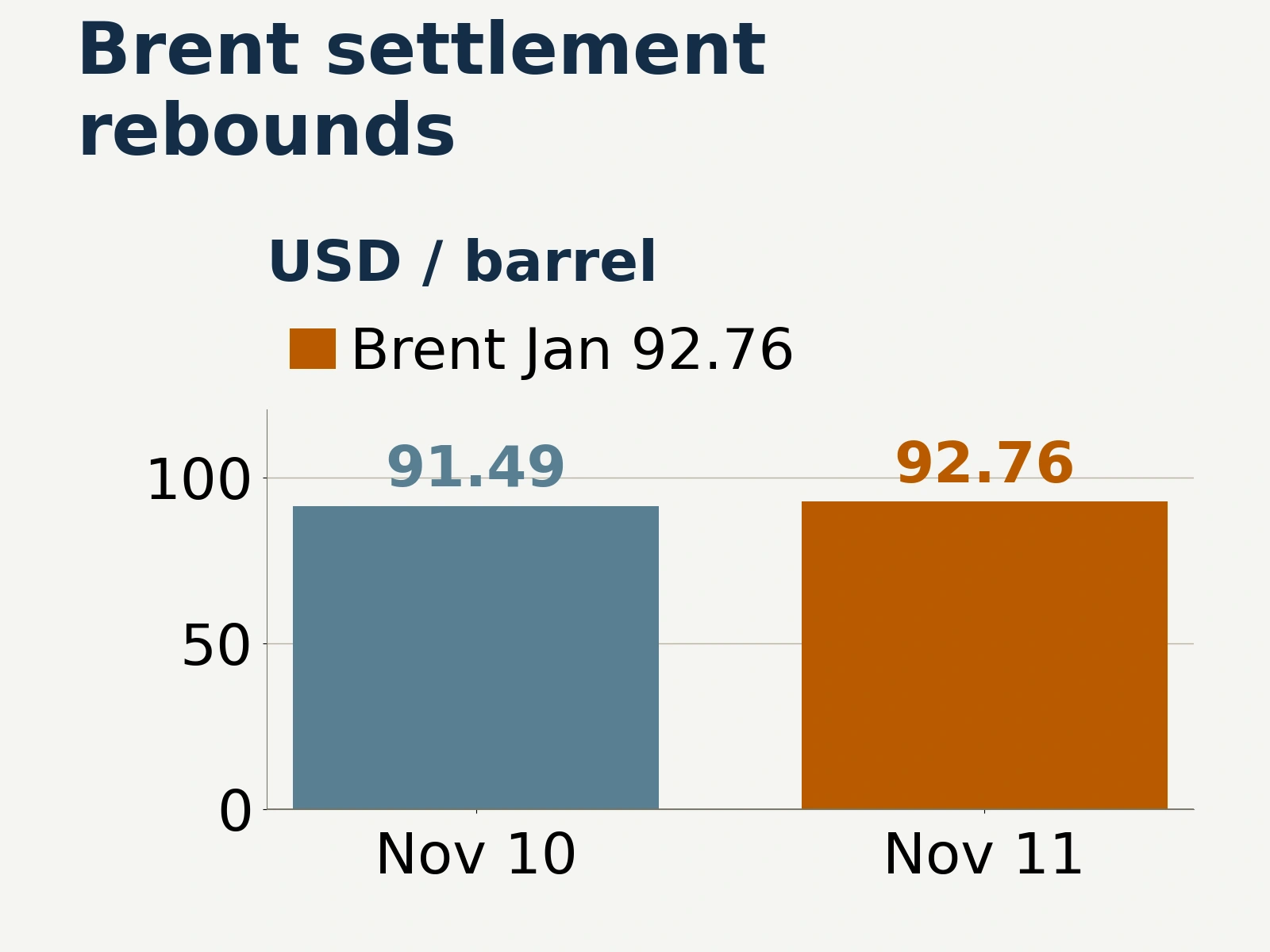
Iran rejects nuclear-material transfers abroad; Brent outperforms WTI
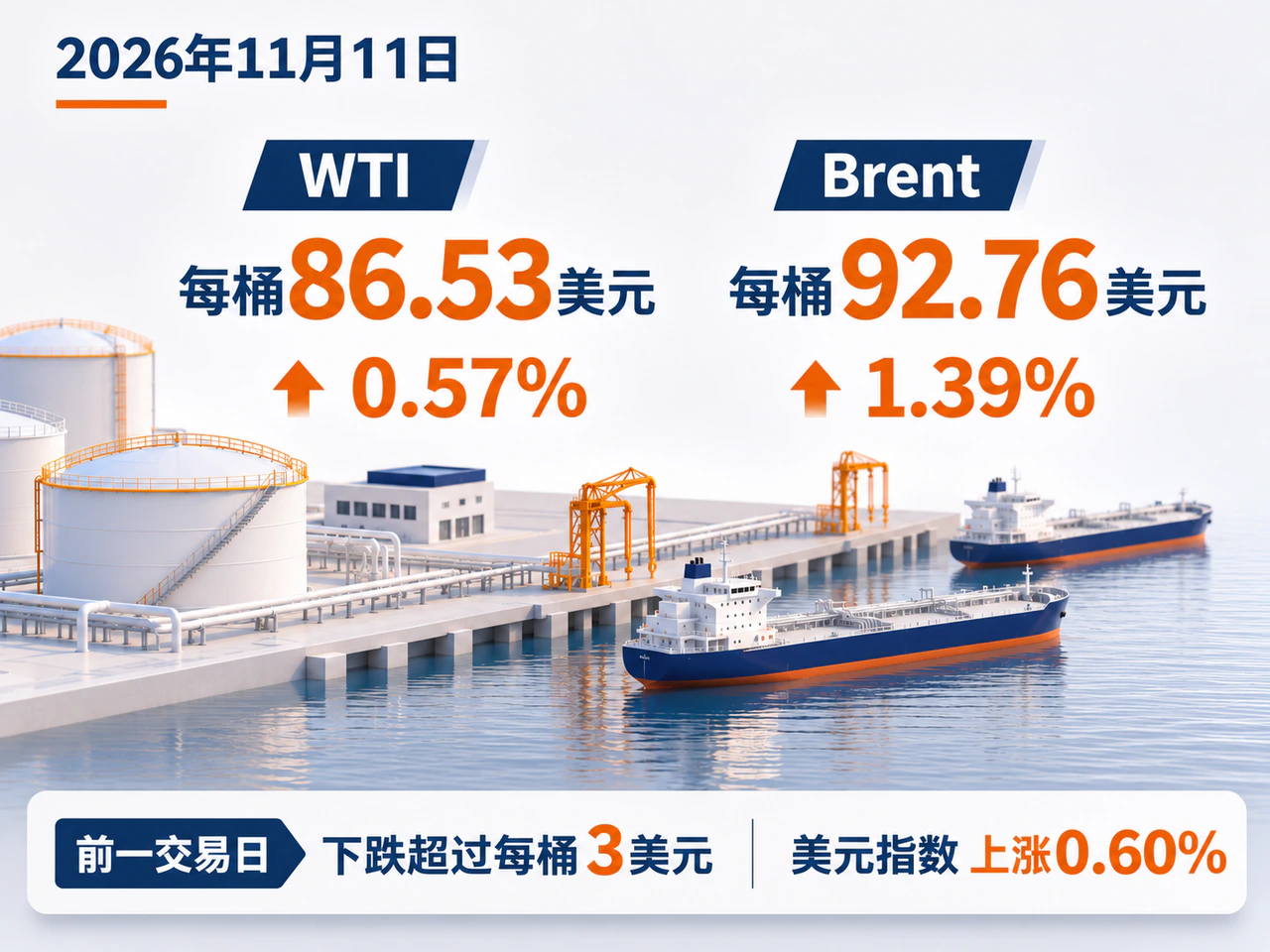
Reuters reported that oil prices fell by more than $3 a barrel at one point in the previous trading session, before paring their losses after Iran denied that negotiations were under way. On November 11, Iran's security chief reiterated that enriched nuclear material would not be allowed to leave the country, bringing diplomatic differences back into pricing. UBS analyst Giovanni Staunovo said fading hopes of a rapid de-escalation were supporting oil prices.
Shipping incidents have given diplomatic differences a direct impact on supply and transport. On November 10, the United Kingdom Maritime Trade Operations office reported that a tanker had been hit northeast of Lima, Oman. Iran separately said that two tankers had struck mines and caught fire on routes it described as unauthorized. In a November 10 report, LSEG Oil Research said that even with an agreement, a recovery in flows through the strait would still depend on mine clearance, insurance costs and shipowners' willingness to take on risk. Progress in negotiations affects risk appetite first; shipping costs and physical deliveries take longer to recover.
This also helps explain why Brent rose more than WTI that day: Brent is more directly exposed to disruptions in seaborne supply. The dollar index closed 0.60% higher on the same day, yet oil prices still advanced. A weaker dollar did not contribute to the rebound.
OPEC+ raises October output; Middle Eastern shut-ins fall to 2.5 million barrels a day

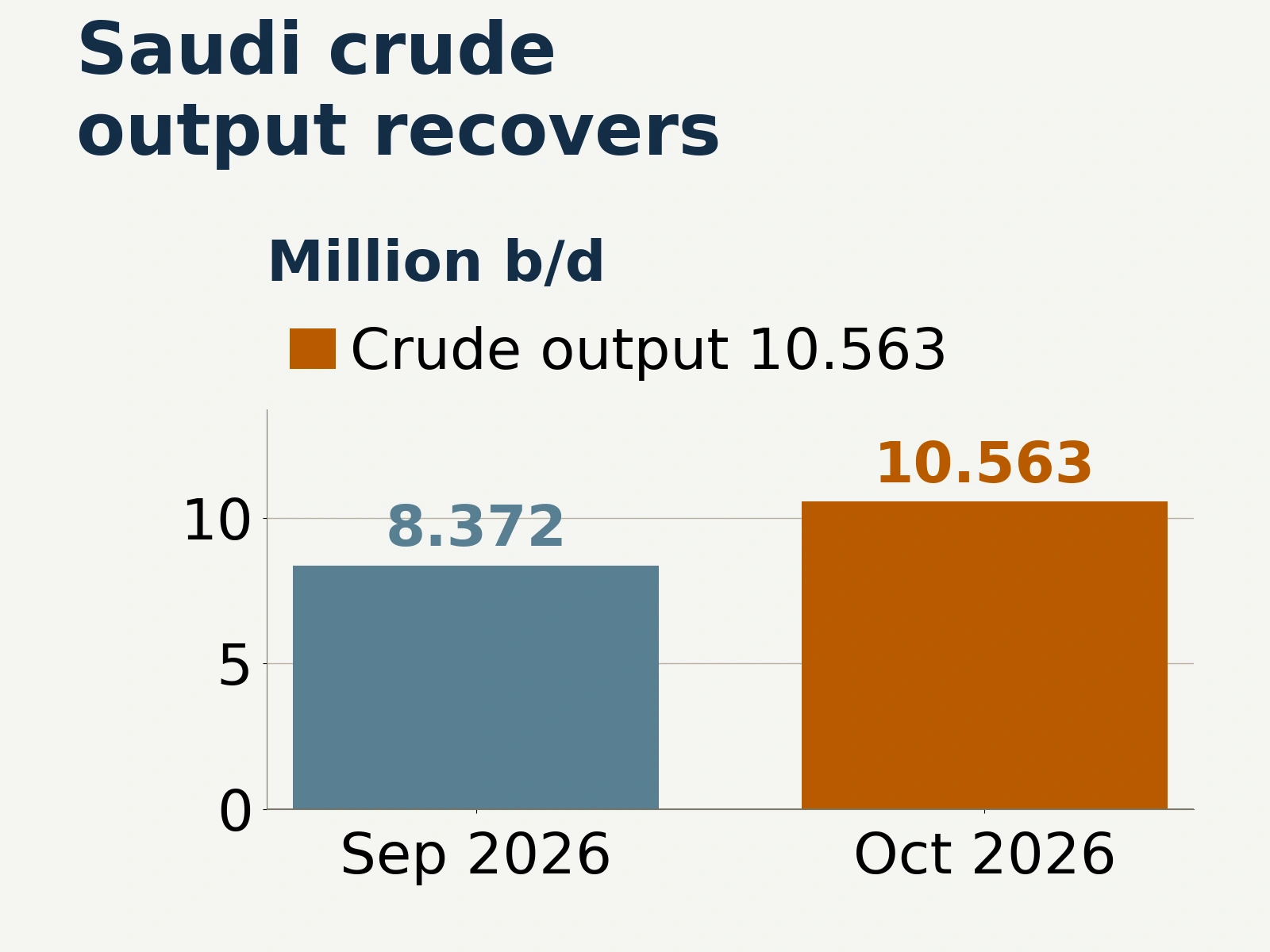
OPEC's monthly report, released on November 11, provided fresh evidence on supply. Citing the report, Reuters said OPEC+ crude production averaged 41.23 million barrels a day in October on a secondary-source basis, about 2.04 million barrels a day above September. Saudi Arabia directly reported October production of 10.563 million barrels a day to OPEC, up from 8.372 million in September. The two sets of figures use different reporting bases, but both point to a recovery in Gulf supply.
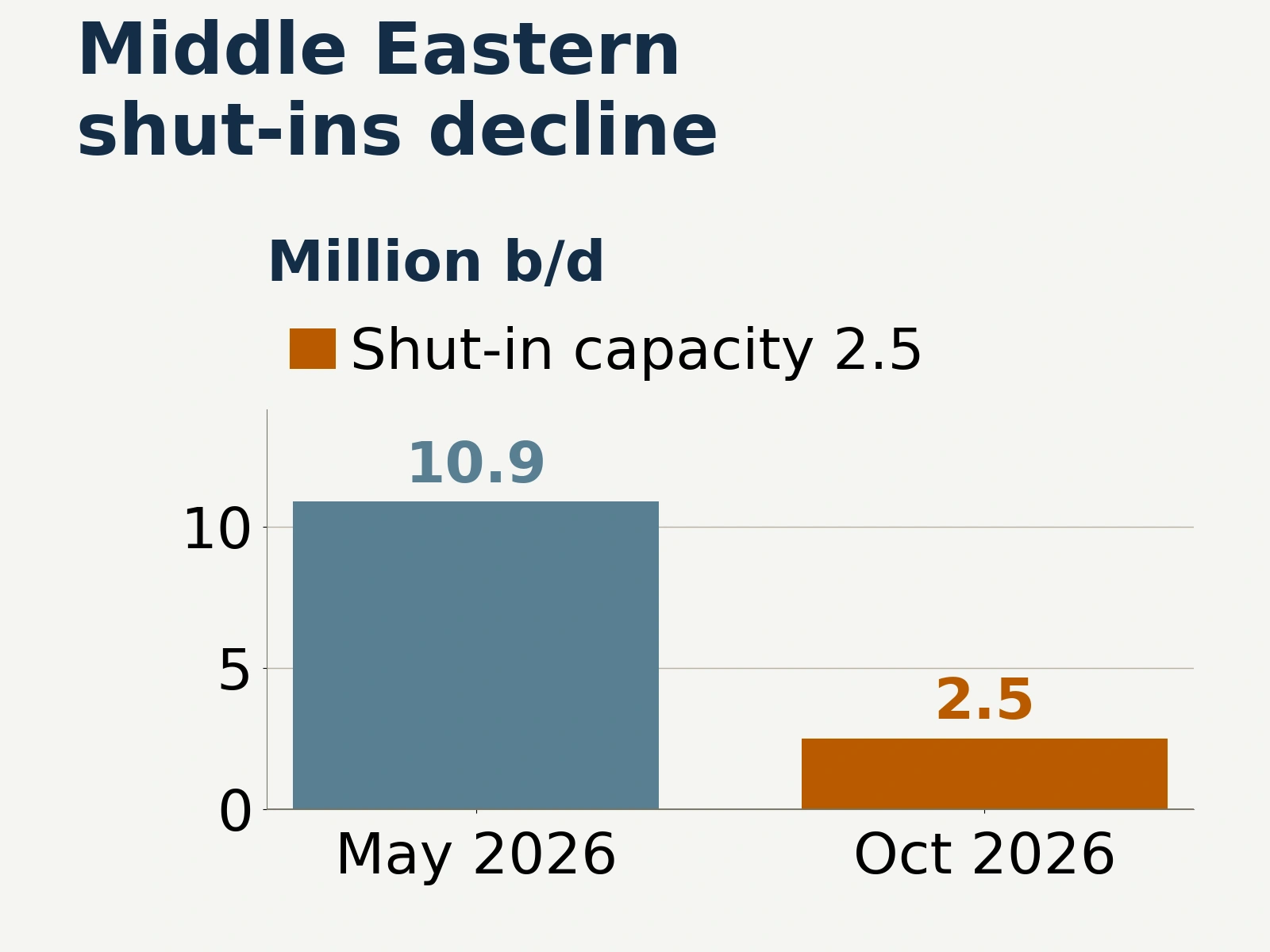
Supply can rise before transit through the strait returns fully to normal. In its November Short-Term Energy Outlook, released on November 10, the EIA said the restart of Saudi Arabia's East-West pipeline and ship-to-ship transfers off Oman had increased Middle Eastern exports in October. The EIA estimated that Middle Eastern crude capacity shut in by disruptions had fallen from a May peak of 10.9 million barrels a day to 2.5 million in October. Rerouting remains expensive, but more oil is reaching export markets, weakening the price support associated with the period of most acute near-term tightness.
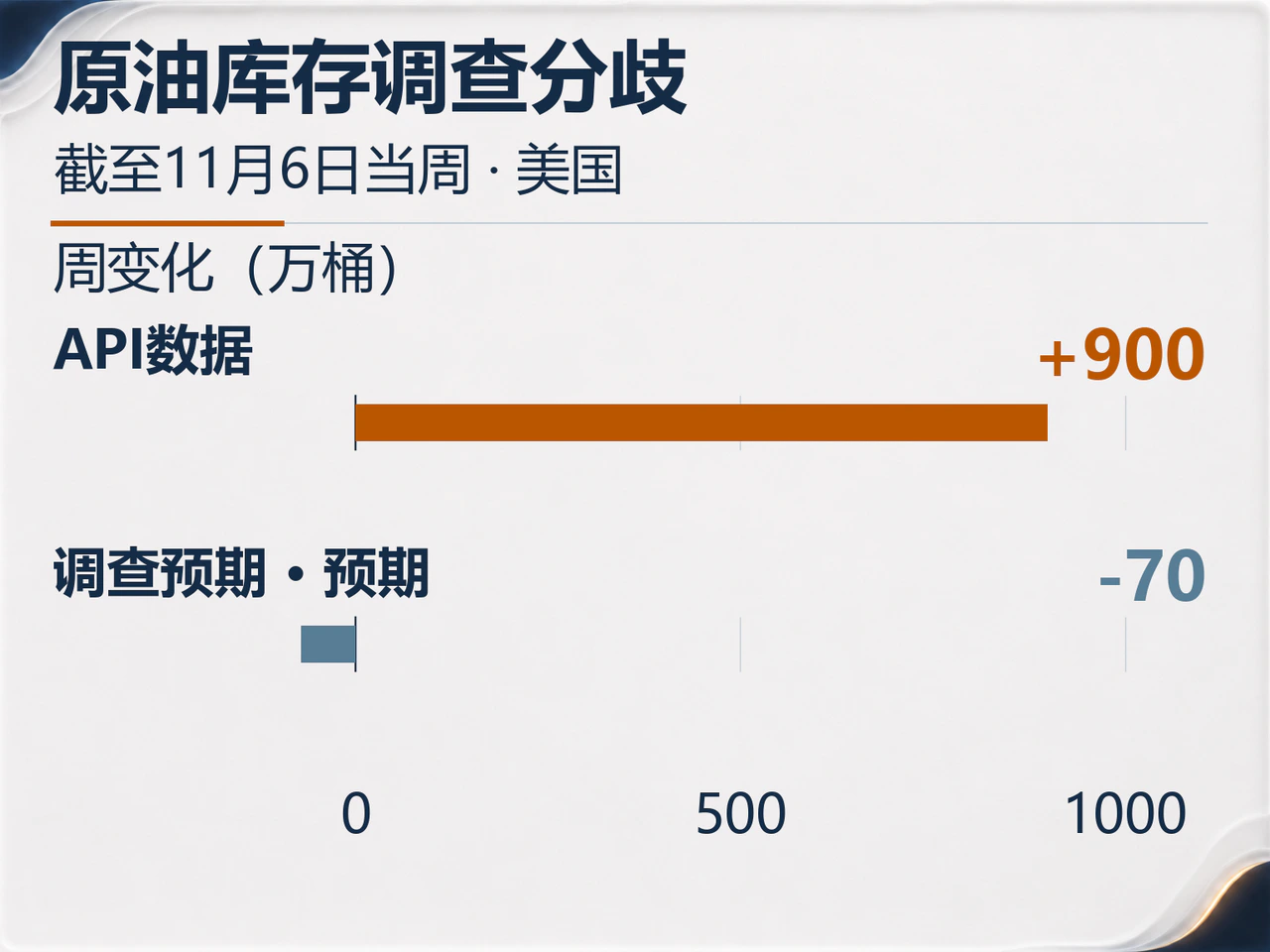
U.S. inventory signals diverged sharply. Bloomberg reported that API data showed U.S. crude stocks rising by 9 million barrels and distillate stocks by 1.5 million in the week ended November 6. A Wall Street Journal survey of nine analysts and traders produced average forecasts of a 0.7 million-barrel decline in crude inventories and a 1.2 million-barrel decline in distillates. Because of Veterans Day, the EIA's official weekly report was rescheduled to noon U.S. Eastern time on November 12, or 1 a.m. Beijing time on November 13. That release will test whether official figures confirm the build reported by the industry data.
EIA expects inventories to begin building; diesel remains tight

The EIA expects global oil inventories to shift from draws averaging 1.2 million barrels a day in the third quarter to builds in the fourth quarter. Assuming a continued recovery in alternative Middle Eastern export routes, it forecasts inventory builds averaging 3.5 million barrels a day in the first half of 2027 and an average Brent spot price of $77 a barrel in the fourth quarter of 2027. The forecast depends on a gradual recovery in logistics.
However, constraints in refined products still qualify the outlook for improved supply further out. The EIA said damage to refineries in the Middle East and Russia had reduced refined-product exports, while high crack spreads were supporting U.S. refinery runs. U.S. refinery crude inputs averaged 16.6 million barrels a day in October and were expected to remain close to that level in November. Improved crude availability can coexist with tight diesel supply, with the latter continuing to support crude demand through refinery purchases.
Four signals will shape the scope for further gains. A substantial build confirmed by official U.S. inventory data would reinforce the case for looser supply. Whether rising Gulf output consistently translates into loadings and deliveries will determine its physical impact. Insurance costs, mine clearance and shipping incidents in the strait will influence whether the logistics premium can fall. Persistently high diesel spreads and refinery inputs would delay a cooling in crude demand.
The day's rise recovered part of the earlier losses driven by growing hopes of peace talks, while recovering supply is already visible in production and export data. The key for oil prices is whether the pace of decline in the risk premium matches the actual recovery in logistics.