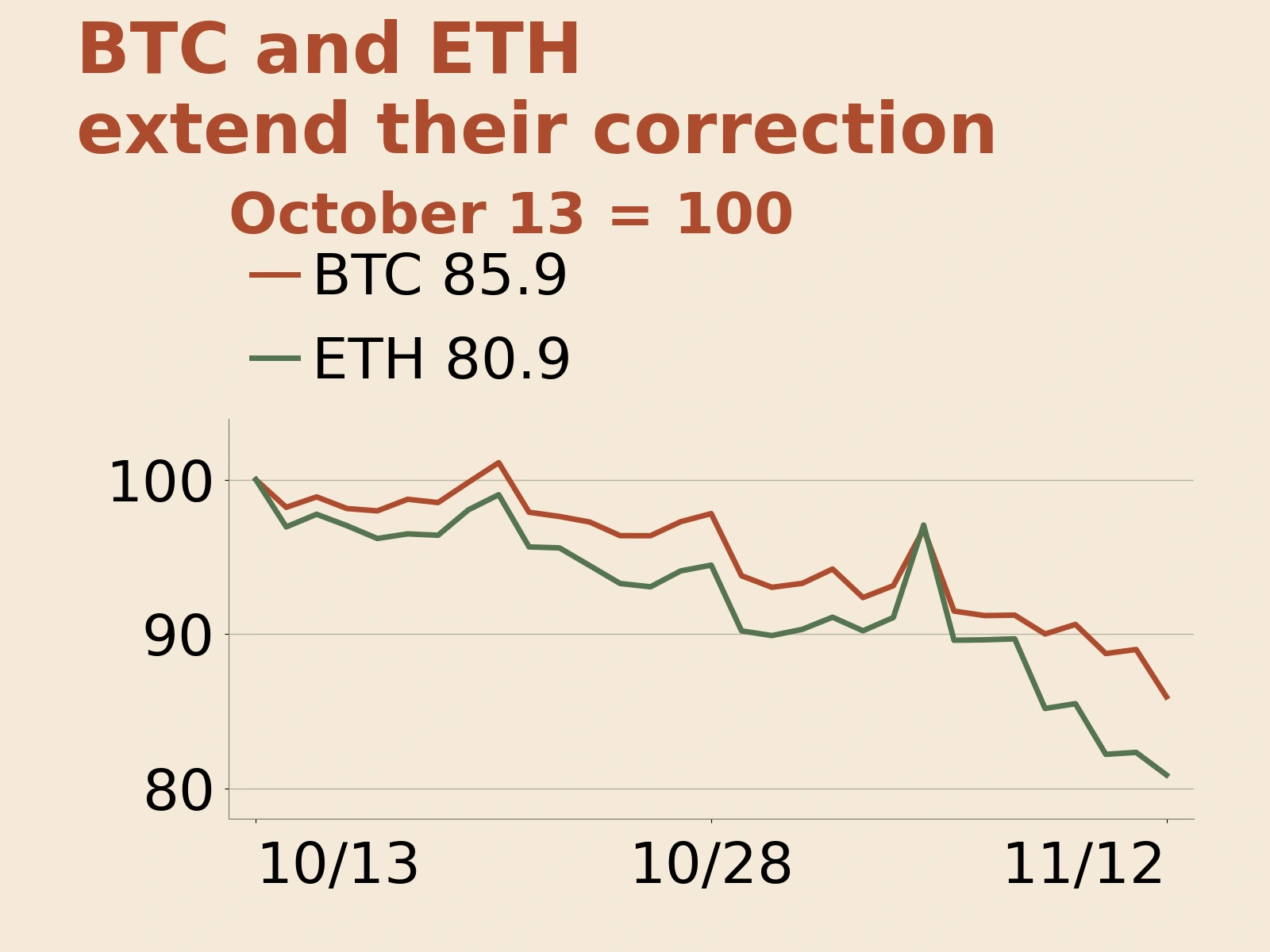
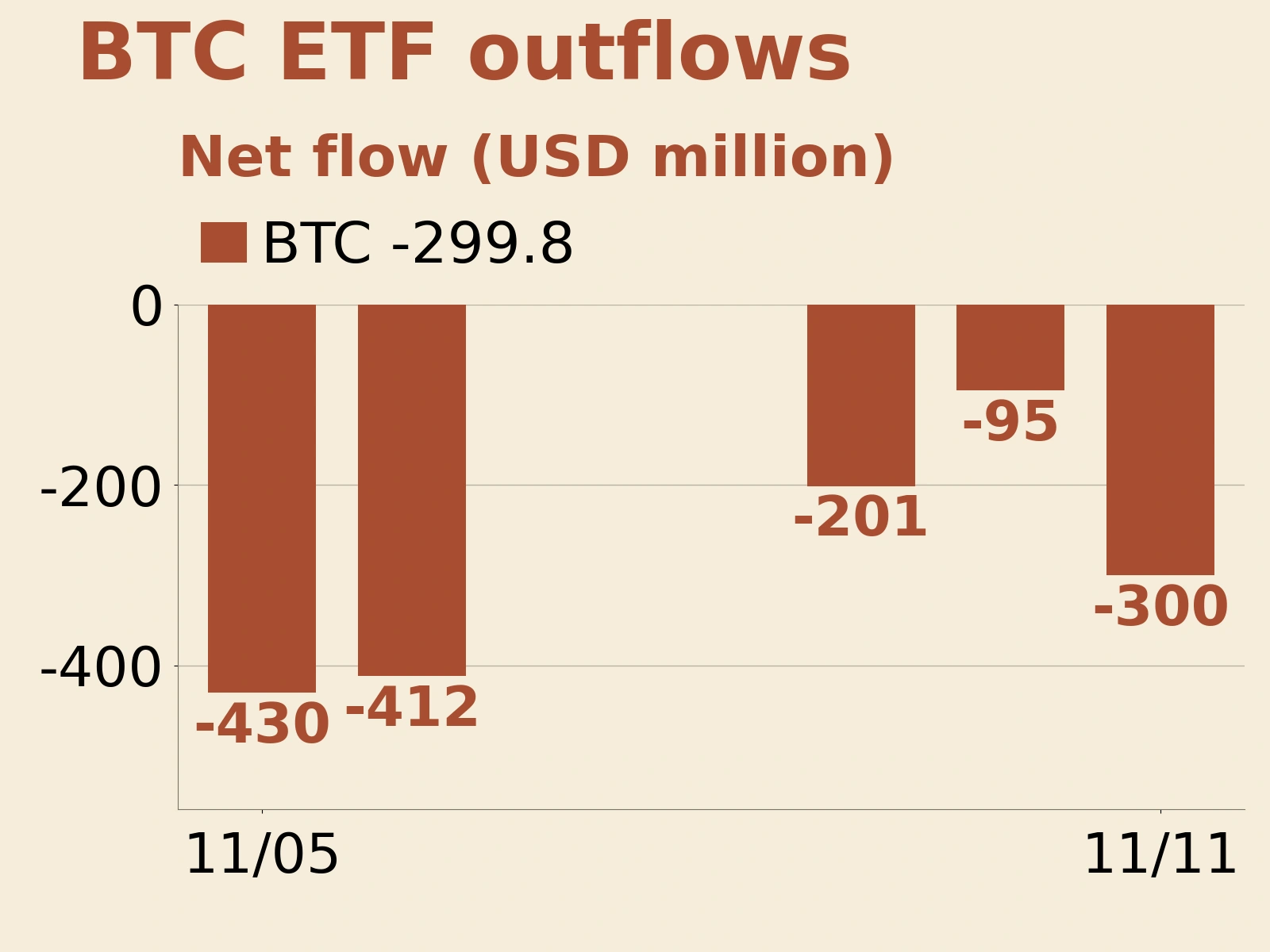
On November 12, 2026, Polygon announced the launch of SoFiUSD, while DTCC unveiled plans to connect its tokenization service to Solana. The former adds a payment asset to the network; the latter expands the future choice of settlement networks for securities. That same day, trading volume on decentralized exchanges covered by DefiLlama rebounded, while dollar-denominated total value locked (TVL) edged lower across several major networks. Asset issuance, transfers and capacity limits continue to expand, but actual usage still faces constraints involving conversion channels, funding, collateral management and the connection between on-chain transfers and legal rights.
DEX volume rebounds 5.9% as TVL edges lower on major networks
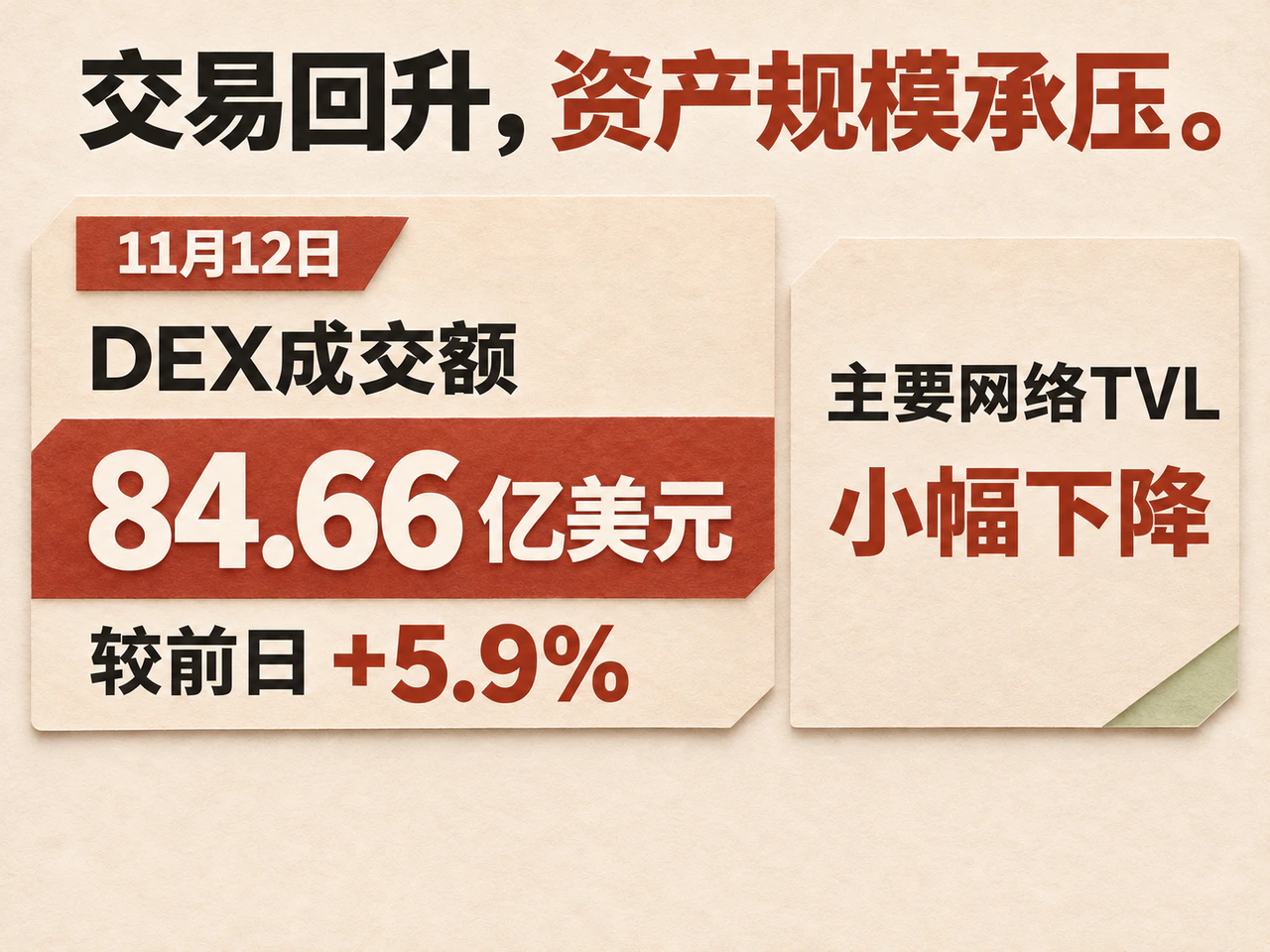
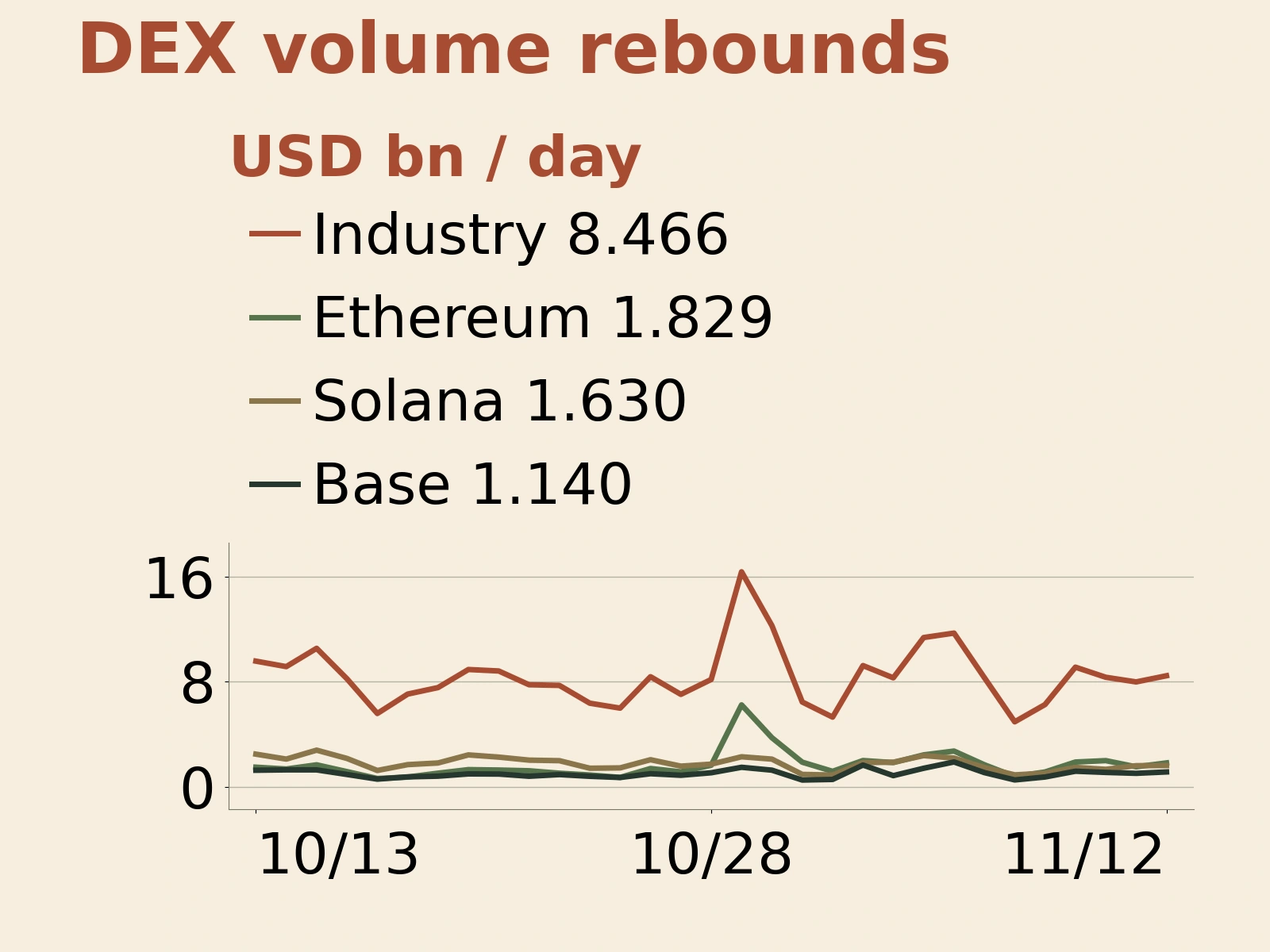
On DefiLlama's UTC-date basis, spot trading volume across the decentralized exchanges it covers reached approximately $8.466 billion on November 12, up about 5.9% from $7.996 billion the previous day. Ethereum, Solana and Base recorded approximately $1.829 billion, $1.630 billion and $1.140 billion, respectively, representing daily increases of around 19.5%, 0.7% and 10.2%. Trading demand remains, but the incremental activity is unevenly distributed across networks.
Assets are also unevenly distributed. DefiLlama's TVL snapshots dated November 12 show approximately $40.288 billion on Ethereum, $5.645 billion on Base, $4.992 billion on Solana, $1.372 billion on Arbitrum and $625 million on Polygon. The substantial differences in assets held across these five networks mean that comparisons of public blockchains need to consider asset retention, trade execution and payment access together. Trading activity alone cannot capture the full picture.
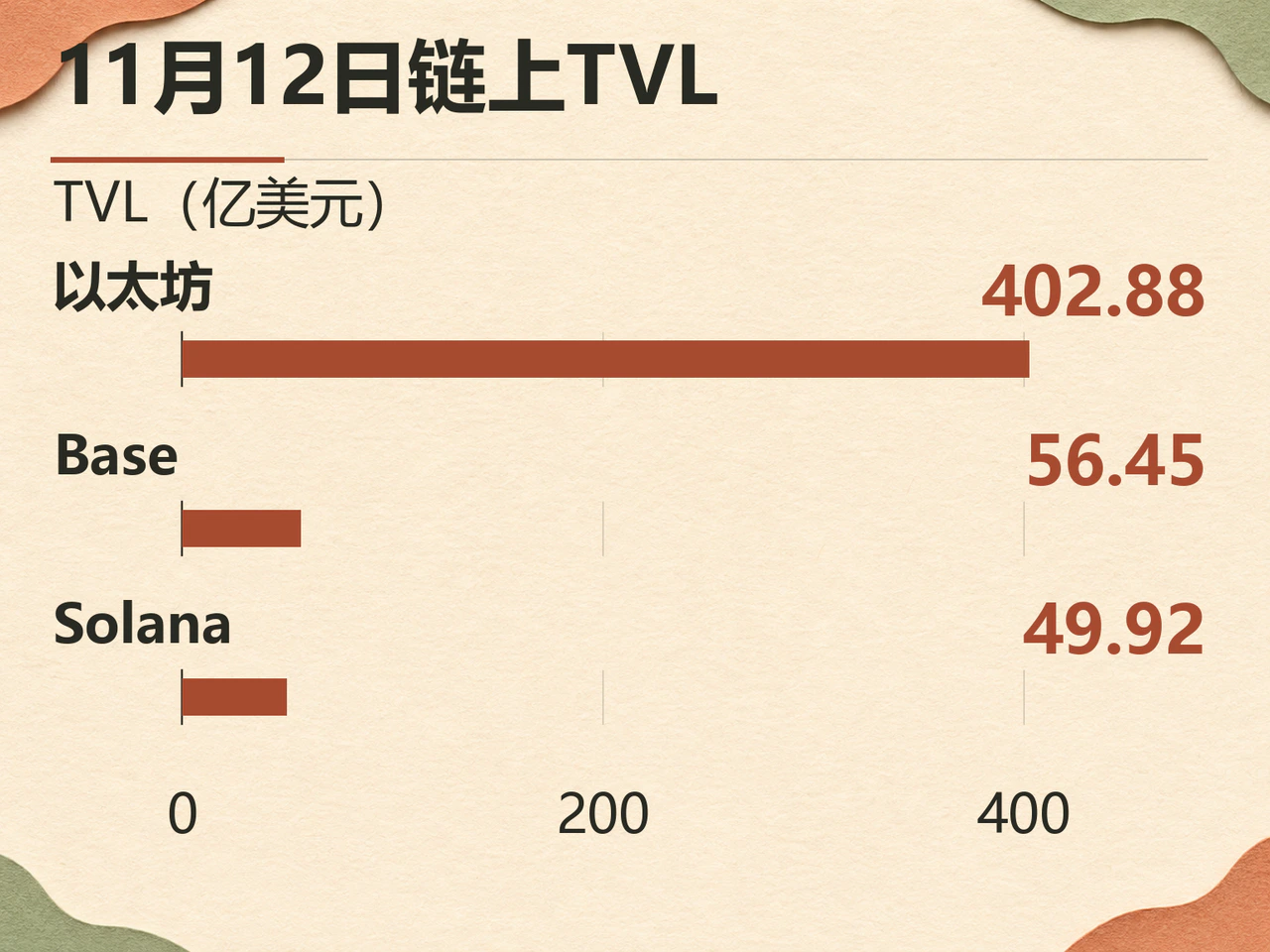
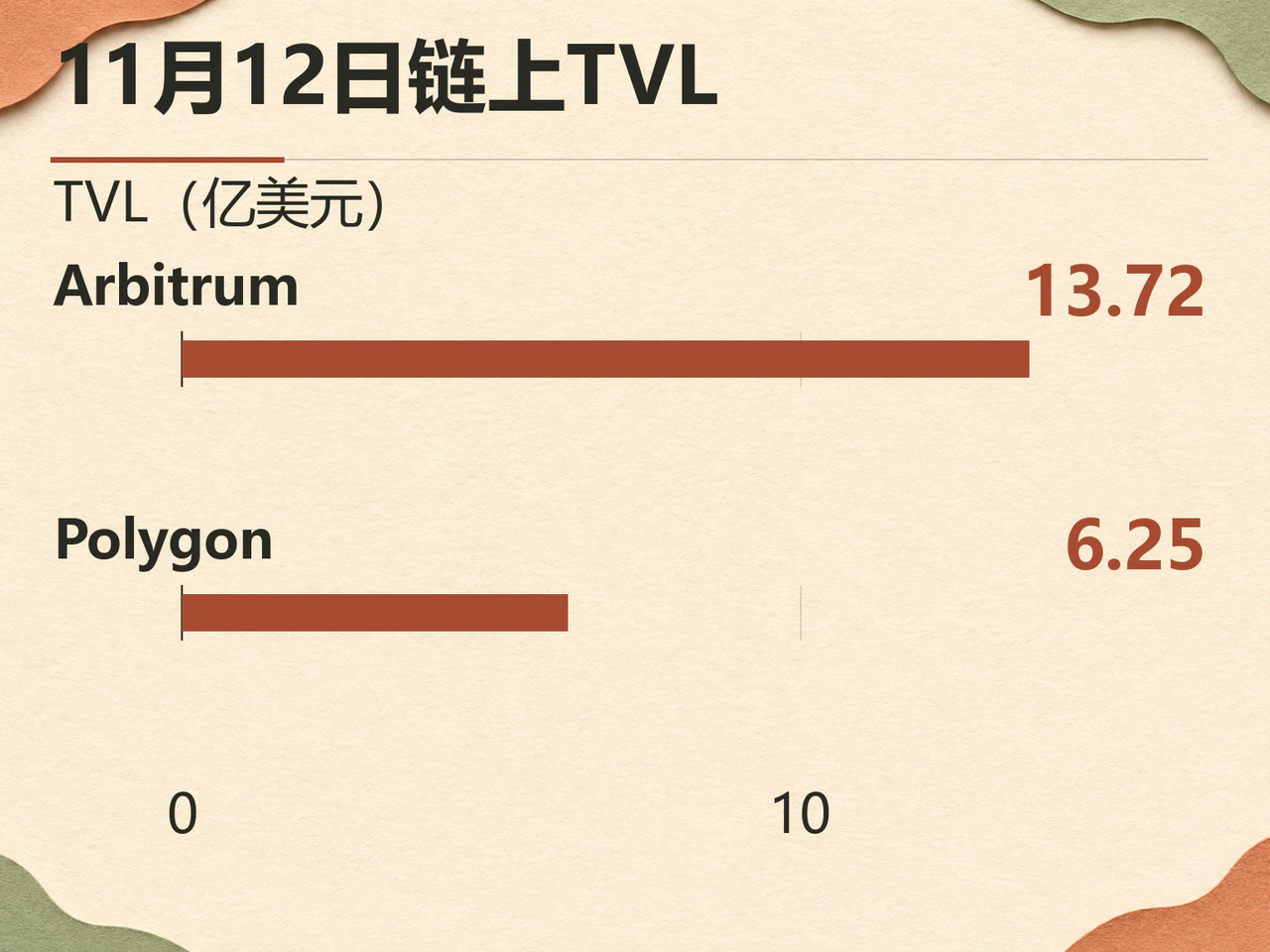
Dollar-denominated TVL on all five networks was lower than the previous day, with declines of roughly 0.2% to 1.5%. Changes in TVL reflect both changes in asset quantities and the revaluation of collateral, whereas trading volume measures turnover. Together, the two sets of indicators suggest that trading demand persisted that day while dollar-denominated asset values remained under pressure. Further data are needed to establish whether higher trading volume signals a lasting return of capital.
Payment and securities access expands; conversion and legal rights determine practical reach
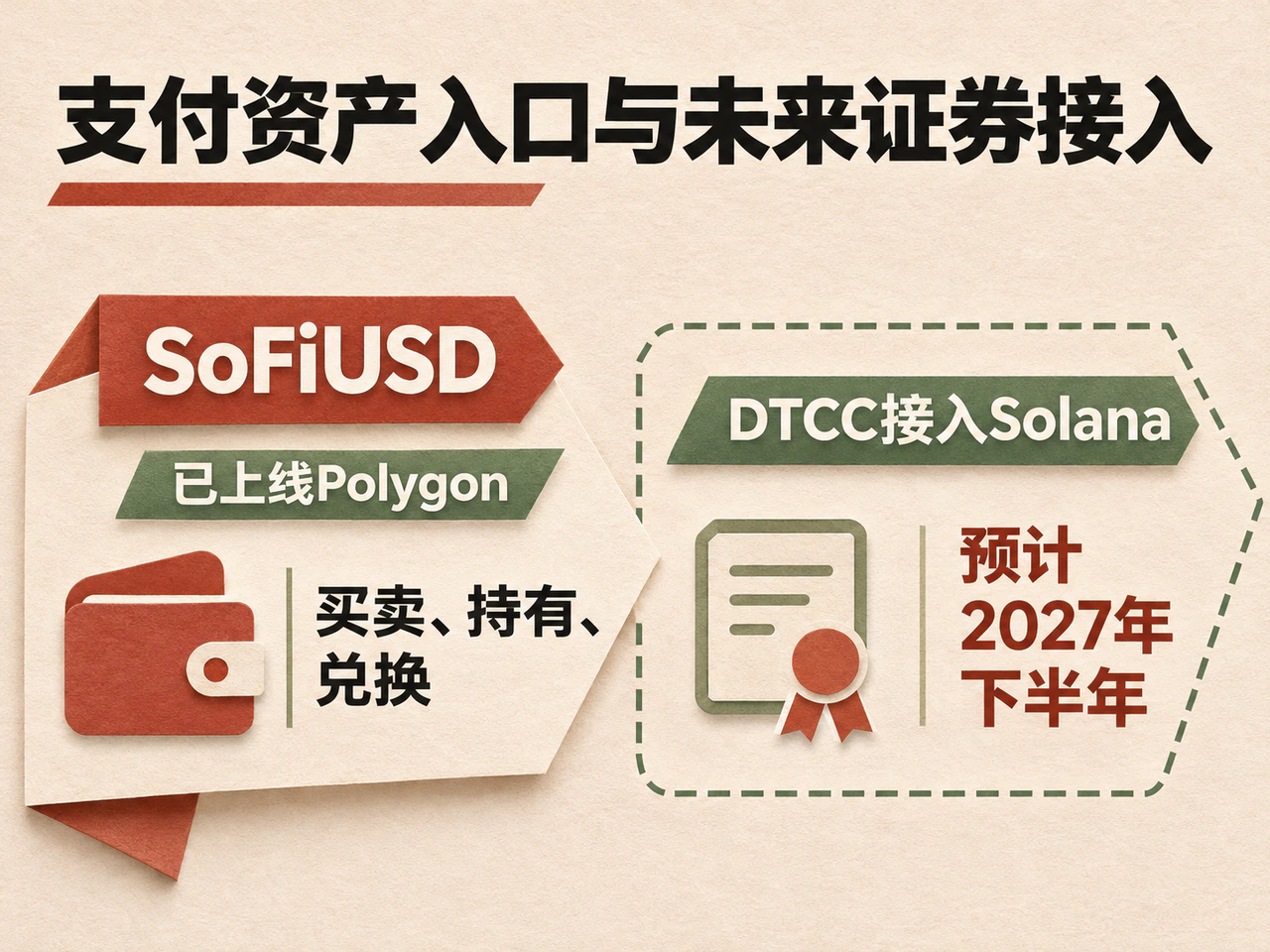
Polygon says SoFiUSD has joined its Open Money Stack alongside USDC, USDT and PYUSD. Businesses already settling on Polygon can use their existing integrations to handle this payment asset. The significance goes beyond adding another token: coordinated access to wallets, fiat on- and off-ramps, compliance, conversion, cross-chain routing and settlement could reduce implementation costs for merchants.
The rollout of SoFiUSD's own functions needs to be assessed in stages. According to Polygon's announcement, SoFi users can already buy, sell, hold and convert SoFiUSD in the app. Around-the-clock cross-border transfers, and the ability of eligible users to convert stablecoins into interest-bearing tokenized deposits, remain on the roadmap. The token and basic trading functions are live; the broader payment and savings functions have yet to be fully opened up.
For a payment asset to circulate in commerce, recipients must also be able to exit their positions smoothly. SoFi's terms limit eligibility for direct issuance and redemption to approved customers with separate agreements; an on-chain transfer does not pass that eligibility to the recipient. When merchants and payment service providers integrate the asset, they need to establish who will provide conversion, how much capacity is available and how funds will be handled in exceptional circumstances. Adding a wallet address alone does not resolve these questions.
These arrangements also shape how value is distributed. SoFi discloses that SoFiUSD itself pays no interest, is not a bank deposit and has no FDIC or SIPC insurance. Stablecoin balances, interest-bearing deposits and returns on reserve assets involve different products and rights. Growth in payment volume initially creates demand for settlement. Whether that translates into network fees, application revenue or returns for token holders depends on the specific fee and distribution mechanisms.
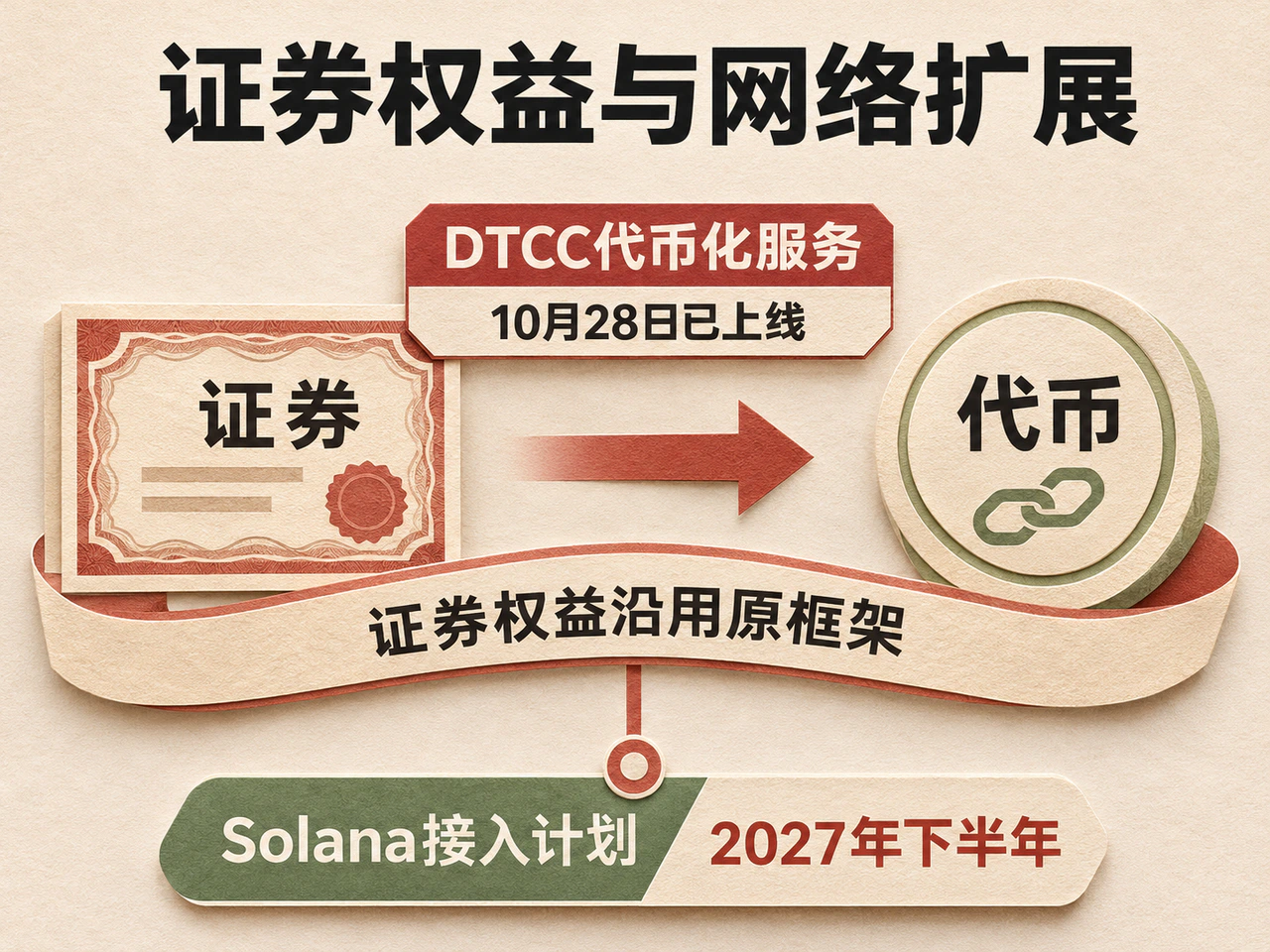
Securities tokenization has a longer timetable. DTCC says its tokenization service launched on October 28, with Solana connectivity expected in the second half of 2027 for eligible assets held in DTC custody. The announcement expands the future choice of settlement networks. DTCC also emphasizes that the securities will retain their existing investor protections, ownership rights and regulatory safeguards. Transfers of securities on a public blockchain therefore still need to align with financial rights; they are not equivalent to the unrestricted transfer of ordinary tokens.
Proposed Aave USDC borrow-cap increase of 200 million; available liquidity around 126 million
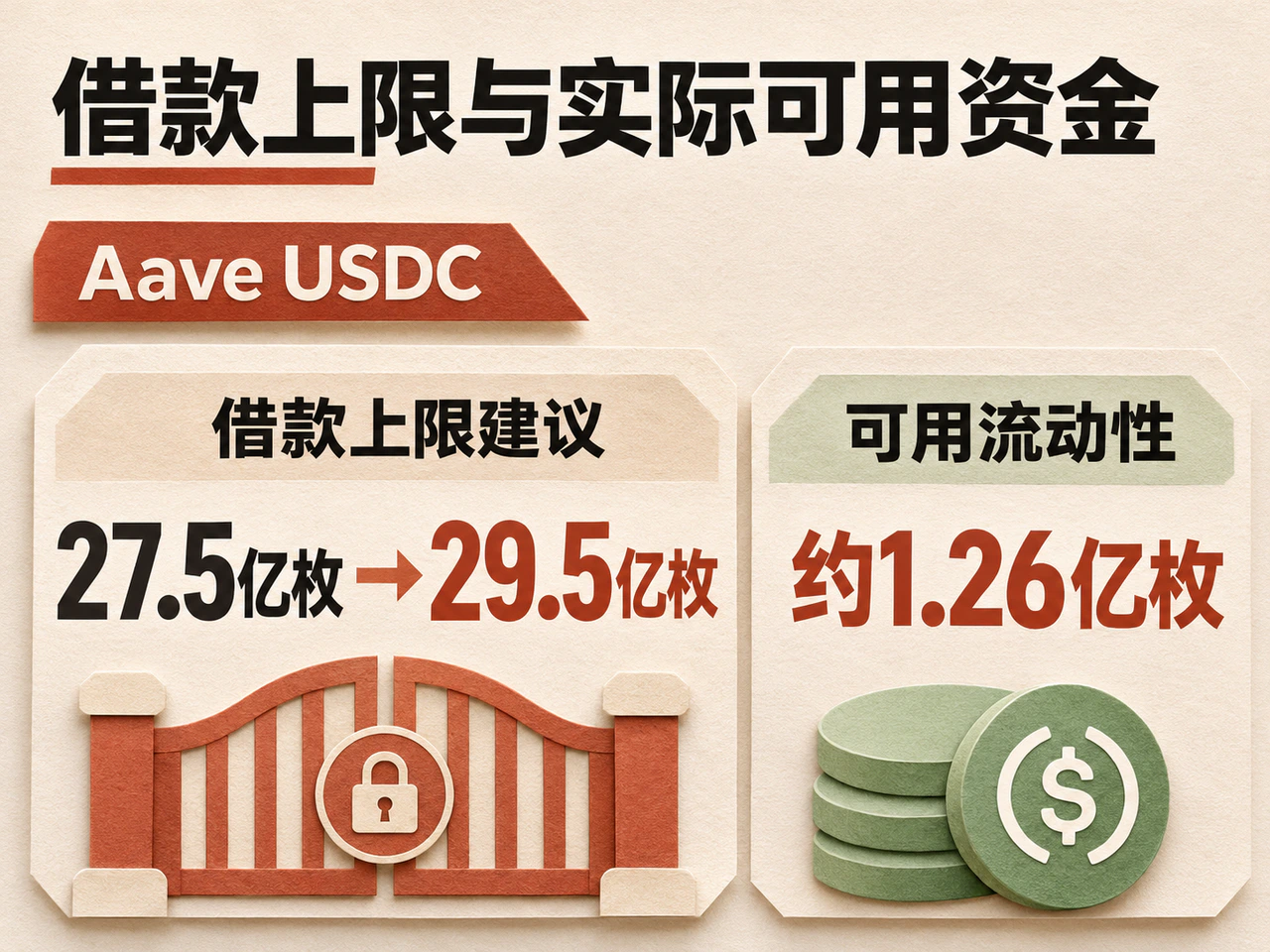
DeFi lending also illustrates the difference between widening access and adding funding. In an Aave V3 Core assessment dated November 12, LlamaRisk recommended raising the USDC borrow cap from 2.75 billion to 2.95 billion tokens. The assessment listed approximately 2.72 billion USDC in borrowing, 2.85 billion in supply and 126 million in available liquidity. Raising the cap by 200 million expands permitted borrowing capacity; the funds actually available to borrow remain constrained by supply and remaining liquidity.
On November 12, a governance-forum participant accordingly asked whether remaining liquidity would become the effective constraint once the new cap exceeded existing supply. The recommendation has not yet become an implemented rule. The question highlights the economic meaning of the proposed expansion: capacity parameters determine how far the business is allowed to grow, while funding determines how quickly current borrowing demand can be met.
From payments on Polygon and securities connectivity on Solana to lending on Ethereum, the industry is adding connections between assets and applications. The more consequential indicators in the next stage are whether stablecoins can be used repeatedly for actual settlement, whether securities can move efficiently while preserving legal rights, and whether borrowing demand can obtain sustained funding. Expanded access is already taking shape in specific assets and parameters. The quality of the resulting business still depends on actual usage and liquidity across those connections.
Click “Read the original” for the full details.