On November 12, 2026, DTCC announced plans to extend its existing tokenization service to Solana, with eligible assets held in DTC custody expected to be available for tokenization on that network in the second half of 2027. On the same day, the Hong Kong Monetary Authority released details of an industry seminar jointly organized with the Securities and Futures Commission to advance connections between tokenized deposits and investment products. The two developments focus respectively on securities custody networks and cash settlement, but address the same question: once securities move on-chain, how can asset transfers, cash settlement and day-to-day operations become a sustainable business process?
DTCC plans Solana integration in the second half of 2027, retaining the existing framework for securities rights
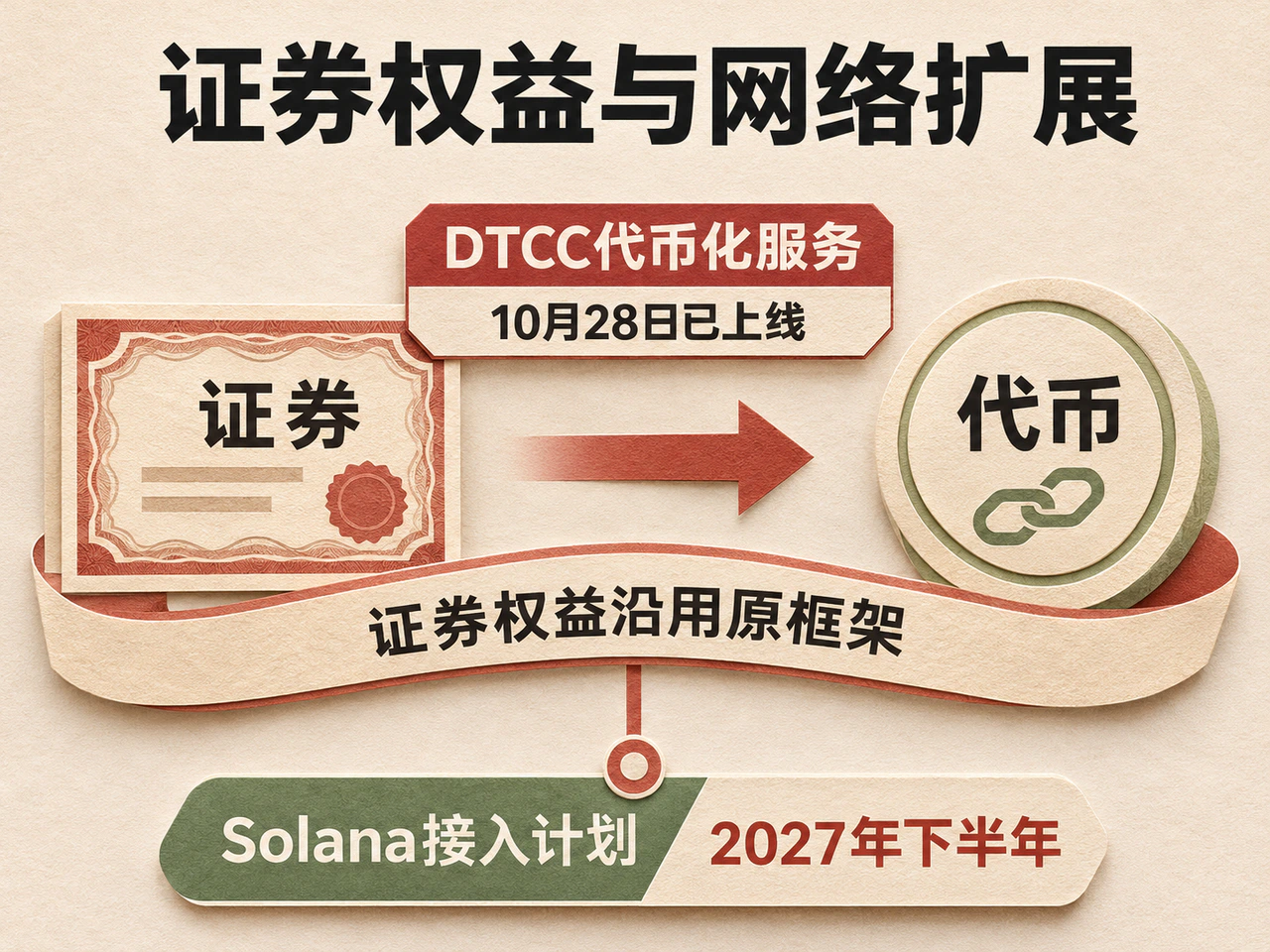
DTCC's announcement concerns a planned network expansion. DTS, the tokenization service operated by its subsidiary DTC, went live on October 28, initially on Canton Network and DTCC's private Besu network; Solana integration is expected in the second half of 2027. The existing service is operational, while the additional network remains to be implemented.
DTS creates tokenized representations of assets held in DTC custody. Eligible securities entitlements can be converted between traditional and tokenized forms and delivered to digital wallets selected by users. DTCC says securities tokenized through the service will retain the ownership rights, investor protections and regulatory safeguards associated with their traditional counterparts. For institutions, the principal changes concern how assets are transferred and used; securities rights and safeguards continue to rest on the existing institutional framework.
At launch, 20 DTC participants, including Bank of America, Citi, Fidelity Investments, J.P. Morgan, Morgan Stanley and UBS, had signed agreements to use the service. This provides an initial customer base; actual business volumes will depend on how many securities these institutions subsequently convert, transfer and use in collateral management.
The value of a multi-network approach lies in giving institutions more ways to use their assets while retaining their custody and rights arrangements. If securities can be moved more quickly to where they are needed, collateral management could require less time and smaller idle balances. Planned Solana integration broadens the choice of networks, but translating that plan into a contribution to the business still requires technical integration, participant onboarding and actual transactions. Service usage, the volume of securities converted and the durability of business demand will provide ways to assess the efficiency gains from the additional network.
Hong Kong advances links between tokenized deposits and investment products, with larger transaction volumes next
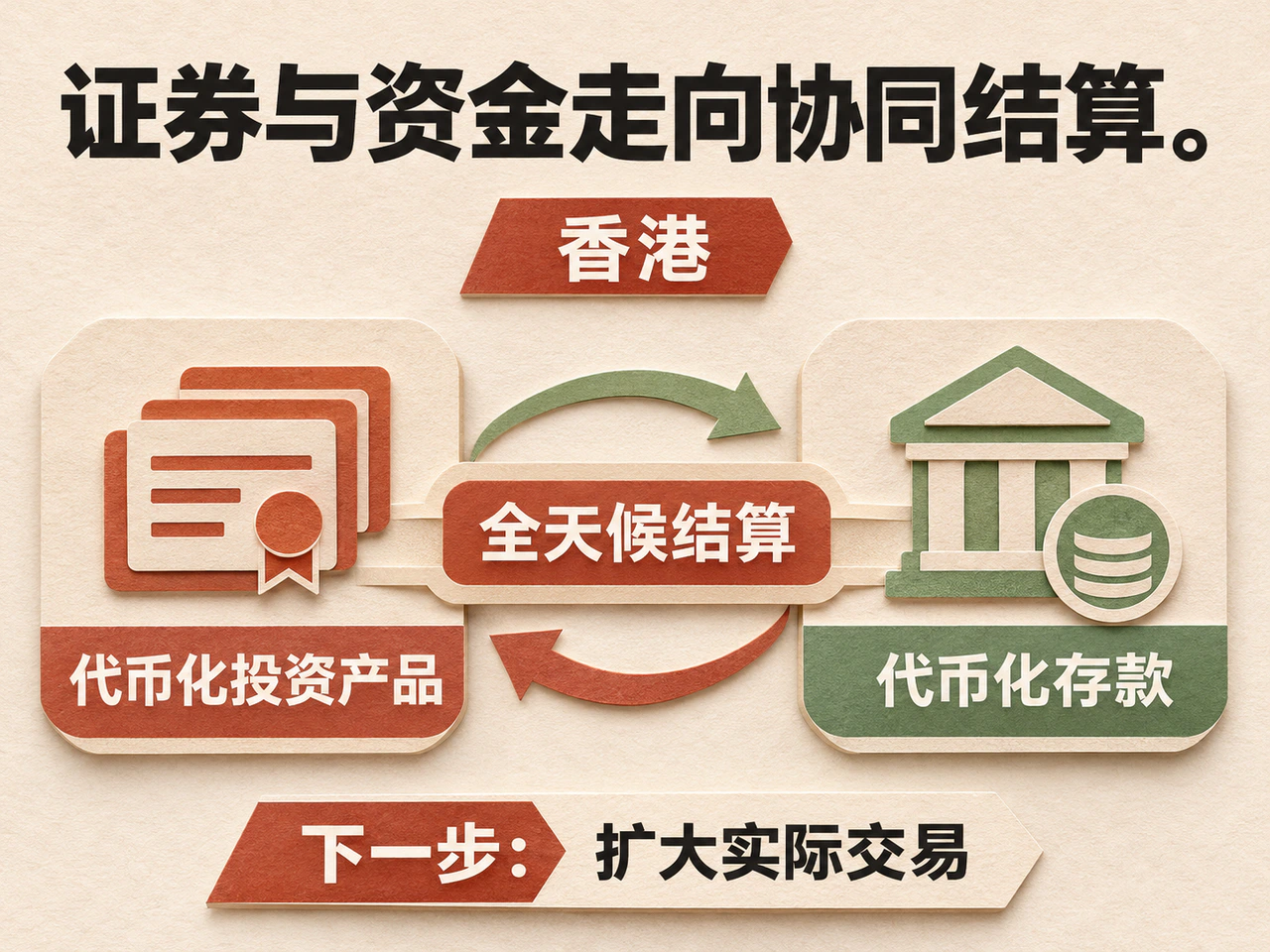
Hong Kong's disclosure focuses on connecting securities and cash. In an announcement on November 12, the HKMA reported on an industry seminar it held with the SFC on November 11. Around 200 industry representatives attended to discuss Project Ensemble and SFC-authorized tokenized investment products.
The announcement also noted that the new phase of EnsembleTX, announced during FinTech Week, supports round-the-clock interbank settlement of tokenized deposits, and that the SFC has approved round-the-clock secondary trading of tokenized money market funds. These arrangements had already been announced or approved. The latest development chiefly concerns collaboration among regulators, banks and industry participants on practical applications, together with a clear intention to expand transaction volumes and commercial uses in the next stage.
For round-the-clock securities trading to deliver lasting value, cash settlement must also cover the corresponding hours. Tokenized deposits connect to bank funds, while tokenized funds serve investment demand. Linking both to financial infrastructure allows institutions to allocate liquidity over a wider range of hours. In the announcement, Christina Choi, the SFC's Executive Director of Investment Products, described the next stage's priority as connecting investment products, digital money and infrastructure to bring actual transactions to these digital channels.
DTCC's approach emphasizes preserving securities rights while expanding network access; Hong Kong's emphasizes coordination between investment products and settlement funds. Together, they show institutional tokenization moving beyond putting assets on-chain toward settlement and day-to-day operations. Future commercial results will depend on sustained customer usage, smooth cash settlement and the ability to improve asset turnover while retaining safeguards for rights. The conditions for connecting infrastructure are beginning to take shape; growth in actual transactions will determine whether institutional investment translates into revenue.
Click the original article link for further details.