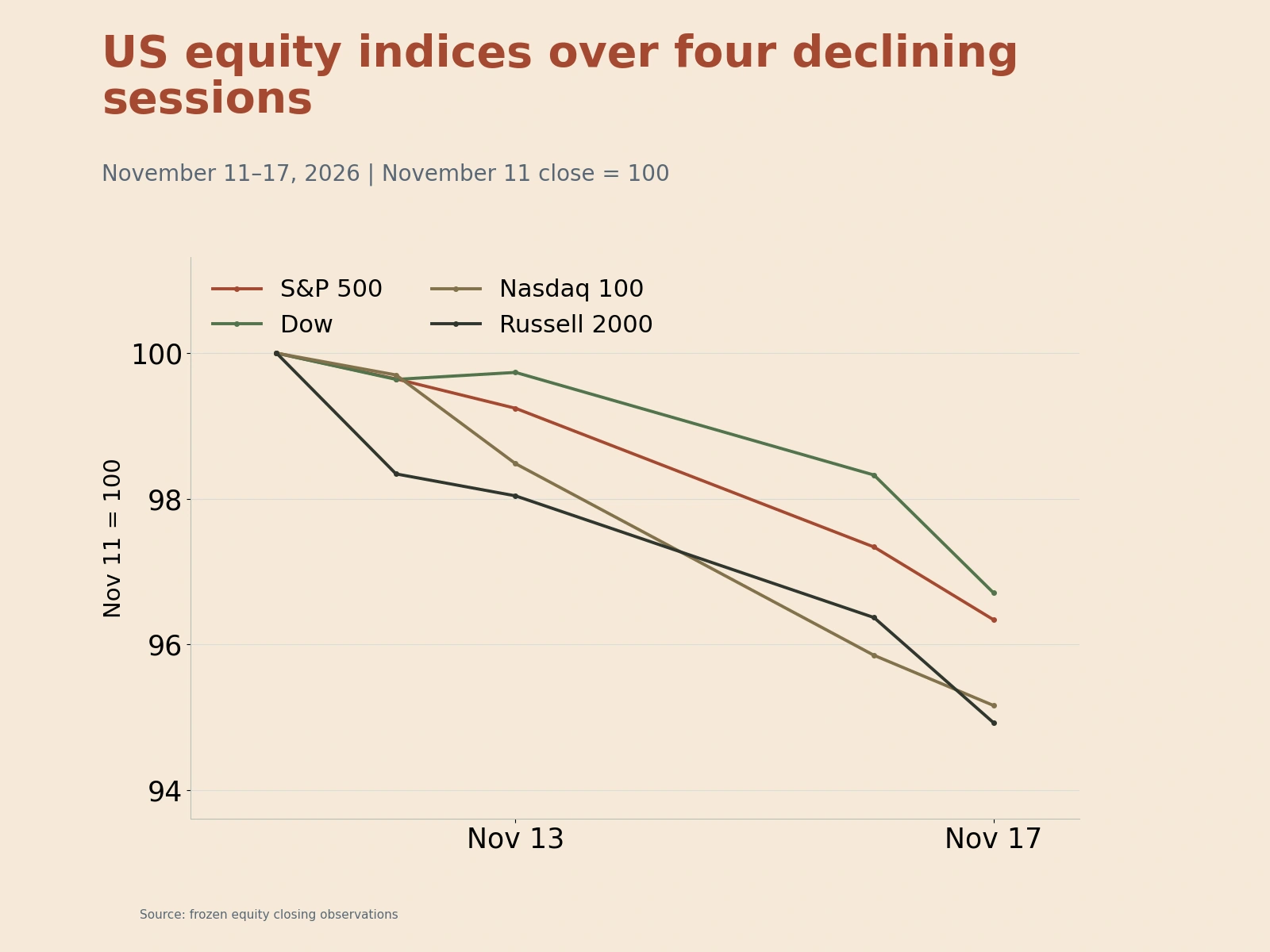
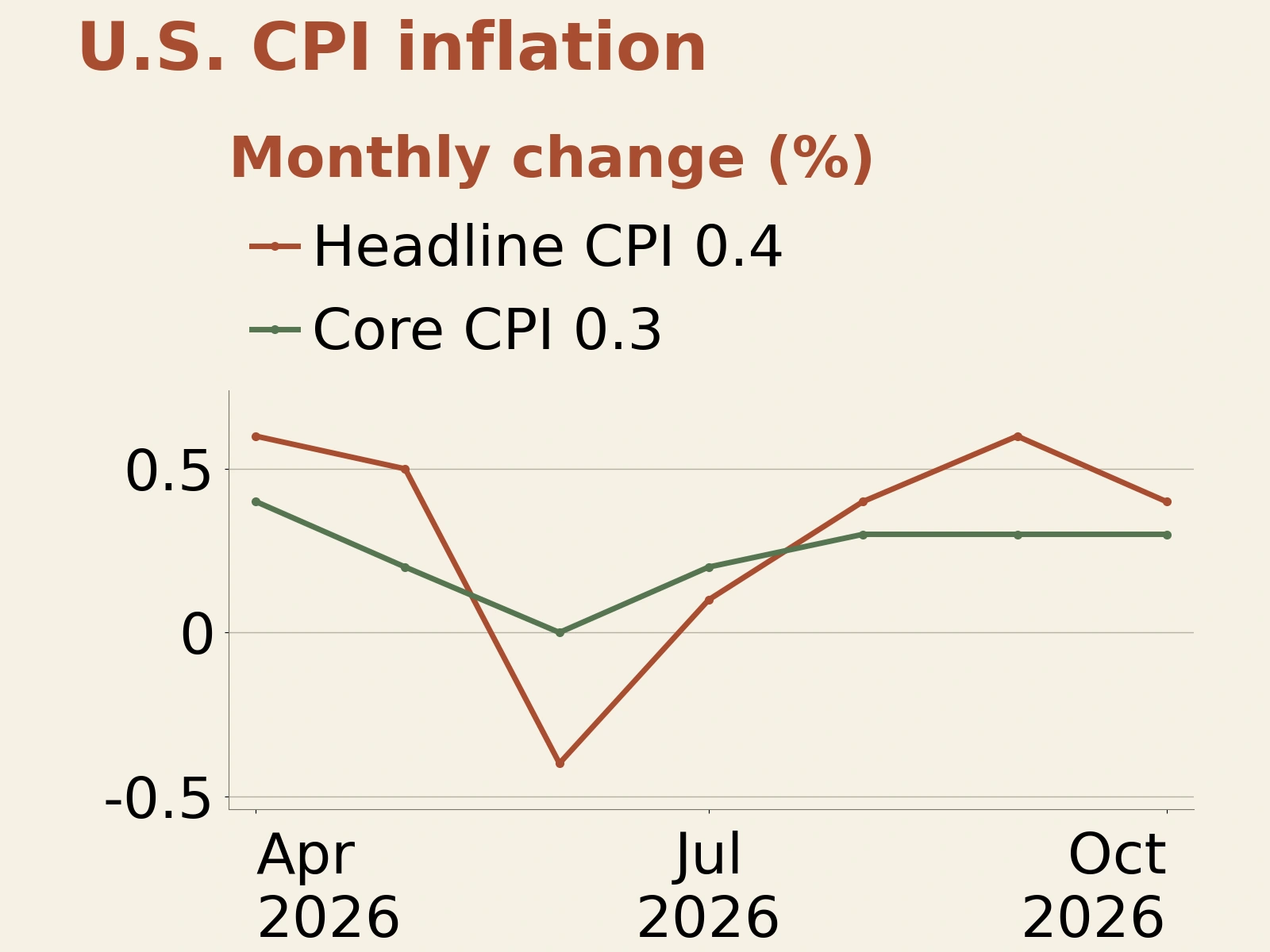
On November 18, 2026, the S&P 500 surrendered its intraday gains after the Federal Reserve released the minutes of its October meeting, closing lower for a fifth consecutive session. Inflation concerns continued to constrain short-dated Treasuries, yet the 30-year Treasury yield fell 5 basis points that day. Equities also diverged: falling oil prices weighed on energy stocks, while retailer Target gained about 4% on growth in traffic and sales. Investors are still preparing for potential interest-rate increases, while differences in duration, sector exposure and earnings quality are widening the gaps in asset returns.
Policy expectations constrain the short end as falling inflation compensation lifts long bonds
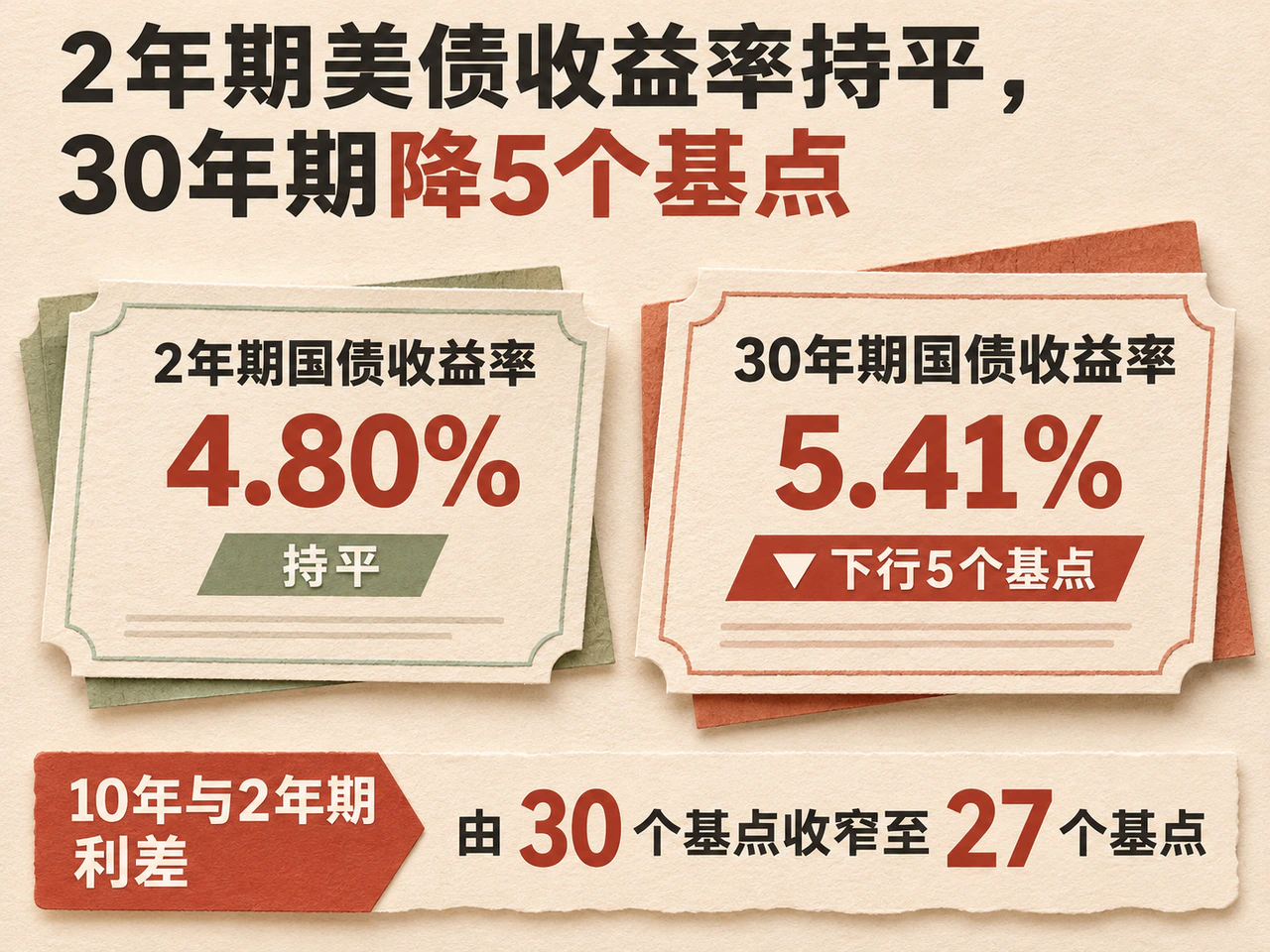
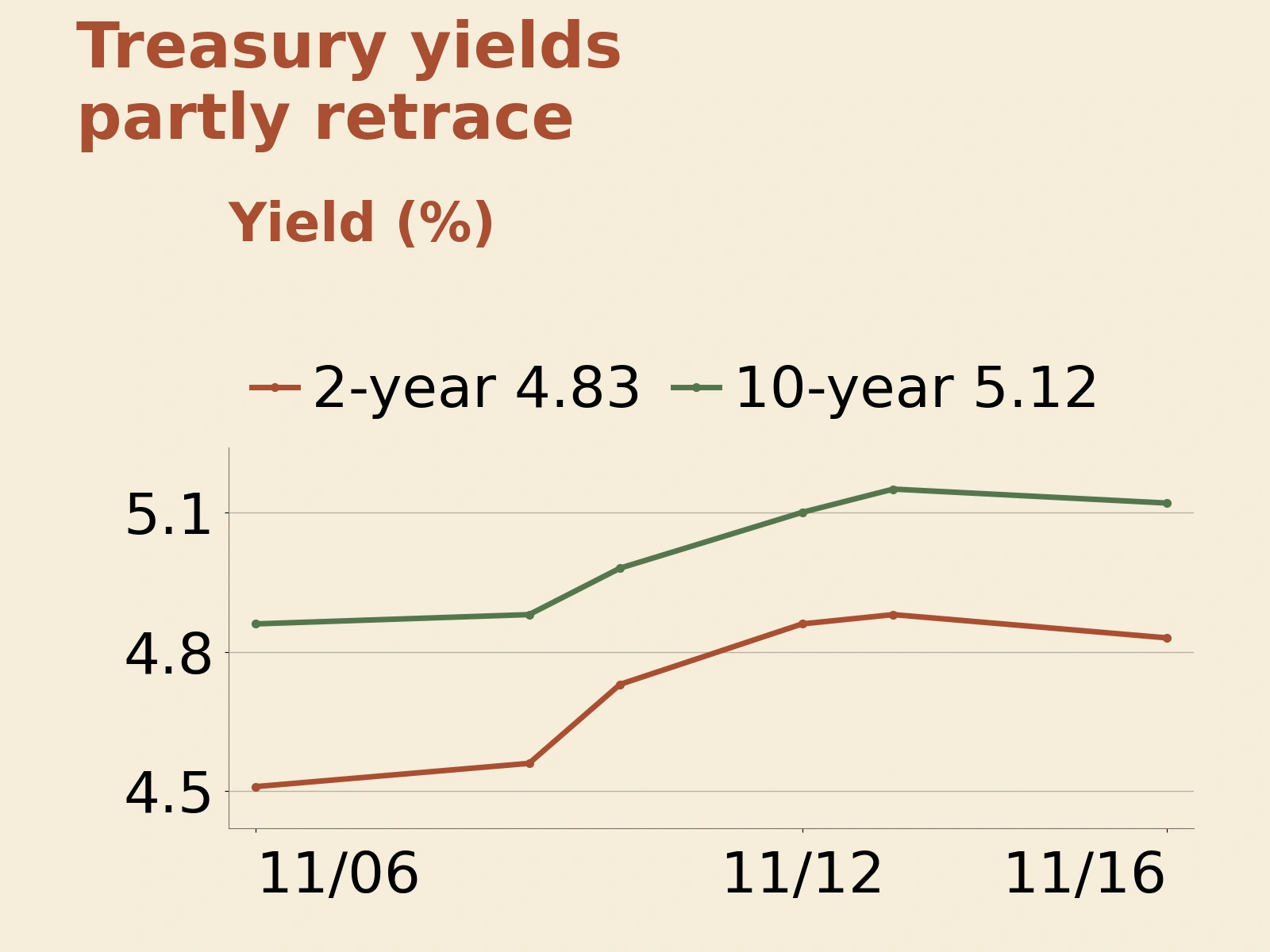
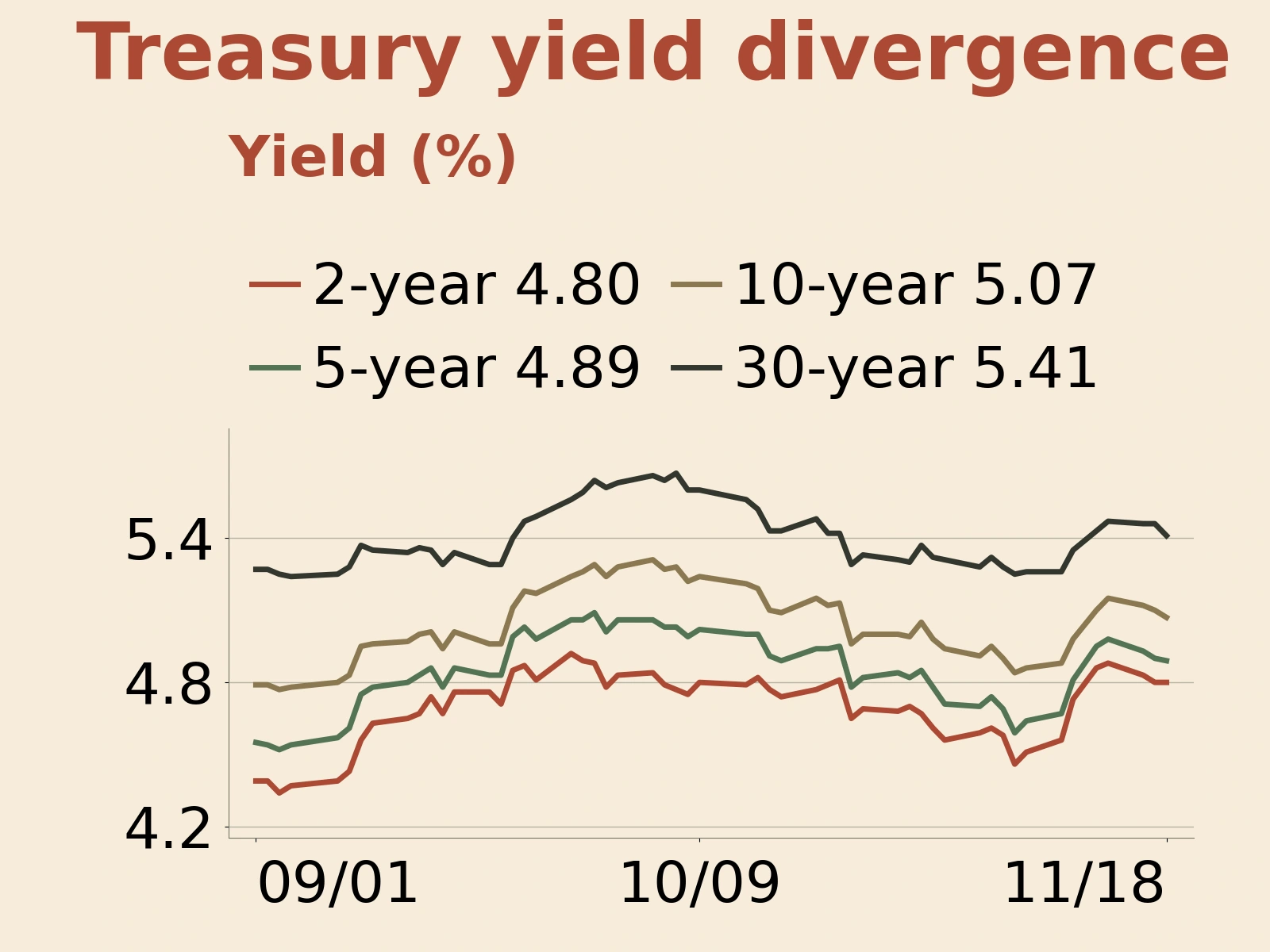
The U.S. Treasury's end-of-day yield curve showed the two-year yield unchanged at 4.80% on November 18, the five-year down 1 basis point to 4.89%, the 10-year down 3 basis points to 5.07%, and the 30-year down 5 basis points to 5.41%. The 10-year/two-year spread narrowed from 30 to 27 basis points. Since November 13, the 10-year yield has fallen for three consecutive trading sessions from 5.15%.
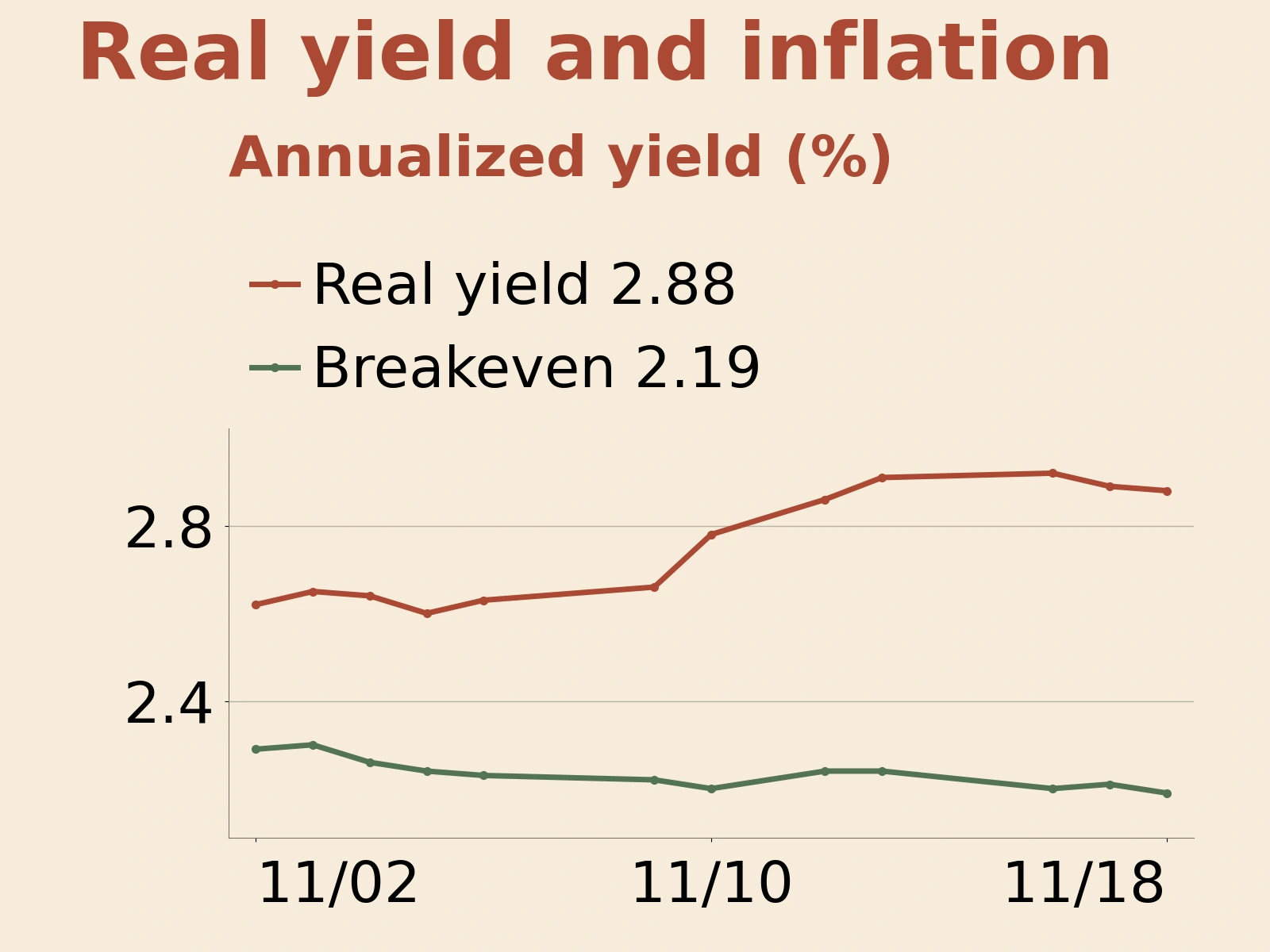
Treasury inflation-protected securities (TIPS) help explain the rally in long bonds. The 10-year real Treasury yield fell 1 basis point to 2.88% that day, while the difference between nominal and real yields—the breakeven inflation rate—declined from 2.21% to 2.19%. Thus, about 2 basis points of the 3-basis-point decline in the nominal 10-year yield came from a reduction in the inflation compensation demanded by the market. Five-year inflation compensation also fell 3 basis points, consistent with the decline in oil prices. By contrast, the near-term monetary-policy outlook remained restrictive. A New York Fed trading-desk survey presented at the October meeting showed a median forecast of one Fed rate increase in December and another in March next year. Reuters reported that the two-year Treasury yield briefly jumped after the minutes were released.
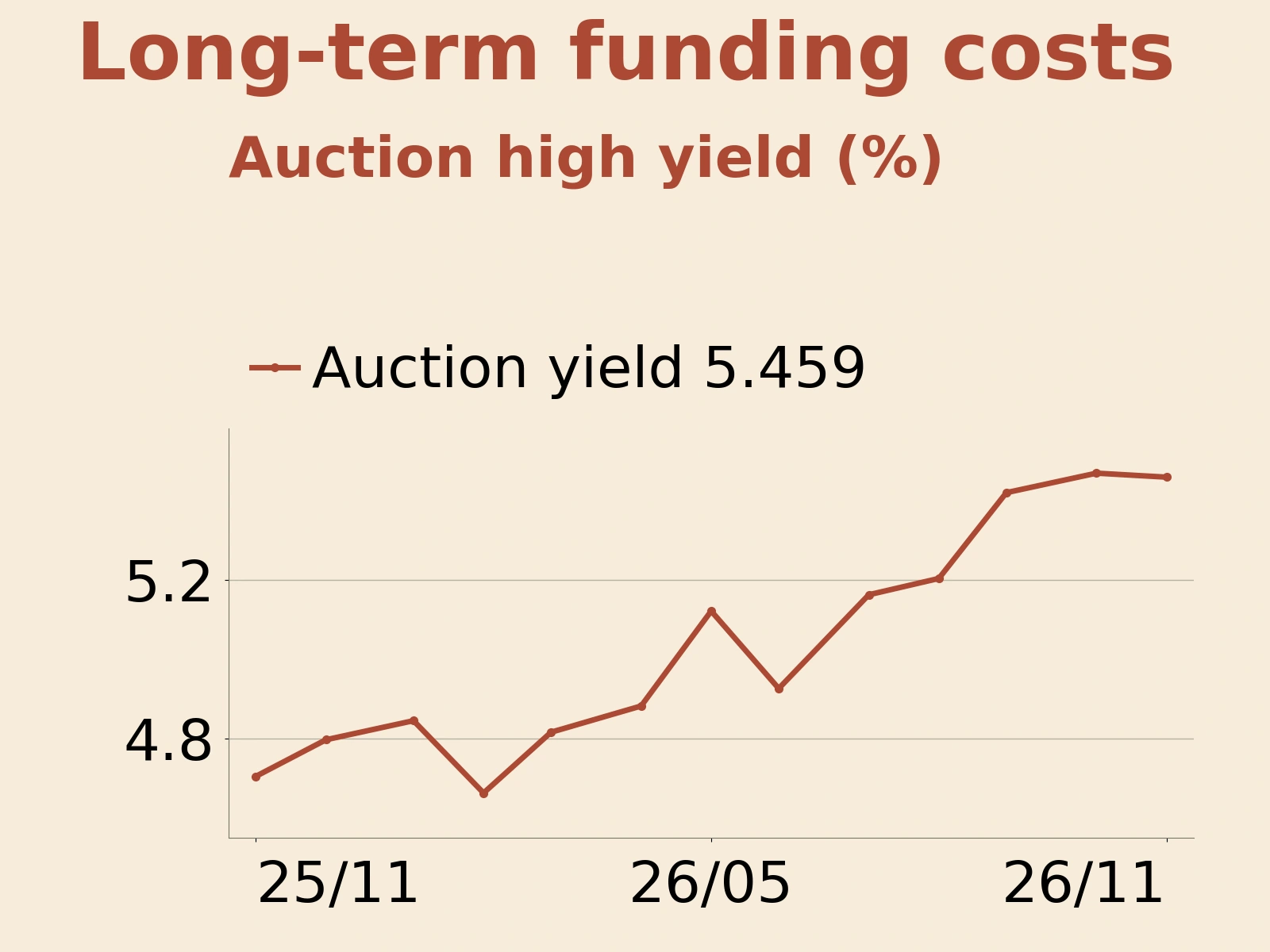
In the primary market, the Treasury auctioned $16 billion of new 20-year bonds that day at a high yield of 5.459%, matching the secondary-market yield at the bidding deadline. The bid-to-cover ratio declined from 2.73 at October's reopening to 2.63, in line with the average of the previous six auctions. Compared with the new issue of the same size in August, the auction yield was 25.5 basis points higher. Despite the recovery in long bonds over recent sessions, the Treasury's long-term funding costs remain substantially above summer levels.
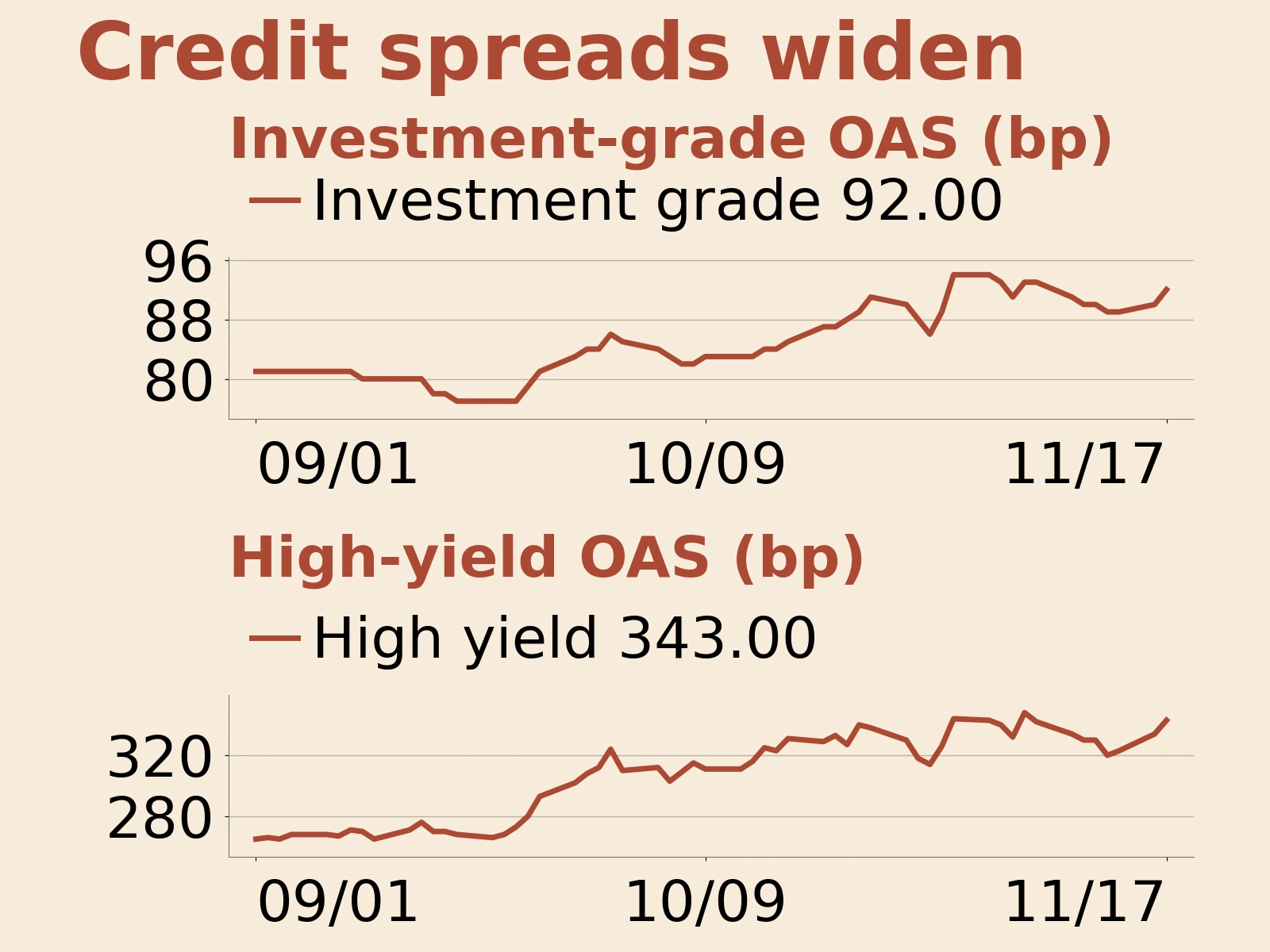
Whether lower Treasury yields feed through to corporate borrowers also depends on investors' willingness to take credit risk. Between November 13 and 17, the option-adjusted spread on the U.S. investment-grade corporate bond index widened 3 basis points to 92 basis points, while the high-yield index spread widened 20 basis points to 343 basis points. The additional financing costs faced by lower-rated companies rose faster. Overseas bond buying also slowed. September Treasury International Capital data released on November 18 showed that foreign investors bought a net $80.8 billion of U.S. Treasuries that month, down from $108.9 billion in August; net purchases of U.S. corporate bonds fell from $52.3 billion in August to $27.0 billion. On a transaction basis, overseas funds continued to flow into Treasuries in September, but the total market value of foreign Treasury holdings fell $76.0 billion over the same period to $9.241 trillion.
A lower base and multifamily building lift housing starts as the project pipeline shrinks
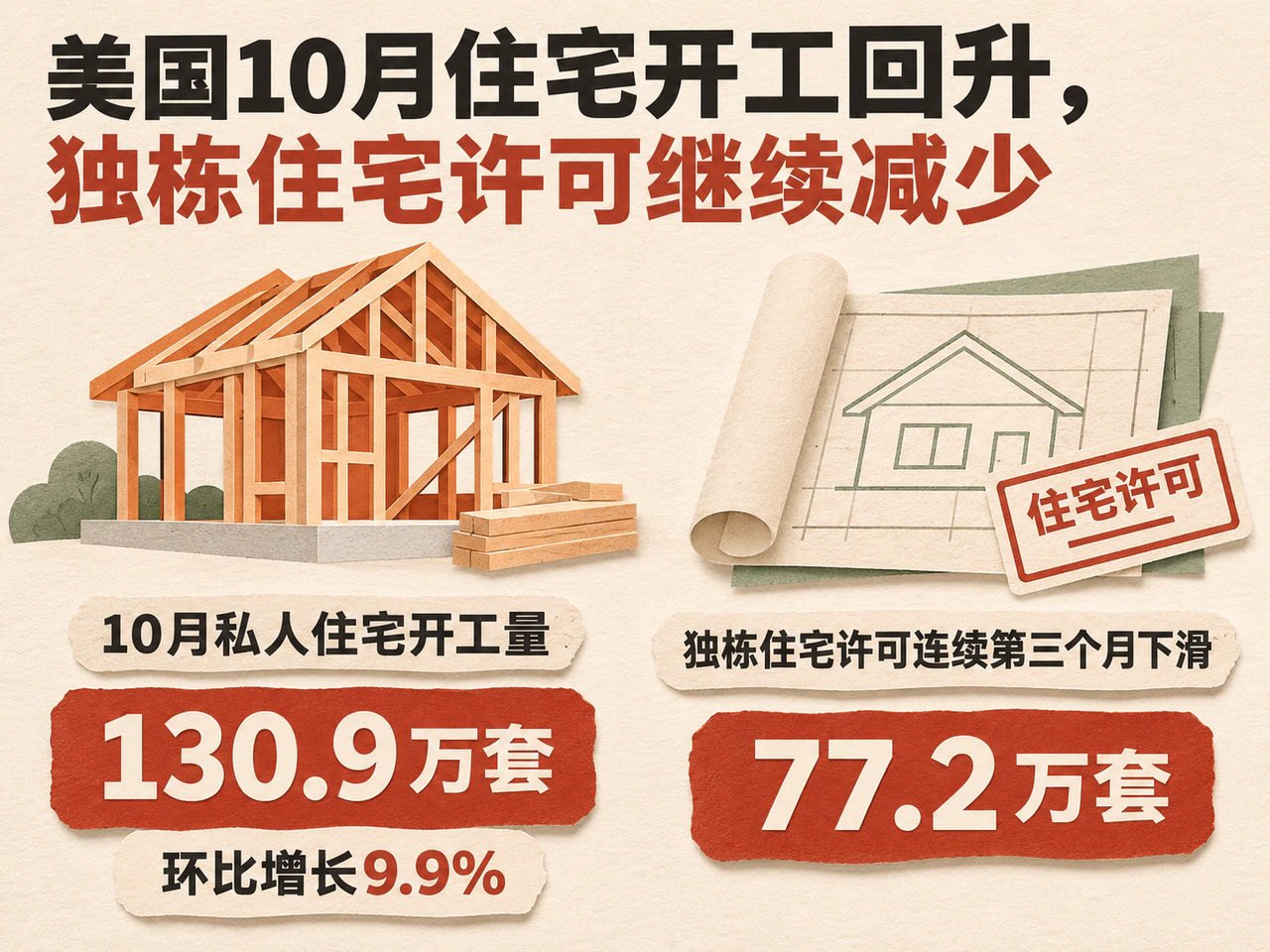
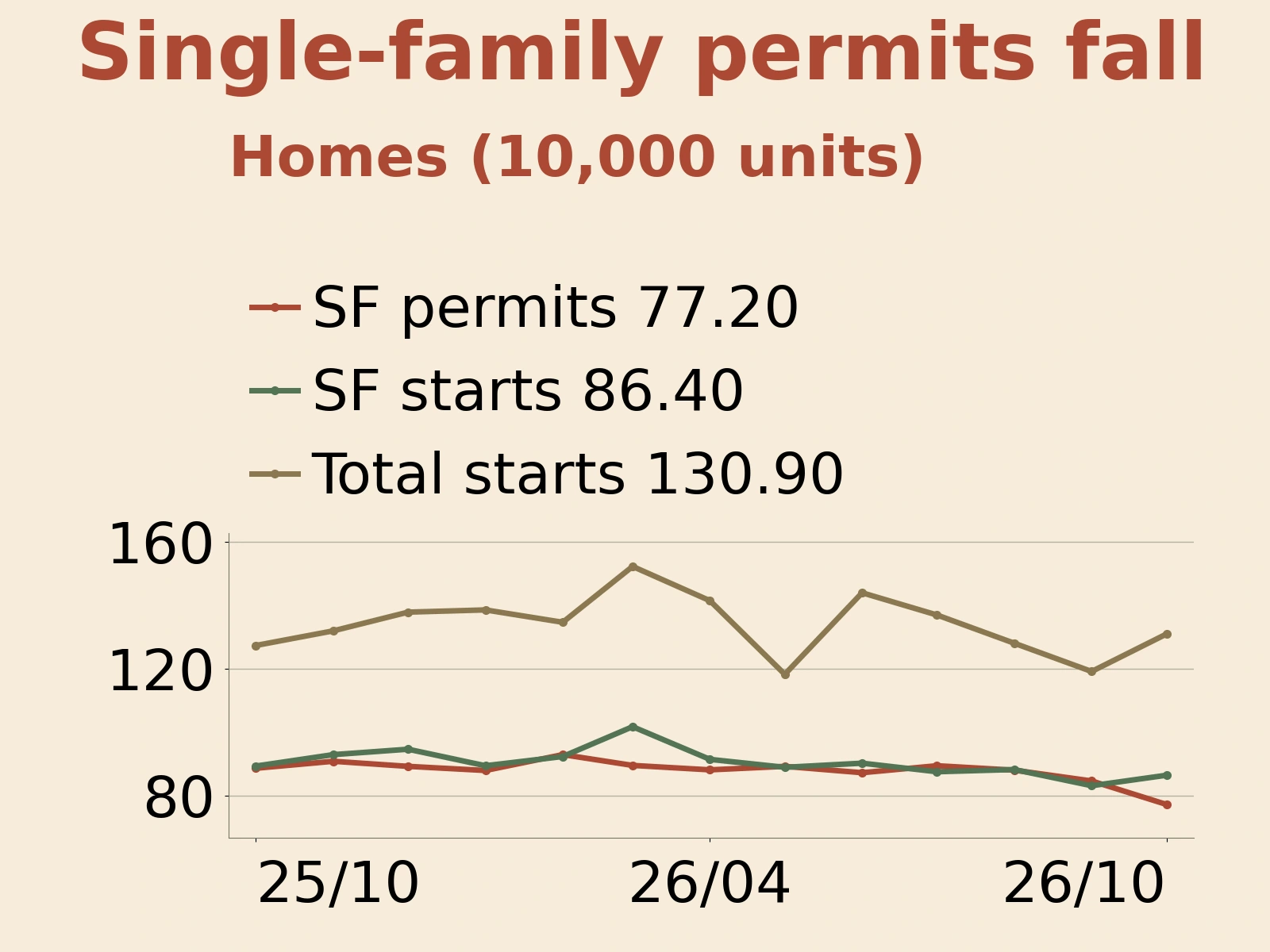
October's U.S. housing figures illustrate the pressure that high financing costs are placing on real demand. The Census Bureau and the Department of Housing and Urban Development reported privately owned housing starts at a seasonally adjusted annual rate of 1.309 million, above the 1.245 million forecast in a Reuters poll. The 9.9% month-on-month increase partly reflected a downward revision to September's base, from 1.221 million to 1.191 million. Starts in buildings with five or more units rose 25.5% month on month, while single-family starts increased only 4.0% and were down 3.2% year on year.
Projects already under construction can support near-term building activity, but the pipeline is shrinking. Housing permits fell 7.4% month on month in October to an annual rate of 1.295 million. Single-family permits declined for a third consecutive month, falling from 894,000 in July to 772,000, the lowest since January 2023. The number of single-family homes authorized but not yet started also fell 3.2% month on month to 151,000.
Demand is also under pressure. Homebuyers faced an average 30-year fixed mortgage rate of 7.18% last week. The National Association of Realtors reported that October's Pending Home Sales Index, which measures signed contracts before closing, fell 4.7% month on month and 16.7% year on year, setting a survey low for a second consecutive month. Stanley, an economist at Santander U.S. Capital Markets, argued that weak demand means builders still need to work through single-family inventories and may slow the pace of starts. NAR chief economist Lawrence Yun said October could mark the low point in this cycle's contract signings if mortgage rates have peaked. October new-home sales and inventory data due on November 25 will further test whether builders can sell homes as quickly as construction progresses.
U.S. inventory builds weigh on WTI; a stronger dollar and the month's rise in real yields pressure gold
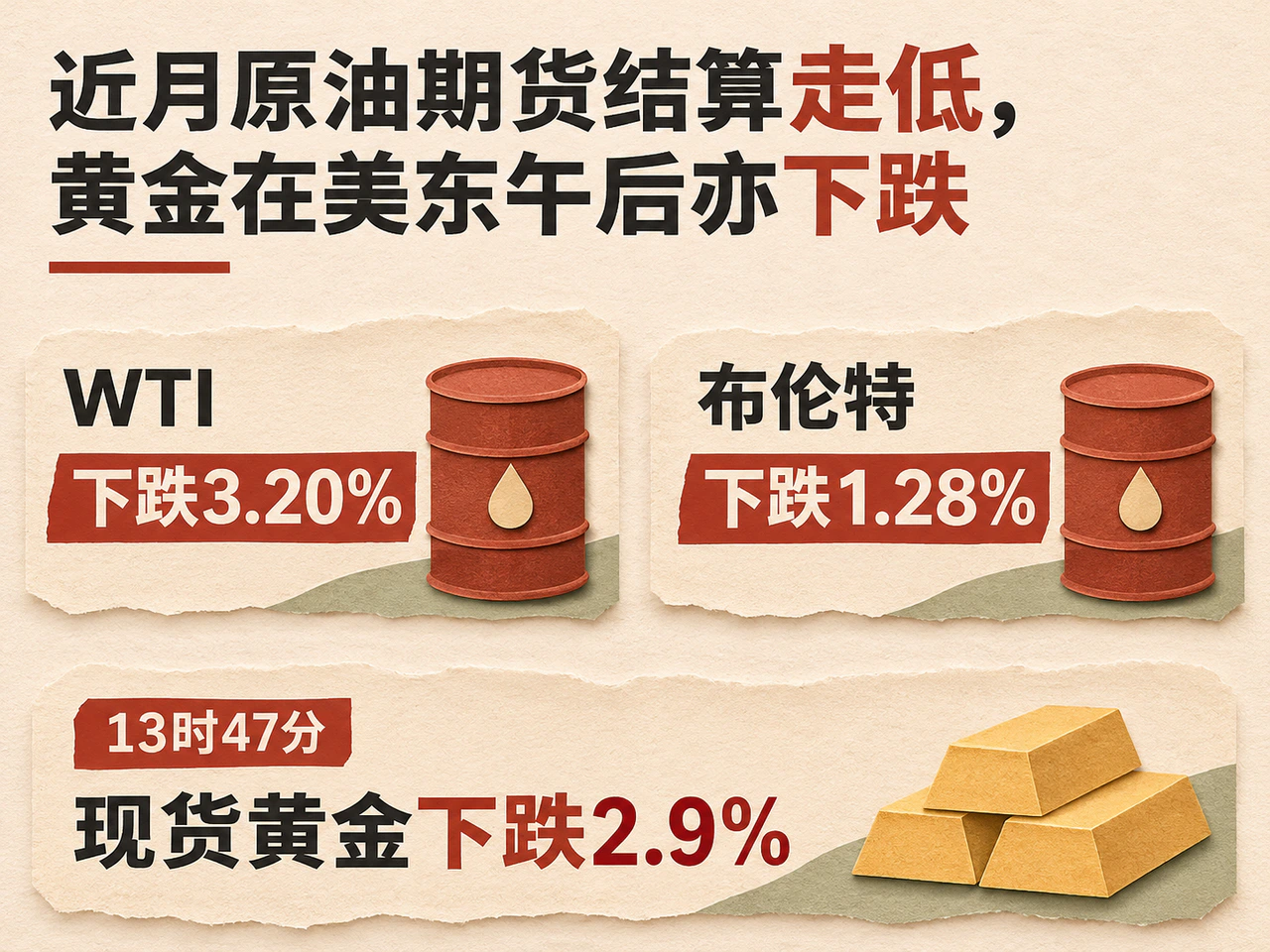
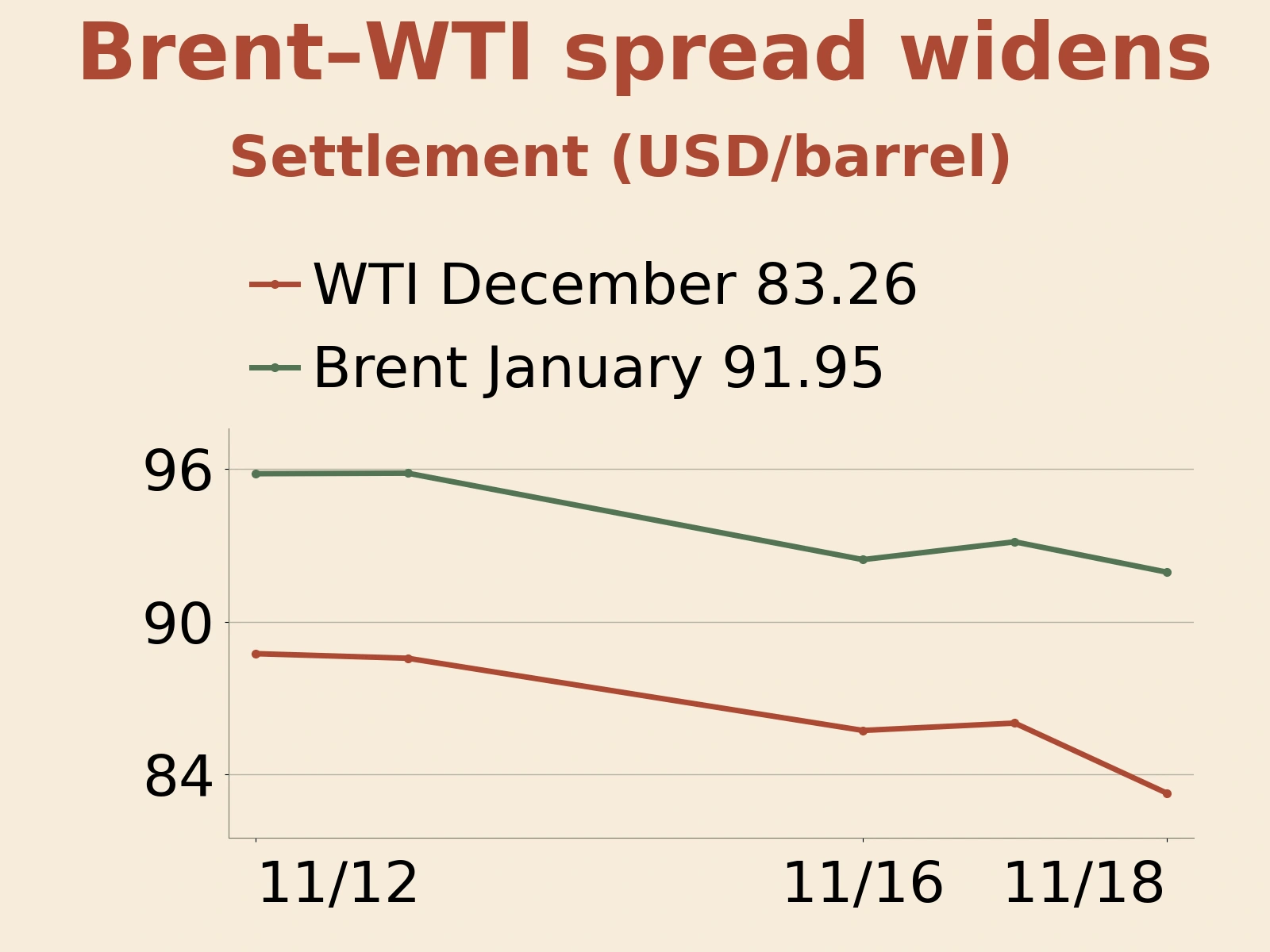
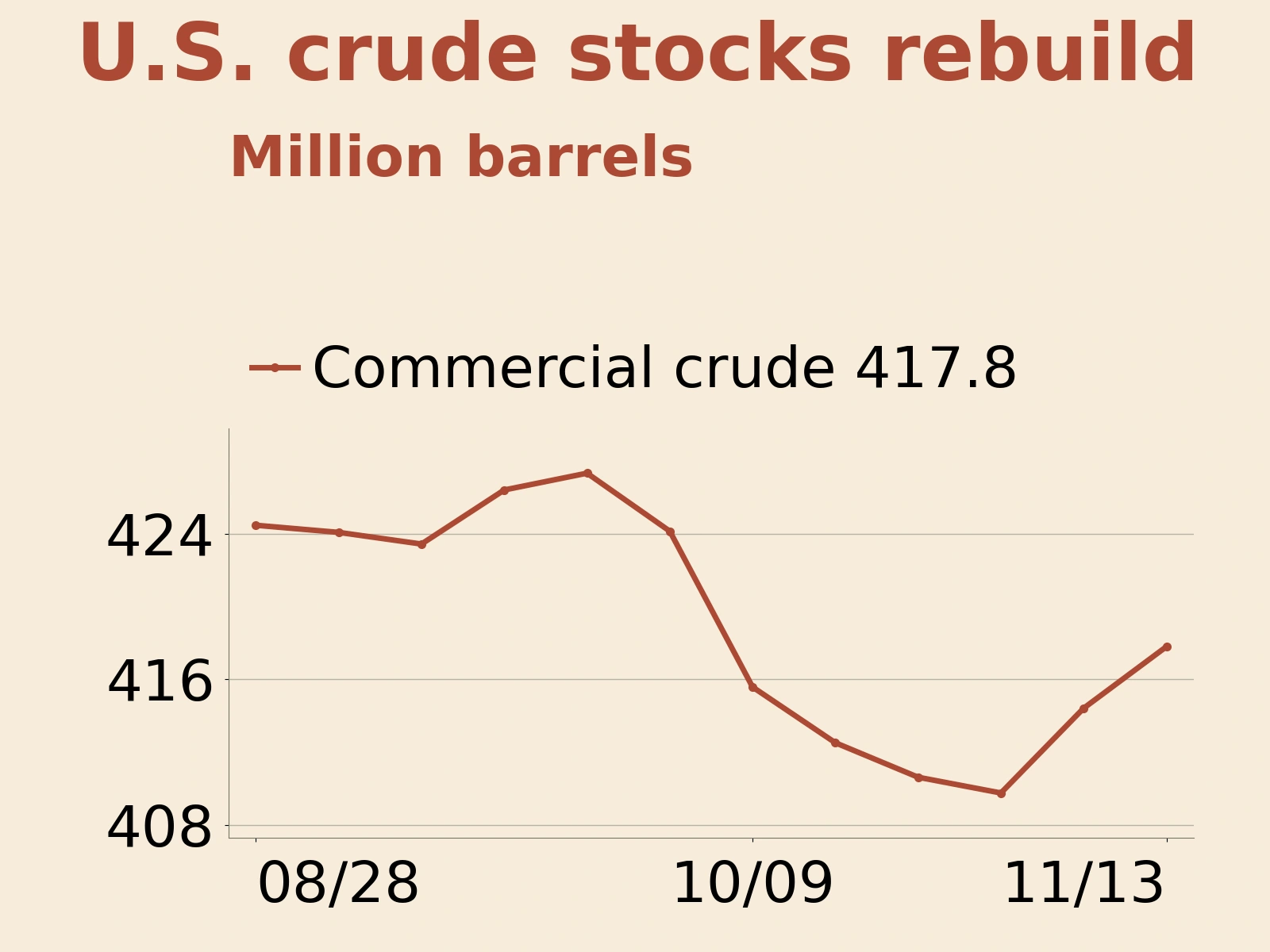
In commodities, inventory accumulation in the United States widened the divergence between U.S. and European oil prices. The Energy Information Administration (EIA) reported that U.S. commercial crude stocks rose 3.4 million barrels to 417.8 million barrels in the week ended November 13, far exceeding the 58,000-barrel increase forecast in a Reuters poll. Gasoline stocks increased 5.2 million barrels, also above the expected 1.6 million, with most of the build coming from blending components. Refinery crude runs fell 129,000 barrels per day over the same period. Inventory pressure was directly reflected in regional settlement-price spreads: on November 18, the front-month WTI contract for December fell 3.20% to settle at $83.26 per barrel, while front-month Brent for January next year fell 1.28% to $91.95 per barrel. The spread between the two respective front-month contracts widened from $7.13 to $8.69.
Sparta Commodities analyst June Goh said current prices and freight costs left no arbitrage opportunity to ship U.S. crude to Asia or northwestern Europe; U.S. spot crude needed a deeper discount to attract overseas buyers. Middle Eastern supply, meanwhile, faced geopolitical disruption. An Abu Dhabi National Oil Company logistics subsidiary disclosed on November 18 that a vessel had been attacked in the Strait of Hormuz on November 17, leaving one person missing and 11 injured. Analysts at the London Stock Exchange Group (LSEG) said that although alternative routes could partly supplement Middle Eastern supplies, ship-tracking data showed that traffic through the strait remained far from normal. High U.S. inventories depressed domestic oil prices, while timely delivery of Gulf crude remained subject to shipping risks.
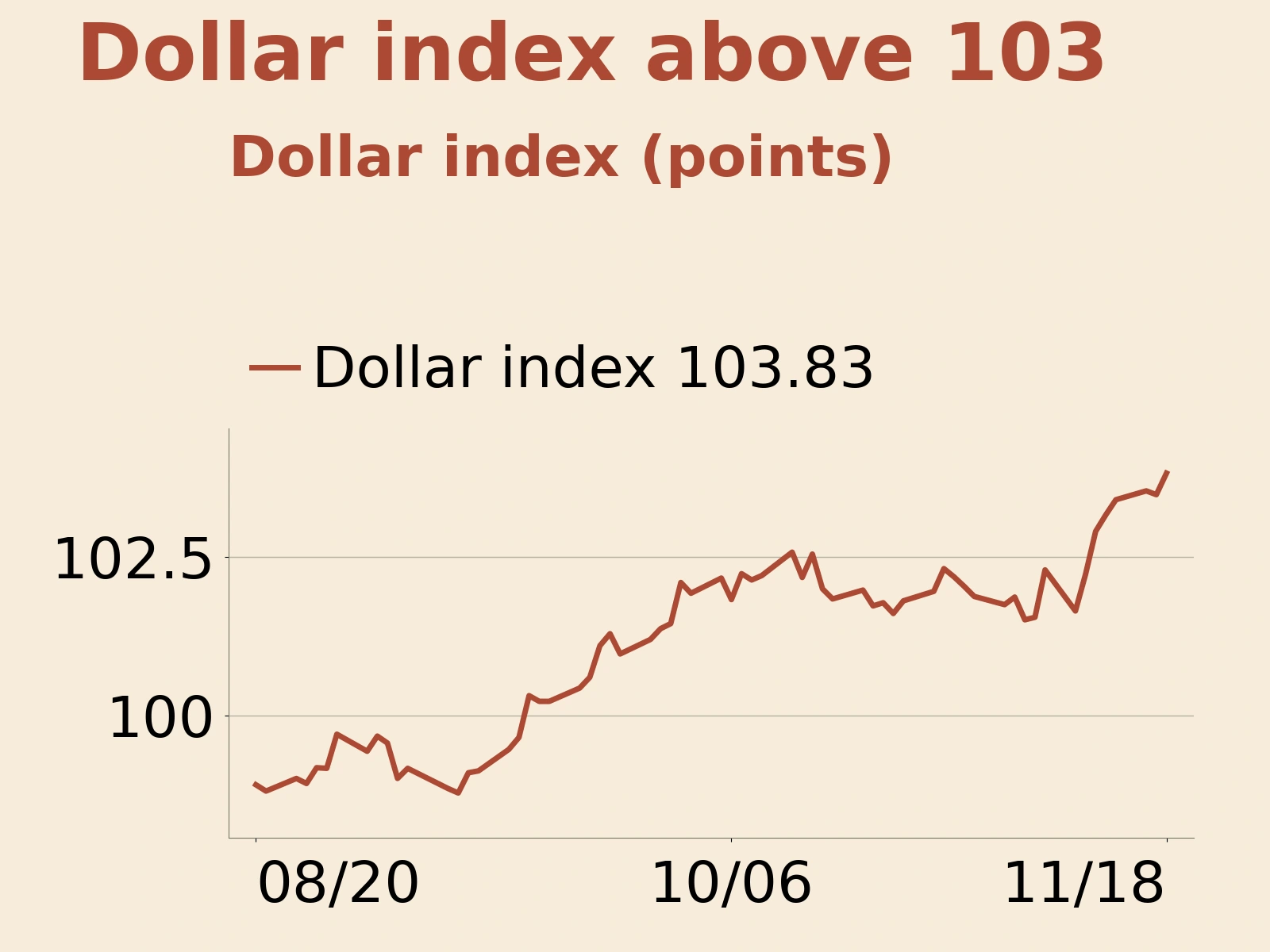
Gold was already falling before the Fed released its minutes. At 1:47 p.m. Eastern time on November 18, spot gold was down 2.9% at $3,739.39 per troy ounce, having touched $3,734.76 intraday, its lowest since September 26, 2025. At 10:42 a.m. that day, the dollar index stood at 103.83, above the previous session's 103.49, raising the cost of gold for non-dollar buyers. And although the 10-year real Treasury yield fell 1 basis point to 2.88% on November 18, it remained well above the 2.62% level at the beginning of November. Its rise over the month continued to increase the opportunity cost of holding non-interest-bearing gold.
Customer traffic supports retail stocks; gross-margin guidance weighs on chips
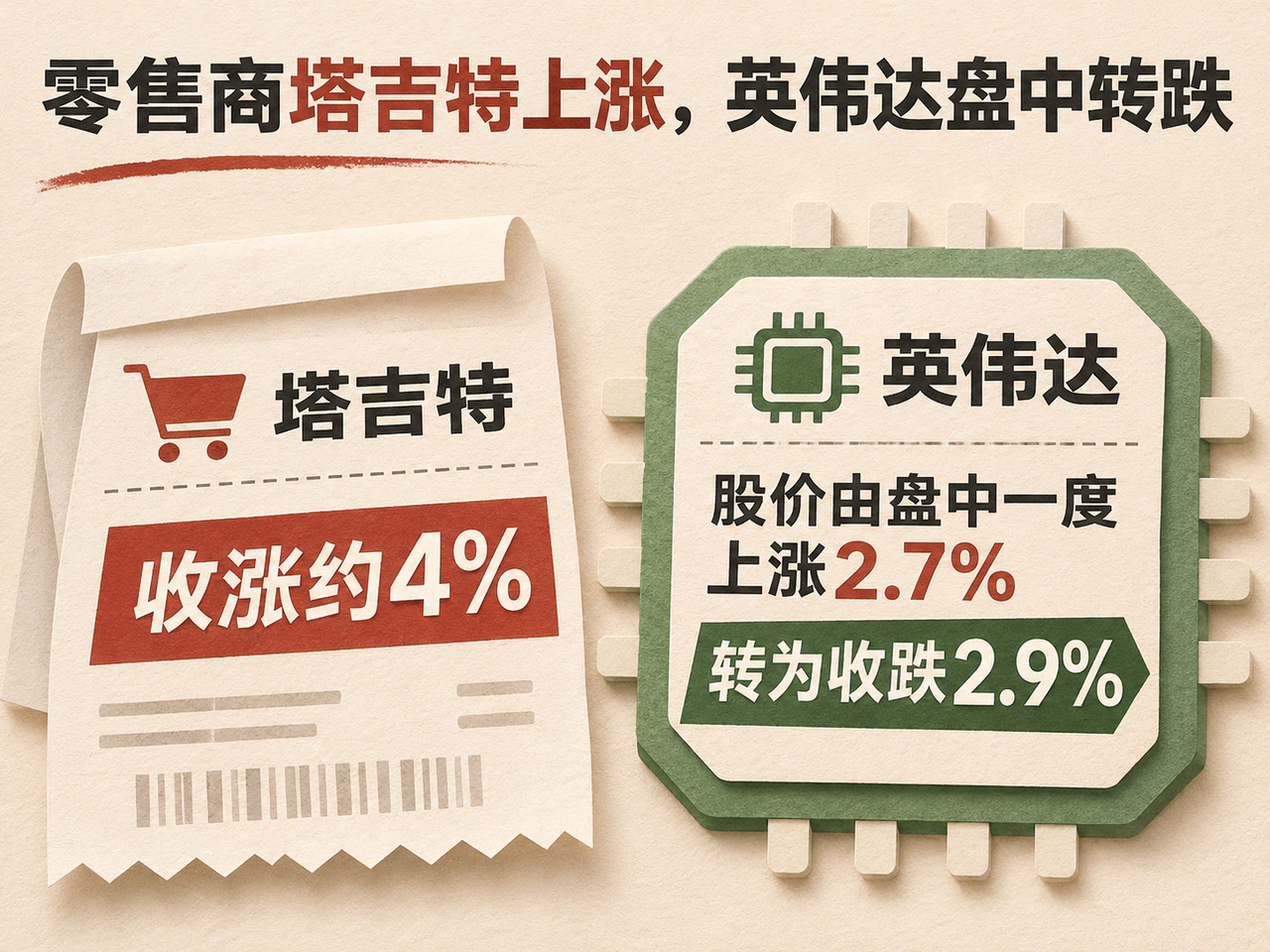
The major U.S. equity indexes diverged. On November 18, the S&P 500 closed down 0.23% at 7,323.63 and the Dow Jones Industrial Average fell 1.11% to 50,198.17; the Nasdaq 100 rose 0.42% to 27,116.26, while the small-cap Russell 2000 gained 0.46% to 2,714.31. Among sector ETFs, energy and financials fell 3.27% and 1.14%, respectively, while technology edged up 0.34%. Despite the decline in the S&P 500, the VIX, which measures expected market volatility over roughly the next month, fell from 25.46 to 24.56, indicating some easing in the options market's pricing of broad-market volatility.
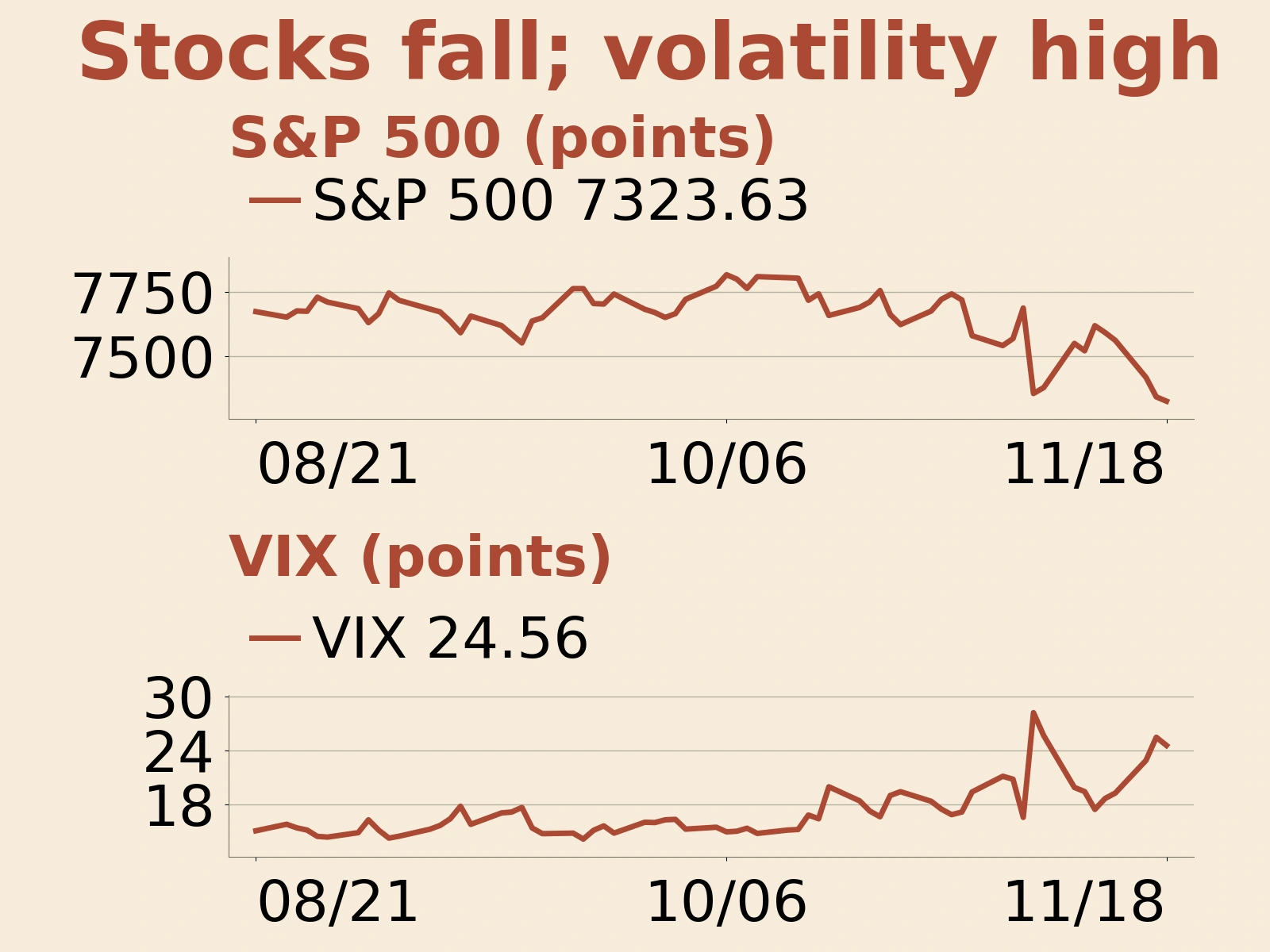
Among individual companies, discount retailing continued to generate earnings growth through customer traffic despite the housing downturn. Target reported third-quarter comparable traffic growth of 5.0%, driving a 5.6% increase in comparable sales, with sales growth in November through the announcement date running faster than in October. Quarterly earnings per share were $2.65, including $0.50 in tariff refunds. Excluding that income, adjusted earnings per share still rose 21% year on year, helping the stock close about 4% higher that day.
In technology, investors' attention at leading chipmakers shifted to margins. After the U.S. close on November 17, Nvidia reported fiscal 2027 third-quarter revenue of $115.8 billion for the period ended October 25, double the year-earlier level. Data-center revenue rose 110% year on year to $107.6 billion. For the next fiscal quarter, which contains one more week than a standard quarter, Nvidia forecast revenue of about $130.0 billion, plus or minus 3%. However, its U.S. generally accepted accounting principles (GAAP) gross-margin guidance of 71% to 72% was below the third quarter's realized 74.8%, implying a sequential decline in the gross profit retained per dollar of sales. On November 18, Nvidia reversed an intraday gain of as much as 2.7% to close down 2.9%. In Asian markets, which closed earlier that day, South Korean memory-chip producer SK Hynix rose 4.19%, helping the KOSPI gain 1.99%. Japanese semiconductor-testing equipment maker Advantest rose 4.6%, and the Nikkei 225 finished about 0.3% higher; Hong Kong's Hang Seng Index fell about 0.9%.
The primary market also offered a valuation reference for technology. After the U.S. close on November 18, Reuters cited people familiar with the matter as saying that AI model developer Anthropic had priced its initial public offering (IPO) at $83 per share, above the earlier $70–78 indicative range. The company declined to comment. Trading was scheduled to begin on November 19, when secondary-market demand would directly test the enthusiasm seen during the offering.
Asian liquidity conditions and progress on U.S.–Philippines trade
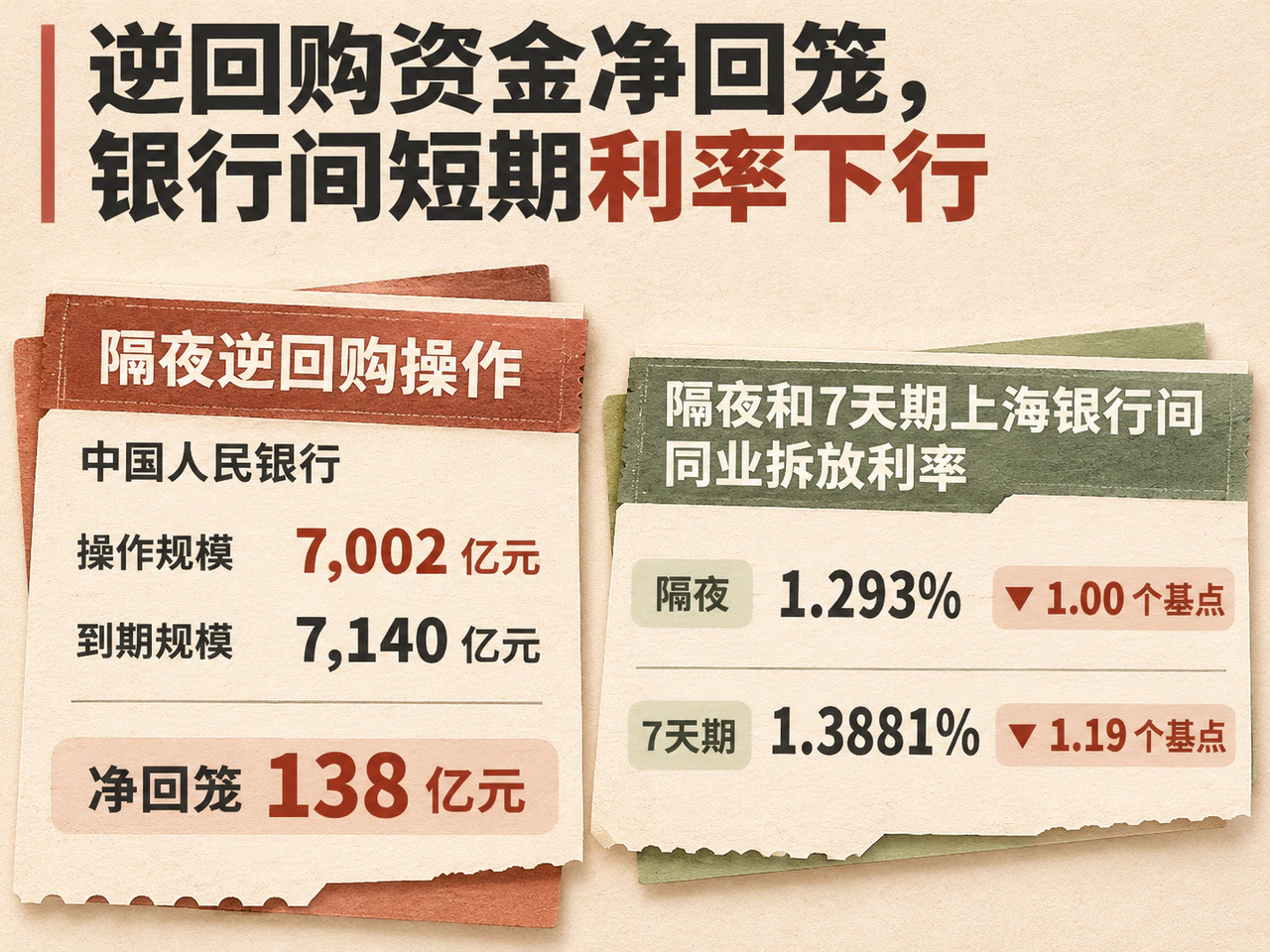
In Asian money markets, the People's Bank of China conducted RMB700.2 billion of overnight reverse repos on November 18 at a fixed rate of 1.25%. Against RMB714.0 billion of maturities that day, this produced a net liquidity withdrawal of RMB13.8 billion. Interbank liquidity remained ample: overnight and seven-day Shanghai Interbank Offered Rates (Shibor) fell 1.00 and 1.19 basis points to 1.293% and 1.3881%, respectively. On the macroeconomic front, data released the same day showed October's nationwide surveyed urban unemployment rate declining to 5.1%. Urban unemployment among 16–24-year-olds excluding students fell 0.8 percentage points month on month to 17.2%, while the rate for those aged 30–59 was unchanged at 3.9%. The National Bureau of Statistics said the seasonal effects of the graduation period were fading. Meanwhile, total retail sales of consumer goods rose 0.4% year on year in October, indicating that the recovery in household consumption remained slow.
In Hong Kong dollar and offshore debt markets, high-quality issuers continued to access cross-currency financing smoothly. The Hong Kong Mortgage Corporation disclosed on November 18 that it had priced three benchmark issues on November 17: HK$8 billion of three-year bonds, RMB5 billion of two-year offshore renminbi bonds, and US$1.1 billion of five-year bonds. Together, the issues were equivalent to HK$22.5 billion, with peak orders of about HK$55 billion. That demand contrasts with the widening U.S. dollar high-yield spreads discussed above, illustrating investors' choices among borrowers of different credit quality.
In international trade, U.S. President Trump announced a trade agreement with the Philippines in Manila on November 18, highlighting agriculture and energy. The Philippine presidential office subsequently confirmed that the two sides had reached an understanding on areas of economic cooperation. However, Philippine Ambassador to the United States Romualdez said no formal documents had been signed that day and that specific measures still had to be developed by the two countries' trade representatives. For U.S. exporters and Philippine importers, the tariff rates, purchase volumes and implementation timetable needed to calculate revenues and costs still await the detailed text.