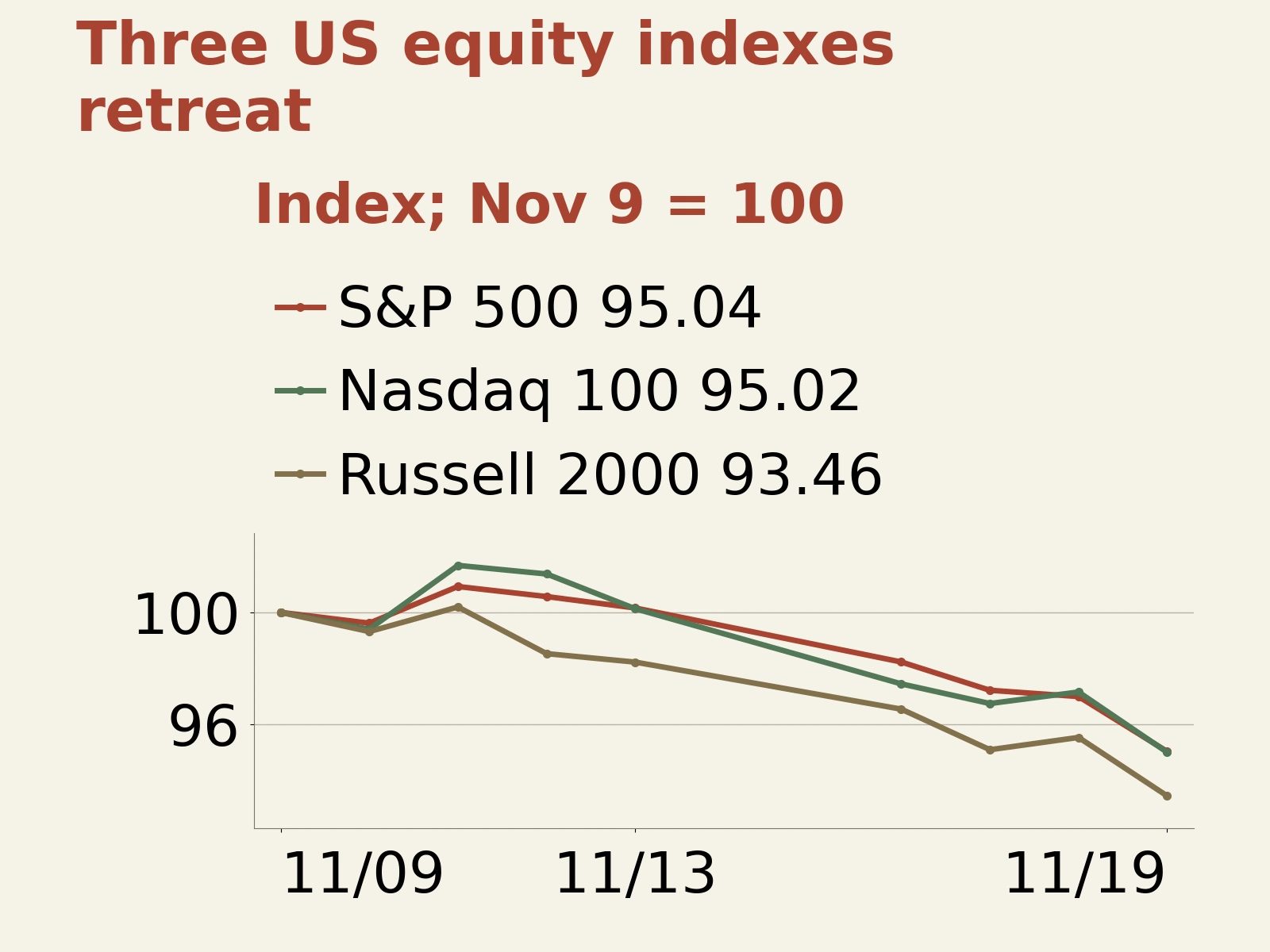
On November 19, 2026, the S&P 500 fell 2.02% to close at 7,175.83, its sixth consecutive session of losses. Artificial intelligence company Anthropic rose 17.1% from its offer price on its market debut, while small-cap, financial and chip stocks broadly declined. Performance diverged sharply across asset classes: US Treasury prices rose, with the ten-year yield falling for a fourth consecutive session, while gold futures dropped more than 3% on the day. The real impact of this correction on businesses depends on changes in borrowing costs and the time it takes for investment in additional capacity to generate revenue.
An IPO gains on debut as US equity selling spreads to small caps
Anthropic priced its offering at $83 a share. Its first trade on Nasdaq was at $111.50, and it reached an intraday high of $115 before surrendering more than half of its intraday gains by the close. Argent Capital portfolio manager Jed Ellerbroek told Reuters that funds subscribing to large IPOs may need to sell existing holdings to free up cash. He was also more cautious about the pace of data-center capital spending, given rising construction costs and possible project delays. The former concerns the day's allocation of funds; the latter concerns companies' investment returns over the coming quarters.
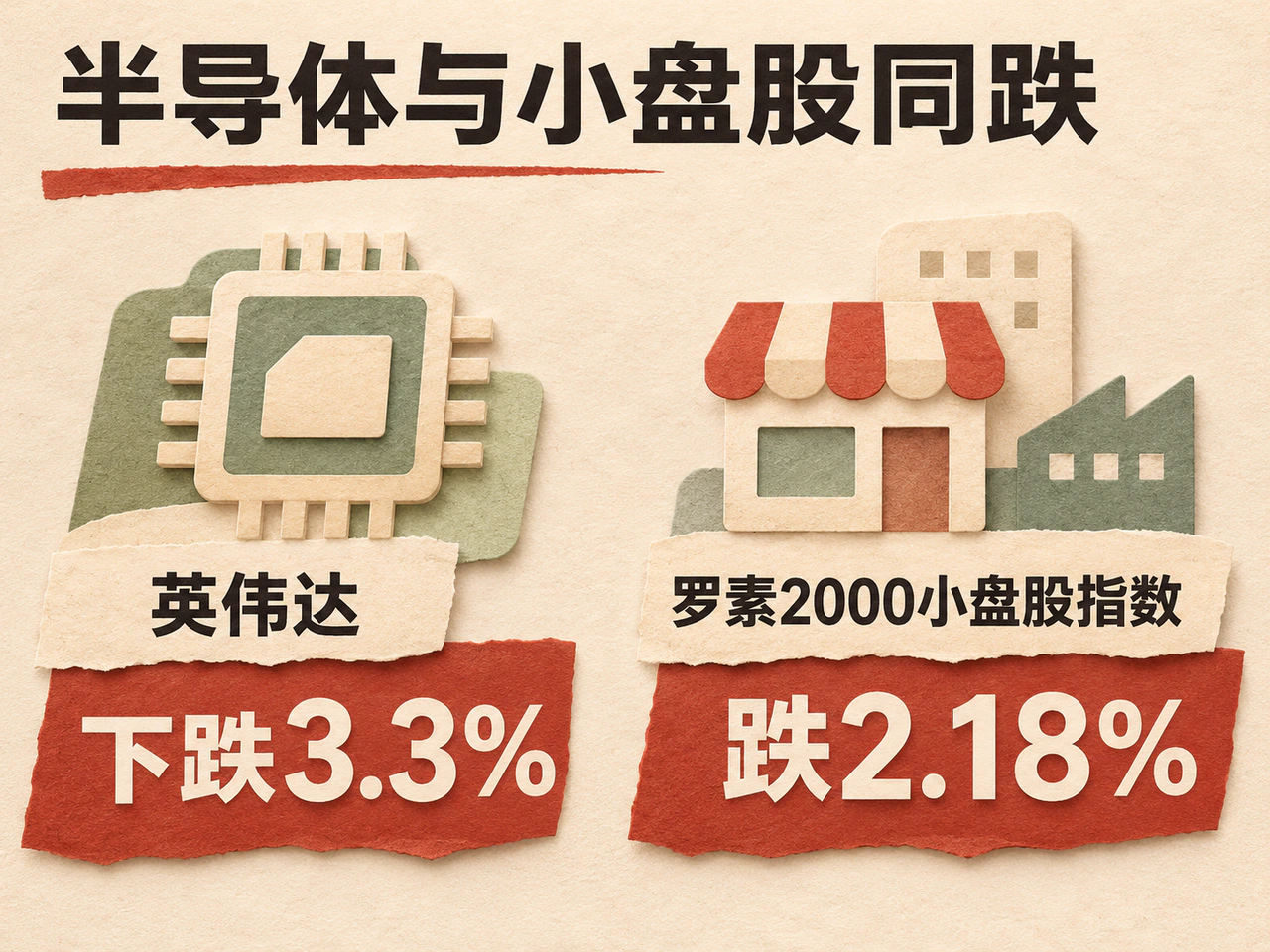
Computing infrastructure and semiconductor stocks were broadly under pressure. Nvidia fell 3.3% despite issuing upbeat revenue guidance earlier in the week. The Philadelphia Semiconductor Index declined 2.4%, while cloud providers CoreWeave and Nebius, which require continued investment in computing capacity, fell 6.1% and 9.4%, respectively. Cybersecurity company Palo Alto Networks, however, bucked the trend with a 6.4% gain after raising its full-year revenue guidance.
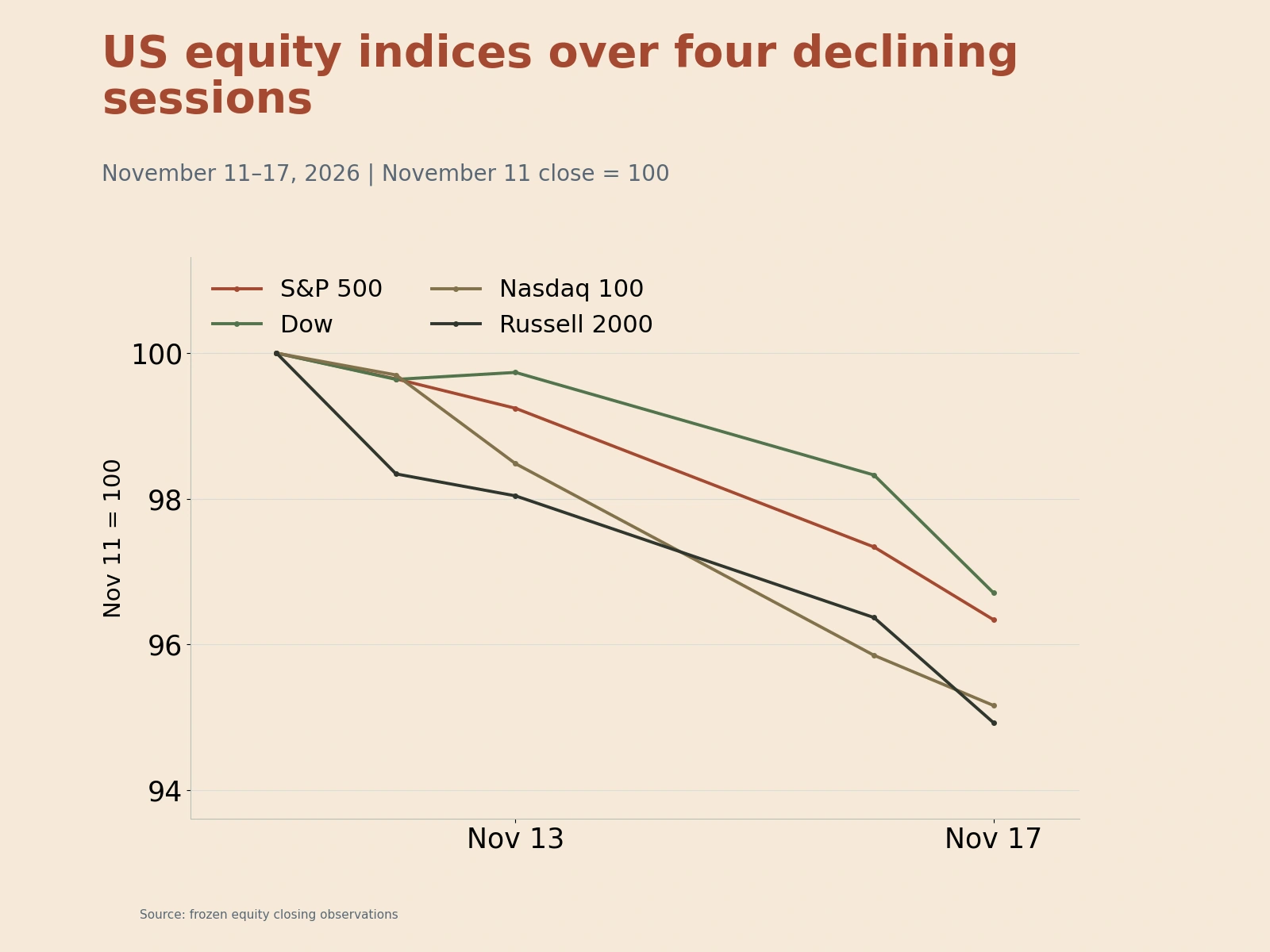
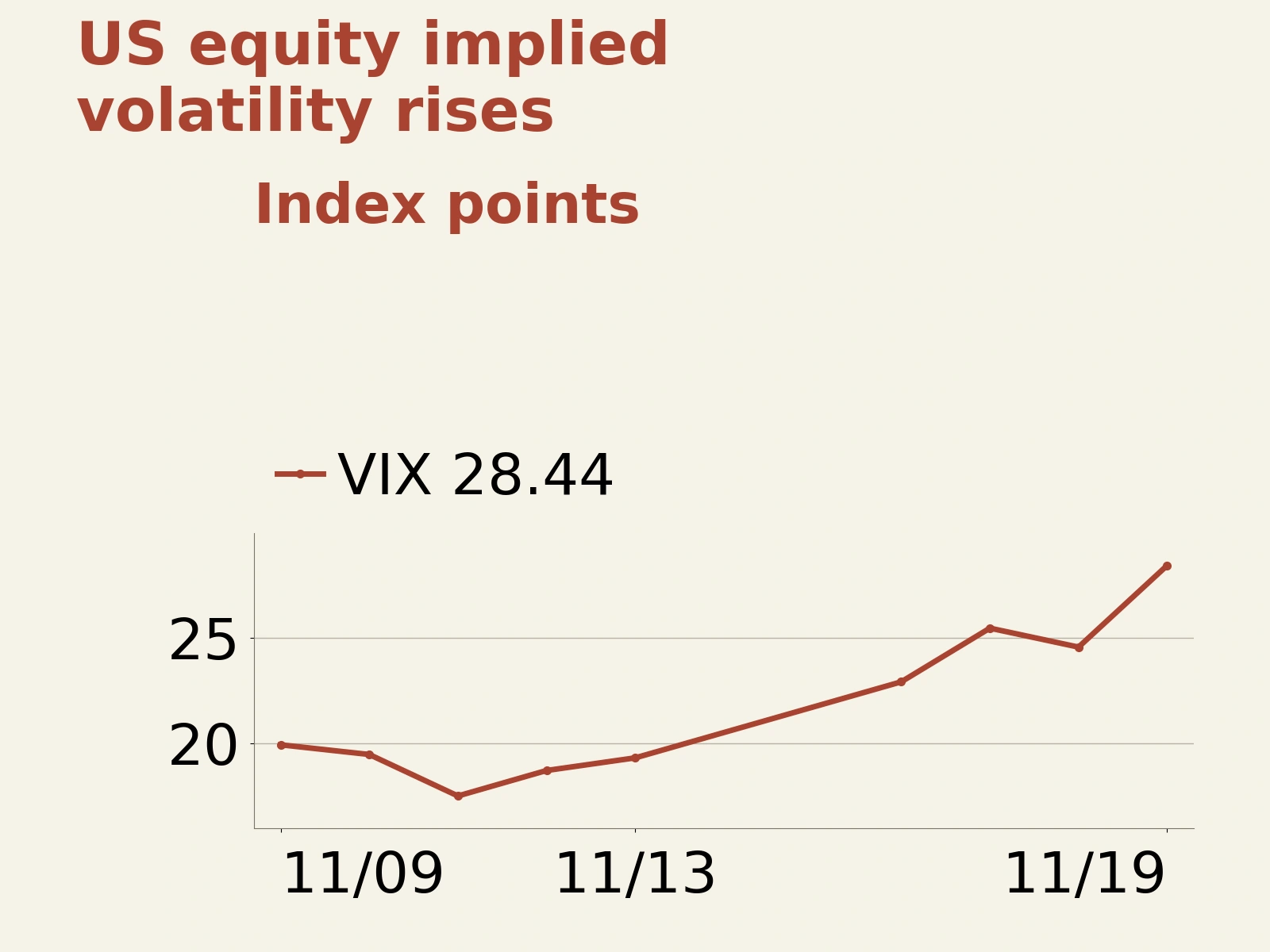
Selling extended beyond technology. The Dow Jones Industrial Average fell 1,101 points to 49,097.06; the Nasdaq 100 lost 2.21%, and the Russell 2000 small-cap index declined 2.18%. Decliners outnumbered advancers on the New York Stock Exchange by approximately 4.4 to 1. According to Reuters, 20.83 billion shares changed hands across US exchanges, above the average of 19 billion over the previous 20 trading sessions. The VIX, which measures the roughly 30-day implied volatility of S&P 500 options, rose from 24.56 to 28.44.
Consumer stocks were mixed. Walmart's quarterly revenue rose 5.2% year on year and its global e-commerce business grew 17%. Yet its shares fell 1% despite an increase in full-year sales guidance, as market expectations had been higher. Gap, which reported after the close, posted flat comparable sales at the group level: the Gap brand grew 9%, while activewear brand Athleta declined 15%. The results suggest that demand pressures on retailers differ by category.
Treasury yields retreat, but financing remains costly for businesses and homebuyers
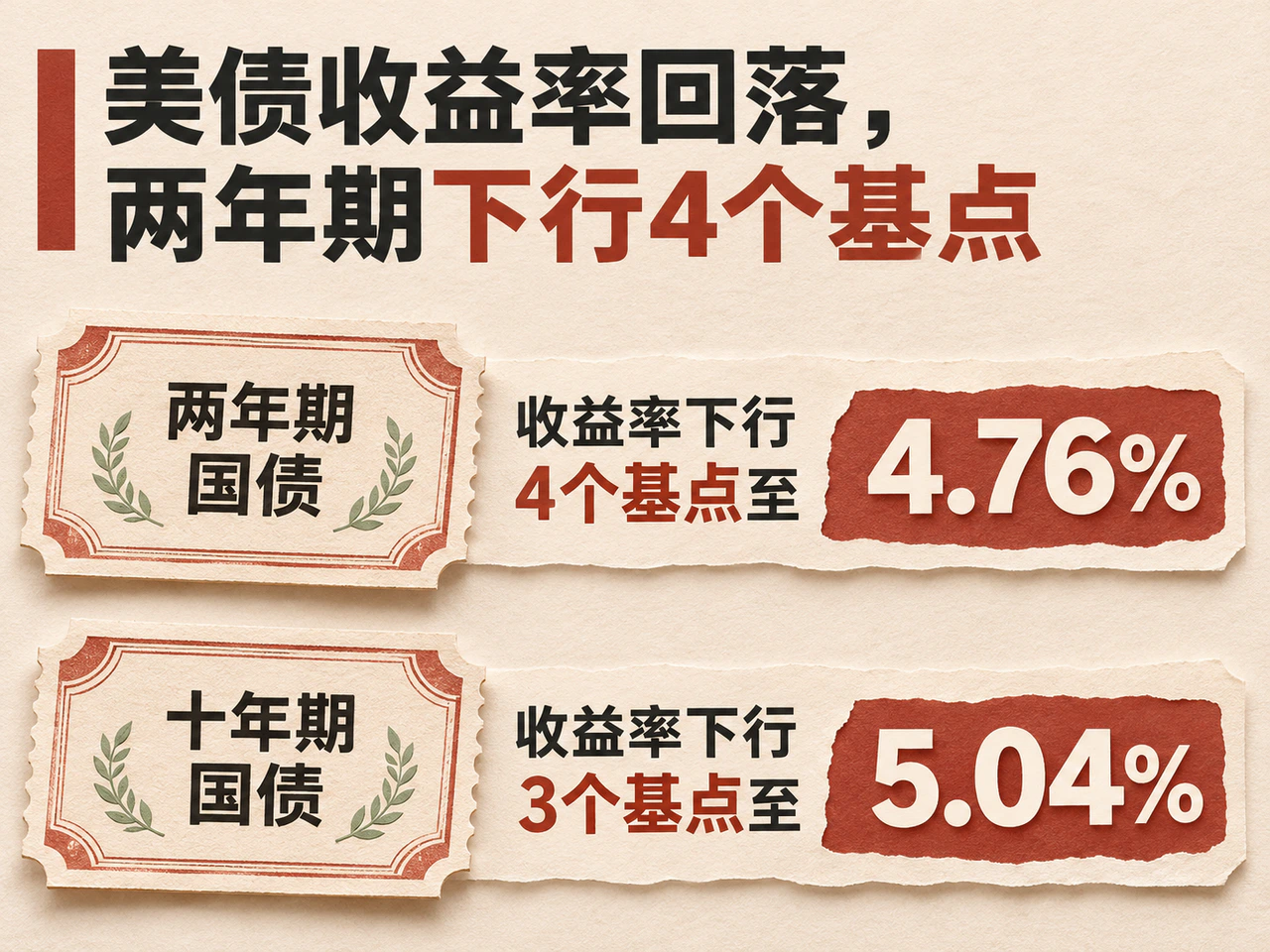
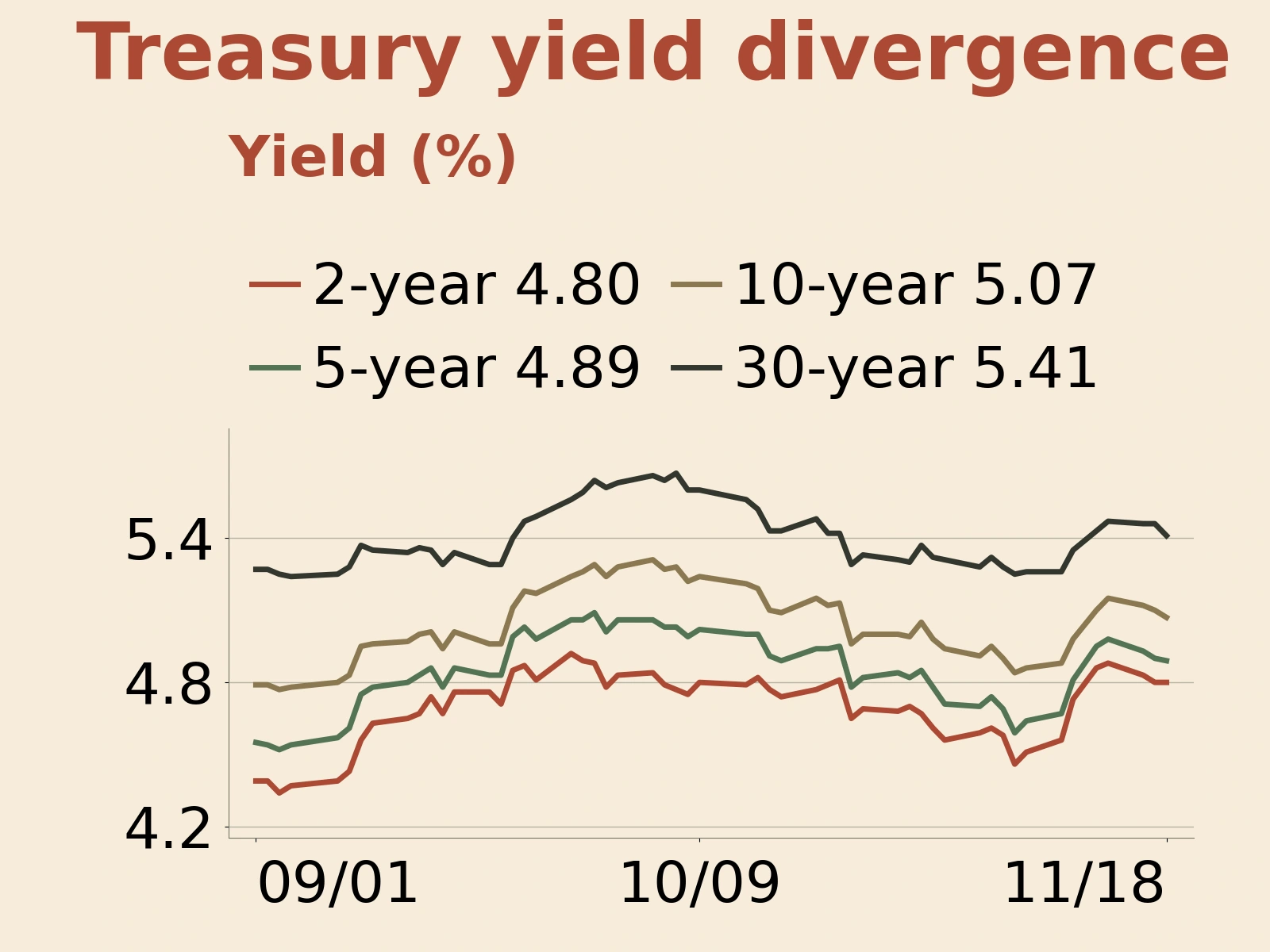
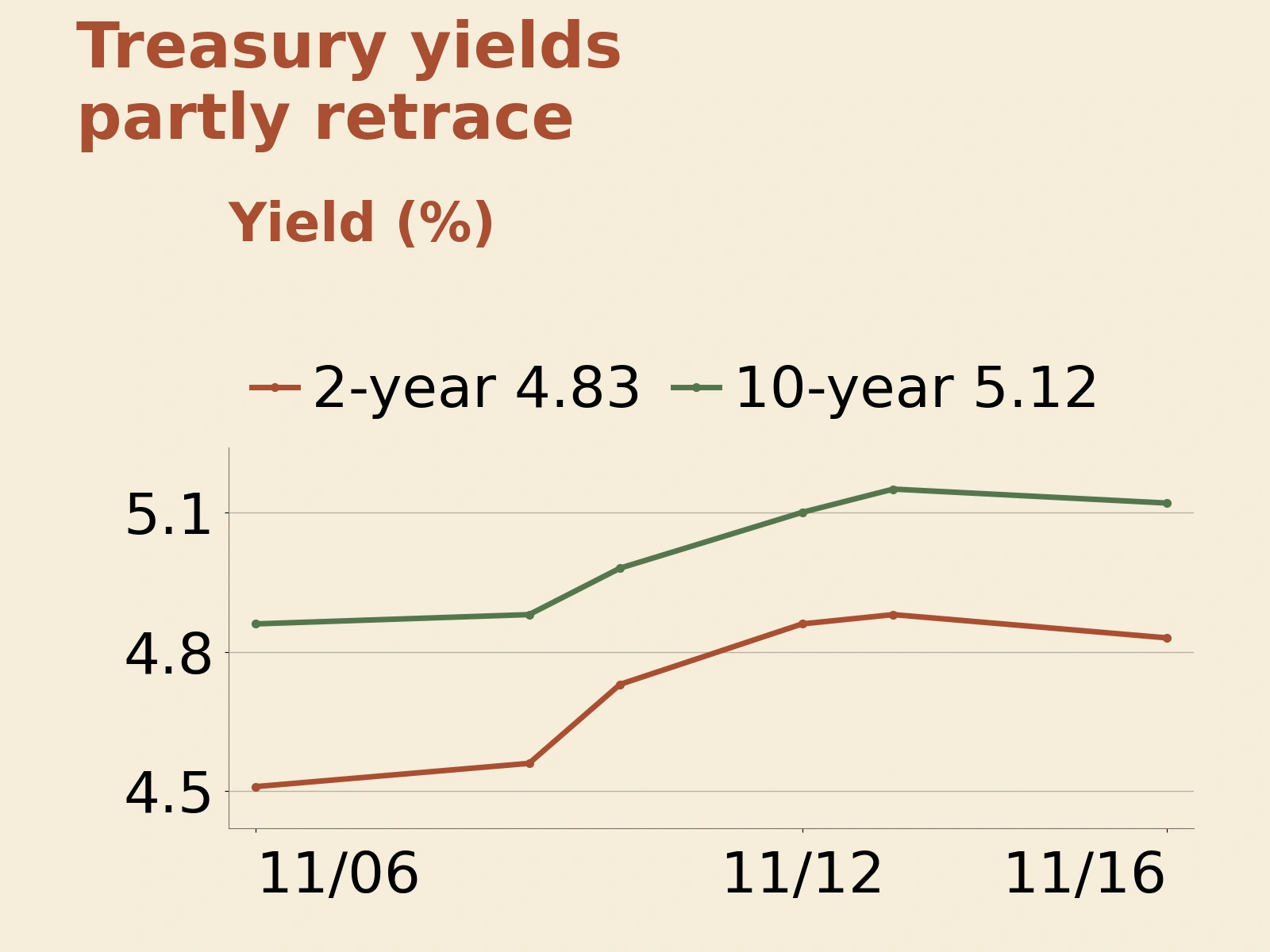
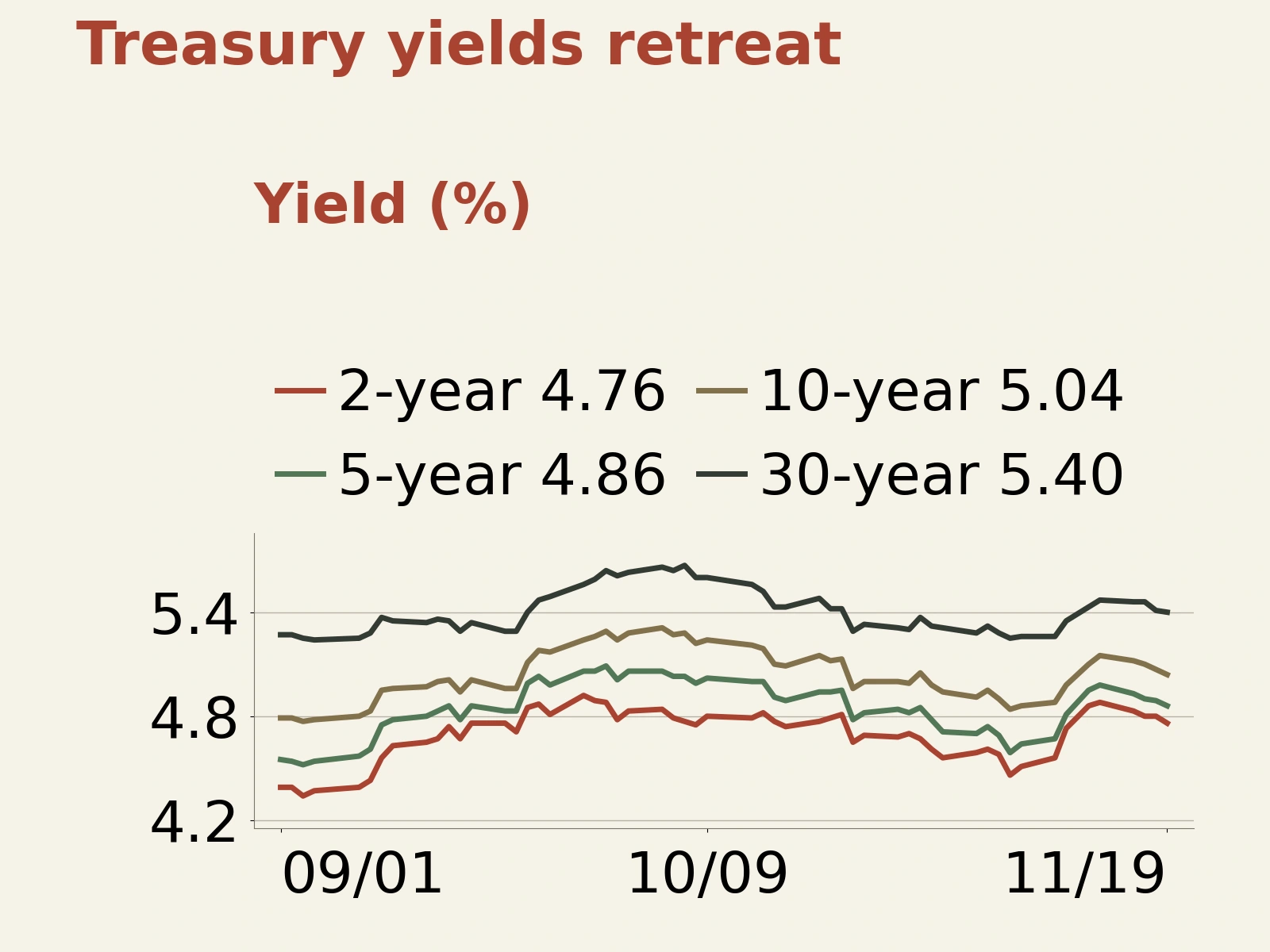
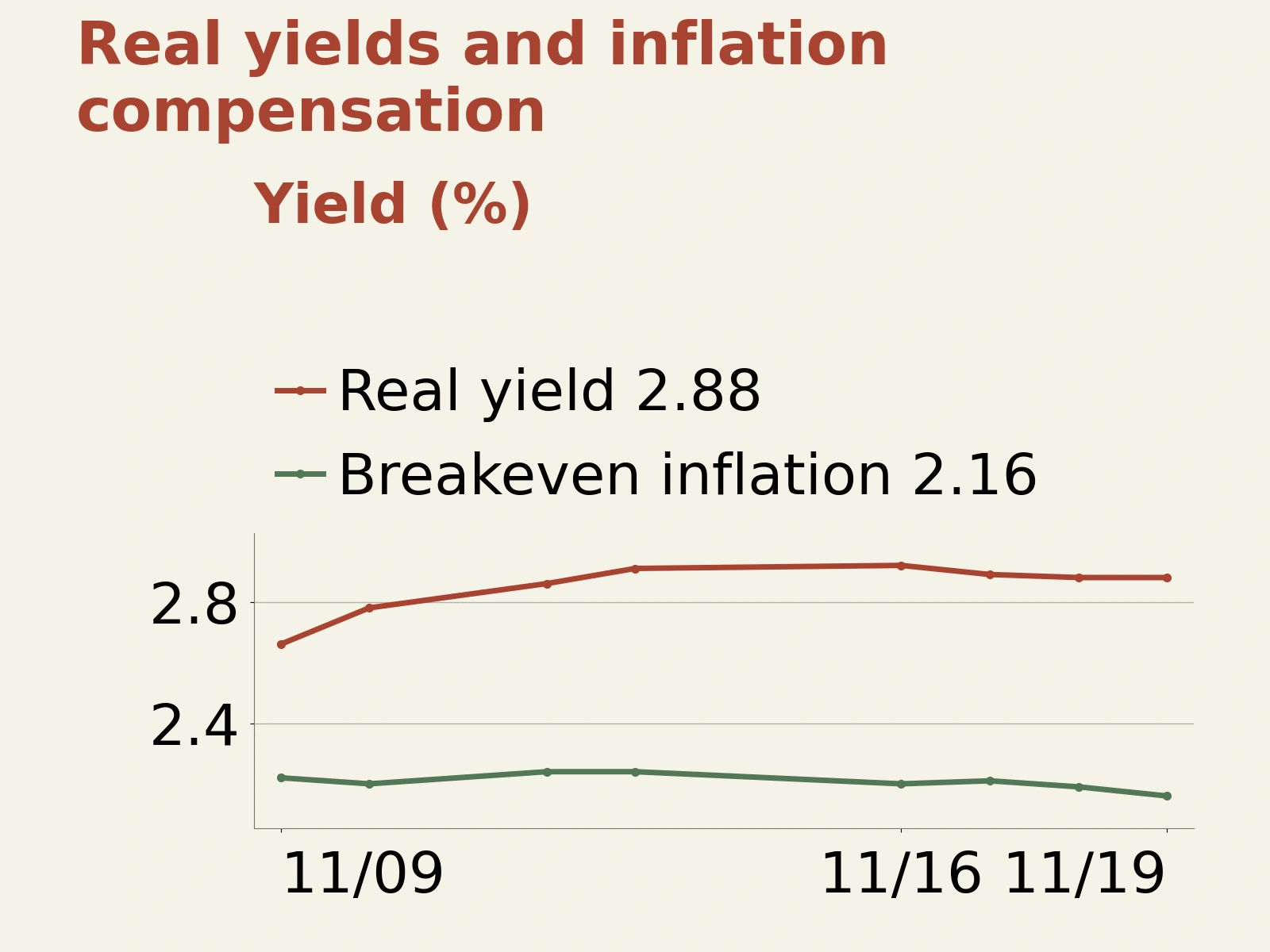
The US Treasury's end-of-day yield curve showed the two-year yield down 4 basis points to 4.76%, the five-year down 3 basis points to 4.86%, the ten-year down 3 basis points to 5.04%, and the thirty-year down 1 basis point to 5.40%. The ten-year minus two-year spread widened from 27 to 28 basis points. The ten-year breakeven inflation rate fell 3 basis points to 2.16%, matching the decline in the nominal yield at the same maturity, while the ten-year real yield was unchanged at 2.88%. That afternoon, the Treasury reopened $19 billion of ten-year Treasury Inflation-Protected Securities (TIPS), with a high real yield of 2.903%.
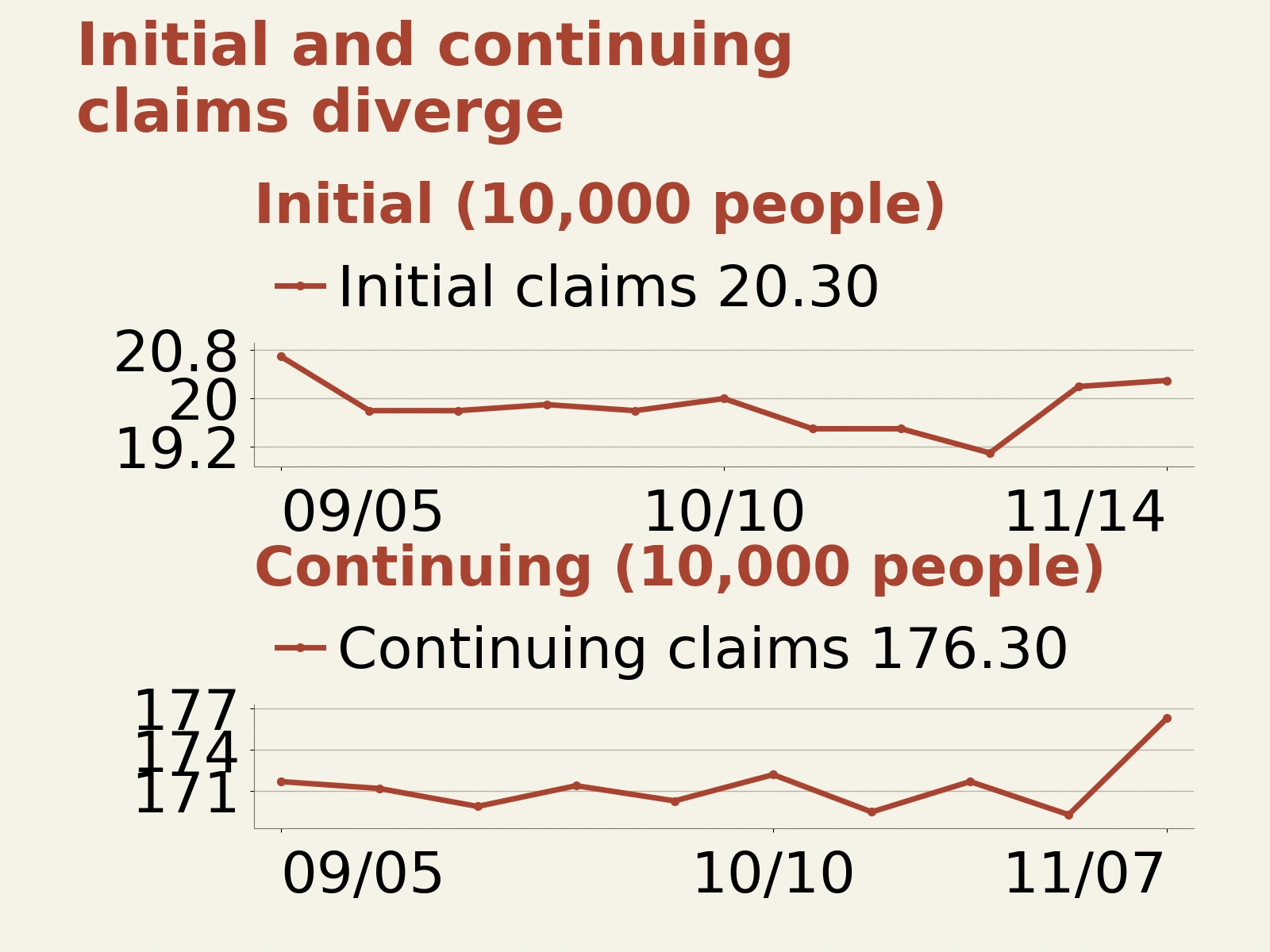
In the macroeconomic data, the difficulty unemployed people face in finding new jobs attracted more attention than new layoffs. The US Labor Department reported seasonally adjusted initial jobless claims of 203,000 for the week ended November 14, just 1,000 above the previous week's revised figure. Continuing claims, however, rose by 70,000 to 1.763 million in the week ended November 7.
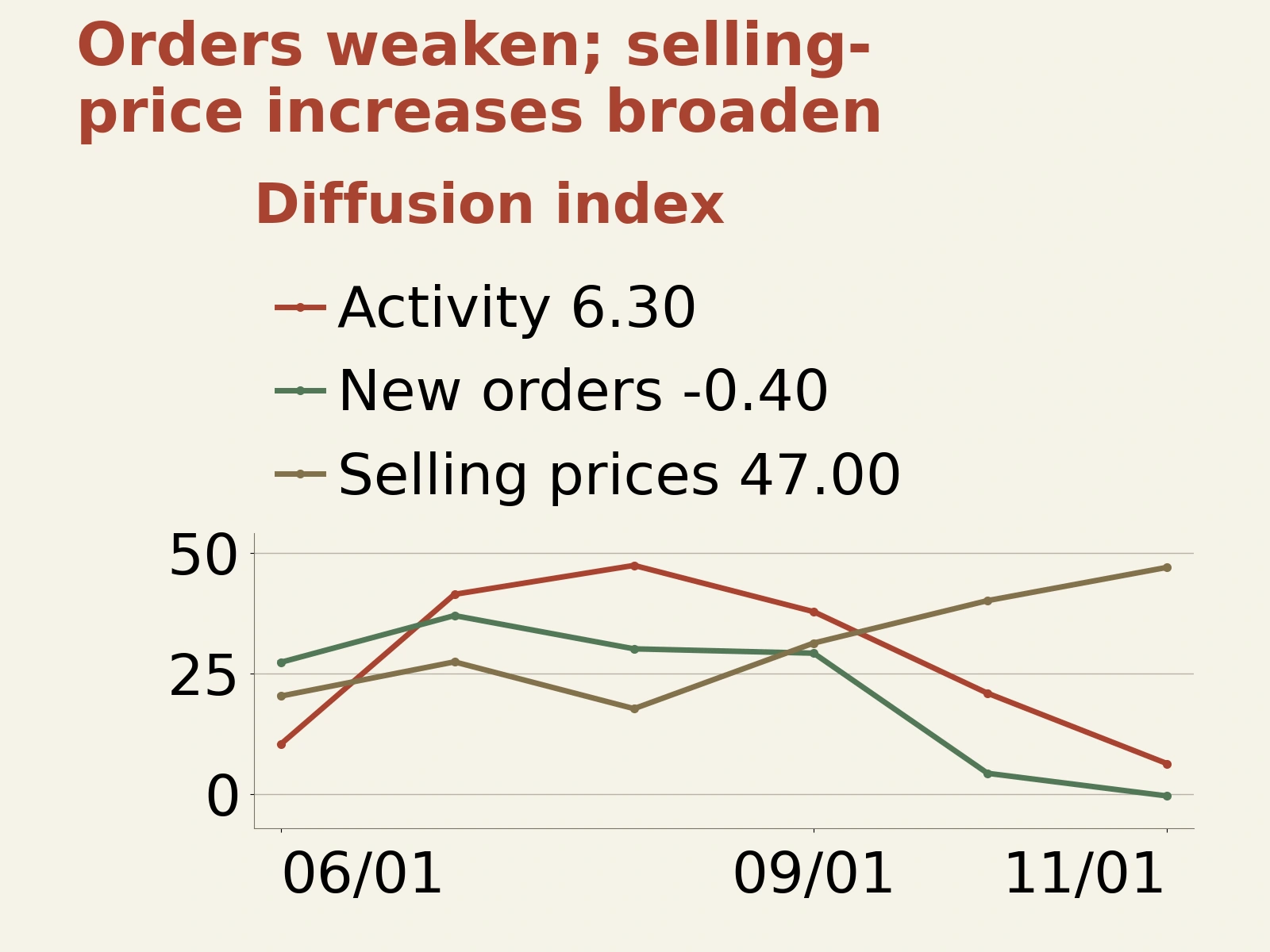
Manufacturing surveys showed pronounced regional differences. The Philadelphia Fed's November general business activity index fell from 20.9 to 6.3, and its new orders index dropped from 4.3 to -0.4. With roughly equal shares of firms reporting rising and falling orders, the share reporting higher selling prices exceeded the share reporting lower prices by 47 percentage points, the largest gap since June 2022. In contrast, supported by transportation equipment manufacturing, the Kansas City Fed district's new orders index rose from 3 to 16 and its employment index from 1 to 20.
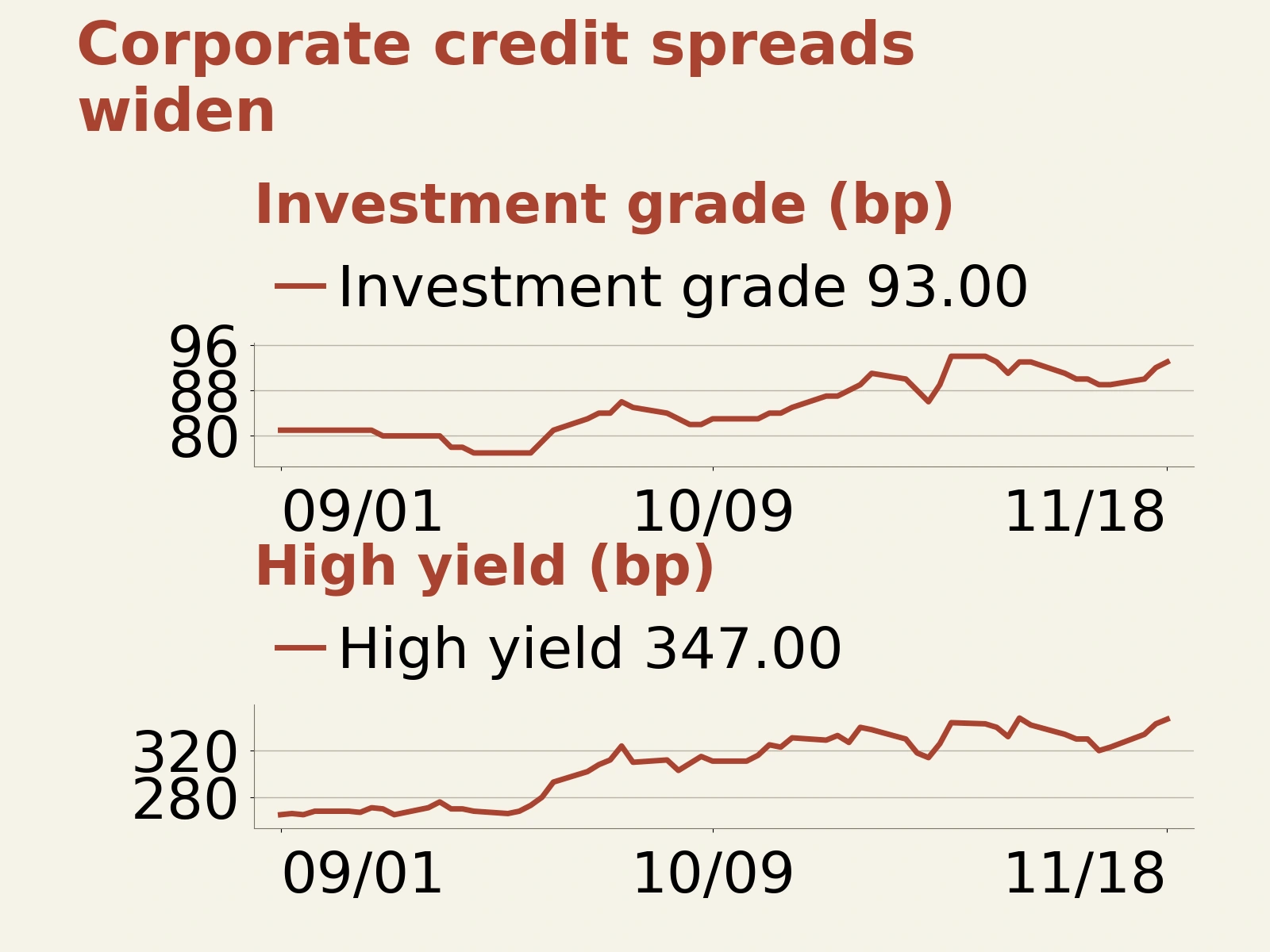
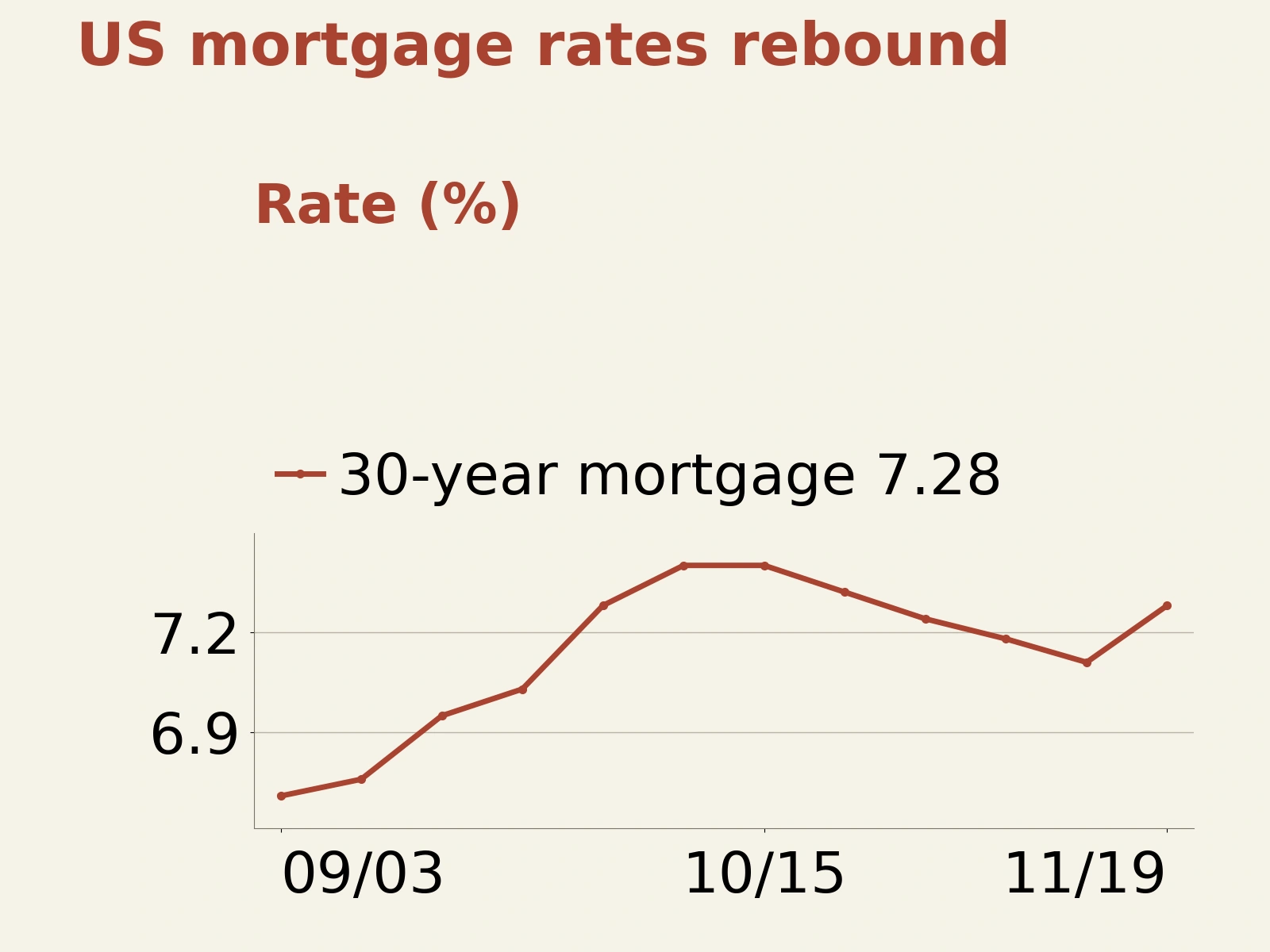
For companies with weaker credit quality, widening credit spreads partly offset the benefit of lower Treasury benchmark yields. As of November 18, the ICE BofA US High Yield option-adjusted spread was 347 basis points, 24 basis points wider than on November 13; investment-grade spreads widened by only 4 basis points to 93 over the same period. Homebuyers' financing costs, meanwhile, rebounded. Freddie Mac reported an average thirty-year fixed mortgage rate of 7.28% for the week of November 19, up 17 basis points in a week. Constrained by high rates, US pending home sales fell 4.7% month on month in October. Building permits were also the largest contributor to the Conference Board Leading Economic Index's 0.3% monthly decline in October.
Gold falls more than 3%; front-month crude settlements are nearly unchanged
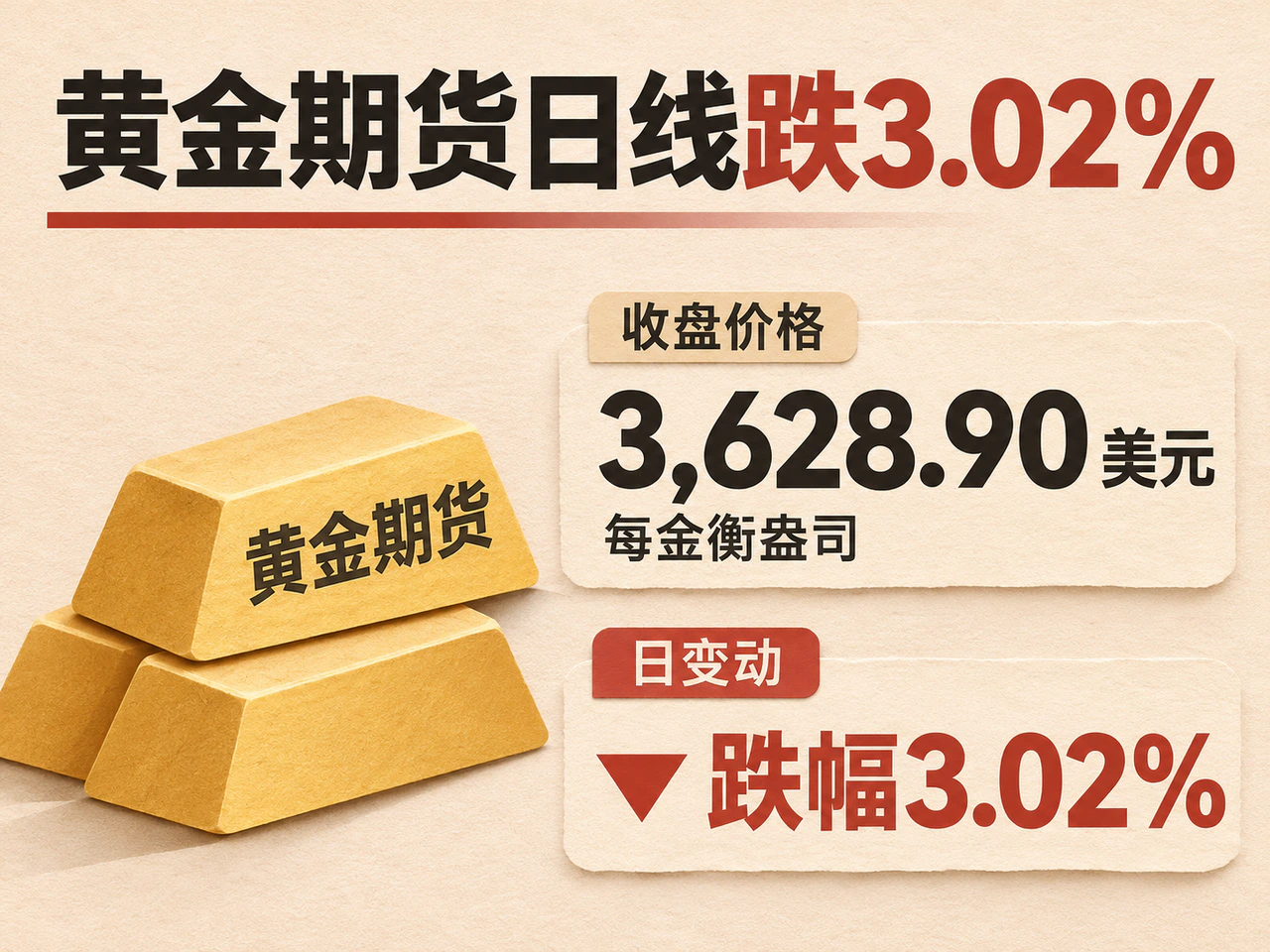
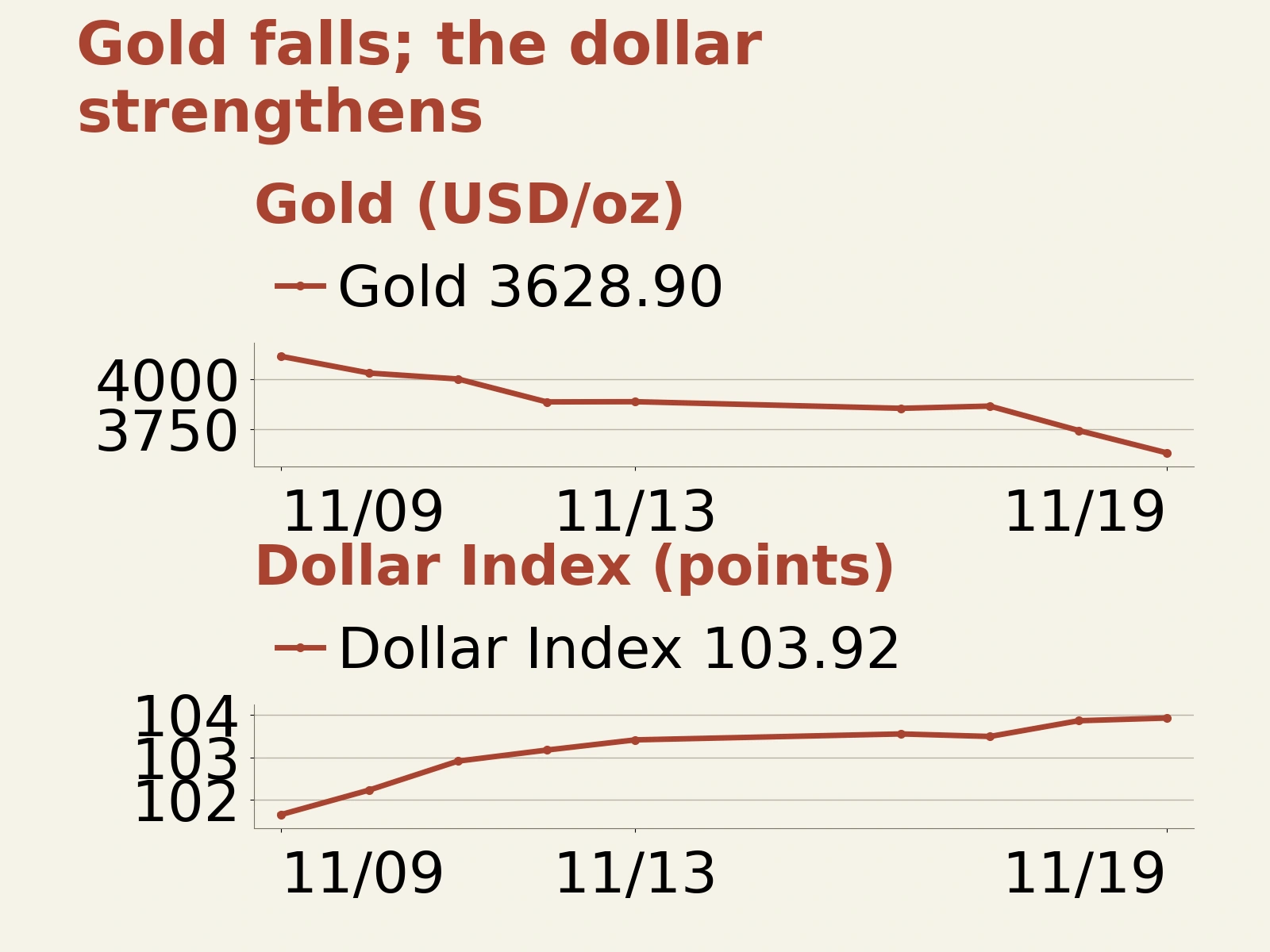
On November 19, the continuous daily gold futures series closed at $3,628.90 per troy ounce, down $113, or 3.02%, from the previous session. The same price series had stood at $4,114.50 on November 9. Over those ten days, the Dollar Index rose from 101.65 to 103.924 and the ten-year Treasury real yield increased from 2.66% to 2.88%, raising the opportunity cost of holding non-interest-bearing gold. Looking only at November 19, however, the Dollar Index edged up just 0.06% and the ten-year real yield was unchanged, limiting the direct contribution of exchange rates and real yields to that day's decline in gold.
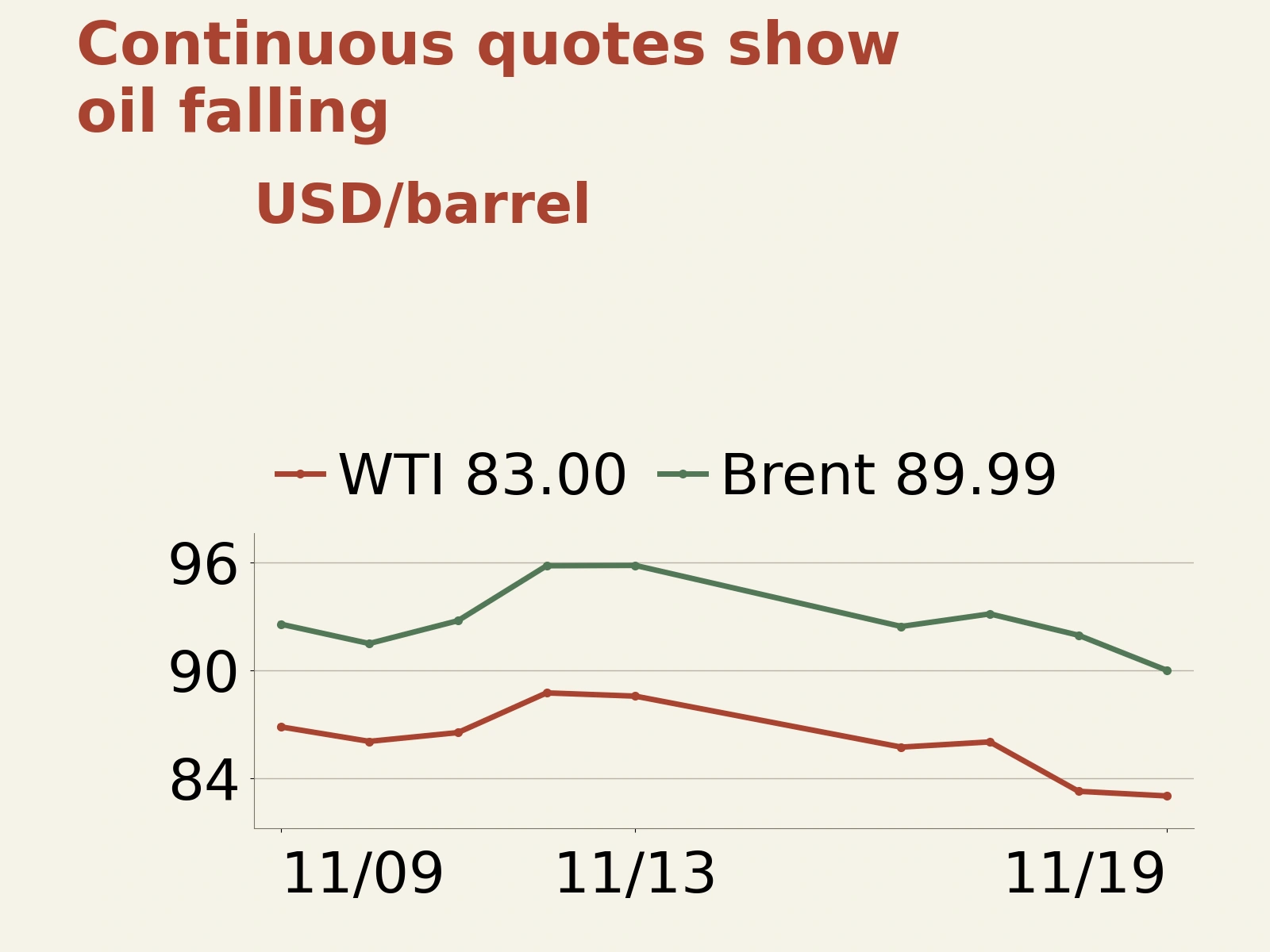
In crude oil, contract settlement prices and continuous daily closing prices showed different daily changes. According to Reuters, front-month Brent futures settled at $91.98 a barrel, up 3 cents, while December WTI settled at $83.21, down 5 cents. On the market data provider's later continuous daily close basis, however, Brent closed at $89.99 and WTI at $83.00, down 2.13% and 0.31%, respectively, from their previous closes on the same basis. The December WTI contract was due to expire the next day. On the afternoon of November 19 in New York, it traded as much as $1.13 above the following January contract, indicating a continuing premium for prompt delivery.
Slower Gulf shipments and rising US inventories pulled oil prices in opposite directions. Bloomberg, citing Kpler estimates, reported that the combined seven-day moving average of oil transit through the Strait of Hormuz and net ship-to-ship transfers in the Gulf of Oman had fallen from about 13.4 million barrels a day in early November to about 10 million on November 10. Meanwhile, the US Energy Information Administration (EIA) reported that commercial crude inventories rose by 3.4 million barrels to 417.8 million in the week ended November 13, while gasoline inventories increased by 5.2 million barrels. Inventory accumulation in consuming markets cushioned some of the supply pressure from shipping delays.
On geopolitics and energy policy, the United States, United Kingdom, France and Germany read a joint statement at the International Atomic Energy Agency Board of Governors in Vienna on November 18, calling on Iran to restore inspections of damaged nuclear facilities. The UK government published the full statement on November 19. Statements by Russia, China and Iran on November 18 linked the full restoration of inspections to conditions including an end to hostilities. Separately, China, the United States and Russia issued a joint declaration in Shenzhen on November 19 proposing increased production and supply of refined petroleum products. Its actual market impact will depend on additional refinery throughput and the scale of product loadings; higher refinery utilization could also boost demand for crude purchases.
Hong Kong technology stocks retreat as Europe plans new ESG fund categories
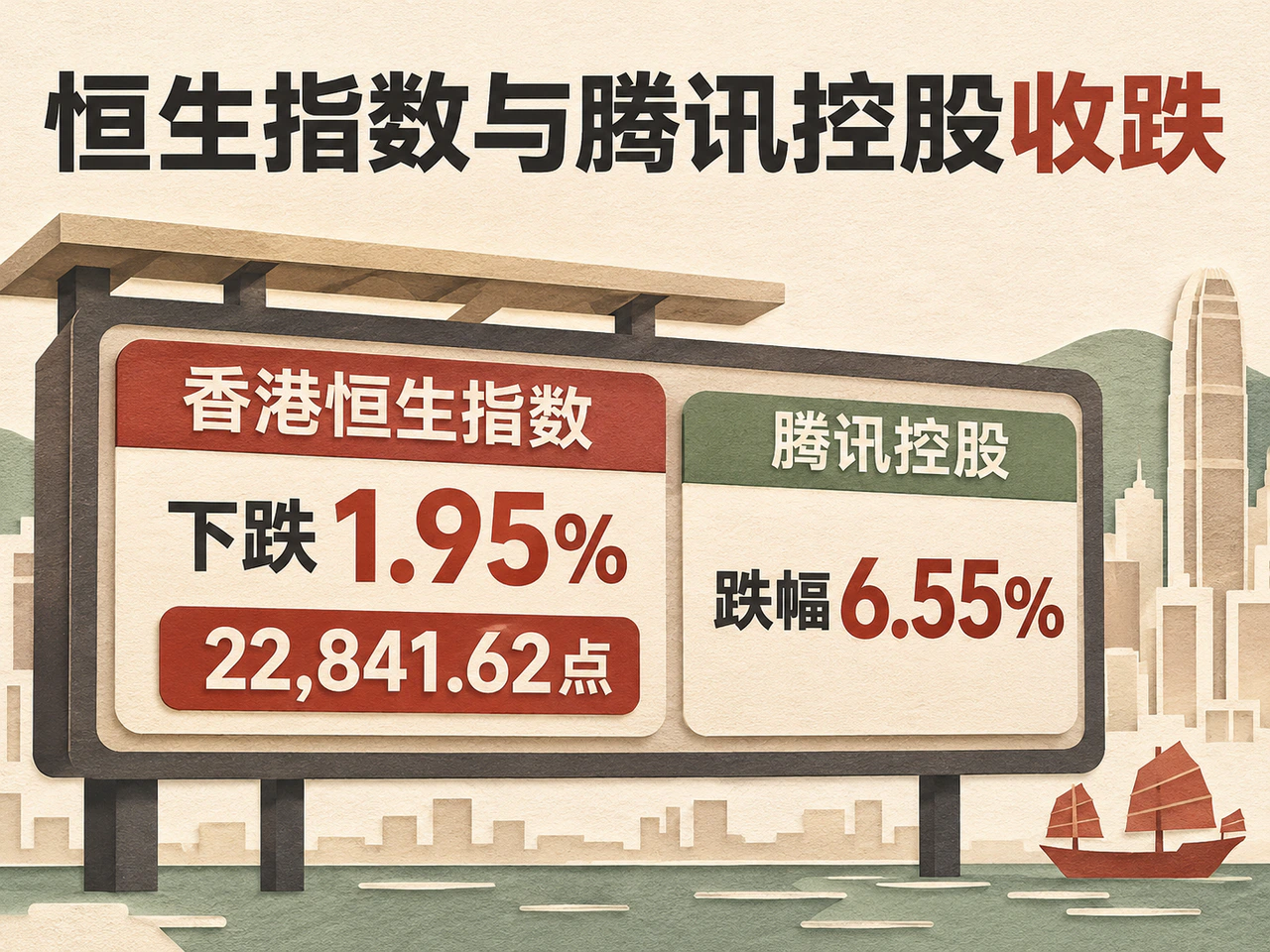
Asia-Pacific equities, which closed before New York on November 19, were mixed. South Korea's KOSPI gained 1.39% and the Nikkei 225 rose 0.71%, while the broader TOPIX edged down 0.04%. Hong Kong's Hang Seng Index fell 1.95% to 22,841.62. Among heavyweight stocks, Tencent declined from the previous close of HK$372.80 to HK$348.40, a loss of 6.55%; Alibaba fell 5.51%, while Hua Hong Semiconductor and SMIC rose against the broader decline. After the Hong Kong close, Alibaba reported quarterly results: for the quarter ended September, AI cloud and computing services revenue rose 53% year on year to RMB60.973 billion, while group free cash outflow widened from RMB21.840 billion a year earlier to RMB34.472 billion.
On China's domestic economy and liquidity, the Ministry of Commerce on November 19 discussed previously released consumption figures: retail sales of services rose 4.9% year on year in January-October, 4 percentage points faster than retail sales of goods, while total retail sales of consumer goods rose 1%. The ministry also said that the China-US trade council had held its first meeting online on November 13, with the agricultural working group due to hold its first meeting soon. On the same day, the People's Bank of China injected a net RMB67.3 billion through overnight reverse repos. The overnight pledged repo rate for depository institutions in the interbank market (DR001) fell to 1.2554%, close to the 1.25% operation rate. In offshore bonds, Reuters, citing a term sheet, reported that China's Ministry of Finance planned to issue $2 billion of three-year dollar sovereign bonds in Hong Kong. Final price guidance tightened from 25 basis points above comparable US Treasuries to flat, providing a new pricing benchmark for Chinese companies' offshore dollar financing.
Europe also saw a prospective regulatory change that day. Representatives of the European Parliament and EU member states reached a provisional agreement to revise the Sustainable Finance Disclosure Regulation (SFDR), proposing three categories for relevant financial products: sustainable, transition and basic ESG. Products in the transition category would be required to invest at least 70% in accordance with the relevant transition objectives. The text still requires formal approval by the European Parliament and the Council of the European Union. Funds focused on transition strategies will subsequently need to assess and adjust their existing holdings against the new threshold.