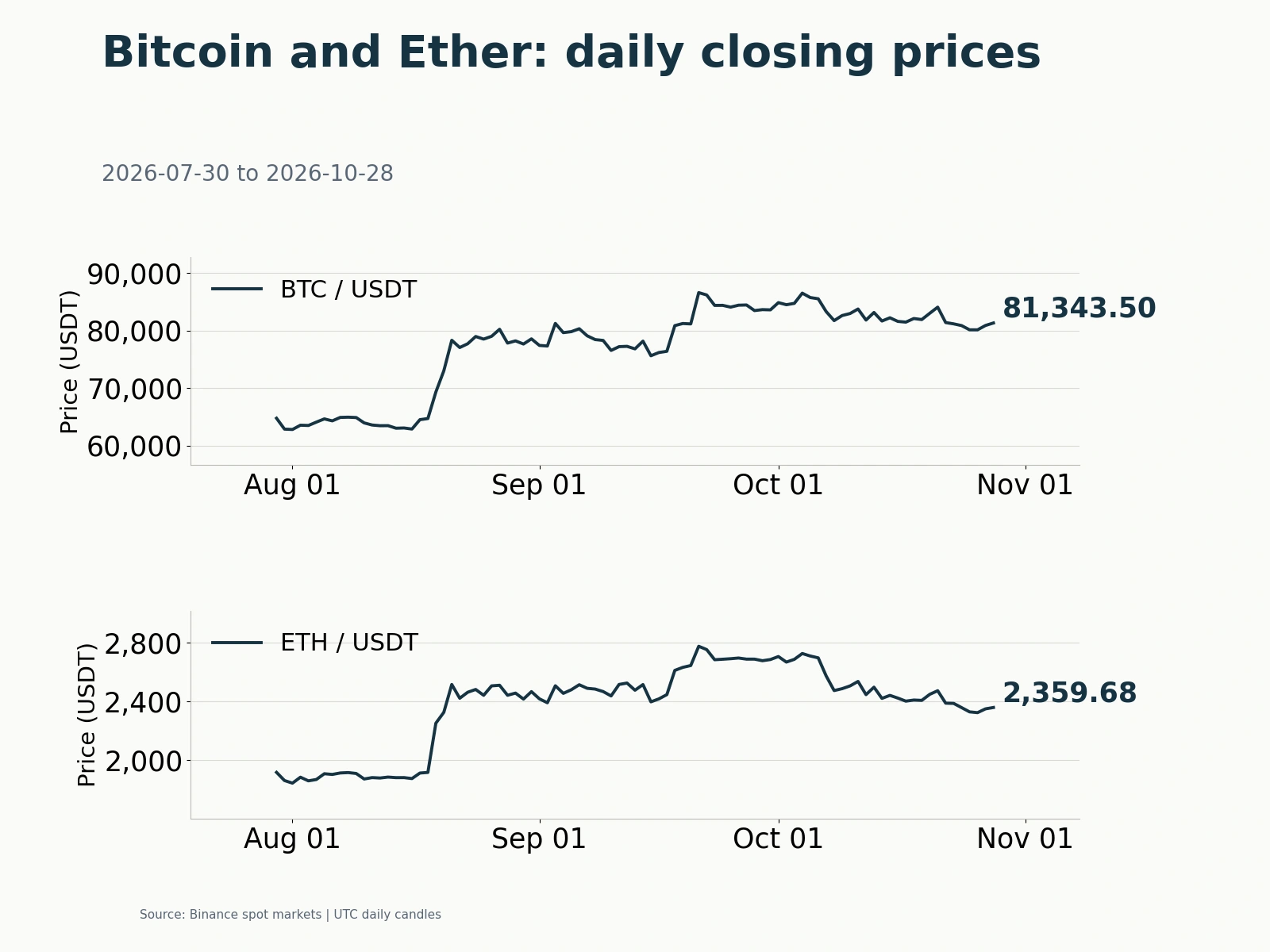
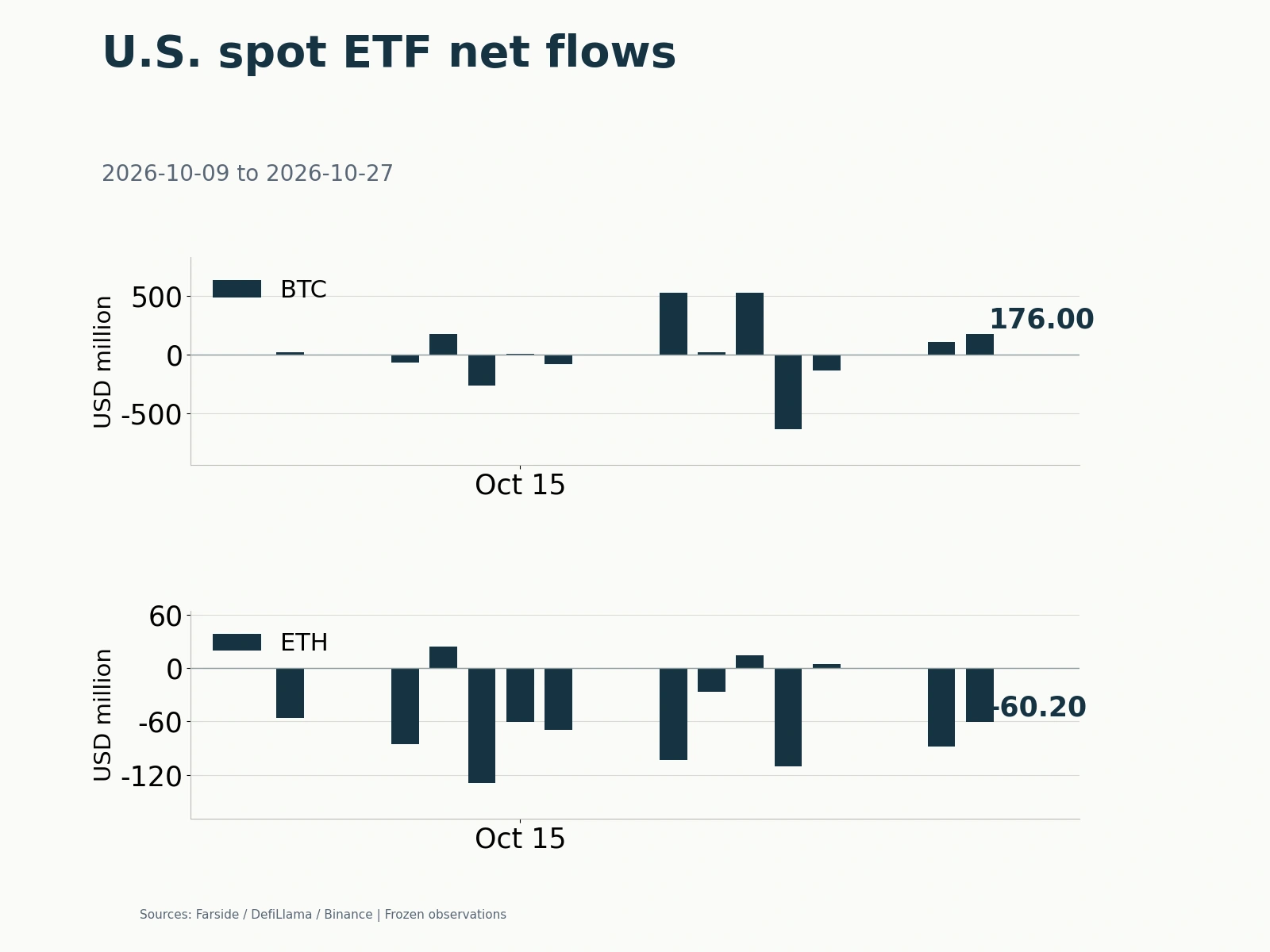
On October 26, 2026, U.S. spot Bitcoin ETFs ended two consecutive trading days of net outflows, receiving US$110.3 million. Ether ETFs, meanwhile, lost US$88.6 million. Allocation capital was beginning to return to Bitcoin, but stablecoin supply continued to contract and the quantity of open positions in major perpetual futures also edged lower. The improvement in funding remained confined to selected channels.
Bitcoin ETF purchases offset 14% of earlier outflows; Ether remains under pressure
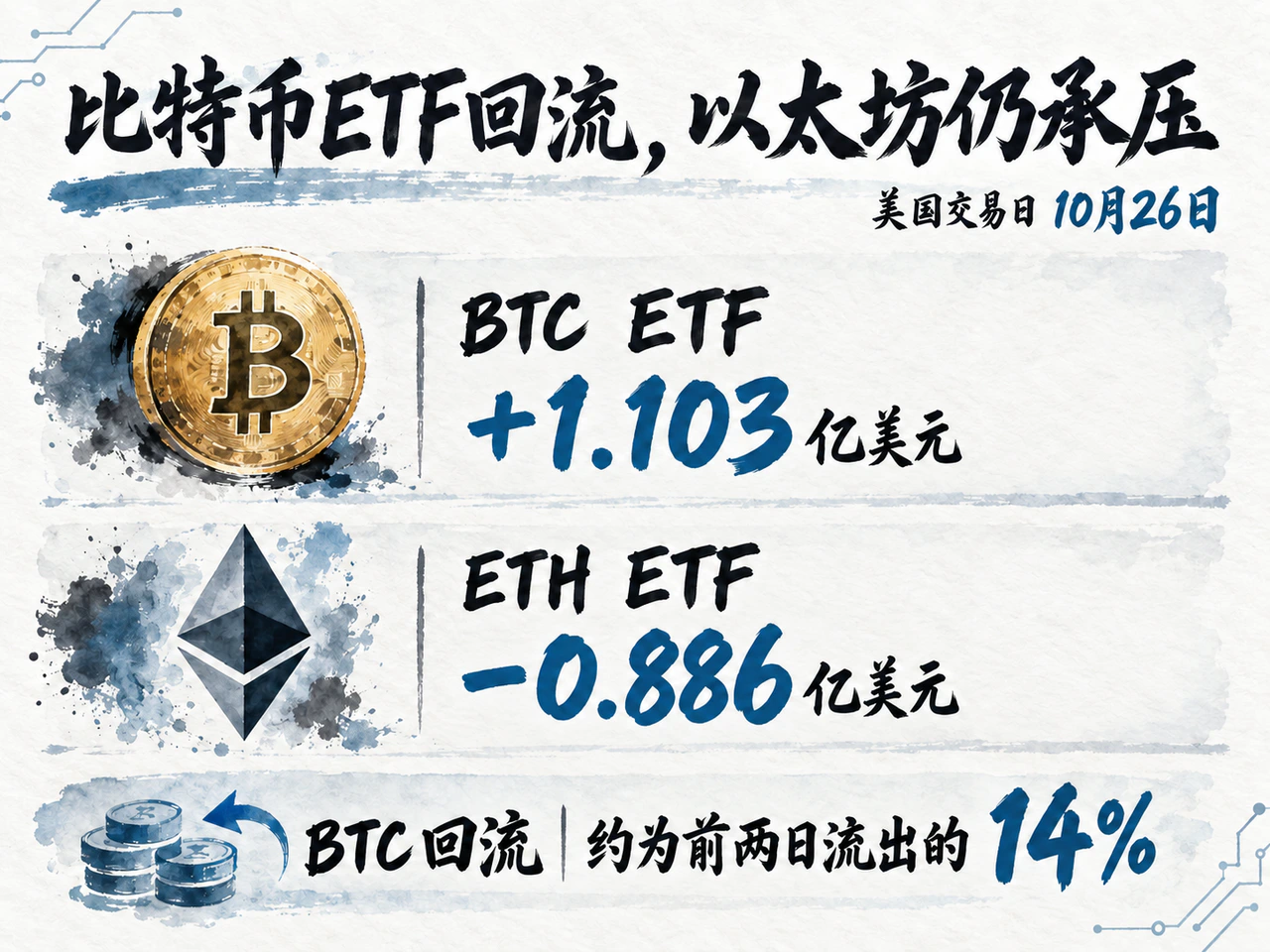
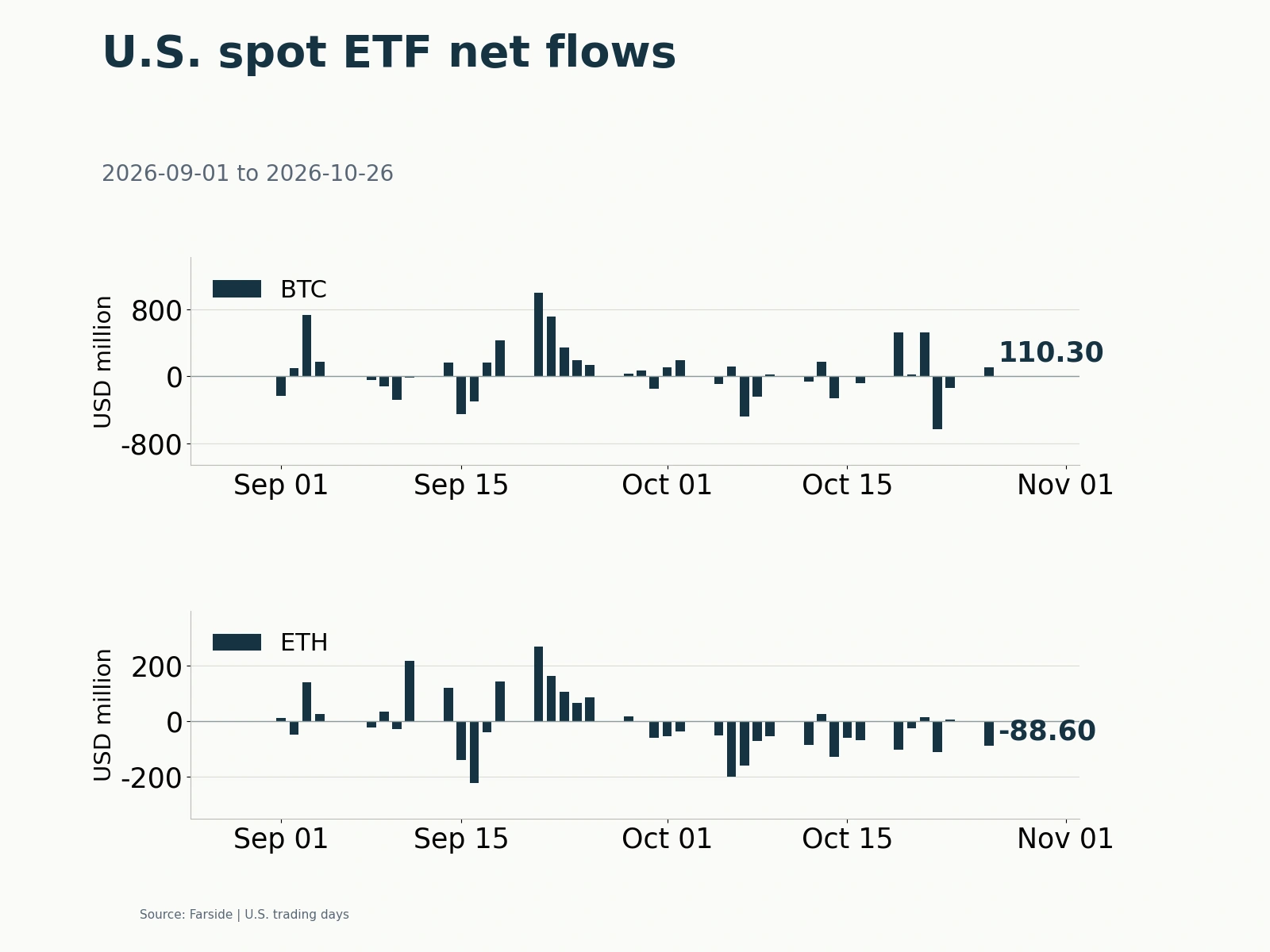
Farside's U.S. trading-day data show that all Bitcoin ETF net inflows on October 26 came from BlackRock's IBIT. Other products recorded no net subscriptions or redemptions that day. Outflows on October 22 and October 23 had totaled US$635.6 million and US$137.9 million, respectively, or US$773.5 million combined. Monday's inflow offset only about 14% of those two days' losses. Buying had recovered, but participation remained narrow.
Bitcoin ETFs received a cumulative US$301.2 million from October 19 to October 23, but the direction of flows reversed sharply within the week. The first three trading days brought US$1.0747 billion of inflows, most of which was quickly given back over the final two days. After that volatility, Monday's inflow will need to persist and spread to more products to provide more durable support.
Ether ETFs had yet to escape redemption pressure. On October 26, ETHA lost US$104.7 million while FETH received US$16.1 million, insufficient to offset the former's redemptions. Ether ETFs had already lost a cumulative US$220.7 million from October 19 to October 23. Allocation demand for Bitcoin and Ether continued to diverge, and returning capital had not reached both major asset classes.
Stablecoin supply falls by US$2.185 billion in a week

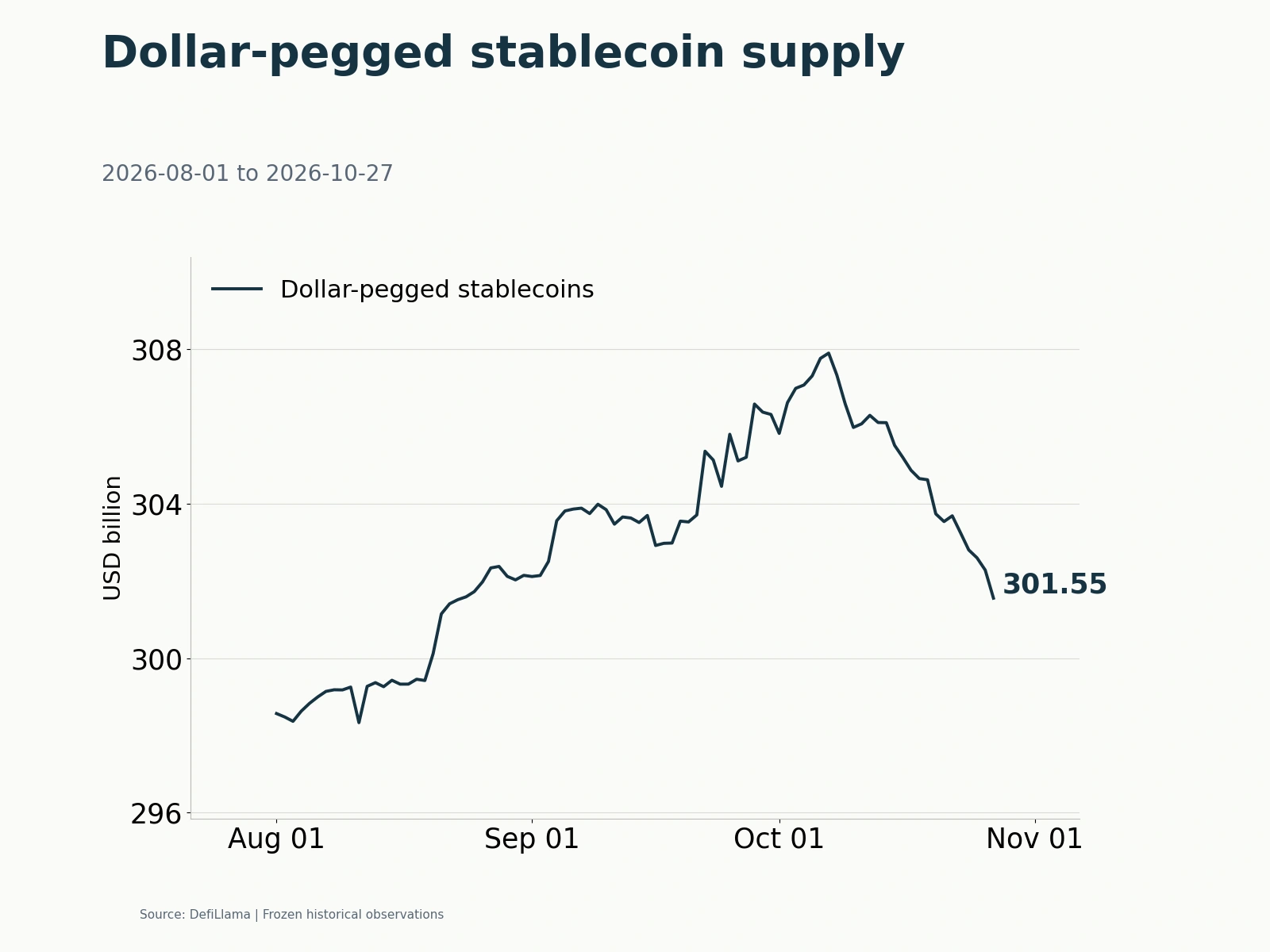
While selected ETFs regained inflows, the on-chain dollar supply continued to shrink. DefiLlama's historical series for dollar-pegged stablecoins put the October 27 supply observation at approximately US$301.553 billion, down US$729 million from October 26 and US$2.185 billion from October 20, a weekly decline of roughly 0.72%. Supply was approximately US$6.352 billion below its October 7 level of US$307.905 billion.
Stablecoins support trade settlement, collateral and payments, among other uses. Their supply reflects issuance, redemptions and demand across those activities. A decline means that the outstanding stock of these dollar assets has decreased; it does not correspond transaction by transaction to Bitcoin selling. Alongside concentrated ETF subscriptions, the data show that a partial recovery in allocation buying has not been accompanied by a simultaneous increase in on-chain dollar supply.
Notional open interest rises as coin-denominated positions edge lower

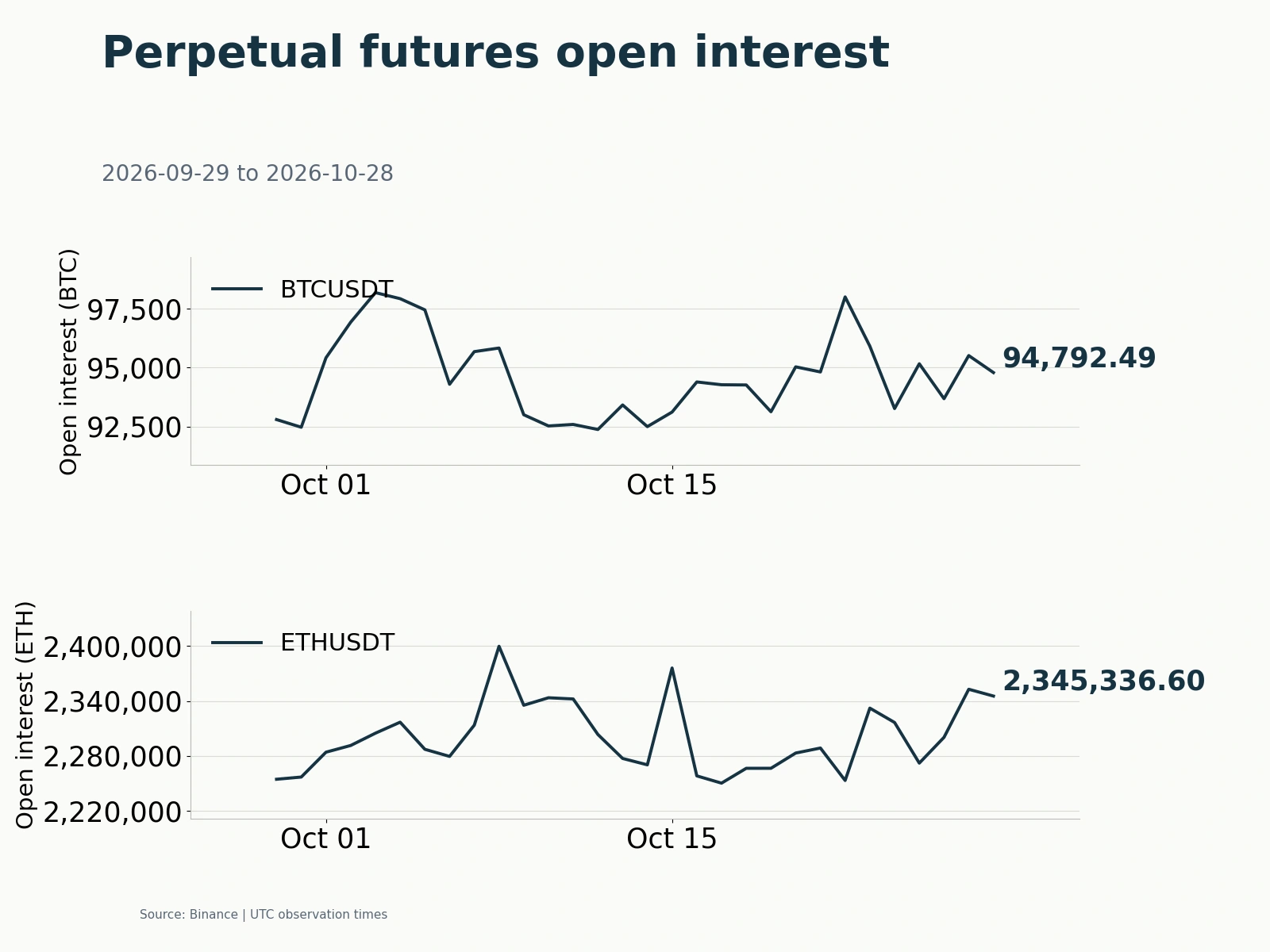
Daily open-interest records for Binance BTCUSDT and ETHUSDT contracts show that, between 00:00 UTC on October 27 and 00:00 UTC on October 28, Bitcoin open interest fell from approximately 95,500 to 94,800 BTC, down 0.76%. Ether open interest declined from about 2.3528 million to 2.3453 million ETH, down 0.32%.
Over the same period, notional open interest in USDT rose 0.18% and 0.79%, respectively, reaching approximately 7.666 billion and 5.510 billion USDT. The divergence reflected higher coin prices lifting contract valuations. Even with fewer coins represented in open positions, the notional value of the remaining positions can rise. In these two Binance contract samples, the increase in value mainly reflected repricing rather than an expansion in position quantities.
Longs continued to pay funding costs. At the three eight-hour settlements on October 27 UTC, BTCUSDT funding rates were 0.0100%, 0.008696% and 0.0100%, totaling 0.028696%. ETHUSDT rates were 0.008957%, 0.005932% and 0.007171%, totaling 0.022060%. Positive rates mean longs pay shorts, indicating a long bias in contract pricing. The slight decline in coin-denominated open interest shows that this bias had not translated into simultaneous growth in position size.
Options markets were still pricing downside risk. An intraday CoinDesk report on October 27 said the most actively traded Bitcoin option over the preceding 24 hours in its observation window was a December 25 put with a US$72,000 strike. On the report's put-minus-call convention, 25-delta skew was positive across maturities, indicating a relative premium for downside protection. Active trading can include purchases, sales and combinations of trades. The pricing differential provides more direct evidence of demand for protection.
The main change in funding is renewed support through Bitcoin ETFs. Ether still faces redemption pressure, stablecoin supply continues to fall, and perpetual markets combine positive funding with slightly smaller position quantities. The next questions are whether ETF subscriptions persist, stablecoin supply stabilizes and contract position quantities recover. If these developments reinforce one another, a partial recovery in buying will have a better chance of becoming broad-based funding support.