On October 28, 2026, Ripple said it expected its annualized product revenue run rate to approach US$900 million by year-end. Its operating priorities this year include integrating payments, custody, stablecoins, prime brokerage and corporate treasury management. That same day, Circle published its comments to the U.S. Securities and Exchange Commission, seeking greater clarity on the treatment of compliant payment stablecoins in on-chain financing, settlement and broker-dealer capital rules. The two developments approach institutional adoption through business networks and capital regulation, respectively. For stablecoins to enter institutional finance, usable products and service networks must be accompanied by clear asset and capital treatment.
Ripple adds trust-bank oversight for reserves and custody, with product rollouts at different stages
Ripple said it now serves more than 1,700 institutional, corporate and other customers, and that the number of customers and partners using multiple solutions has tripled this year. The company expects an annualized product revenue run rate approaching US$900 million by year-end. This measures the pace of business, rather than revenue already earned for the full year, which remains subject to actual financial disclosure.
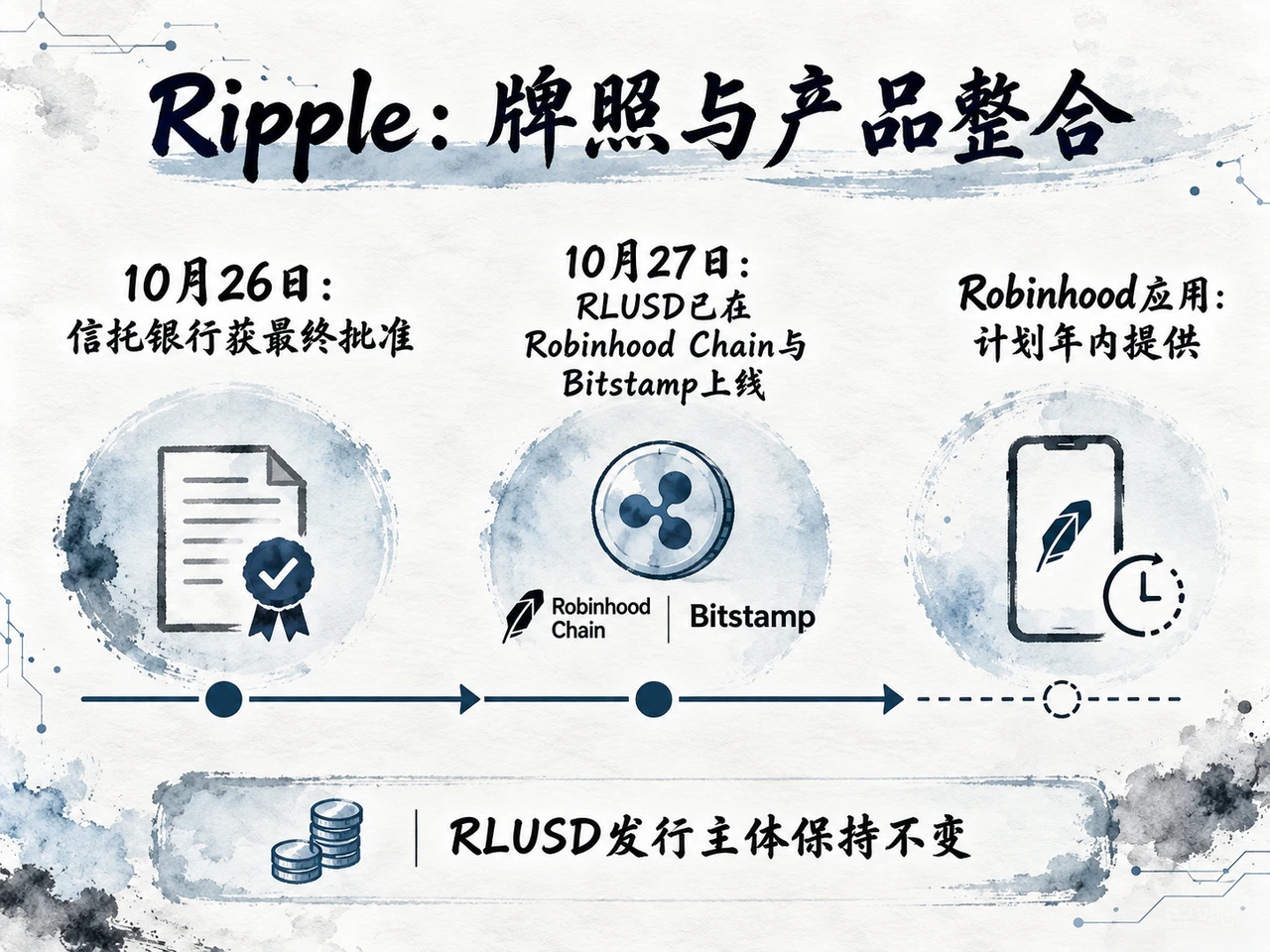
A trust-bank charter provides part of the regulatory foundation for this integration. On October 26, Ripple announced that its national trust bank, RNTB, had received final approval from the U.S. Office of the Comptroller of the Currency. It may manage segregated reserves backing RLUSD, act as reserve collateral trustee for holders' benefit and, after opening, provide fiduciary digital-asset custody. RLUSD continues to be issued by Standard Custody & Trust Company, regulated by the New York State Department of Financial Services. RNTB adds regulatory arrangements for reserves and custody without changing the issuer.
The products are at different stages of deployment. When Ripple and Robinhood announced their partnership on October 27, RLUSD was already available on Robinhood Chain and Bitstamp, while availability in the Robinhood app remained planned for later this year. Robinhood will also integrate Ripple Treasury to manage its own cash, liquidity and payments. The existing prime brokerage partnership already covers lending and margin financing for approximately 20 digital assets; support for perpetual futures remains a later plan.
The potential value of this combination lies in linking customer transactions, corporate treasury management and institutional financing. Stablecoins can support customer transfers as well as an institution's own financial operations. Prime brokerage connects trading venues, funding and collateral. Sharing customer relationships and settlement interfaces across these businesses could deepen product adoption among existing clients. Partnership announcements describe an expansion path; actual revenue contributions will depend on implementation, usage and pricing power.
Circle seeks cash treatment and a reduction of the 2% haircut to zero
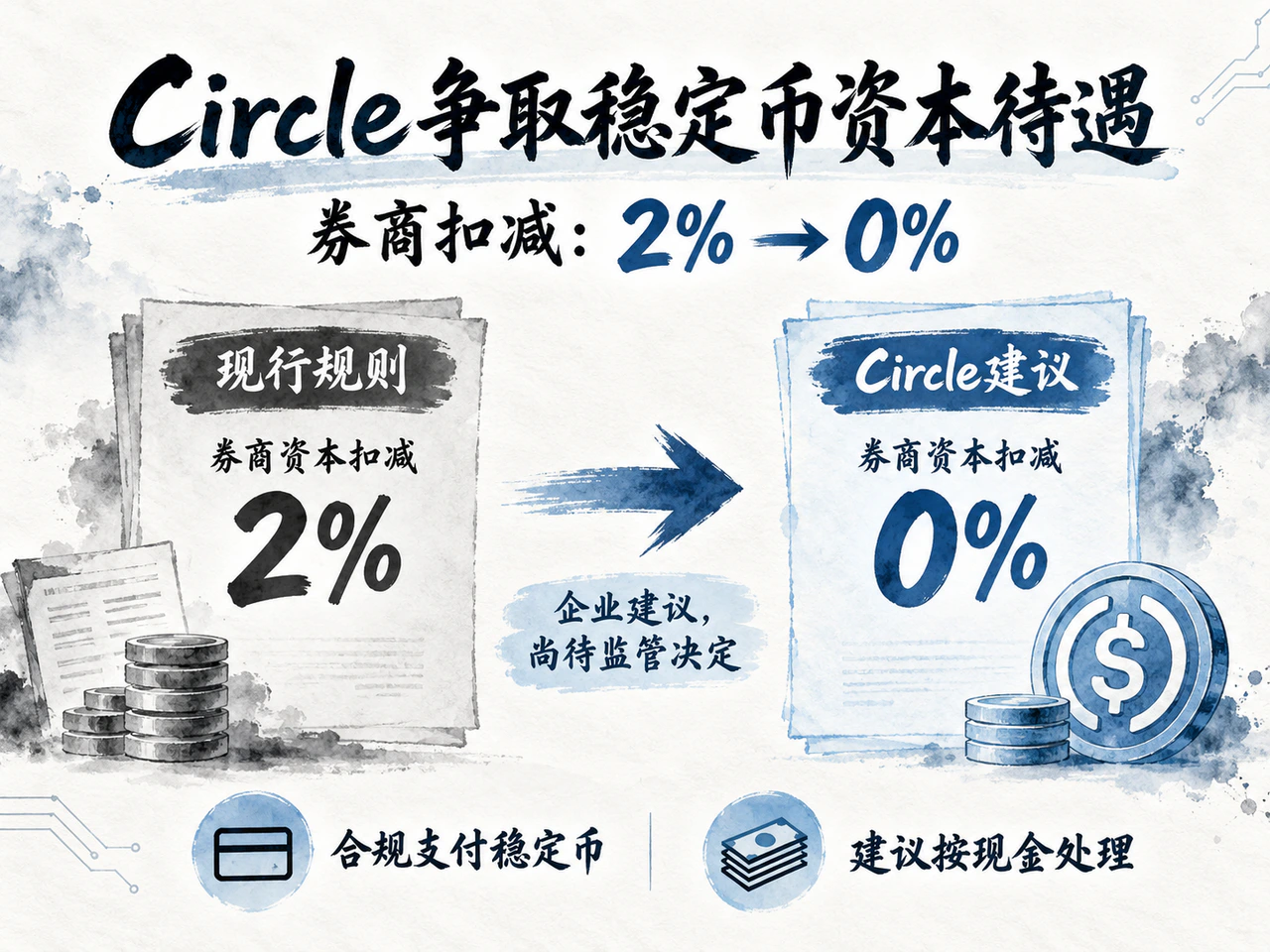
Circle disclosed on October 28 that it had submitted comments on October 20 concerning the SEC's proposed Regulation Crypto Assets. Its two central requests were to treat qualifying payment stablecoins as cash under proposed Rule 302(b), with clear dollar valuation, accounting and customer reserve treatment; and to reduce the current 2% haircut under broker-dealer rules to zero for GENIUS Act-compliant payment stablecoins, subject to objective safeguards. These remain a company's recommendations on proposed rules. Regulators will decide whether to adopt them.
Capital treatment directly affects the cost of institutional stablecoin adoption. An additional capital haircut on a settlement asset requires an institution to commit more resources to holding and transferring the same notional amount. Circle's request for treatment closer to cash is, in substance, an effort to lower the regulatory cost of bringing stablecoins onto institutional balance sheets and into on-chain financing and everyday settlement. Regulators must still balance reserve quality, redemption arrangements, operational risk and customer protection. Instant on-chain transfers cannot replace those safeguards.
Circle also asked for coordination between the proposed rules and the GENIUS Act, clarification of how different permissionless network structures would be regulated, and a clearer distinction between technical maintenance after a network becomes functional and essential managerial efforts. These issues affect how issuance, network operation and securities analysis fit together, as well as how workable the rules will be.
Ripple is strengthening its licenses, products and customer network, while Circle seeks to reduce uncertainty around asset recognition and capital treatment. These address the supply of institutional services and the regulatory cost of adoption. The next milestones are whether announced products launch as planned, institutions use them consistently, and the SEC incorporates the recommendations into its final rules. Stablecoin expansion is moving beyond issuance totals into specific financial processes. Licensing, settlement capability and capital efficiency will jointly shape its commercial potential.